Measures that can protect European cities from extreme heat are well known to scientists, governments, and business alike. Many of them are already working successfully in individual countries and cities. But why do these solutions still remain the exception rather than the rule?
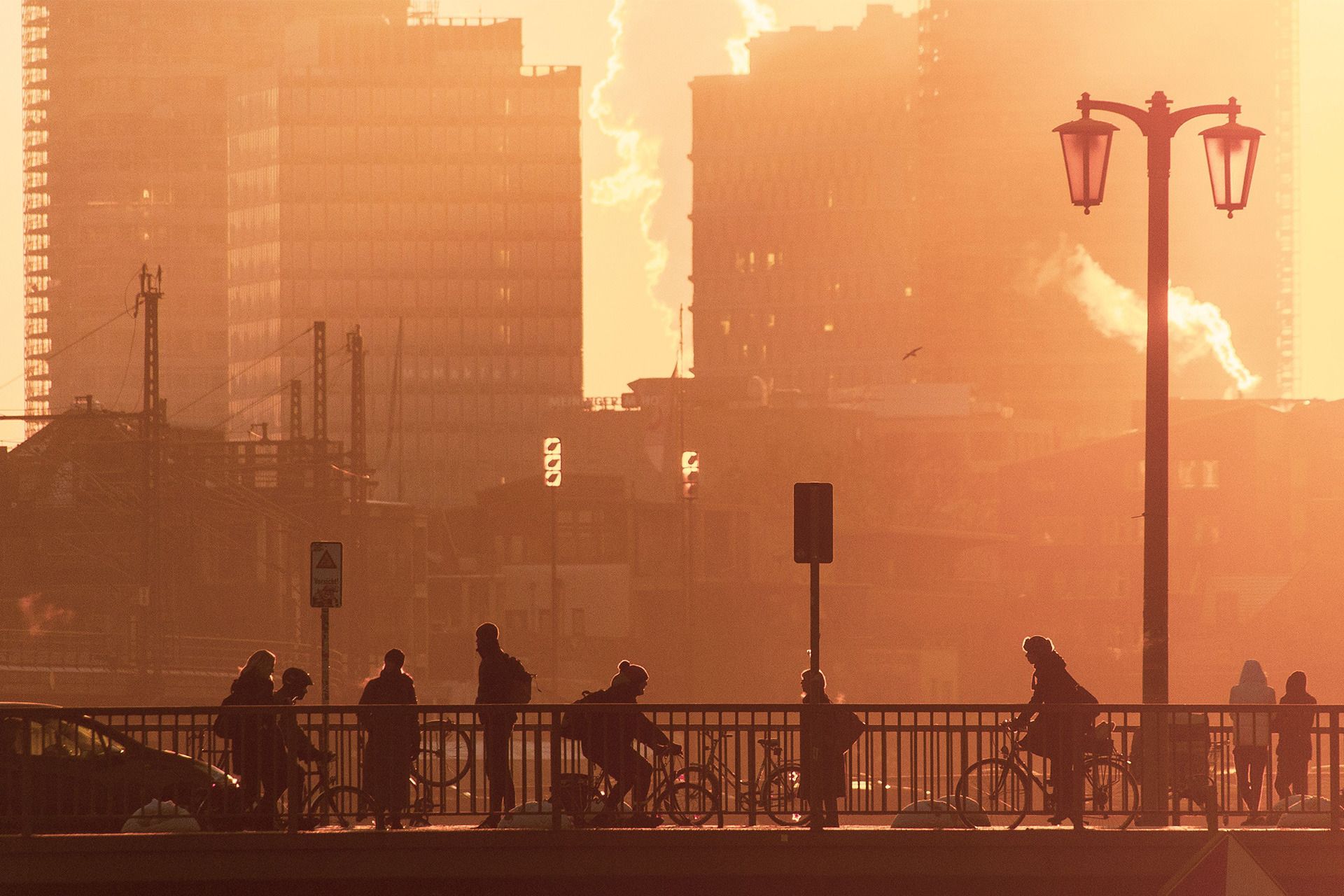
Source: Pexels
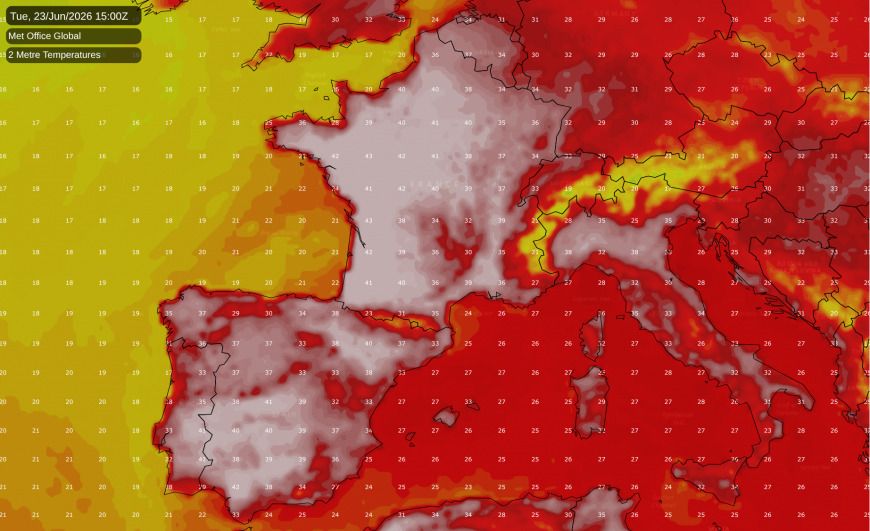
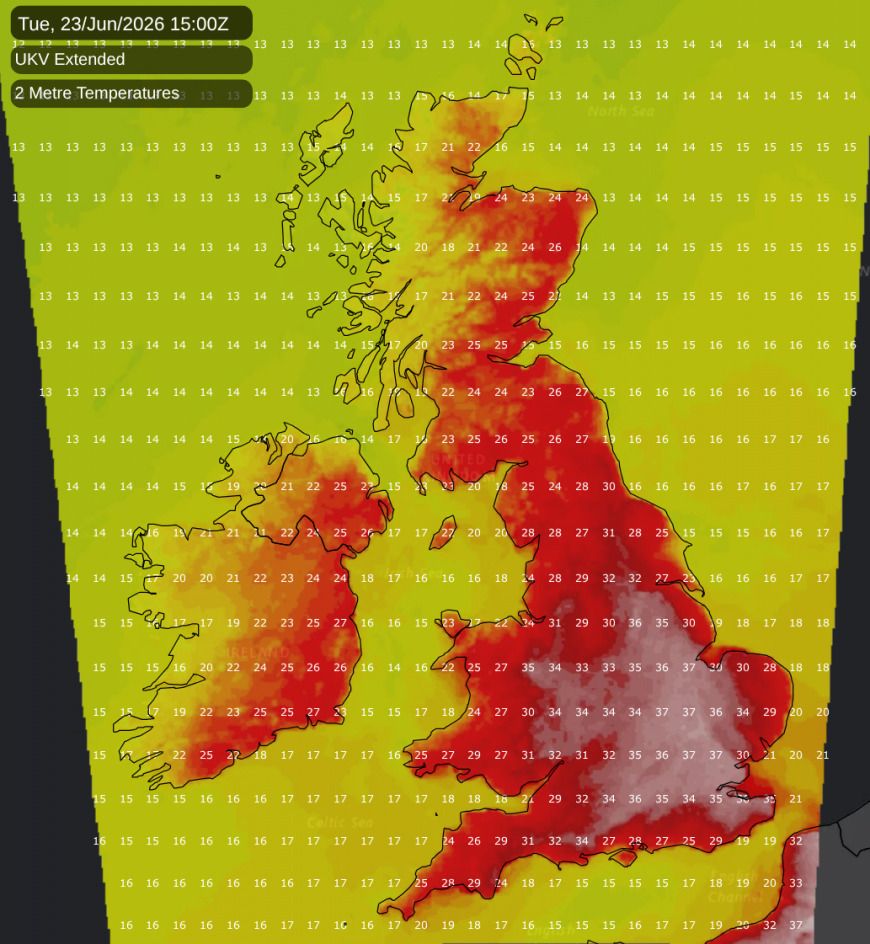
In the latter part of June, all social media were flooded with a clip of a parody weather forecast on French TV: in the “2050 weather forecast”, France was predicted to reach temperatures of up to 43 °C in August because of global climate change. The catch is that in June 2026, almost all the country’s cities had repeatedly “caught up with and overtaken” that forecast. What looked like a joke in 2014, when the parody first appeared, has become reality with frightening speed.
There are still reasons to laugh at this reality: for example, a climate conference is taking place in London right now, and on June 25 a panel session on extreme heat was due to be held — but it was canceled because of extreme heat. But there is much more sad news than funny news. The consequences of such climate catastrophes are not only the death of people (for example, in 2025 alone — 62.7 thousand heat-related deaths in Europe) or the abstract “loss of labor productivity”: they are also blackouts, rising electricity prices, roads that melt, and even rails. And the drop in labor productivity is not abstract either: couriers, builders, and farmers are forced to pause work; cafes and shops lose income; offices and factories are emptied where work is banned at extreme temperatures.
Source: Netweather.tv
The immediate everyday effects are also felt very clearly. Here is how, for example, a typical French woman from Bordeaux describes her day in an uninsulated attic apartment: with 44 °C outside, it is 47(!) degrees inside; all objects and surfaces have warmed to ±40 °C; the router has died; the induction hob will not turn on because it detects overheating; and even the refrigerator door has heated up on the inside.
And this is without even taking into account the long-term consequences for nature and agriculture, which could trigger new catastrophes.
At the same time, asking the questions “what should be done and who is to blame?” in any affected country shows: the answer to what should be done is well known by scientists, as well as by many politicians and businesspeople (and this is confirmed by numerous projects that have already been implemented and have proven effective at the local level); and those to blame for the fact that adequate measures still have not been adopted are, above all, bureaucracies that limit funding for environmental programs.
The root of the problem is politicians’ refusal to acknowledge their responsibility for a catastrophe that is not a “natural disaster” at all, but is caused by specific anthropogenic and socio-economic factors.
Overheating as a non-random chain of events
Europe is warming faster than other regions of the world - and the latest data for 2024-2026 confirm this.
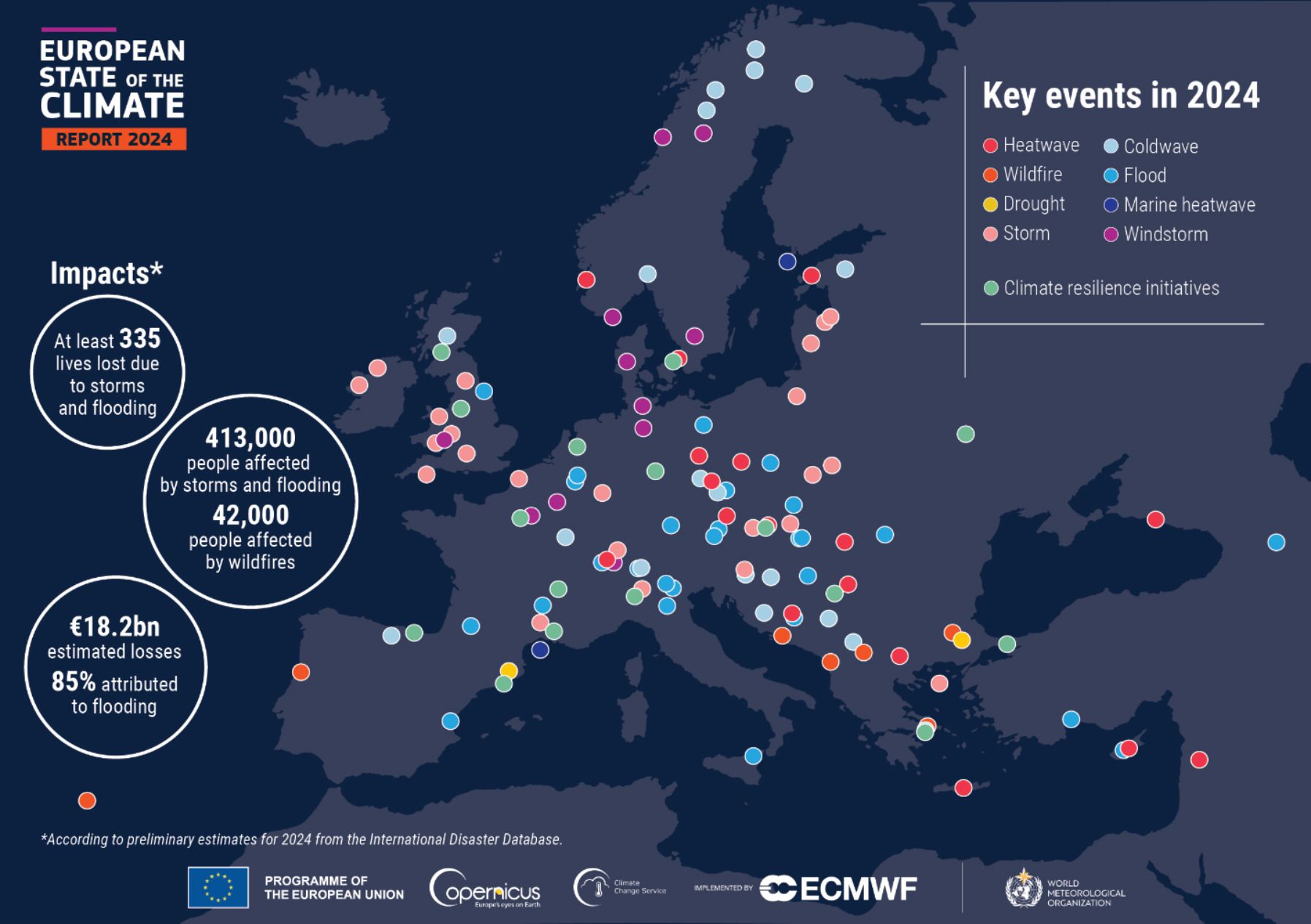
2024 became the hottest year in the entire history of meteorological observations for the world as a whole, but it was especially hot in Europe. Last year, the global average surface temperature exceeded the pre-industrial level by 1.5 °C — the largest weather anomalies were recorded precisely in Europe. The main удар then was taken by the east and southeast of the continent (temperatures 2-3 °C above the 1991-2020 average; a record 13-day heatwave in July; an abnormal number of “heat stress” days), however even then the blocking anticyclone that caused that heatwave affected a significant part of Germany and southern Italy.
Source: Copernicus.eu
This year’s heat was caused by a similar atmospheric phenomenon, though different in form — the “Omega block”, and it is now situated over Western Europe — which is why in 2026 the main records are being set in France, Britain, and Spain. But the geographical details are secondary here: whether it is an anticyclone in one region or an Omega block in another, the decisive role in Europe’s climate catastrophes is played by the same thing, anthropogenic increase in baseline temperature. It is precisely this that turns any atmospheric “trap”, even a familiar one, into an anomalous heatwave affecting different parts of the continent. Europe is made even more vulnerable by the fact that huge landmasses inside the continent lack the moderating influence of the oceans — and for that reason alone warm up almost twice as fast as the rest of the world.
And the consequences of this are not limited to economic losses and excess mortality. One of the most dangerous and non-obvious consequences of climate change is the increase in the frequency of so-called compound events, when, for example, a severe drought is followed by a flash flood: soil that has dried out and cracked during the drought loses its ability to absorb water — and when torrential rains hit it, this leads to rapid floods that can be more destructive than drought or flooding separately. Studies show that the number of such events in Europe could rise by about 35% by mid-century.
Concrete jungles
Cities suffer the most from heat worldwide — a fact that seems obvious and not to require long explanations — but it is precisely the scientific basis for this that makes it clear why high temperatures “hit” Europe much harder than, say, the similarly highly urbanized territory of the United States.
The phenomenon in which cities “heat up” significantly more than suburbs and rural areasis called UHI (urban heat island). Concrete and asphalt in cities absorb and retain solar heat — and the denser the development and road network, the more strongly the “waves” of heat reflect and radiate onto each other. Historic European centers with their dense development, narrow streets, and tall buildings create “urban canyons” in which building walls repeatedly reflect heat — and the warmed air stagnates between them. American cities generally have wider streets and buildings are spaced farther apart — so even the ubiquitous skyscrapers do not create such dense “canyons”.
Europe’s situation is worsened by the historical status of many buildings, which does not always allow them to be renovated using modern “cool” materials that reflect solar radiation more effectively.
Europe has many ways to fight urban overheating — and this is not just greening, and the latter does not mean only planting trees: in addition to expanding green areas, urban air is helped to cool by green walls and even building roofs. For example, during the heat in Athens, full roof greening with grass helped reduce the city’s air temperature by an average of 0.7 °C, and in some places by more than 2 °C.
In addition, Europe has accumulated experience with projects of very different scope and application — for example:
Reflective facades as a thermal shield: research at the University of Seville showed that coating walls with special ultra-emissive “cool” paints reduces heat flow into a building by 33-65% at the peak of summer heat. Such facades are already being used in Southern Europe, reducing the burden on air conditioners without changing building structures.
Passive cooling for social housing: in Andalusia, Spain, during the renovation of apartment buildings, ventilated roofs with evaporative cooling and night ventilation were installed. This reduced thermal discomfort for residents by 80% and the need for active air conditioning by 70%, and made it possible to almost отказаться from compressor cooling in a hot climate.
Buildings as thermal batteries: in Eindhoven (the Netherlands), a digital twin of a building and a “smart” heat-pump control system were created, which stores cold or heat in advance, using solar energy to do so. This made it possible to reduce peak load on the power grid by 1 MW and cut total energy consumption by 20-30%, while maintaining comfort for people.
Data-driven fight against urban heat: in Amsterdam, Ghent, and Novi Sad urban weather networks have been deployed that accurately record temperatures in different types of development (local climate zones). The data showed that the densest neighborhoods warm at night by 6-9 °C more than the suburbs during heatwaves. Based on these observations, Amsterdam created heat-stress maps and the “find-your-cool” service for residents, and also expanded blue-green roofs; Ghent designed green corridors and facade gardens to strengthen ventilation; Novi Sad installed green roofs and vertical greening on the most vulnerable public buildings. The three cities showed how meteorological data can be turned into targeted, evidence-based adaptation measures — taking local climate and urban structure into account.
Heat pumps against grid overloads: in Germany (the ViFlex project) and the Netherlands (DACS-HW), hundreds of household heat pumps were combined into virtual pools and controlled centrally. The result was a 10-25% reduction in evening peak load without harming residents’ comfort, which makes it possible to avoid costly expansion of grid infrastructure.
Industrial cold for the city: in Barcelona (Spain), a district cooling system is operating, capturing excess cold (-160 °C) from regasification of liquefied natural gas at the port. This “free” cold (131 GWh/year) is distributed through the network to offices, hospitals, and even the city market, saving electricity and reducing CO₂ emissions by 32 thousand tons per year.
Protection against compound events: “blue-green infrastructure” systems (blue-green infrastructure) — for example, “sponge city” projects in the Polish city of Bydgoszcz or the renaturation of the Emscher river in Germany — play a key role in stormwater management and flood prevention by retaining, absorbing, and slowing runoff.
Arguments over air conditioners
In addition to the constant discussion of heat itself and its consequences, Europeans on social media this year are especially actively debating the installation of air conditioners in homes. Why is there so much controversy about this?
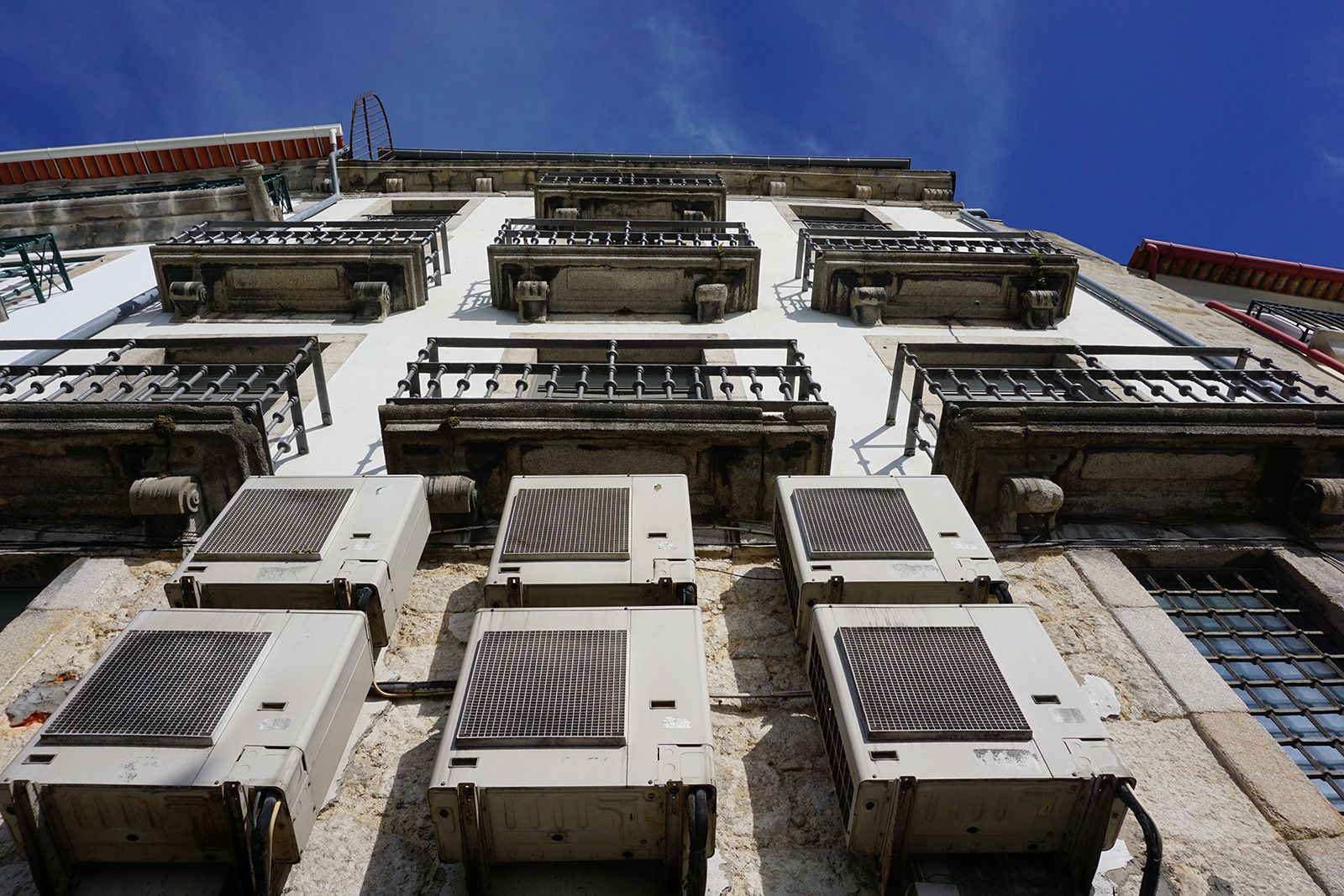
The point is that air conditioners are another factor that intensifies the notorious UHI effect in cities. They mainly use refrigerants with a high greenhouse potential, and above all they emit hot air outdoors. Thus, in Paris, according to research, widespread use of air conditioners could lead to a rise in the city’s average temperature by up to 4 °C. In addition, they place a burden on power grids and “drive up” prices on the energy market: for example, in Greece one of the July heat surges in 2025 led to a 45% rise in electricity prices in one day and pushed the power system to the brink of blackout.
The latter factor leads to the fact that the debate over air conditioners is also developing as a debate about social inequality. “Privileged” city residents who can afford to cool their apartment with an air conditioner (and do so constantly, believing that it does not harm the city) not only worsen the health of those who do not use them — they also negatively affect the financial situation of poorer sections of the population. After all, rising prices on the free electricity market during periods of peak demand are reflected in every utility bill one way or another.
Source: Pexels
Many environmentally conscious Europeans are giving up air conditioners (or “saving” them only for the most extreme case) literally for the common good. Scientists suggest leaving them only in hospitals, schools, nursing homes, and other places where vulnerable groups of the population stay.
Heat as a threat to democracy
However, the issue of introducing alternative methods of “softening urban heat” — of which there are a huge number, all effective and potentially capable of motivating some people to give up air conditioners and others not to die (and preferably figuratively, not literally) at 40+ degrees — is, regrettably, not only a scientific and technical issue, but also a deeply political one. And heat can not only be “cured” but also prevented — and specialists have plans for how to ensure this — but most of them, as a rule, “run into” bureaucracy and other phenomena of a purely political nature.
In France, which this year has been hit hardest by the weather anomaly, the clearest example of this symptom is the situation with the “Green Fund” (Fonds vert), created to finance climate projects at the local level.
The fund’s budget is constantly being cut. In 2023 it amounted to 2 billion euros, in 2025 — already 1.15 billion, and for this year — 837 million. Moreover, immediately after the first heatwave in May 2026, the government decided to cut this amount by another 162.5 million.
The leader of the French “Greens” (the Les Écologistes party), Marine Tondelier, called this the highest level of “incompetence and stubbornness in the wrong direction”. A deputy from another green party (Génération écologie), Delphine Batho, called the government’s actions a “professional mistake” — or rather, accused it of complete inaction: the government, she says, “did not plan, did not expect, and did not prepare“ anything at all to prevent the current heatwave.
Batho stresses that the government relies on an outdated 2003 “heat plan”, without adapting it to new realities at all. She cites examples where after every heatwave (particularly in 2019 and 2022), no lessons were learned, and each time the country was unprepared. Even now, the government is not even trying to pretend it is acting ahead of time: an interministerial meeting on the June heatwave was convened only five days after the crisis began.
An ecology expert in a Mediapart article summed up the actions of French politicians: instead of investing in passive cooling (greening, changes in urban planning) and renovating buildings, the country is, in essence, offered only simplified solutions such as installing air conditioners — it has already been explained above what this can mean in a country like France.
Government and leading climate scientists criticize the “forgetfulness” after each catastrophe and the budget cuts — calling on people to “politicize” the issue and not let politicians deny responsibility, while also stressing that adaptation without a radical reduction in emissions is doomed to fail. The “Greens”, including Delphine Batho, are calling for the creation of a full-fledged ministry for resilience and civil security and the adoption of a climate adaptation law with a budget comparable to France’s postwar reconstruction — these demands still have not been heard.
Similar problems exist in other countries hit by the latest heatwave:
In Italy many effective preventive measures were canceled back in 2013 — and this has been systematically making itself felt since at least 2021. According to the results of the 2024 heat, out of 62.7 thousand heat-related deaths across Europe, Italy accounted for an “anti-record” 19 thousand . The economic losses from the 2025 heat alone are estimated at almost 12 billion euros. During the current wave, power grids in several cities could not withstand the load, which is blamed on the mass use of air conditioners. The National Climate Change Adaptation Plan exists more on paper — its implementation runs into bureaucratic and coordination obstacles. The consequences, including heat deaths, are directly linked to socio-economic problems (for example, builders are forced to work in the heat so as not to lose their jobs, and 60% of schools in the country do not have adequate insulation) — but Prime Minister Giorgia Meloni prefers to deny this link, even calling the very idea of transitioning to a “green” economy “extremism”.
In the British Parliament this year’s extreme heat was called a “silent killer” — the ambulance service reports a record number of calls related to dehydration and breathing problems. As in other countries, urgent measures are being called for here — while at the same time it is being acknowledged that the existing infrastructure was “built for a climate that no longer exists”. The Climate Change Committee states that the current government adaptation plan is “far from what is needed”. The head of Parliament’s Environmental Audit Committee, Toby Perkins, in addition to urgent measures, is demanding guarantees from the government that new homes will be built with future heatwaves in mind.
Source: Netweather.tv
In Germany politicians criticize the government for offering only “friendly advice” like “drink more water” in the midst of the heat instead of real action. Bundestag members from the Greens point out the problem of overheated hospitals and nursing homes, where both patients and staff suffer, and call for mandatory heat-protection standards for all social institutions and the creation of an investment program for their adaptation. The German District Association (DLT) had previously stated that the country lacks a comprehensive and coherent plan for protecting citizens in the event of weather emergencies or power outages. Criticism for the lack of a climate adaptation strategy is also heard at the federal-state level — for example, from Social Democrats in Schleswig-Holstein, where (the northernmost region of Germany, bordering Denmark) the air temperature had already exceeded 35 °C.
***
Europe has found itself in a paradoxical situation: it has technologies, pilot projects, and even local successes to combat extreme heat — but it lacks the systemic will to turn these solutions into everyday normality.
There is no point in guessing whether more effective facade paints or smart cooling systems will appear — they already exist. But their future depends on how quickly states stop treating each new heatwave as yet another “surprise” and begin acting in advance. While innovations are introduced locally and climate adaptation funding is being cut (as in France with its Fonds vert), heat deaths risk becoming not the exception, but the “new normal”. And for politicians who refuse to take responsibility, this should not go unpunished.
The problem here runs deeper than slashed budgets or bureaucratic delays. When a state systematically fails to deal with a foreseeable threat that takes tens of thousands of lives every year, it undermines trust in politicians’ ability to perform their basic functions.
Not long ago in Germany, the transport minister called the problems of Deutsche Bahn a threat to democracy. Chronic train disruptions are, from a certain point on, no longer a technical matter but a political one: seeing problems on this scale, citizens begin to doubt that the authorities are capable of solving problems at all. Climate adaptation is a matter of the same order: helplessness in the face of heat is not a failure of protection systems, but a political failure. One can only hope that the discourse in Europe will finally shift in this direction, and that the weather catastrophe will be seen not as a given, but as a challenge requiring a thoughtful, calibrated response. Otherwise, even larger catastrophes are not far off.
If you enjoyed this article, consider making a donation — one-time or, even better, monthly. Your support helps us motivate our authors and become better with every article.
Our organization is recognized by the Internal Revenue Service (IRS) as a 501(c)(3) tax-exempt, charitable organization, which means that all contributions made to us are tax-deductible to the fullest extent permitted by U.S. law. Individuals may generally deduct charitable contributions of up to 60% of their Adjusted Gross Income (AGI) for cash donations made to qualifying 501(c)(3) organizations. For donations of appreciated assets (such as stocks or other long-term capital assets), the deduction is typically limited to 30% of AGI, based on the fair market value of the asset. C-corporations may deduct charitable contributions of up to 10% of their taxable income for donations made to eligible charitable organizations.
By submitting a donation, you confirm that you have read and accept the following documents: Privacy Policy and User Agreement, and also give consent to the processing of your personal data.
If you would like to unsubscribe from a monthly donation, please email us at: [email protected]