Of course, technologies are not yet capable of fully replacing the charisma and intellect of a real person. Even the richest and most powerful are mortal. But what seemed like science fiction in the 20th century (cryogenically frozen “leaders,” endless organ transplants, supercomputers making state decisions) is gradually taking shape as a scientific project in the 21st century. Authoritarian immortality is now not only a metaphor but also a goal that commands significant resources.
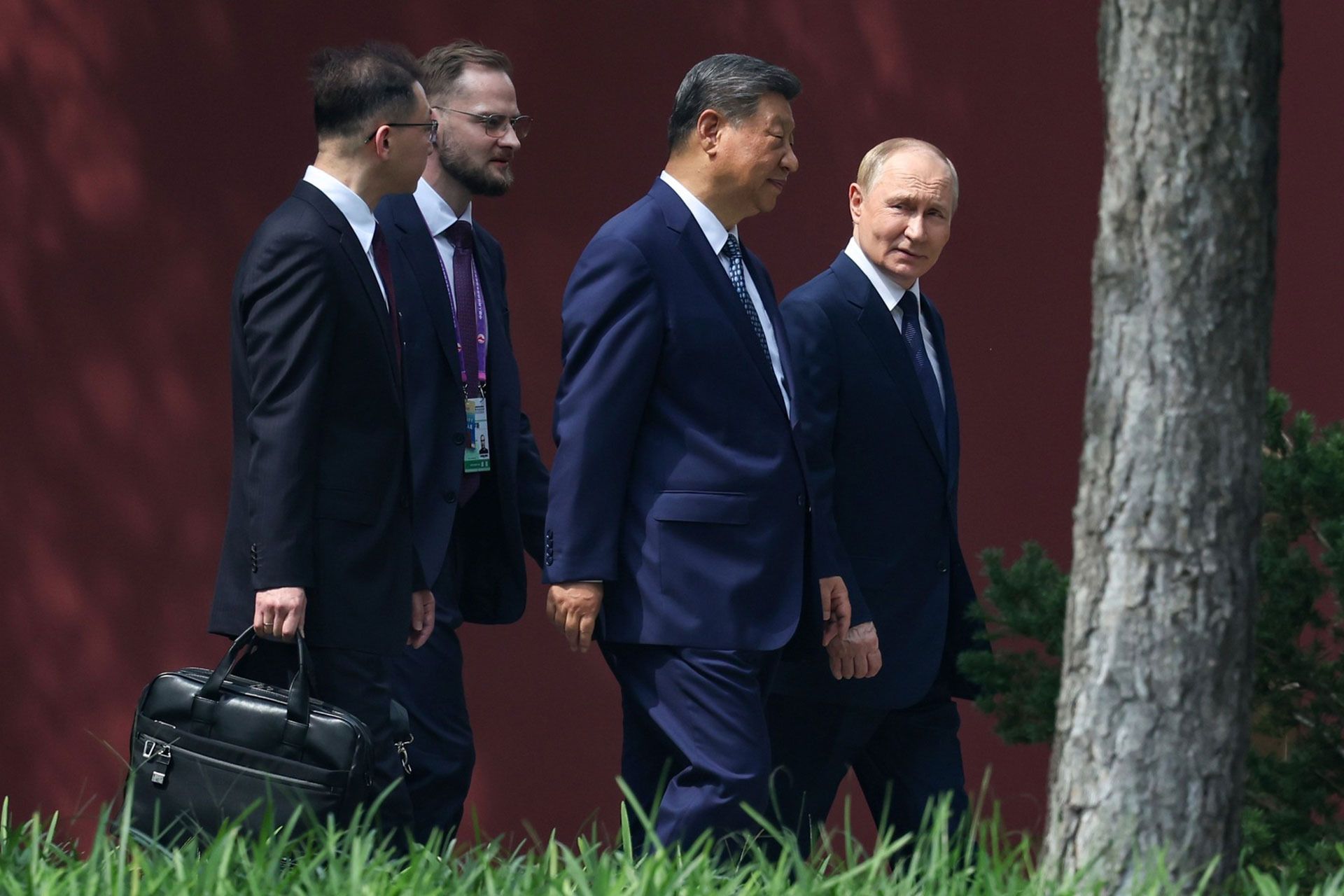
Vladimir Putin and Chinese President Xi Jinping at the Zhongnanhai residence, September 2, 2025
China’s state television recently demanded that Reuters remove a video recording of a conversation between and Xi Jinping, accidentally aired during a military parade in Beijing. The reason for the censorship was unusual: in the footage, the leaders of Russia and China discussed longevity and even immortality. According to leaked fragments, Putin’s translator spoke in Chinese about how “with the development of biotechnology, human organs can be transplanted continuously, and people will be able to become younger and even achieve immortality.” Chairman Xi responded that “there is a chance to live up to 150 years this century.” Later, Putin confirmed to journalists that he indeed discussed with Xi prospects for radically extending human life. The conversation between the two leaders, both aged 72, demonstrated the authoritarian rulers’ interest in the possibilities of radical life extension.
Fear of Death and the Kremlin’s Biotech Projects
According to journalistic investigations, the Russian president began to take an interest in alternative medicine with age and believes in procedures allegedly “prolonging youth.” It is known that on the advice of Defense Minister Sergey Shoigu, Putin takes baths with deer antler extract (so-called “pant baths”) — a folk remedy credited with skin rejuvenation and improved heart function. At the height of the pandemic, visitors were sent into a two-week quarantine before personal meetings. Such care for life extension is combined with a whole system of medical support around Putin: he is almost always accompanied by a team of doctors, including specialists in oncology and hormonal diseases. Any signs of illness are hidden — for example, during back pain attacks, the presidential press service used pre-recorded meeting videos so Putin could disappear for treatment without public attention.
The obsession with longevity is evident not only in personal habits but also at the state level. Russian authorities have invested heavily in anti-aging biotechnologies in recent years. As early as 2024, Putin announced a new national project for the development of health preservation technologies, with one of its priorities explicitly named as combating aging. Approximately 210 billion rubles are planned to be allocated to this program by 2030. The goal is to develop innovations for extending active life expectancy, including regenerative medicine technologies, neurotechnologies, and “ensuring active longevity.”
The unofficial inspirer and lobbyist of anti-aging initiatives is considered to be physicist Mikhail Kovalchuk — a longtime friend of Putin and head of the Kurchatov Institute. Kovalchuk, as is known, is obsessed with the idea of immortality and convinced the president to support related research. He oversees a large genetic research program involving Putin’s eldest daughter, endocrinologist Maria Vorontsova. Vorontsova received multimillion-dollar state grants to study cellular aging mechanisms and ways to extend human life. The fact that Putin’s close associates lead projects searching for the elixir of youth is seen by American authorities as confirmation of the president’s personal interest: when sanctioning Vorontsova, the U.S. Treasury noted that she heads the Kremlin’s genetic research program worth billions, personally overseen by Putin.
Specific projects of the Russian “gerontocracy” sound like science fiction. In June 2024, the Russian Ministry of Health sent an urgent letter to leading institutes requesting proposals for breakthrough developments in combating aging — from methods of immune system correction based on aging markers to organ bioprinting technologies. The state corporation “Rosatom,” which for some reason has overseen biomedicine since the 2010s, declared its goal to learn how to grow blood vessels and livers on 3D printers by 2030. In 2023, Russia’s budget spending on bioprinters increased almost 50-fold compared to 2018. Such haste and generosity are understandable — after all, the stakes are essentially the technology of eternal “replacement parts” for a worn-out body. This is exactly what Putin alluded to in his conversation with Xi Jinping, discussing continuous organ transplantation for immortality.
Russian scientists and startups have indeed achieved some results in the race to extend life.
As early as 2015, the 3D Bioprinting Solutions laboratory was the first in Russia to implant a bioprinted thyroid gland into a mouse. And in 2018, its bioprinter managed to print living tissue in space aboard the ISS — a global precedent bringing organ creation for transplantation closer to reality.
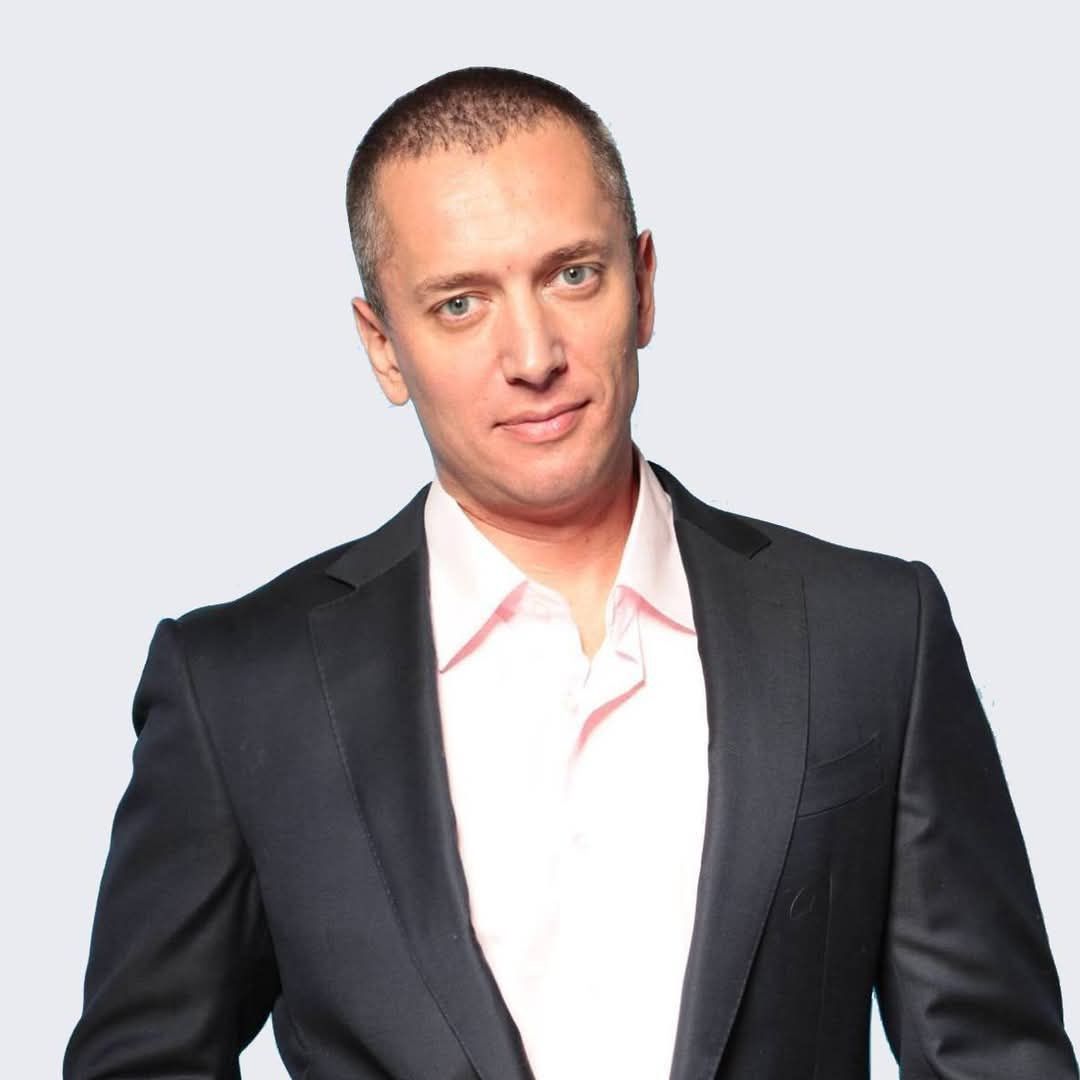
Worldwide, there is the example of tech billionaire Bryan Johnson, who achieved rejuvenation by five years at a cost of two million dollars a year on medical supervision. In Russia, similar ambitions are shown by businessman Dmitry Itskov — a billionaire who made his fortune in internet media and previously worked on image projects for United Russia. In 2011, he founded the futuristic “2045 Initiative”, declaring cybernetic immortality as its goal: transferring human consciousness to an artificial carrier. Within the project, Itskov demonstrated a robot avatar, organized international conferences Global Future 2045, and even sent open letters to billionaires on the Forbes list urging investment in life extension technologies. Itskov is not directly connected to the Kremlin, but his idea reflects the spirit of the age: advanced technologies, including artificial intelligence, are seen as tools that could one day allow a ruler to virtually “digitize” himself and rule forever.
Dreams of an Eternal Reich
The desire to prolong one’s rule at any cost is an inseparable trait of dictators. Adolf Hitler, from his first days in power, imagined his state as unsinkable: boastfully declaring that the Third Reich he created would last a thousand years — thus was born the propaganda term “Thousand-Year Reich.” In fact, the Nazi empire lasted only twelve years.
The Nazi elite sought mystical guarantees of immortality for their regime. SS leader Heinrich Himmler was seriously fascinated by occultism and ancient legends, hoping to find a source of supernatural power for the Führer. In 1940, Himmler traveled to occupied Catalonia and went to the Montserrat monastery — a sacred place surrounded by legends of the Holy Grail. According to legend, the Grail (the cup of Christ) grants the chosen one miraculous power, eternal youth, and invincibility. Himmler believed that by finding the Grail, he would help Germany win the war and grant invulnerability to the Reich. According to testimonies, the SS Reichsführer arrived at Mount Montserrat with maps of caves and hidden passages, searched the monastery surroundings — but found no miraculous cup.
Mysticism permeated many secret Nazi projects. The society “Ahnenerbe” (“Heritage of the Ancestors”), created by Himmler, sent expeditions to Tibet, the Caucasus, and worldwide in search of ancient knowledge, artifacts, and “power spots,” which supposedly could give the Third Reich an advantage and prolong its dominance. Archaeologist-esotericists searched for traces of a proto-Aryan supercivilization, trying to prove that Aryans were destined to rule forever. In the Wewelsburg castle, the SS created an occult center where rituals were held and pseudoscientific theories about the superhuman were developed.
However, no concrete proven projects on the “elixir of immortality” have been recorded among Hitler’s circle.
The Nazi leadership did not disdain more mundane attempts to stay in power longer. While the fronts burned, Hitler maintained himself with a cocktail of powerful drugs administered daily by his personal doctor, Theodor Morell. Amphetamines, hormonal extracts, painkillers, and even narcotic derivatives — the Führer was injected with everything that gave him energy to continue fighting despite his deteriorating health. Essentially, the Nazi dictator became a “pharmaceutical zombie,” trying to postpone the inevitable decline. However, neither occult searches nor miracle drugs saved Hitler: by 1945, his body and the Third Reich simultaneously fell into irreversible decay. The thousand-year ambitions ended with a gunshot in the bunker — instead of physical immortality, Hitler gained only a tragic posthumous fame as a villain, forever etched in history (which is probably the only form of “immortality” available to him).
Eternal Dictatorship
Scientific progress is turning the quest for immortality from myth and thriller plots into a part of real politics. Modern authoritarian leaders openly show interest in life extension technologies, seeing them as a way not only to live longer personally but also to hold power indefinitely. and Xi Jinping are the most prominent examples. Both have effectively made themselves lifetime rulers: Xi removed presidential term limits in China, while Putin rewrote the Russian Constitution to rule at least until 2036. However, an ordinary human term in power now seems insufficient to them. Hence the investments in biomedicine, genetic research, and rejuvenation experiments.
In the mouths of Xi and Putin, the talk of living 150 years is not an abstract fantasy but a quite practical question of political longevity.
Besides biology, digital paths to an “eternal ruler” have also appeared on the horizon. Technological visionaries warn that artificial intelligence could become an “immortal dictator” from which humanity cannot escape. If a machine ever gains full power, it will not die on its own as Stalin or Mao did in the past — its rule could last indefinitely. Theoretically, it is already conceivable to create a neural network trained on data about a leader’s personality, speech, and decisions that can imitate their consciousness. Suppose in 20-30 years technology will be enough to “digitize” Putin — then after biological death, his virtual copy could continue issuing orders, and propaganda would convince the masses that Vladimir Vladimirovich is still somewhere at the top, just having become “artificial intelligence.”
Of course, technologies are not yet capable of fully replacing the charisma and intellect of a real person. Even the richest and most powerful are mortal. But what seemed like science fiction in the 20th century (cryogenically frozen “leaders,” endless organ transplants, supercomputers making state decisions) is gradually taking shape as a scientific project in the 21st century. Authoritarian immortality is now not only a metaphor but also a goal that commands significant resources.
Dictators dream of circumventing the natural course of history — through sacred relics, like the Nazis, or through modern laboratories, like the Kremlin. However, humans are mortal, and perhaps this truth remains the last barrier on the path to absolute power. Attempts by Putin, Xi, and their ilk to remove this barrier are both fascinating and frightening. On the one hand, they may spur medical advances against cancer and aging, benefiting all humanity. On the other hand, success in this area risks eternal tyranny, where a ruler literally outlives their own people. Then the tales of the “Thousand-Year Reich” will become reality.
The demand by Chinese censors to remove the dialogue about immortality reveals a fear that such conversations expose the true ambitions of the world’s powerful. While some leaders discuss how to live to 150, hundreds of thousands die in wars and repressions under those same regimes. Perhaps our generation will witness those in power truly trying not to die. And then humanity will face a dilemma: to conquer aging — and thereby grant eternal life not only to good but also to evil.
If you enjoyed this article, consider making a donation — one-time or, even better, monthly. Your support helps us motivate our authors and become better with every article.
Our organization is recognized by the Internal Revenue Service (IRS) as a 501(c)(3) tax-exempt, charitable organization, which means that all contributions made to us are tax-deductible to the fullest extent permitted by U.S. law. Individuals may generally deduct charitable contributions of up to 60% of their Adjusted Gross Income (AGI) for cash donations made to qualifying 501(c)(3) organizations. For donations of appreciated assets (such as stocks or other long-term capital assets), the deduction is typically limited to 30% of AGI, based on the fair market value of the asset. C-corporations may deduct charitable contributions of up to 10% of their taxable income for donations made to eligible charitable organizations.
By submitting a donation, you confirm that you have read and accept the following documents: Privacy Policy and User Agreement, and also give consent to the processing of your personal data.
If you would like to unsubscribe from a monthly donation, please email us at: [email protected]