Surely everyone interested in the country's past has at least once wondered: could it have become different? And if so, under what circumstances? One of the turning points — the events of November 1920 in Crimea. Those days saw the fall of the last anti-Bolshevik regime in the European part of the former empire, the Government of South Russia under Lieutenant General Pyotr Wrangel.
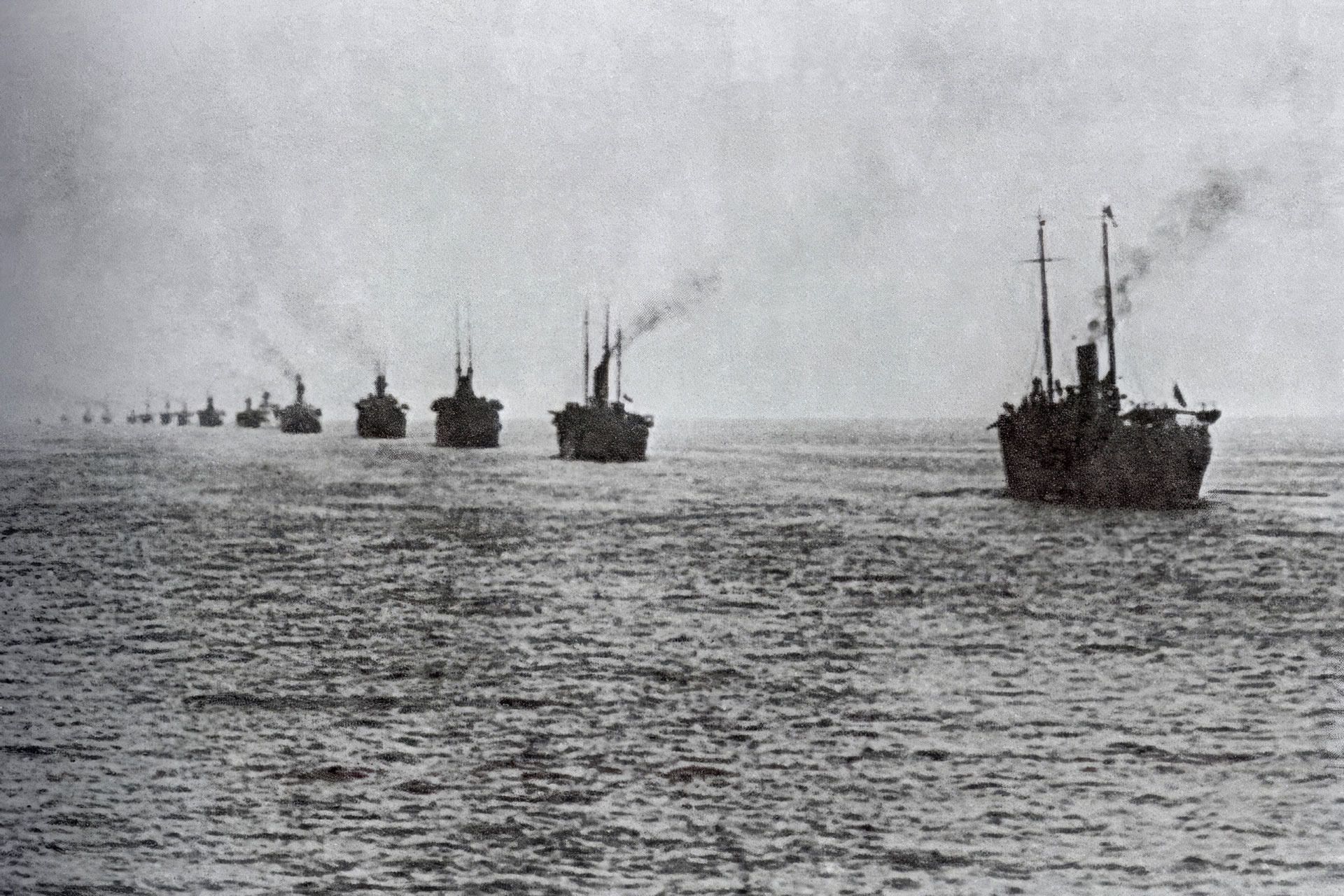
Wrangel’s ships leaving Crimea for Turkey, November 1920. Photo: Wikipedia / kadet.ru
Having lost the Perekop-Chongar battle to the advancing Reds, the “Black Baron” at the head of the White Army did not tempt fate and went into exile with his supporters. What lay behind this decision — a military defeat or the political collapse of Wrangel’s project? Why did the general not save the “reset” of the White movement, which tried to turn towards the peoples of Russia? Finally, could things have turned out differently?
Time to Say Goodbye
In mid-November 1920, panic gripped the cities of Crimea. Just a couple of weeks earlier, the common folk held the thought that the war was happening somewhere far away, in the Dnieper steppes, and the peninsula remained a deep rear for Wrangel’s army. Alas, within days, Blessed Tavrida shared the fate of other once-reliable strongholds of the White movement — the Urals, Siberia, and the Don with Kuban. The fall of the front was followed by the loss of the rear.
November 11, 1920 — October 29 old style(the Whites in South Russia deliberately used Julian dates, not recognizing the Bolshevik calendar reform) — the Red Army stormed the peninsula. On the same day, Baron Wrangel ordered the evacuation of troops and “all who shared with the army its crucifixion path, families of servicemen, civil officials with their families, and individuals who might face danger if the enemy arrived.”
Those wishing to emigrate wait for the steamer on the Sevastopol embankment, November 1920. Photo: Wikipedia / MBlinoff
By general consensus of eyewitnesses, the Crimean evacuation was relatively well organized. It was far more orderly than the memorable flight from Novorossiysk in March 1920. Then there was truly a “save yourself if you can” scenario: people fought hand-to-hand for places on ships, and whole regiments of soldiers were left on the shore. Yes, there was disorder in Crimea too; for example, a division that broke through to Feodosia might find the ships waiting in Kerch. But the command fulfilled the main task:
all 146,000 military and civilians who wanted to leave the Bolsheviks with Wrangel left the peninsula. The ships set course for the part of Turkey occupied by the Entente.
Of course, participants of the “Russian Exodus” at that moment hardly thought about the organizational genius of their commander-in-chief. Most White Guards and their sympathizers realized the war was lost, there was no place for them in the new Soviet Russia, and ahead lay only uncertainty. Therefore, diaries and memoirs of various emigrants reveal a uniformly grim tone. Characteristic are the lines of a certain N.I.K.
October 30 [November 12]. The city [Sevastopol] is unrecognizable. Main streets are literally clogged with people; on Nakhimov and Ekaterininskaya streets, carts loaded with belongings and goods, accompanied by armed soldiers, stretch. The evacuation order came like a thunderbolt out of a clear sky. Everyone walks with worried faces, hurrying to the piers to board. On Nakhimov Street, across the sidewalk lies a bloodied corpse, a crowd around it. “Who was killed? Why?” No one knows...
Similar images and tones appear in other testimonies about the Crimean evacuation. Abandoned horses, overturned cars, looted warehouses, bonfires of documents, crying children, screaming women… However, even against such a mournful background, there was room for oddities. Major General Anton Turkul — one of Wrangel’s best commanders, leader of the elite Drozdov Division — had his own driver confess aboard the steamer that he would not follow his chief into exile. Under the Soviets, he said, he was safe because he himself was a Bolshevik.
Crimean evacuation in the painting “White Russia. Exodus” by Dmitry Belyukin (1992). Image: artlib.ru
“This confession did not surprise me much: what’s there to be surprised about when everything in Russia has shifted and mixed,” reflected Turkul later in exile. Then, in 1920 in Crimea, he thanked the driver for his service and ordered him to be put ashore. Two Russias said goodbye forever.
“Such an Army Could Not Build Russia”
Crimea entered history as the last stronghold of the White Guards in the European part of the former Russian Empire. This was not due to any deep reasons — circumstances simply unfolded that way. The Civil War gave the peninsula an especially complicated story.
From November 1917 to June 1919, power here changed hands seven times. Crimea experienced two Soviet republics, rule by Crimean Tatar nationalists, German occupation, and a brief first arrival of the White Guards. In summer 1919, a naval landing led by Major General Yakov Slashchev restored White control over the territory of the Armed Forces of South Russia. The Bolshevik leadership fled after minor clashes.
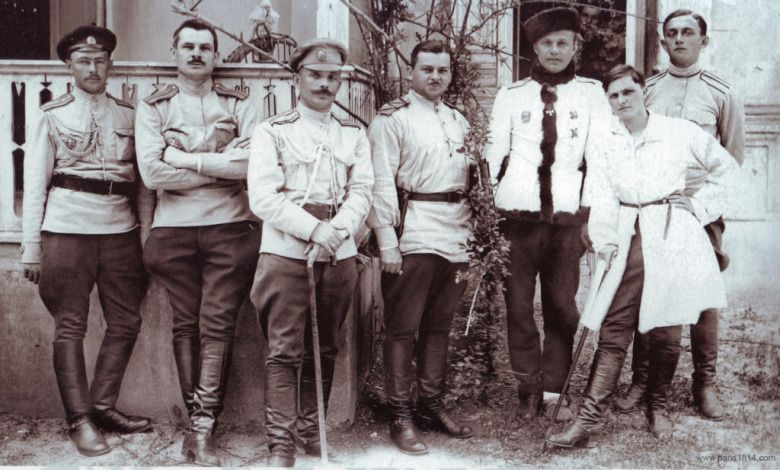
Yakov Slashchev (third from right) and his staff officers. Second from right — adjutant and future wife of the general Nina Nechvolodova, spring 1920. Photo: Wikipedia / unknown author
In January-March 1920, Slashchev again made his mark in Crimean history. This time, in a series of defensive battles, he held the peninsula against the Reds breaking through from the north. The White general, with only one corps, held back a superior Red grouping. Slashchev’s victories on the isolated Crimean front were all the more valuable given the overall disastrous winter of 1920 for the White Guards.
After the failed forced advance on Moscow — the fixated idea of then Commander-in-Chief Lieutenant General Anton Denikin — the Armed Forces of South Russia collapsed. Under Red pressure, troops rapidly retreated south, losing even the Don and Kuban. On March 25-26, 1920, the Whites’ misfortunes culminated in a panicked evacuation from Novorossiysk. Fleeing to Crimea at all costs, they left thousands of comrades in arms, herds of cavalry horses, and mountains of military equipment to the Bolsheviks.
The Novorossiysk disaster undermined Denikin’s prestige among the troops, and the commander did not cling to his post. On April 3-4, 1920, he convened a military council of the most authoritative White generals to decide on his successor. After brief debates, the officers recommended Anton Ivanovich appoint Lieutenant General Pyotr Wrangel — not only absent from Crimea at the time but expelled by Denikin into exile just six weeks earlier.
Ironically, just as Crimea became “White” only near the end of the events, so did its future ruler join the White Guards during the war. Having waited for a long time, Wrangel joined Denikin’s army only in August 1918, when it had already become a real military-political force. Thanks to his completed General Staff Academy education, merits in World War I, and undeniable talents, Pyotr Nikolayevich quickly rose to leading roles in the anti-Bolshevik camp. On June 30, 1919, the pinnacle of his success was the capture of the considered impregnable Tsaritsyn (Volgograd).
Anton Denikin and Pyotr Wrangel (right in the foreground, in light and black uniforms respectively) at the parade in captured Tsaritsyn, July 1919. Photo: Wikipedia / unknown author
But after the Volga victory, a black cat ran between Wrangel and Denikin. The subordinate from an ancient Ossetian family publicly criticized his ill-bred commander-in-chief: for the terrible organization of the rear and for abandoning the campaign deep into the Volga region. Instead of uniting with Admiral Alexander Kolchak’s armies, the head of the Armed Forces of South Russia imprudently preferred an adventurous march on Moscow. The result was a complete failure, at the peak of which the two generals exchanged harsh letters, and on February 21, 1920, Denikin dismissed Wrangel. Just a month and a half later, the defeated commander had to effectively appoint his opponent as his successor.
An army raised on lawlessness, robbery, and drunkenness, led by commanders whose example corrupted both themselves and the troops — such an army could not create Russia. Without an organized rear, without preparing a single fortified line or resistance node in the rear, and retreating through areas where the population learned to hate it, the Volunteer Army rolled back uncontrollably.
— from Wrangel’s accusations in open correspondence with Denikin, February 1920
The situation looked strange even for the other side. Wrangel seemed to have won the battle with his disliked commander but took his place at the moment when the White movement had almost no chance of turning the war around — of all former conquests, only Crimea remained.
The White Phoenix
Wrangel’s appointment as commander-in-chief was helped by a remarkable episode that unfolded precisely on the Black Sea peninsula. On February 3, 1920, infantry captain Nikolai Orlov staged a mutiny in Yalta, declaring war on negligent commanders and rear embezzlers. His “march of justice” was quickly suppressed by General Slashchev, but in his manifesto, Orlov demanded to put “our young leader” Pyotr Wrangel at the head of the remnants of the Armed Forces of South Russia. Apparently, this impressed other generals; after all, who else but Denikin’s fiercest critic should correct his mistakes?
Orlov’s mutiny was indicative of the chaos reigning in Denikin’s rear. Later, almost all White veteran front-line soldiers bitterly recalled how dandyish officers, assigned to unknown departments, paraded through their rear areas, while warehouses overflowed with ammunition desperately needed at the front. Some authors reluctantly acknowledged the lawlessness of the Armed Forces of South Russia’s counterintelligence, which under the pretext of fighting Bolsheviks committed robberies and extortion.
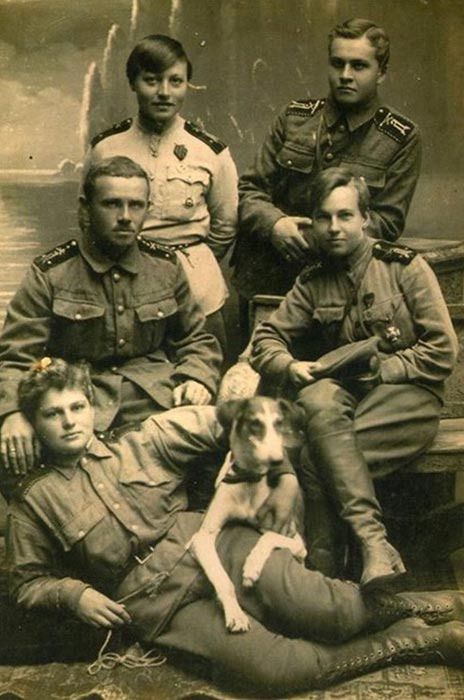
Junior officers of the Drozdov Division in Crimea, autumn 1920. As seen, alongside men, women also served. Photo: Wikipedia / unknown author
Wrangel tried to put an end to this anarchy. The Baron hastily reorganized the shattered and demoralized remnants of the troops into a single 40,000-strong army with the simple name Russian. The new commander-in-chief did not allow many notorious commanders with bad reputations in. Those caught looting, which had become rampant under Denikin, were now executed after brief trials. The new command harshly suppressed Jewish pogroms, also favored by the White Guards from the south.
In Sevastopol, I had to shoot two Drozdov soldiers [servicemen of the elite division named after the fallen General Mikhail Drozdovsky]. For looting. Two soldiers of the 6th company, good soldiers, stole a lady’s gold watch with a chain and a medallion. [...] I remember how the gray-haired lady cried, tore her black veil to shreds, begging to spare the “little soldiers.” Too late. The soldiers were shot.
— Anton Turkul, White general
The army’s reorganization allowed Wrangel’s forces to rise from the ashes and strike unexpected blows against the Reds, who were very much entangled in the war with Poland. As early as spring 1920, the Whites successfully landed in Northern Tavria. On June 6, they launched a full offensive beyond the peninsula. Near Melitopol, General Fyodor Abramov’s infantry corps, with air support, destroyed an entire cavalry group of the Red Army — the seemingly defeated troops confidently advanced north. By September 1920, the Whites had successively taken Alexandrovsk (Zaporizhia), Volnovakha, Mariupol, and several smaller towns. They controlled a large territory in southern modern Ukraine.
Soviet propaganda poster dedicated to the threat of Wrangel by N.D. Kochergin, 1920. Image: artchive.ru
Despite all setbacks on the Polish front, the Bolsheviks could not ignore the victories of the Crimean generals. On September 21, the Reds reluctantly dedicated a separate Southern Front to Wrangel. Its commander Mikhail Frunze — a professional revolutionary who revealed his military talent during the war — was supposed to stop enemy troops, drive them back into Crimea, and then cleanse their lair. The question inevitably arose: how politically stable would Wrangel’s “state” be compared to Denikin’s anarchy?
Master for the Russian Man
Wrangel in his policy rejected two questionable concepts that had previously ruined the governments of Denikin and Kolchak. These were “one indivisible Russia” and “non-resolution.” The first implied that the fallen empire must be restored within its original borders strictly on a unitary basis. Therefore, any movements for independence or autonomy of individual peoples should appear no better than the Bolsheviks to a fighter for “one indivisible” Russia.
[Under Denikin] we fought the Bolsheviks, fought Ukrainians, Georgia, Azerbaijan, and almost started fighting the Cossacks… In the end, proclaiming one great and indivisible Russia, we ended up dividing all anti-Bolshevik Russian forces and splitting all Russia into a number of hostile formations.
- Pyotr Wrangel
The Whites were no less harmed by “non-resolution” — the conscious refusal of any political reforms until the victory over the Soviets and the convocation of the Constituent Assembly. This approach hindered the White Guards from winning the war because it deprived them of mass support. Peasants, the key social group in Russia at the time, viewed the anti-Bolshevik forces as “the army of masters” and therefore sabotaged any help to the White armies, from mobilization to grain supplies. Strangely, the hereditary aristocrat and landowner Wrangel understood this better than the landless noble Kolchak or the serf’s grandson Denikin.
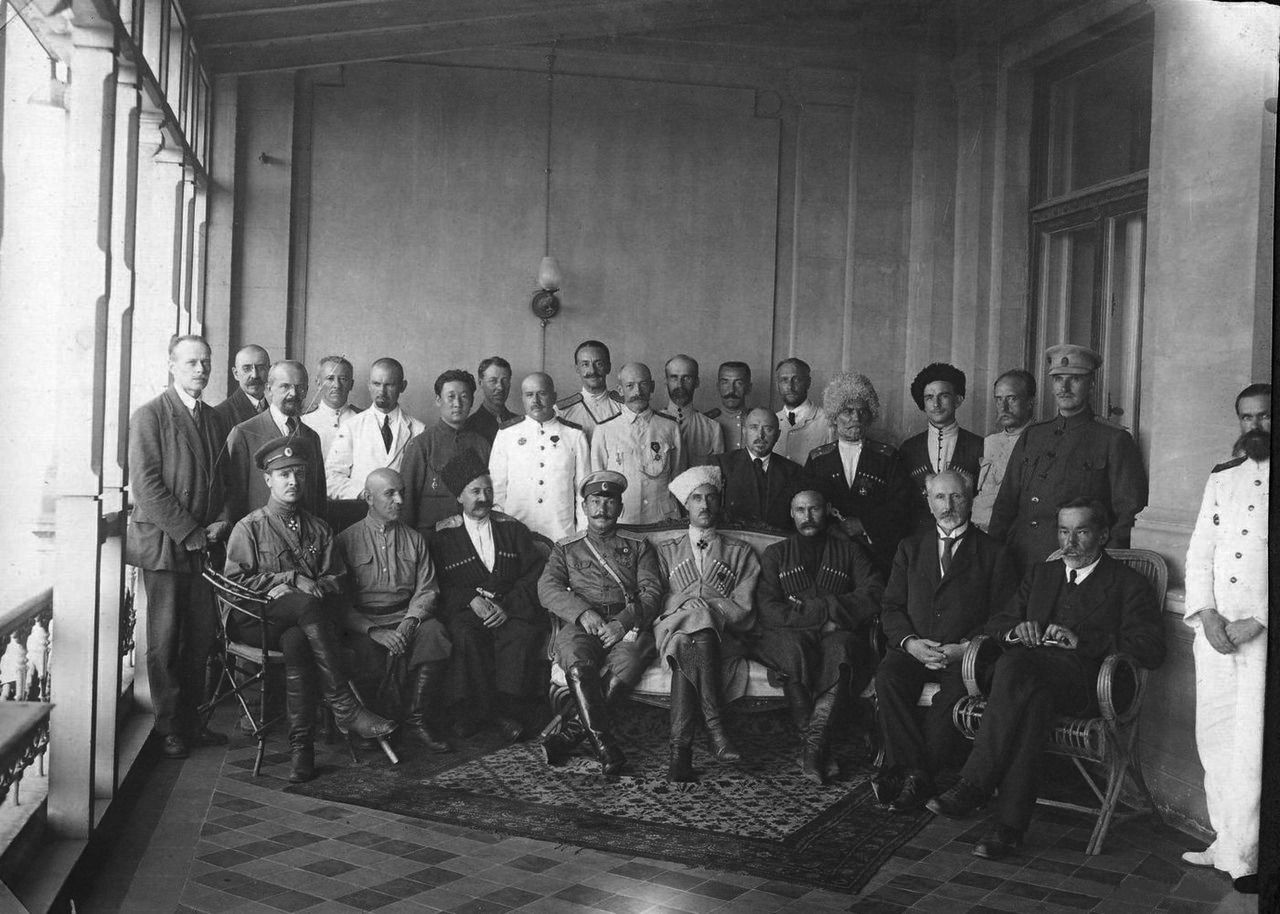
Wrangel (sitting in the center) with members of his government. Far left is Chief of Staff of the Russian Army Lieutenant General Pyotr Shatilov, second from right is government chairman Alexander Krivoshein. Photo: Wikipedia / unknown author
In summer 1920, Wrangel’s authorities tried to solve the old problem. The Sevastopol government of Alexander Krivoshein adopted laws on agrarian reform and peasant self-government. It was assumed that farmers could own plots as private property by redemption, including lands seized during the revolution. At the same time, peasants became independent in resolving local issues. The state took on the role of mediator in calculations between old and new owners.
The project looked generally attractive to the potential audience. However, Krivoshein and his government needed enough time to implement the reform in practice, and his civilian politicians could ensure military victories only with obvious inequality of forces against the enemy. Now we can only guess what the outcome of the Civil War would have been if the Whites had passed such laws not in the third but in the first year of the conflict.
At the same time, Wrangel tried to build bridges with small nations. He realized that the independence of Poland and Finland was already a fait accompli. He urged representatives of other peoples to join the future renewed Russia on a federal basis. This included Cossack regions, the North Caucasus highlanders, and Ukraine.
The Ukrainian question especially concerned Wrangel. In his Russian-named army, ethnic Ukrainians made up to half of the fighters. Bolshevik agents in reports to Moscow claimed that even in the elite Kornilov Division, up to half of the personnel were from Kharkiv, Poltava, and neighboring provinces. It was claimed that many of them had previously fought for the self-proclaimed UPR, the Ukrainian People’s Republic.
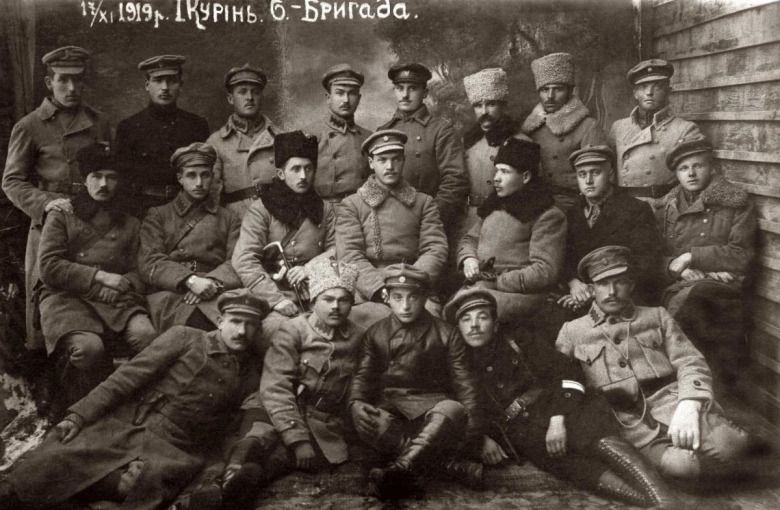
Soldiers of the Ukrainian Galician Army after joining the Russian White Guards, late 1919. Photo: Wikipedia / unknown author
Wrangel initially banned chauvinistic toponyms in his state such as “Little Russia” and “Southwestern Krai,” so beloved by the ideologically Ukrainianophobic Denikin. The country was now supposed to be called only Ukraine, and its inhabitants exclusively Ukrainians. In summer 1920, at the peak of their military successes, the Whites on the left bank of the Dnieper actively cooperated with local insurgents fighting the Bolsheviks, who were in some way successors to the UPR. The exception was Nestor Makhno’s anarchists: they ideologically hated the White Guards and refused any cooperation. The Makhnovists demonstratively dealt with Crimean negotiators and renewed their military alliance with the Red Army.
Wrangel in summer 1920 confirmed the official status of the Ukrainian language in controlled territories and recognized the half-vanished UPR with a hint at its entry into the “beautiful federation of the future.” But, as with the peasant reform, most contemporaries perceived these White steps as forced, insincere, and belated. Many were unsettled even in May 1920 by Wrangel’s programmatic manifesto “What We Fight For.” The text ended with a strange line: “That the Russian people themselves would choose their MASTER.” Some saw in it a call to restore the monarchy, which was far from universally desired, others a hint that the Baron wanted to be the “MASTER,” i.e., dictator, personally.
Too Little Chemistry
Wrangel’s government was distrusted not only by peasants and various nationalists. Its prospects were also doubted by foreign partners in the Entente — Great Britain and France. After the failure of the Moscow campaign, the British directly urged the White Guards to negotiate with the Soviets and capitulate honorably.
The British government forbade the delivery of military cargo to Crimea on its ships. When we in Bulgaria with great difficulty purchased airplanes for the army, the British control commission destroyed them, allegedly due to a misunderstanding.
- Vladimir Kharzhevsky, White general
The French position looked no better for the Russian Whites. Only in August 1920 did Paris officially recognize the Sevastopol government and agree to provide military aid to partners. The British left-wing newspaper Daily Herald claimed that the guarantee of French goodwill was a secret treaty on onerous terms: Wrangel’s recognition of Tsarist Russia’s old debts, payment of interest on new loans, and concession transfers to the ally after a hypothetical victory over the Bolsheviks. It is still unclear whether this document existed in reality and, if so, what points it contained.
Be that as it may, White generals, to regain their former prestige, needed new theaters of combat. Great potential lay in Kuban, where after the Soviet “liberation” in spring 1920, residents quickly experienced all the delights of the new order: grain requisition, searches for everyone who fought against the Red Army, and harsh tyranny of revolutionary committees. The remnants of White detachments that failed to evacuate were led by Major General Mikhail Fostikov. The officer pompously called his troops the “Army of Russia’s Revival,” established contact with Crimea, and began a partisan war against the Soviets.
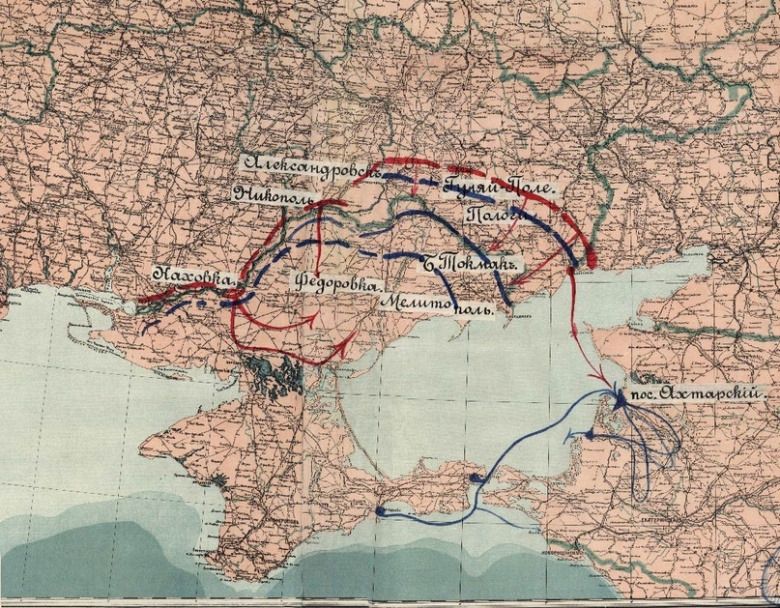
Maximum advance of Wrangel’s forces in Ukraine summer-autumn 1920. Map: Wikipedia / unknown author
In summer 1920, Fostikov achieved a number of local victories; his “army” grew to about 5,000 fighters. Local residents sympathized with the White partisans but did not join their ranks en masse — the silent majority considered the Communists’ victory in the war a done deal. On August 14, Wrangel tried to encourage the Kuban Cossacks by sending a landing force of fellow Cossacks under charismatic General Sergey Ulagay. However, the Reds quickly concentrated large forces at the landing site, and after three weeks of fighting, Ulagay had to return to Crimea. Soon the partisans of Fostikov also retreated there — a large-scale uprising in Kuban never happened.
Speaking of Ulagay’s landing, one characteristic detail cannot be overlooked. In the heat of battle, Chief of Staff of the White group, Lieutenant General Daniil Dratsenko, requested immediate replacement from the supreme command… claiming personality clashes with Ulagay, that he was not allowed to work, and asking to return to Crimea. This shocking story for any army demonstrated once again that the White Guards’ “chemistry” was still poor.
Drawing by Wrangel officer B. Pavlov depicting French “Nieuports” serving alongside their fellow pilots, June 1920. Image: Wikipedia
Also indicative is the arc of Yakov Slashchev, who saved Crimea in winter 1920. The hero of past battles caught a star and became addicted to cocaine; initially, he took it as a painkiller for numerous wounds. Increased ambitions led to conflicts between Slashchev and other officers, and Wrangel preferred to send the restless general into an exclusively honorable retirement. However, this maneuver did not stop Yakov Alexandrovich’s degeneration. In 1921, the officer emigrated to the RSFSR, where he joined the Bolshevik service.
No Strength Left to Hold On
The initial successes of Wrangel’s generals were largely explained by the fact that the Communists were distracted by a heavy war against Poland in southern Ukraine. But in October 1920, the Bolsheviks recognized defeat and reconciled with Warsaw, which refused to ally with the White Guards. This decision allowed the Red command to pay more attention to the Southern front.
On October 14, 1920, the Red 2nd Cavalry Army defeated Wrangel’s forces at the Alexandronikopol battle. At the same time, the Whites failed to storm Kakhovka. Even the mass use of tanks — by Civil War standards — did not help. The attackers unsuccessfully deployed a dozen remaining British machines, at least five of which reached Kakhovka’s defenders undamaged.
British tank of the Whites captured by Red Army soldiers near Kakhovka, October 14, 1920. Photo: Wikipedia / Rumlin
The Whites’ plans to advance deep into Right-Bank Ukraine collapsed. In the realities of the highly mobile Civil War, the failure of one side’s offensive almost guaranteed the enemy’s counteroffensive. This time was no exception. On October 28, the reinforced 140,000-strong grouping under Commander Frunze began pushing the enemy south. By November, the retreating forces had lost all their mainland gains. They retreated to Crimea across the Perekop Isthmus and Chongar bridges, preparing to defend the peninsula.
The mood [in November 1920] was generally gloomy. Most were silent, cursing the cramped conditions, cold, and lack of food. Some shook their heads: one or two battles and our forces will yield to the enemy’s onslaught. Others believed the Reds would not storm Crimea in a rush, that our struggle might become protracted.
— from the diary of Georgy Orlov, staff captain of the Russian army
The pessimists in the cited debate were right. On November 8-9, Frunze’s troops and their Makhnovist allies broke through the enemy’s defense at Perekop Isthmus and advanced deep into Crimea. This was due to the attackers’ unconventional tactics (primarily the unexpected crossing of the shallow Syvash Bay), their fourfold numerical superiority, and the defenders’ morale collapse. Immediately after the hurried retreat from Northern Tavria, many were left to freeze on poorly equipped positions — many lost the will to fight to the death.
Red cavalry at Perekop, painting by N.S. Samokish, 1920s. Image: Wikipedia
The victors themselves later emphasized the intangible factors of the Perekop battle. Vladimir Triandafillov, a former staff captain of the Tsarist army serving on Frunze’s staff, wrote bluntly: “Only the general breaking of the enemy’s will can explain their clearing of the Perekop positions, not our tactical success.”
His Final Bow
After the capture of Perekop, the fall of the White government in Crimea became inevitable. Receiving bad news, Wrangel, as mentioned at the beginning of the article, gave the evacuation order. The Baron initially kept in mind the sad experience of Novorossiysk and timely ordered the fleet to prepare for such a scenario.
Wrangel descending the Grafskaya pier in Sevastopol for the last time, November 1920. Image: Wikipedia
Speaking of the White Guards’ departure from the peninsula, one cannot ignore the common accusation against Wrangel. In recent years, it has often been claimed that the Baron criminally ignored the Bolsheviks’ offer of honorable surrender and kept it from his subordinates. His arrogance allegedly provoked the enemy to mass repressions in Crimea. But does this myth correspond to reality?
First, the idea of honorable surrender came not from the political leadership of Soviet Russia but personally from Frunze. He indeed proposed that the enemy lay down arms in exchange for full amnesty and the right to emigrate for all willing. But the commander acted clearly on his own initiative — he had done similarly before in campaigns in Siberia and Central Asia. Vladimir Lenin, however, did not appreciate(“Extremely surprised by the excessive leniency of the terms”). Ilyich stated plainly that free exit for the White Guards was out of the question. There were no guarantees that other provisions would not suffer the same fate.
If the enemy accepts [your terms], then the fleet must be realistically seized and not a single ship allowed to escape. If the enemy does not accept these terms, then, in my opinion, they should not be repeated and the enemy must be dealt with mercilessly.
— from Lenin’s telegram to Frunze, November 12, 1920
Second, the very formulation that Wrangel should be responsible for Red actions and the Crimean residents for the White general’s actions seems absurd. No, the Cheka in 1920-1921 cleared the recaptured peninsula strictly according to orders from its superiors. By the lowest estimates, the Red terror in Crimea cost at least 15-20 thousand lives — both those actually linked to Wrangel’s forces and those who suffered for their non-proletarian social origin. Incidentally, this is not several times but orders of magnitude more than similar White government actions on the peninsula in 1919-1920 (about 300 executions there).
So if Wrangel had made Frunze’s text public to his people, the statistics of the Cheka’s victims in Crimea would likely have grown even more — surely many Whites would have believed the Reds’ promises and waited for their own execution. As it seems now, this was the general’s limit — to evacuate about 150,000 unwilling to live under Bolshevism. Overthrowing the hated regime was beyond the Baron’s chances: his predecessors had spent too much.
Throughout 1920, Wrangel’s troops had to fight as if on credit — hoping that Kuban and Ukraine would soon rise, allies would start helping properly, and the Bolsheviks would tear themselves apart. But time passed, miracles did not happen, and faith in the Crimean project among its defenders gradually faded. Therefore, the sad finale of Wrangel’s epic seems deeply inevitable.
And yet, in closing, one cannot help but be sarcastic: the fates of most of the defeated at Kakhovka and Perekop turned out better than many of their victors. Almost all Wrangel’s generals — Shatilov, Turkul, Fostikov, and Kharzhevsky — started new lives from scratch in exile and died in old age. Meanwhile, heroic Red commanders either succumbed to an epidemic of mysterious deaths in the Red Army in the 1920s (Slashchev, who defected, was not spared), or the Stalinist Great Terror.
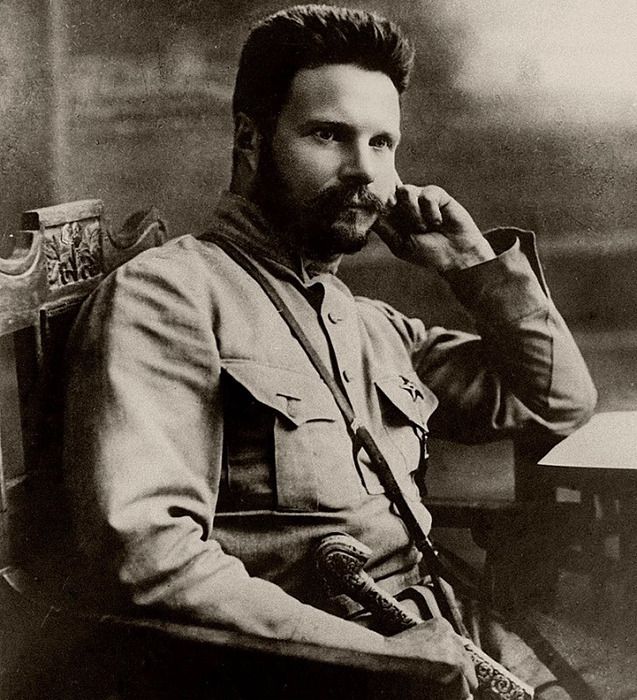
Mikhail Frunze. The victor at Perekop died under mysterious circumstances in 1925 — officially from blood poisoning during a planned surgery. Wrangel outlived him by only three years — officially died of tuberculosis, but some authors also attribute this death to Soviet special services. Image: Wikipedia
If you enjoyed this article, consider making a donation — one-time or, even better, monthly. Your support helps us motivate our authors and become better with every article.
Our organization is recognized by the Internal Revenue Service (IRS) as a 501(c)(3) tax-exempt, charitable organization, which means that all contributions made to us are tax-deductible to the fullest extent permitted by U.S. law. Individuals may generally deduct charitable contributions of up to 60% of their Adjusted Gross Income (AGI) for cash donations made to qualifying 501(c)(3) organizations. For donations of appreciated assets (such as stocks or other long-term capital assets), the deduction is typically limited to 30% of AGI, based on the fair market value of the asset. C-corporations may deduct charitable contributions of up to 10% of their taxable income for donations made to eligible charitable organizations.
By submitting a donation, you confirm that you have read and accept the following documents: Privacy Policy and User Agreement, and also give consent to the processing of your personal data.
If you would like to unsubscribe from a monthly donation, please email us at: [email protected]