After the victory of the far right in the parliamentary elections in Saxony-Anhalt, special representative of the President of the Russian Federation Kirill Dmitriev wrote on his X: “I look forward to jointly building a great future together with ‘AfD’ — Germany’s most popular party”. Russian authorities have indeed long supported this party, and elections in eastern Germany may affect the result of the federal elections to the Bundestag. However, not necessarily in favor of AfD.
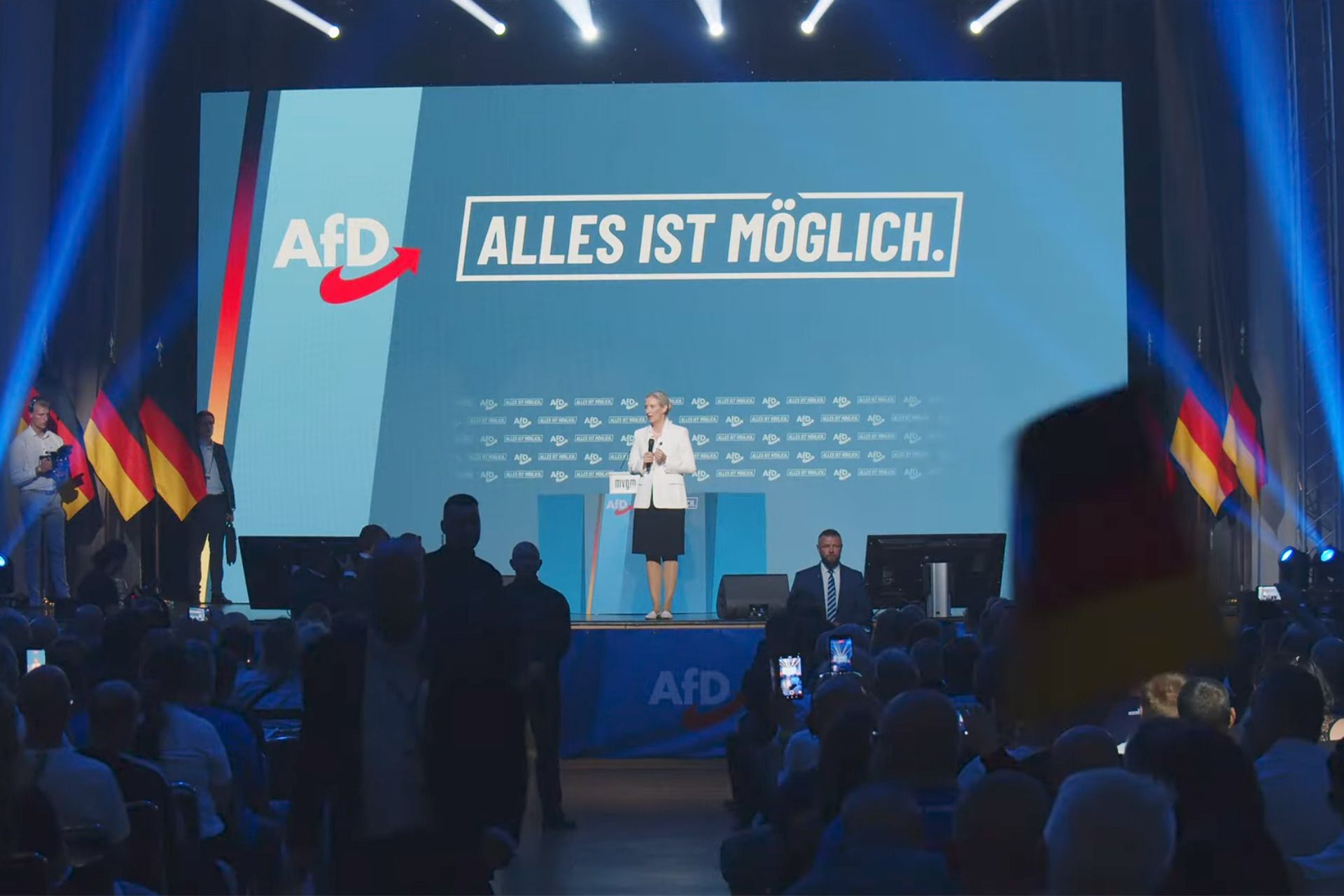
One of the leaders of “Alternative for Germany”, Alice Weidel, against the backdrop of the slogan “Everything is possible”. Frame from video: YouTube / AfD TV
The result of the latest elections to the Landtag (state parliament) of Saxony-Anhalt, where the far-right pro-Moscow “Alternative for Germany” (AfD) won with a resounding 43.8%, had the effect of a bombshell. The party more than doubled its representation compared with the analogous elections in 2021. Back then it won 20.8% of the vote.
So what happened? Let’s figure it out.
***
The state of Saxony-Anhalt, located in central Germany, is the smallest by population of all 12 federal states in the country: 2.1 million people (for comparison: around 18 million people live in the westernmost and most populous state, North Rhine-Westphalia).
At the same time, economically Saxony-Anhalt is considered the poorest state of the Federal Republic. If North Rhine-Westphalia’s GDP in 2024 was 789.7 billion euros, Saxony-Anhalt’s GDP for the same period was 79.51 billion euros.
But in per capita GDP terms, North Rhine-Westphalia stands at about 44,000 euros a year, while Saxony-Anhalt is around 38,000 euros. Less, of course, but not catastrophically so, and it does not explain the explosive rise in the popularity of the far-right “Alternative”.
AfD emerged only 13 years ago and rapidly went from an absolute marginal force to a party that won 43.8% in the state elections.
It would seem that after World War II Germany did everything possible to destroy fascism in the minds of its citizens. For decades, the entire educational system and cultural policy, both in the FRG and in the GDR, were aimed at this.
Children and adults alike (for example, migrants in integration courses) in Germany are still told about the horrors of fascism and the murder of millions of Jews in those years.
The entire legal system is also directed against the revival of fascism here. In Germany, public justification of the crimes of the Hitler regime carries real prison terms. The politics of guilt over World War II has not gone away.
But fascism grows like weeds through asphalt.
There are several problems here. One of them is that fascism does not begin with gas chambers. It ends with them. And it begins with a feeling of discomfort that the average person experiences for one reason or another. With thoughts that today everything is not as good as one would like. But wasn’t it wonderful once upon a time! Parents told them about it, friends told them, they read about it somewhere. Then comes the thought: how wonderful it would be to bring back the beautiful and great distant past.
In other words, fascism begins with the ordinary myth of a “golden age”. How good it would be to return to the good old days, when the trees were taller, the grass greener, and the sky bluer! Of course, we can do that, but enemies are standing in our way. They are чужие, not ours. They have come here and are breaking the familiar and proper way of our life, creating problems that would not exist if it weren’t for them.
There are also external enemies, with whom the internal ones are of course connected. They weave networks with the sole purpose of enslaving us, taking away what we own. They take our jobs, parasitize on our kindness...
A certain part of the population in almost any country is always susceptible to these mythologemes. These people are the backbone of the electorate of right-conservative parties. And those parties always exploit such moods.
Co-chair of the “Alternative for Germany” party Alice Weidel. Frame from video: YouTube / AfD TV
It should not be forgotten that from a political science perspective, fascism is right-wing conservatism. In a situation of relative stability, people with such views look like amusing reactionaries. But at some point these people radicalize, and old-fashioned right-wing conservatism, seasoned with revanchism, post-imperial complexes, and xenophobia, turns into fascism.
For such moods to spread among broad layers of the population, a catalyst, a push, is needed.
This can be a sharp deterioration in the economic situation, a massive influx of migrants, or even just panic rumors and moods carefully spread by someone.
At that moment many demand simple and clear answers to the question of why this happened.
And right-wing politicians hand citizens the answers on a silver platter: the Jews are to blame, migrants are to blame, internal and external enemies are to blame.
What among all this is present in modern Germany?
***
In socio-economic terms, the FRG has been and remains one of the most prosperous countries in the world.
The average salary in the country for the first half of 2026 was 5,558 euros: that is five times more than, for example, in Russia. The minimum wage in Germany for 2026 is 2,400 euros. The actual amount after taxes is from 1,700 to 1,900 euros. The minimum wage in Russia this year is 27,093 rubles (270 euros).
There is no shortage of food in German stores. Inflation is moderate and not across the board. In the more than three years I have lived in Germany, food prices here have hardly changed. Of the things I eat, only cheese, walnuts, and coffee have become more expensive (by about 50%). And as one might guess, walnuts and coffee are products that Germany imports, so here inflation is the result of rising prices on the external rather than the domestic market.
Yes, there is the old income tax problem. It is too high for broad strata of the population — above all for the lower layer of the working middle class. People have been talking about this for a long time, but nothing has changed so far. AfD, by the way, raised this issue in its election campaign. However, it is unlikely that this factor alone led to the sharp rise in its popularity.
The number of migrants in Saxony-Anhalt is incomparably smaller than in other German states. Yes, and in general the “migration problem” in Germany is quite relative. Germany has long been a country of migrants. After World War II there were several waves of migration to Germany. In the 1950s–1970s, hundreds of thousands of Italians came to the country in search of work and higher wages. Today, 650,000 Italians, their children, and grandchildren live in Germany.
The next wave was Turkish guest workers. Today there are about 3 million Turkish immigrants and their descendants in Germany. There are also many Poles, Arabs, Africans, Afghans, and Iranians here. As early as 2017, out of Germany’s 83 million population, 18.6 million people had a migrant background. After the start of Russia’s invasion of Ukraine, this figure rose to nearly 20 million — thanks to more than a million Ukrainian refugees.
Nevertheless, in my observation, the migration situation is now better than it was three years ago. Work on integrating migrants into German society is being carried out here systematically and on a very large scale.
So then why are AfD’s results in Saxony-Anhalt so astonishing?
***
I can explain this phenomenon only by the fact that the society in which we live is becoming increasingly informational. In the sense that the people of this society are largely guided not by real problems, but by virtual ones. Often an event seen on television, on a computer, or on a phone screen, happening not in their state and not even in their country, but presented in an apocalyptic key, makes a much stronger impression on people than what happened right nearby. This event is extrapolated onto one’s own life and perceived as a burning issue.
And here incredible opportunities open up for manipulative politicians like Trump or Putin.
Back in the 1990s, Putin understood: whoever owns television owns the country. So as soon as he became president in 2000, he immediately took control of the main, and then all the other television channels in Russia.
Today, with the widest spread of the internet, this formula can be expressed a little differently: whoever holds social networks holds power.
Influence on people’s minds has become transboundary. Whoever has power and/or capital and skillfully manages these tools shapes the consciousness of millions and billions of people.
I think that the migration crisis in Ceuta, the ongoing war in Ukraine, the war in Gaza or Iran, presented in the appropriate way, made a much greater impression on voters in Saxony-Anhalt than the routine of everyday life within Germany.
AfD was quite openly nurtured, cultivated, and financially and informationally promoted by far-right regimes currently in power on both sides of the Atlantic.
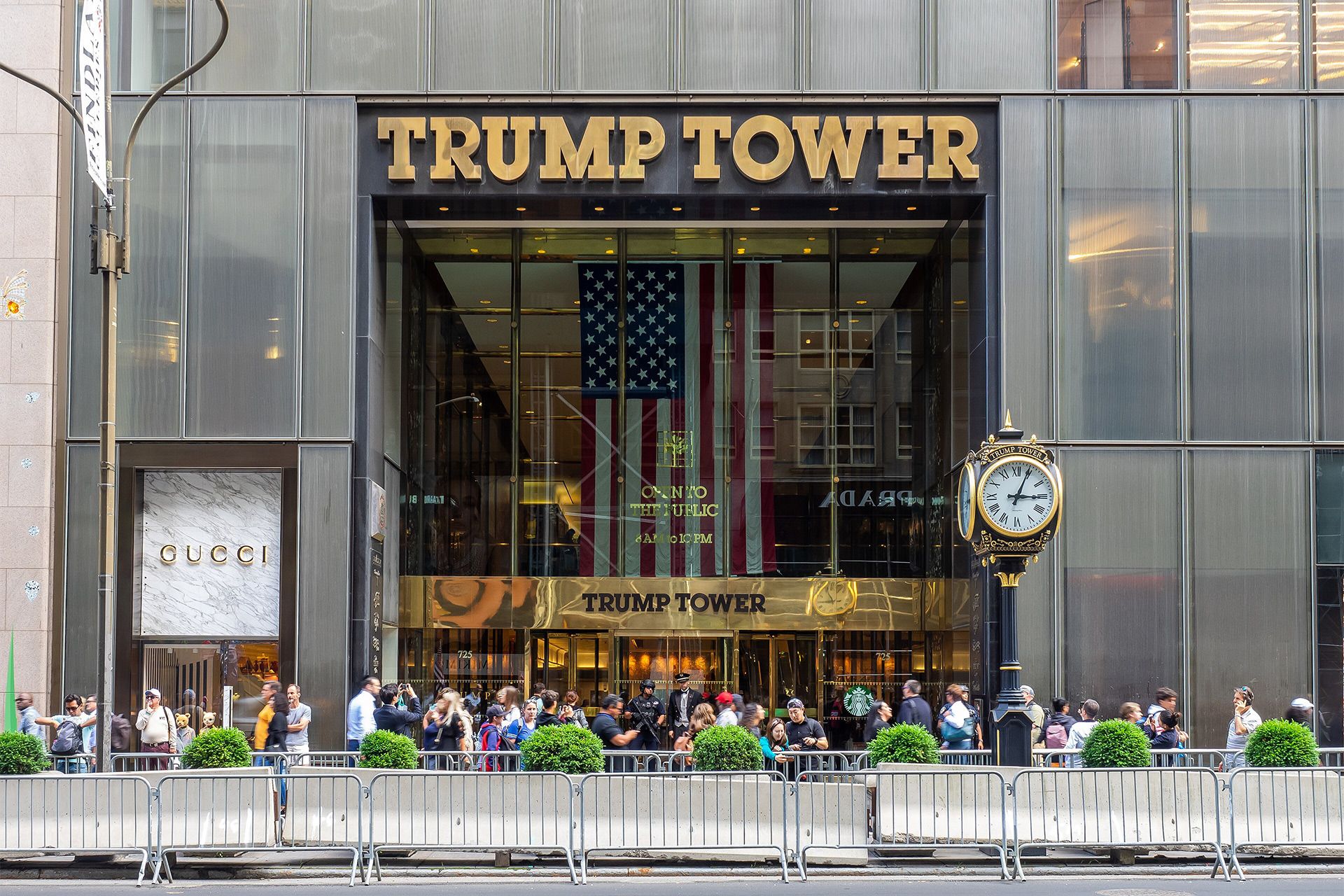
In America, as is well known, it is personally supported by billionaire president Donald Trump and his entire government of billionaires, as well as by the almost unlimited financial and informational resources of the saluting trillionaire Elon Musk. From the east, AfD is openly supported by the Kremlin.
It recently became known that back when he was working in the GDR, KGB agent Vladimir Putin was recruiting far-right figures there. In particular, in order to destabilize the situation in the FRG, he recruited one of the leaders of Germany’s neo-Nazi movement at the time, Rainer Sonntag. In addition, with the help of the Stasi, Putin created a network of informants from among Dresden residents at that time.
It is clear that a lot of time has passed since then. Sonntag died, but the old connections of the Soviet spy, of course, could not simply dissolve into space. For this reason, it cannot be ruled out that Putin may have been at the origins of AfD’s creation.
At any rate, a joint investigation by Insaider and Spigelled journalists to conclude that Moscow in one way or another financed some of AfD’s expenses.
It is hardly surprising that AfD representatives, who in Germany are considered untouchable by the entire spectrum of political parties, were warmly received at the St. Petersburg Economic Forum in June 2026.
***
To form a government, AfD, which received 39 mandates, needs three more to obtain an absolute majority of 42 seats. And unfortunately, they have options.
First, they are now negotiating with the Christian Democrats from CDU/CSU, who, as the deputy head of the AfD faction in the Bundestag Beatrix von Storch said, are “very, very unhappy with their party”.
Second, several members of the right wing that split off from Die Linke entered the Landtag — the Sahra Wagenknecht Alliance (BSW), which in many views, especially on migration policy and on Putin’s policy, is hard to distinguish from AfD. So a coalition with them for the Alternative is quite possible.
Third, the “Alternative” also has an alternative option. If negotiations with possible defectors from CDU/CSU or with BSW fail, it may go to new elections.
According to BBC, Saxony-Anhalt’s candidate for minister-president Ulrich Siegmund is confident that in that case his party will already win an absolute majority.
Something similar may happen after the Bundestag elections as well, which, barring anything extraordinary, are due to take place in 2029. It is unlikely that AfD will win as many votes there as it did in the just-held elections in Saxony-Anhalt, but it could get from 34%, like Hitler’s NSDAP in November 1932, to 40%.
The thing is that today is not 1933. I cannot imagine that the current president of the FRG, Social Democrat Frank-Walter Steinmeier, will follow the path of Weimar Republic President Hindenburg, who then appointed Hitler chancellor, even though Hitler’s party also did not win an absolute majority in the Reichstag.
The current elections in Saxony-Anhalt can undoubtedly affect the result of the federal elections to the Bundestag. However, not necessarily in favor of AfD.
Millions of German citizens have experienced the shock of the far right’s victory in Saxony-Anhalt. And this may mobilize them to vote more actively for other parties.
In addition, events from the outside world that may occur in the next six months to a year could influence the Bundestag elections scheduled for 2029.
For example, a possible defeat for the Republicans in the upcoming November elections to the US Congress. These elections could have far-reaching consequences, up to and including impeachment for Trump.
Or, for example, an end to the war in Ukraine along the current line of combat division.
The latter would mean the defeat of the far-right Putin regime in Russia, which today is the main pillar of the revival of fascism on the planet.
In that case, the huge brown wave raised by the Russian dictator around the world will subside. Including in Germany.
If you enjoyed this article, consider making a donation — one-time or, even better, monthly. Your support helps us motivate our authors and become better with every article.
Our organization is recognized by the Internal Revenue Service (IRS) as a 501(c)(3) tax-exempt, charitable organization, which means that all contributions made to us are tax-deductible to the fullest extent permitted by U.S. law. Individuals may generally deduct charitable contributions of up to 60% of their Adjusted Gross Income (AGI) for cash donations made to qualifying 501(c)(3) organizations. For donations of appreciated assets (such as stocks or other long-term capital assets), the deduction is typically limited to 30% of AGI, based on the fair market value of the asset. C-corporations may deduct charitable contributions of up to 10% of their taxable income for donations made to eligible charitable organizations.
By submitting a donation, you confirm that you have read and accept the following documents: Privacy Policy and User Agreement, and also give consent to the processing of your personal data.
If you would like to unsubscribe from a monthly donation, please email us at: [email protected]