If you want to find yourself at the center of Donald Trump’s financial empire, you need to go up 56th Street toward Central Park — and at the intersection with Fifth Avenue, a 202-meter, 58-story skyscraper will come into view. It ranks only 64th in New York by height, but it is no less famous than the Empire State Building. Construction of Trump Tower was completed in the fall of 1983, and since then the skyscraper has been a symbol of the success and power of the man whose name it bears. But this success story did not come without the KGB and its influence agents in the so-called “Russian mafia”.
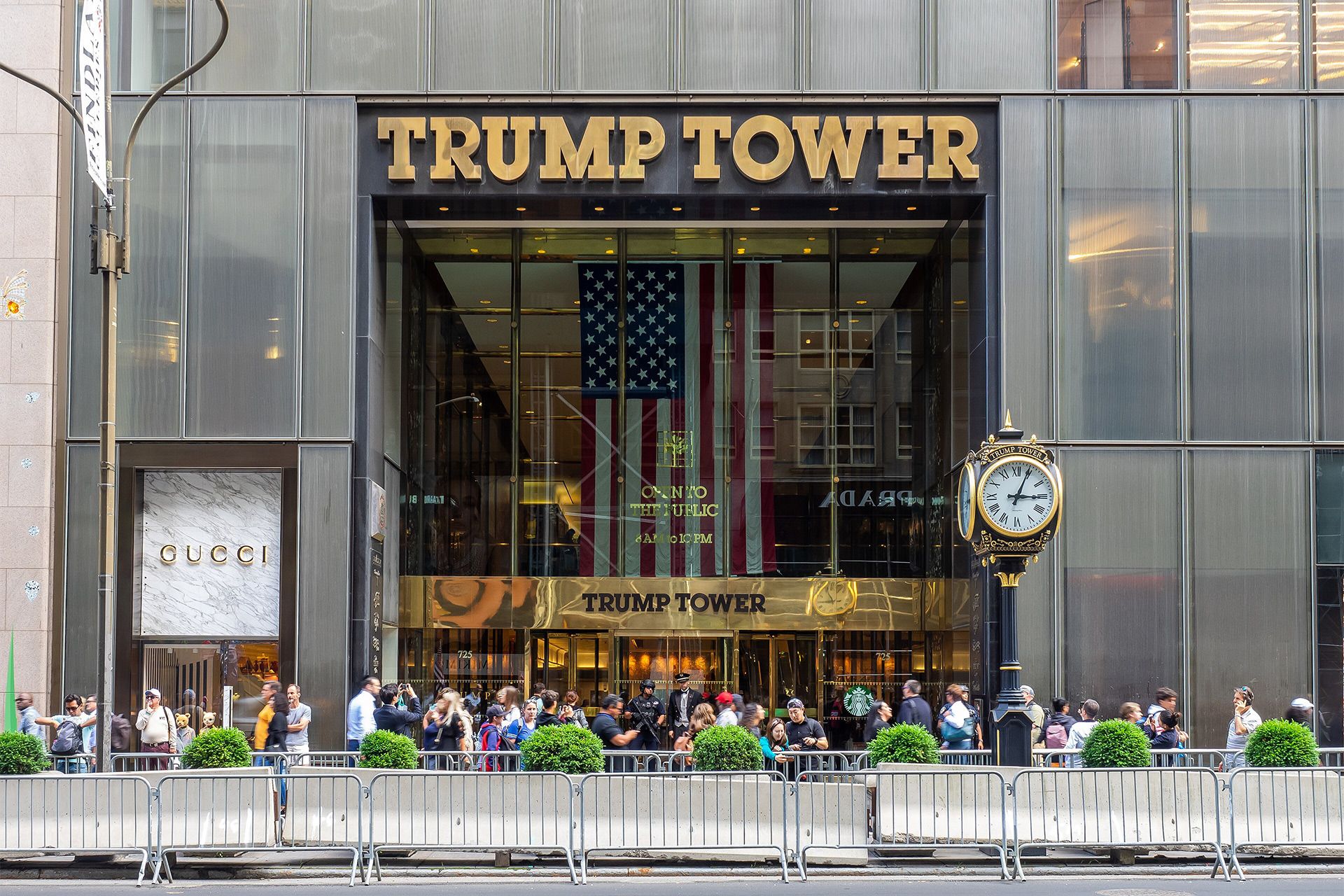
Entrance to Trump Tower on Fifth Avenue in New York City. Photo: Wikipedia / Ajay Suresh / CC BY 2.0
On an early autumn morning in 1984, Soviet émigré David Bogatin, who had come to the United States from the USSR with three dollars in his pocket, entered the lobby of the luxurious skyscraper at 721 Fifth Avenue. There he met the building’s owner, Donald Trump, and bought five luxury apartments from him for $6 million in cash (about $18 million in 2026 prices).
The source of the seller’s money did not bother him; the deal was very good. All the more so because David had not come to Trump entirely “off the street”. He could have been recommended to Trump by an old acquaintance, Sam Kislin, also known as Semen Kislin, the former director of Odessa’s “Gastronom No. 1”, who had a reputation as the most successful entrepreneur in Brooklyn.In 1980, whenTrump, using borrowed investor money, built his first major real estate project in New York — the Grand Hyatt New York hotel near Grand Central Terminal — he bought 200 televisions specifically from Kislin, who at the time was a co-owner of Joy-Lud Electronics on Fifth Avenue.
Where and how Trump met Sam, history does not say, but about the talented entrepreneur from Odessa who moved to New York in search of the “American dream”, Trump may have heard not on Brighton Beach, where he had never been before, but in Moscow.
Trump visited the Soviet Union in 1987. Much has been written about his trip to the homeland of Perestroika, and photo archives have preserved traces of that journey. “Trump first appeared on the radar of Soviet intelligence services shortly after he married the Czech model Ivana Zelníčková and became the target of a spy operation overseen by Czechoslovak intelligence in cooperation with the USSR’s KGB”, American researcher Craig Unger would later write in his book.He began his career as a political columnist for the New York Observer, then became editor-in-chief of Boston magazine. But Trump’s story captivated him so much that Craig Unger soon became one of the most prominent researchers of the future U.S. president’s political career, to whom he dedicated two books: “House of Trump, House of Putin: The Untold Story of Donald Trump and the Russian Mafia” (2018) and “American Kompromat: How the KGB Cultivated Donald Trump, and Related Stories of Sex, Greed, Power, and Treachery” (2021).
“Russian mafia”
David Bogatin became the subject of FBI surveillance long before that autumn morning in 1984, when he brought the first $6 million to Trump Tower. The FBI considered him one of the key figures of the Russian mafia in New York. His brother Yakov appeared in Bureau files as the organizer of a $150 million stock fraud involving a medical company, but he was merely a “front man” in the scheme. Behind the scenes of the crime loomed his brother David and his boss — Semen Mogilevich, whom the FBI considers the “boss of bosses” of the Russian-speaking mafia in the United States.
According to the New York State prosecutor, Mogilevich’s group laundered $1.5 billion through Trump’s real estate. Over 13 years, Trump sold more than a thousand apartments to people linked to the Russian mafia.
In 1991, according to the FBI, Semen Mogilevich bribed a Russian judge to free Vyacheslav Ivankov, a “thief-in-law” known as “Yaponchik”, from a Siberian prison. To be fair, it should be said that many VIPs lobbied for Ivankov’s early release from Tulun prison, including ophthalmologist Stanislav Fyodorov and People’s Artist Joseph Kobzon, who was soon afterward banned from entering the United States altogether. In 1992, a year after his release, Ivankov arrived in New York on a fake business visa. His headquarters were located in the Brooklyn restaurant Paradise, but after placing him under surveillance, FBI agents were surprised to learn that Ivankov preferred to hold business meetings in the very heart of Manhattan — in the apartments of Trump Tower.
In 1995, the FBI arrested Ivankov-Yaponchik on charges of extortion and a sham marriage, after which Mogilevich would hide in Budapest for many years, while David Bogatin, fearing arrest, would go into hiding. The U.S. government seized all five apartments in Trump Tower, stating that they had been purchased for the purpose of “money laundering, concealment, and hiding assets”. Sam, also known as Semen, Kislin would become a private guest of the FBI office in New York — his name was from then on and forever entered into the operational file of the Bureau’s “Russian division”. Finally, the FBI would soon ask the key question: did the respectable developer Donald Trump know whom he was selling apartments to in Trump Tower?
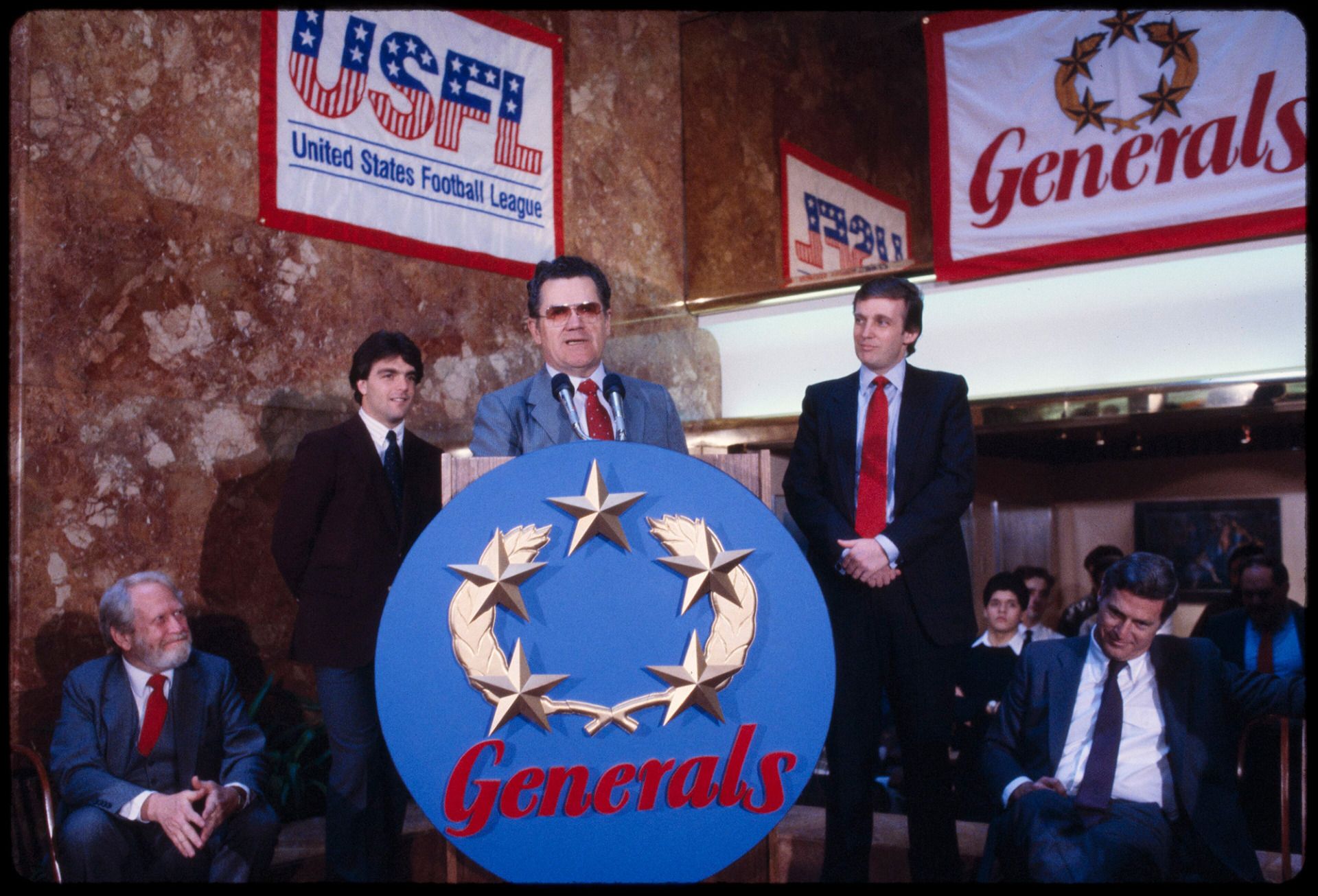
Owner of the New Jersey Generals football team Donald Trump (second from right), quarterback Doug Flutie (second from left), and team coach Walt Michaels (center) at a press conference in Trump Tower, February 5, 1985. Photo: Wikipedia / Bernard Gotfryd
In his two books, Craig Unger refers to personal conversations with former USSR KGB agent Yuri Shvets, who says that Kislin’s Joy-Lud Electronics was created and controlled by the USSR KGB, and that Kislin himself worked there as a so-called “observer agent”. He had already noticed Donald Trump, describing him as “a young and very ambitious entrepreneur”. That is a good profile for recruitment.
In 1987, when Trump and his young wife Ivana first visited Moscow, their tour was organized by the Intourist agency, which operated under the full control of the USSR KGB. Trump’s hotel room was bugged. The guides, guards, drivers, and hotel staff he met were either KGB agents or informants.
Craig Unger is convinced that it was precisely KGB operatives, surrounding Trump with flattery, who convinced him that he should go into politics. Trump was the ideal target for the Soviet intelligence service — his vanity, narcissism, and greed made him not merely a convenient target, but an ideal one for recruitment.
It is important to remember that in 1987 Trump was not a successful businessman, and his ambitions were matched by his debts. At one point, Craig Unger recalls, his debt reached $4 billion. Trump had already declared bankruptcy six times, and banks had stopped extending him credit. He needed money. Very badly.
“Influence agent”
On September 2, 1987, a little-known New York developer spent $95,000 to place a paid advertisement in the New York Times, Washington Post, and Boston Globe. The text expressed dissatisfaction with America’s allies in Europe and asked: why don’t they pay for their own defense? The author demanded that the United States impose a special tariff on these countries. The article ended with the words: “Let’s no longer allow our great country to be laughed at”. The author’s name was Donald Trump. He had just returned to the United States from Moscow, announced that he wanted to run for president as a Republican, and even held a campaign rally in Portsmouth, New Hampshire. The politician in Trump had awakened.
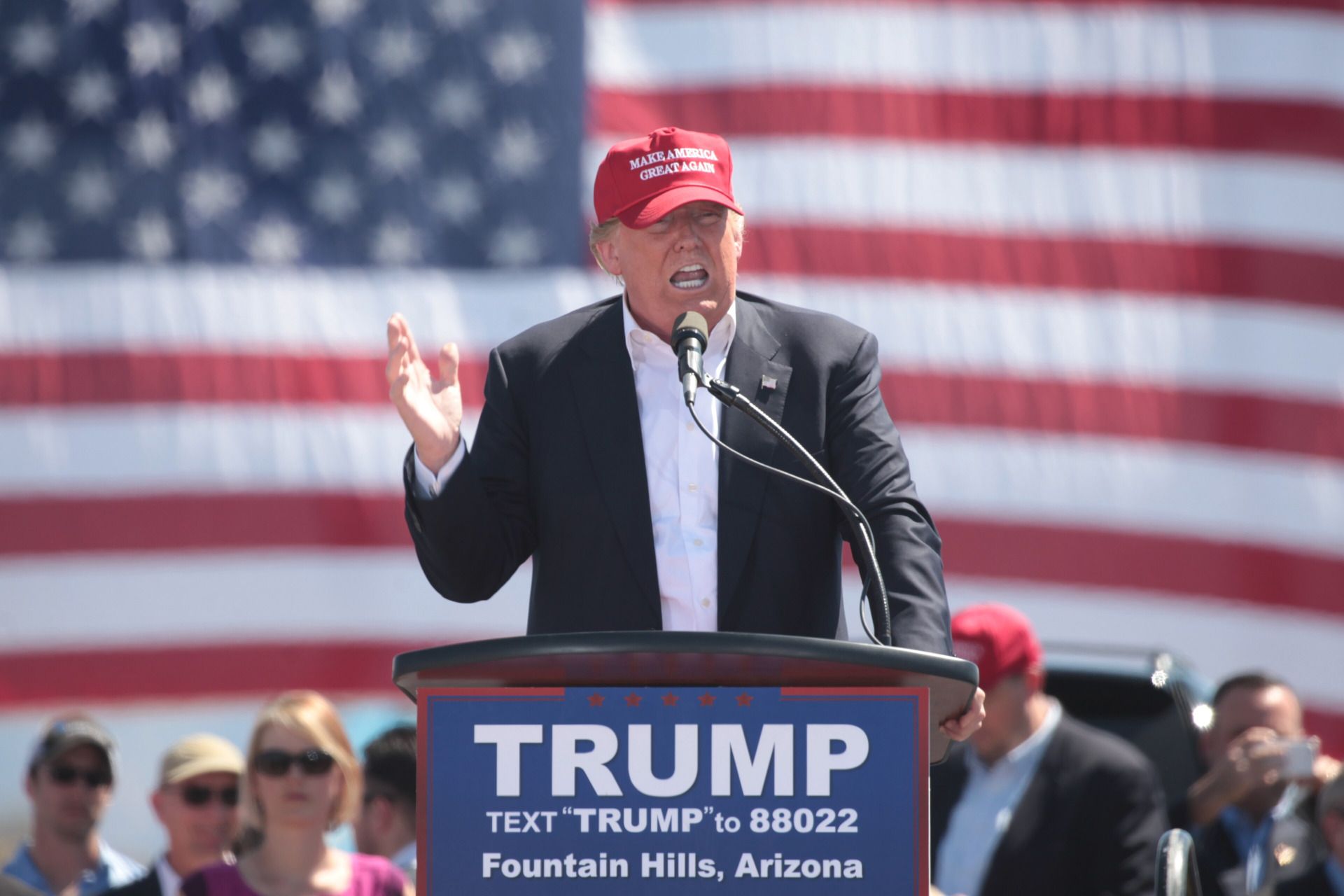
Donald Trump speaks at a rally in Fountain Hills, Arizona, March 19, 2016. Photo: Wikipedia / Gage Skidmore / CC BY-SA 3.0
“As far back as the 1980s, Donald Trump placed expensive full-page ads in The New York Times and The Washington Post, claiming that NATO was a mistake and that the United States was wasting money maintaining an Alliance that was unfair to the Soviet Union. Around the same time, in 1987, he visited Moscow, and during that trip something happened that changed his attitude toward the Soviet Union. Whatever it was, that attitude seems to have influenced his later admiration for Putin”. These words were spoken by American philosopher and political scientist Francis Fukuyama in June 2026 in an interview with the Slovak publication SME. In early September, appearing on BBC Newsnight, Fukuyama added: “Trump has been on the side of the USSR for decades, and then on the side of Russia. And I don’t believe he has become more sympathetic to Ukraine. He is disappointed because he thought the Russians would really destroy Ukraine, and he is unhappy that this did not lead them to a peace settlement. But he has not switched sides”.
In 1987, Soviet intelligence major Yuri Shvets was at the headquarters of the USSR KGB’s foreign intelligence service in Yasenevo when a telegram from the Directorate for Active Measures landed on his desk. Attached to it was a newspaper article about NATO written by Trump. The directorate assessed this as a major success in helping the KGB drive a wedge between the United States and its allies. It was a very important event, Shvets would later personally tell Craig Unger. Shvets would later tell Craig Unger.
Soviet intelligence services managed the unthinkable: three major American newspapers published the USSR KGB’s talking points. It is likely that in 1987 something truly happened in Moscow that eventually turned into a political series worthy of adaptation. The genre is a political thriller with everything it needs: gangsters, money, spies, and finally, war.
Craig Unger does not claim that Trump was directly recruited by the USSR KGB, which maintained contact with him for half a century, using even the “Russian mafia” for its own purposes. In his work, Unger more often uses the phrase “agent of Moscow’s influence”, and Fukuyama leans toward the same definition.
“Personal chemistry”
“There is personal chemistry between them”, Kremlin ambassador Alexander Darchiev said at a ceremonial reception on June 12, 2026, describing the relationship between the presidents of Russia and the United States. Many in Washington would agree with him.
On August 5, 2016, The New York Times published an article by Michael Morell, former acting director of the CIA, in which he stated: “In the intelligence community, we have long said that Putin recruited Trump as an unwitting agent of the Russian Federation”. Shortly before the 2016 election, on the front page of the Washington Post appeared an article by former National Security Agency director and CIA chief Michael Hayden, where he first used the term “useful fool” in reference to Trump — someone whom Russian intelligence manipulates for its own interests while sincerely despising him. In Langley, Trump was never liked. The CIA had many good reasons for that.
Tom Hartmann, an American journalist and researcher, formerly host of the TV show The Big Picture, writes in his memoirs: “In the first months of his first term as president, Trump revealed the name of an Israeli spy to the Russian ambassador, as a result of which Mossad had to urgently extract him. Apparently, the covert agent was operating in Syria against the Russians. This caused the CIA to worry about the fate of a long-time American spy who was working in Moscow. Trump could simply have handed him over to Putin. The risk was so great that CIA agents, at enormous cost to U.S. intelligence capabilities, evacuated the spy from Russia in 2017. And then Trump and Putin met in Finland.
Meeting between Vladimir Putin and Donald Trump in Osaka, June 28, 2019. Photo: kremlin.ru
After Trump and Putin met one-on-one in Helsinki on July 16, 2018, Trump ordered all recordings of his interpreters destroyed. Three weeks after the presidents’ meeting in Finland, Senator Rand Paul made a solo trip to Moscow to personally deliver a document or packet of documents from Trump to Putin. Its contents are still unknown, although Paul told the press it was a “personal” letter. Ten days after Paul’s trip to Moscow, The New York Times reported that the CIA was shocked because its sources in Moscow had suddenly “gone silent”. American media also learned that during the conversation in Helsinki, Putin and Trump discussed the possibility of Russian intelligence interrogating Hermitage Capital founder Bill Browder and former ambassador Michael McFaul. A major scandal erupted in the United States — Democrats accused Trump of betraying the country’s national interests.
Then Trump held another private meeting with Putin. White House representatives told Congress that Trump and Putin supposedly discussed “wildfires” and “trade between countries”. But soon, as Hartmann claims, Trump requested from the Office of the Director of National Intelligence a list of all its employees who had worked there for more than 90 days, and this request caused “serious concern” among intelligence staff.
Even after the Helsinki summit in July 2018, former CIA director John Brennan said live on CBS that Trump’s behavior at the meeting with Putin was “nothing short of treason, the President of the United States is ‘under Putin’s thumb.’” Two years later, in August 2020, the U.S. Senate Select Committee on Intelligence published a report investigating Russian interference in the election. Beneath the thousand-page report stood the signature of the committee chair, who stated plainly: “the Trump campaign’s ties to Russia represent a serious counterintelligence threat to the United States”. The committee chair was named Mark Rubio.
On October 5, 2021, eight months after Trump left the White House, taking several folders of classified CIA documents with him, The New York Times published an article under the headline “Captured, Killed or Compromised: CIA Admits Loss of Dozens of Informants”: “Last week, leaders of American counterintelligence warned all CIA stations and bases around the world about a troubling number of informants recruited in other countries to spy on behalf of the United States who had been captured or killed, informed sources said”. It is from that moment that Trump has strongly disliked The New York Times and the CIA. But the feeling is mutual.
Five years later, when Trump returns to the White House, installs a button in the Oval Office to summon Diet Coke, proposes a “big deal” to Moscow, meets Putin in Alaska, and appoints his son-in-law as chief negotiator with the Kremlin, former CIA director John Brennan will say on MS NOW: “Trump is clearly not in his right mind. He is simply irrational, incapacitated, and constantly lying. That is exactly what the 25th Amendment to the Constitution was written for”.
Donald Trump still has three years and four months ahead of him to run the world, if, of course, nothing happens to him. Who knows, perhaps later a new U.S. president will publish CIA data about what happened in Moscow in 1987, why the developer was selling apartments in Trump Tower to leaders of the “Russian mafia”, and who wrote the talking points about NATO’s mistakes for the ambitious entrepreneur who was on the verge of bankruptcy. And what if everything that Craig Unger wrote in his two books turns out to be the harsh political truth of the 21st century?
If you enjoyed this article, consider making a donation — one-time or, even better, monthly. Your support helps us motivate our authors and become better with every article.
Our organization is recognized by the Internal Revenue Service (IRS) as a 501(c)(3) tax-exempt, charitable organization, which means that all contributions made to us are tax-deductible to the fullest extent permitted by U.S. law. Individuals may generally deduct charitable contributions of up to 60% of their Adjusted Gross Income (AGI) for cash donations made to qualifying 501(c)(3) organizations. For donations of appreciated assets (such as stocks or other long-term capital assets), the deduction is typically limited to 30% of AGI, based on the fair market value of the asset. C-corporations may deduct charitable contributions of up to 10% of their taxable income for donations made to eligible charitable organizations.
By submitting a donation, you confirm that you have read and accept the following documents: Privacy Policy and User Agreement, and also give consent to the processing of your personal data.
If you would like to unsubscribe from a monthly donation, please email us at: [email protected]