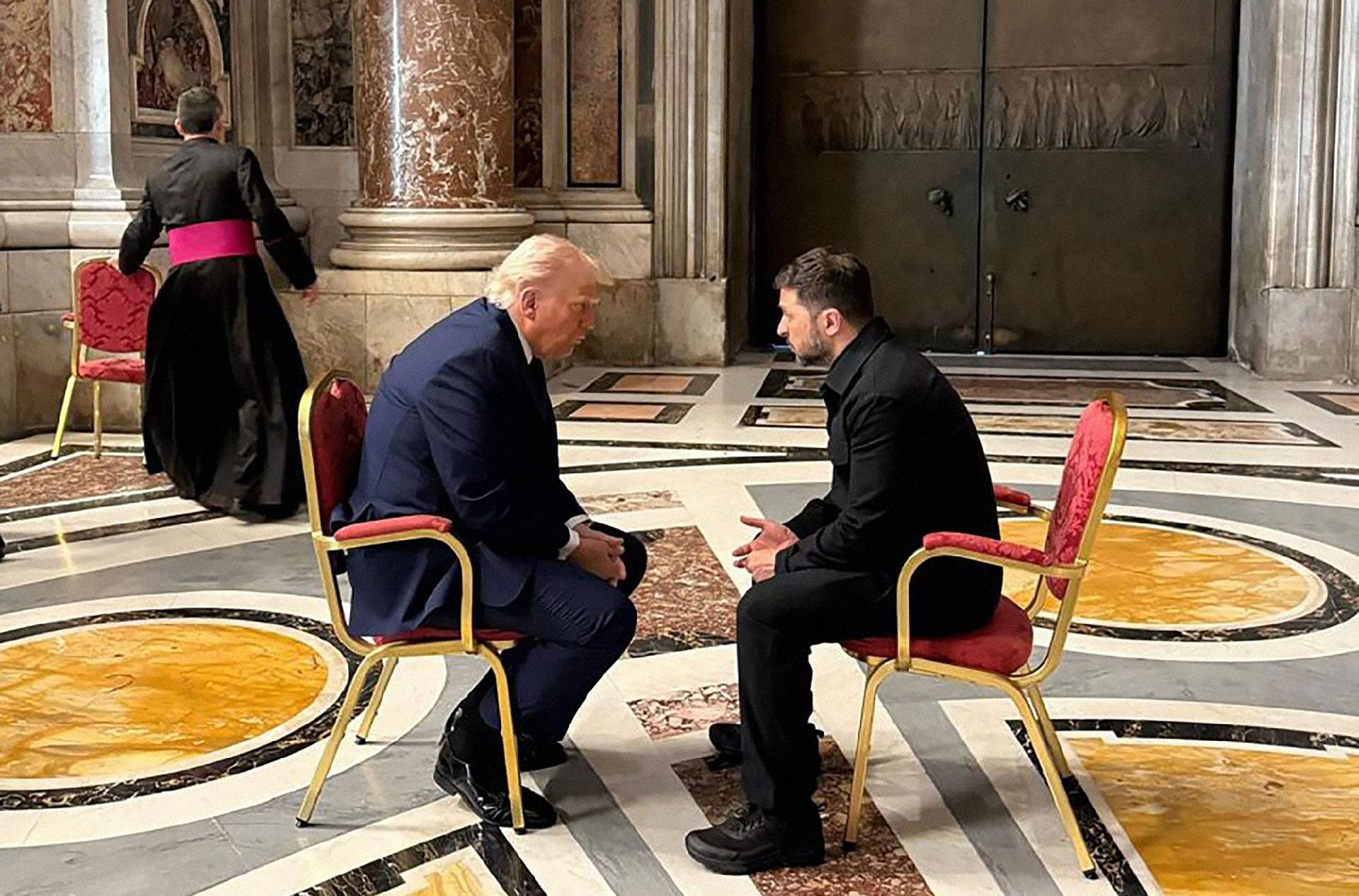
Negotiations between Ukraine and Russia are scheduled for May 15 in Istanbul, actively promoted by US President Donald Trump. According to political scientist and geographer Dmitry Oreshkin (the Russian Ministry of Justice considers him a foreign agent), important matters that have already changed the course of events around the war remain in the shadows of these talks.
- What are your expectations from the talks in Istanbul?
- We are captive to manipulators. The main conclusion from what we are currently observing remains in the shadows. What they will agree on, whether they will agree at all, who will later declare themselves the winner — these are all technical matters. The fundamental point is that Putin’s nuclear blackmail has deflated. Although this is not articulated.
Putin does not want or cannot upset Trump and Mr. Xi. Putin’s range of options is narrowing. Just three years ago, the West seriously feared Putin’s nuclear blackmail. Today, the topic of nuclear escalation, the threat of a nuclear strike on Ukraine, and the war turning into a third world war — is closed. For Putin, another corridor of developments remains. They are already discussing whether he will come to Istanbul or not, whether the participants will agree on anything or not. So it is important to speak not about what is visible now, but about what is not. And what is not, as I already said, is the nuclear scare that Biden and Europeans feared three years ago.
It has become clear that Putin is not sufficiently a maniac to carry out a nuclear strike. And this radically reduces his geopolitical significance. Without the threat of nuclear apocalypse, Putin becomes a much less influential player. As for how he will maneuver further, whom he will sacrifice, what his envoys will agree on — all this is secondary. The question arises as to how far he will be squeezed. It is clear that with only ground operations, he cannot bite off too much. And what people think about the outcome of the talks is all just small details.
- What do you think about the “romance” between Putin and Trump, which has lasted more than three months? Whether it is ending or has ended...
- Besides the fact that Trump and Putin are cut from the same cloth — that is, they believe in power, do not trust agreements, and despise any diplomacy — there is also a pragmatic interest of the first toward the second. Indeed, Trump believes that one can negotiate and reach an agreement with Putin. But besides that, Putin is needed by Trump as an important figure in the game with China. Trump’s main enemy is China. And of course, Trump absolutely does not want China to use Putin as a bulldog. The alliance of Putin and Xi is extremely undesirable for Trump.
Therefore, Trump initially promised Putin many more carrots than sticks. And the sticks he sent to Zelensky. This corresponds to his view: Putin is strong, Ukraine is weak. Therefore, Ukraine must obey him. This is his value orientation. The pragmatic orientation is that he does not want to quarrel with Putin. He needs a neutral Putin in the conflict with Xi.
But Trump has a very obvious problem. He said that this is Biden’s war, and if he were president, it would never have happened, and he would end it in 24 hours, etc. It is clear that so far he has not managed this. And of course, this is a serious blow to his image. And for him, image, like for Putin, is practically everything. Both belong to the tribe of front-runners, for whom showing off and being the top guy in town is important. Of course, this irritates Trump.
But when J.D. Vance says: we will be disappointed and exit this agreement — that’s a bluff. Exiting the talks is an admission of Trump’s geopolitical insignificance. He most likely will not be able to do it. Although they scare with it — primarily, of course, Ukraine. But the one to be scared of is Putin. Because now we see where, speaking in Soviet terms, the threat to peace comes from.
There was a brochure in Soviet times explaining that the threat to peace comes from capitalism. Now the threat comes from Putin.
Meanwhile, Zelensky shows maximum possible loyalty to Trump. He flatters him and rightly so because Trump is ready to swallow this flattery by the spoonful. If he doesn’t get it, he feels insulted.
But now it is clear that Zelensky came, Zelensky is ready to talk, Zelensky signed the deal, and where is Putin? So it is clear who is leading whom by the nose. This is quite obvious — also to American voters. In particular, this is why Trump’s rating in foreign policy is falling faster than any other ratings, including the economy and everything else. Trump cannot be pleased by this. Therefore, of course, he has bitten his lip inside himself regarding Vladimir Vladimirovich Putin. He holds some resentment against him. Another question is that he cannot show it because that would mean weakness.
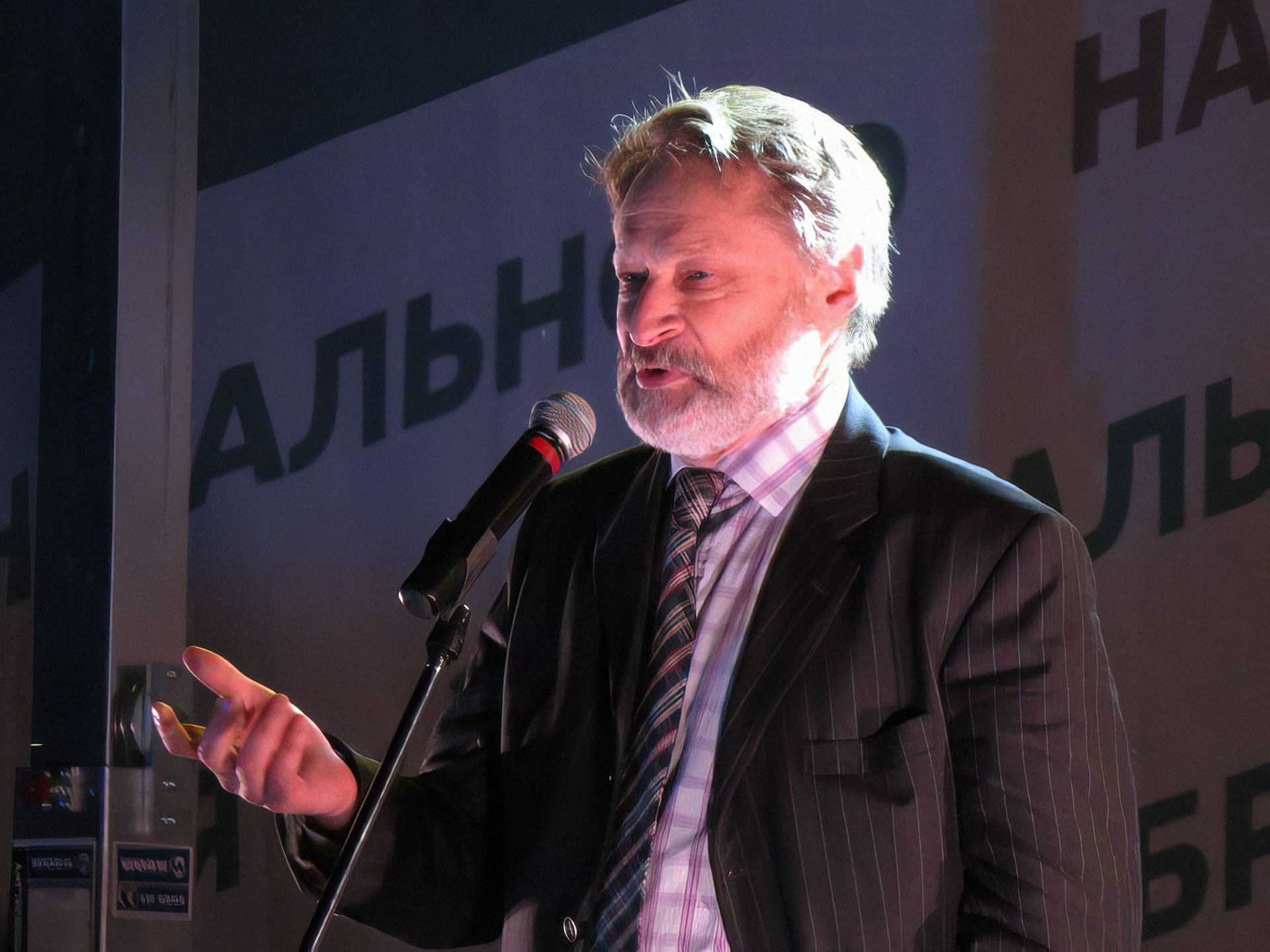
Dmitry Oreshkin. Photo from personal archive
It seems to me that the real hierarchy has become clear. Putin, de facto, though implicitly, reports to Trump. Zelensky already offers him a truce, which Putin cannot accept because that would mean the initiative passes to Zelensky. But he also cannot refuse because that would mean he supports continuing the war. And he must send signals to Trump that he is ready to end the war. Therefore, he invents some alternative, like talks in Istanbul. He invents it, and then does not go there himself.
Accordingly, how can Trump, Vance, the State Department, and so on react? They understand that Putin is torpedoing the negotiation process. They try somehow to lure him to Istanbul, saying that if Putin comes there, Trump will also come. Or they try to scare him. But so far, they don’t really want to do that. Although Europe is already preparing the next package of sanctions. And apparently, the US will have to join it at an accelerated pace because pressure must be put on Putin somehow. Since so far the pressure has not yielded the desired results. Except for the main one I already mentioned — the refusal of nuclear blackmail.
So the States cannot get out of the game, just as they cannot fly from planet Earth to Mars. They will still have to interact with both Russia and China. And Trump’s rhetoric is his usual verbal exercise before concluding a deal: you have to scare the partner, say your position is weak — sign what is given.
- You mentioned European sanctions. Indeed, Europe seems to have realized that it will not get away from this war easily. Recently, leaders of leading European countries — the UK, France, Germany, and Poland — came to Kyiv to see Zelensky. They stated that Russia must immediately agree to a 30-day ceasefire. Otherwise, they threatened to impose new tough sanctions. How do you see developments after this?
- First, we need to understand why Europe is changing. I note three main points.
First. When the war started in 2022, Europe was heavily dependent on Russia for energy supplies. For example, 40% of gas was bought from Russia. Naturally, European leaders were very limited in their ability to respond. And Putin laughed because he believed he controlled the situation. And if anything, he would shut off the gas — Europe would freeze. Industry in Europe would stop, jobs and income sources would be lost, and so on. Consequently, European authorities would lose public support.
But over these three years, the situation has turned inside out: the seller’s market has turned into a buyer’s market. That is, in this sense, European countries have overcome the threat of an energy war. They have enough gas, oil, and wind energy to maintain the necessary level of industrial and social programs.
Second. The very threat of nuclear blackmail. Europeans and Americans received intelligence reports that Russia was preparing to deliver a nuclear strike on Ukraine. At least we learned that Surovikin seriously discussed this issue over the phone. Perhaps the leak of this recording was allowed deliberately. But the topic was discussed. Now this is becoming irrelevant. It turned out that it was all a bluff. Europe realized this.
Third. When the war began, I spoke with many European political scientists and French senators, and they all asked the same question: when can we return to business as usual? Forget about Crimea. They were more concerned about Renault and Nissan, the market for French car manufacturing. Because these are jobs, income, and votes for those same senators. They perfectly understood that Renault and Nissan’s assembly production in Russia depends on parts from France, so these are thousands of jobs and voter support.
Germany created 6,500 joint ventures in Russia, which also created a huge economic base for supporters of business as usual.
And for all of them, it was simply incomprehensible how Putin could sacrifice such obviously mutually beneficial interests for some geopolitical goals, like Crimea and so on. They just did not understand this. So they hoped that soon all this nonsense would end and they could return to their very profitable business. The same applied to energy supplies from Russia.
And over three years, they have personally realized that Putin simply has a different system of priorities. I remind you that at the start of the war, the EU Foreign Minister Josep Borrell went to Kremlin to plead with Putin to stop the war. Putin sent him away. Everyone went to Putin: Scholz, Macron — and they all said the same thing: “Why this war?! Let’s stop it!” The answer was Putin’s aide Nikolai Patrushev’s phrase: “We have returned.”
As a result, over these three years, there has been a radical shift in position and political consolidation in Europe.
Former UK Prime Minister Boris Johnson took a tough anti-Putin stance. Apparently because Britain has a very clear experience of appeasing Hitler. The position of Scholz and Macron, not to mention other European countries, was much more, let’s say, tolerant. Now we see the anti-Putin stance of Britain, France, Germany, Poland, Finland, Sweden, and practically all other European countries. They have finally understood that negotiating with Volodya is pointless. He understands only the language of power.
Accordingly, the new Chancellor Merz represents a different position than Scholz. The new Pope Leo XIV made a harsh statement to Putin, unlike his predecessor who tried to cozy up to him. This is not his direct political function, but it is a sign of how attitudes have changed. Europe is much more consolidated against Putin than three years ago.
- How would you assess Putin’s state and his immediate circle at the moment? Does he still retain sound mind judging by his actions and statements?
- We are witnessing the completion of bunker mentality formation. Informationally, he lives in his own world. He does not want to see what he does not want. And he is no longer allowed to see it. He is supplied only with the information he wants to hear and see. People are afraid to report the real situation to him, and his worldview is detached from objective reality.
Remember how he thought he would be met in Ukraine with hugs and flowers. How he thought Ukrainian statehood did not exist and would instantly collapse. Three years ago, talks began with the demand to appoint Yuri Boyko as Ukraine’s prime minister. That is, Moscow appoints the prime minister in Kyiv, the president can stay — so be it. What else? Remember how he believed the West was cowardly and decadent, therefore unable to resist. And this was, by the way, not far from reality.
But no one came out to greet Putin with flowers, and Ukraine turned out to be a real state structure with sovereignty and readiness to defend it. The Ukrainian army turned out to be combat-ready. The West was ready to support Ukrainian resistance. Many things in Putin’s mind turned out to be inadequate. And now this, it seems to me, has only intensified.
- Is the ongoing war a reflection of Putin’s inadequacy, or something more? Do you think this is the war of the entire Russian people? If Putin dies, will the war end or continue without him?
- To say that this is the war of one person seems completely wrong. Much like World War II was not Hitler’s war alone. One should not underestimate either the individual role or the interests of the military caste, which has a certain worldview that everything is determined by power.
And one should not underestimate what can be called Russian public opinion, which, like German public opinion in the 1920s, was seriously wounded by the collapse of its distorted worldview. Just as Germans felt aggrieved for being excluded from colonial division and insulted by the Treaty of Versailles, part of the Russian population longs for the geopolitical power of the Soviet Union. Here comes Putin and says: we have risen from our knees. And this resentment is a very serious factor. And this is not Putin’s personal trait. It is a trait of the entire post-Soviet people.
And any other politician in Putin’s place would hardly avoid the temptation to ride this wave of resentment. If not Putin, then some Rogozin. He also actively promoted these ideas in the “Motherland” party. Remember how it all started for him? “Give us back Tuzla Island.” And on this, he built his 2003 election campaign. And that’s how he got his 9%.
I think Zyuganov, Lebed, and especially Zhirinovsky — all would have gone down the same path Putin is on now. So this war is not only Putin’s; it is the war of the post-Soviet people.
Another question is that as soon as Putin loses this war, the entire people, or at least a significant part of it, will turn around and say that Putin is a traitor, that Putin made a deal, that Putin was bought, that Putin was replaced. In general, public opinion will digest all this crap for a long time. Except for one rational consideration: that the Soviet Union could not have won World War II without the United States. And all the more Putin cannot repeat that victory today, acting directly against the United States and Western Europe.
So, the basis of this war is such mythology. And the longer it drags on, the more painfully this cognitive dissonance is perceived. Because people sincerely believe that Stalin won World War II. You cannot convince them otherwise.
In reality, the war was won by the anti-Hitler coalition led by the largest industrial power of the time — the United States of America. It produced almost a third of the world’s industrial output. Britain was also not small. And together, over 50 countries defeated Hitler.
But in people’s minds, it is “we” who defeated Hitler. And accordingly, “we” can do it again. But it does not work. In this sense, Putin’s war is a catastrophe of Soviet consciousness, which instead of objectively and rationally assessing the past, lives in mythology. And now this mythology clashes with reality and creates monsters. Already patriotic public accuses Putin of selling out to the West, making deals, and demands a nuclear strike. This idiocy is not personal but systemic. It is the idiocy of the education system. These are people with a distorted worldview implanted in their heads since Soviet school days.
Putin is also trapped in this systemic idiocy. He says that the Ukrainian people are part of the Russian people. And at the same time, he strikes monstrous rocket attacks on that part. This is a form of madness and the completion of bunker mentality formation. In his head is a bunker where he does not allow alternative information. And his circle also does not allow alternative information into his head because they are not interested in it.
Besides, this is also a war of the military caste — the military brass, for whom it is a motherland. And this military caste enjoys the support of a huge number of people in Russia. In particular, because practically all male population went through Soviet school. And that also harms mental abilities. Well, this is how they see the world: “They want to attack us, NATO was going to build a base in Crimea.”
Therefore, the process is so painfully long. Putin’s personalistic consciousness and the mass consciousness of his voters resist the objective picture. Because in this picture, it turns out you are a fool, you believed, and you were deceived. And Russia is not great or mighty; it has only 2% of the world GDP. And the army is not so victorious either.
All this is sad news for Putin’s consciousness, based on resentment and cotton illusions. But it dominates. And it will dominate even after Putin’s defeat. People will look for traitors, enemies, those who stabbed them in the back. Just as they are now looking for sources of the Soviet Union’s defeat in these terms. Because alternative explanations mean that you are fools and served false gods. And who would agree to that? No one.
If you enjoyed this article, consider making a donation — one-time or, even better, monthly. Your support helps us motivate our authors and become better with every article.
Our organization is recognized by the Internal Revenue Service (IRS) as a 501(c)(3) tax-exempt, charitable organization, which means that all contributions made to us are tax-deductible to the fullest extent permitted by U.S. law. Individuals may generally deduct charitable contributions of up to 60% of their Adjusted Gross Income (AGI) for cash donations made to qualifying 501(c)(3) organizations. For donations of appreciated assets (such as stocks or other long-term capital assets), the deduction is typically limited to 30% of AGI, based on the fair market value of the asset. C-corporations may deduct charitable contributions of up to 10% of their taxable income for donations made to eligible charitable organizations.
By submitting a donation, you confirm that you have read and accept the following documents: Privacy Policy and User Agreement, and also give consent to the processing of your personal data.
If you would like to unsubscribe from a monthly donation, please email us at: [email protected]