The problem of Russia's return to peace is multi-layered. One layer is the reverse structural restructuring, partial or complete. The second is the preservation and lifting of sanctions and other restrictions. The third is the social consequences, related not only to the absorption by the labor market of more than half a million former fighters but also to disruptions in business groups tied to the war.
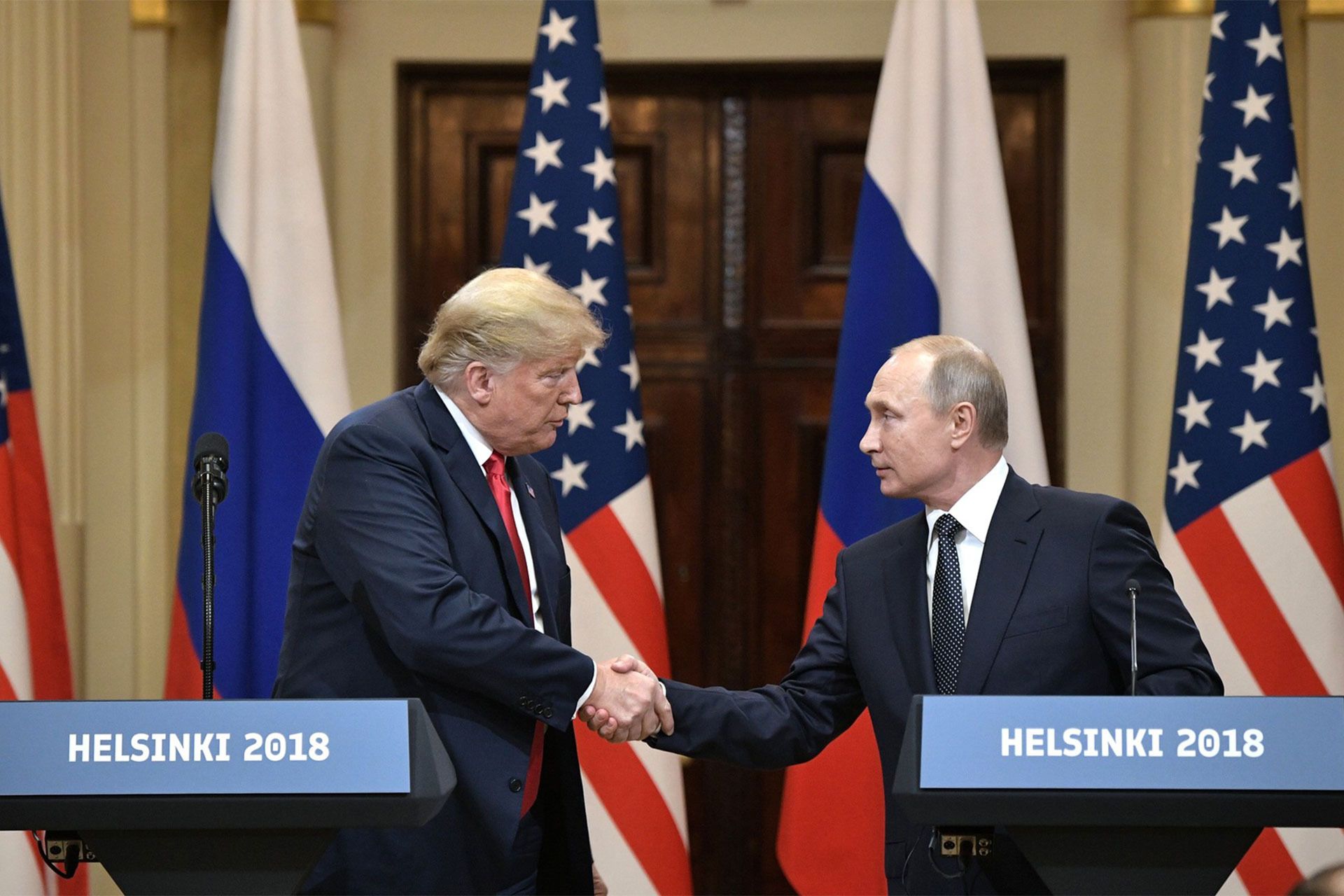
Joint press conference of Vladimir Putin and Donald Trump, Helsinki, July 16, 2018. Photo: kremlin.ru
When the head of the Central Bank, Elvira Nabiullina, spoke in 2022 about structural restructuring of the economy, most focused on the departure of foreign companies, sanctions, and financial system restrictions. However, now, more than three years later, it becomes clear that the main issues were labor and capital.
Capital here is understood as the total sum of assets capable of producing the necessary products – and the problem was not only that it was necessary to replace the foreign capital that left or was cut off by sanctions, but also that production had to be redirected from the civilian sector to the military one. Accordingly, labor had to be modified – from replacing the workers who left, both foreign and domestic relocators, on one hand, and the mobilized on the other, to the flow of labor resources into military industries. Plus the restriction on the use of migrant workers in the sensitive defense sector, plus persecution of the same migrant workers by law enforcement, which limits their use even in civilian sectors.
Credit is due to the government – the restructuring was carried out harshly and efficiently. Defense factories received workers for full capacity due to a sharp rise in wages and mobilization exemptions; the front was initially replenished by mobilized personnel and then regularly supplemented with contract soldiers – thanks not only to high payments but also to the most sophisticated methods of coercion and deception. Consider the payments to law enforcement officers for each person who signed a contract under their pressure – a completely medieval practice of army recruiters.
Yes, almost all reserves were spent on these goals, military expenditures took the dominant share in the budget, and there is no doubt that if there is not enough money, it will be taken from any other budget items. But capital was lured to the khaki side not only by budget money but also by creating unequal conditions for the civilian sector. Who takes loans at unbearable interest rates? Who bears increasing tax burdens? Who suffers from delays in financial transactions? The civilian sector. Meanwhile, the “defense industry” enjoys preferential loans, 100% advance payments on government orders, payment deferrals, and everything else. Working for the war became profitable – so it’s no surprise that today getting a government contract related to the military, even if it’s shoe-making or producing rations, is considered a huge success.
In the event of a cessation of hostilities for a truly unforeseeably long period, production will have to perform a dangerous maneuver called “all sails set at once” in the navy.
It is clear that the defense order will not decrease – the government will replenish the stocks spent during the years of war. But the pace of replenishment may then slow down. And that means the expenses, which currently occupy 40% only on purely military items, can be reduced over the years, stretched out over time.
After all, the same million shells can be produced not in a couple of months but over a couple of years, and nothing terrible will happen. This will lead not only to a proportional reduction in government orders but also to a decrease in prices for military products. Because now there is a surcharge for urgency – and in peacetime, prices can be negotiated. Especially since the narrowing of financial flows will intensify competition.
The demand for labor in defense industries will also decrease. Especially since mobilized personnel and some contract soldiers will return from Ukraine. Most likely, a sharp reduction of the army will be avoided: contract soldiers can be forced to fulfill their contracts for the required number of years. But mobilized personnel will have to be sent home after the end of hostilities. How many will there be? About 300 thousand were mobilized, according to official statistics. The total number of deaths during the war, according to various estimates, is about 100 thousand. Even if we assume they are all from the mobilized (which is certainly not the case) and subtract the wounded, at least 100 thousand people will return with the question: “And where is the decent job for the hero of the special military operation?”
In fact, it will be more profitable to partially release contract soldiers: they were recruited at a high price. In peacetime, they can easily be replaced with new, cheaper ones, or even conscripts – since there are no hostilities, they can be involved. Especially since Russia recognized as its own four Ukrainian regions and is unlikely to refuse this recognition.
Currently, about 600 thousand people are fighting in the army – so at least 300 thousand will likely appear on the labor market.
Workers from the defense industry who were laid off (or left due to wage cuts) will also enter the market. They will also need to be placed somewhere, and given their skills, they will likely be placed in the manufacturing industry. And it has degraded in the civilian sector over these years – just look at how the shortened workweek is being introduced at Russian car factories.
These and other dangerous aspects of the economy’s remobilization are surely visible and taken into account by the government. Based on this, it can be assumed that between cutting military spending and minimizing the dangers of remobilization, the latter will be chosen. And that means the budget will continue to increase its deficit.
The sanctions issue
Almost any information about possible demands on Russia is accompanied by a desire to get rid of sanctions. There have long been no boastful statements about their benefits. But, strangely, not every lifting of sanctions can be harmless.
Take the most pressing issue for the Russian authorities – energy sanctions. Indeed, no matter how much they complain that oil tankers with Russian oil successfully bypass them, the collapse of oil revenues to the budget speaks for itself: sanctions reduce revenues. As for gas, Gazprom's losses are also quite telling. But what will happen if these sanctions are lifted? First, global oil prices will fall. Second, oil companies will try to export everything they can – they won’t care about maintaining high prices; they need to close financial gaps. Considering that the Persian Gulf countries, led by Saudi Arabia, have prematurely fully abandoned voluntary production cuts, the deflationary race could push oil prices below $50/barrel, which the Russian budget simply cannot withstand.
Gas is even more unclear. For Gazprom, it is important to resume gas exports to Europe. But the EU has refused to use the Nord Stream pipelines. And even if Donald Trump's idea of handing over “Nord Stream 2” to the US works, the main income from gas exports will clearly not go to Gazprom. Meanwhile, the European market is currently well supplied with LNG, and gas is supplied under long-term contracts. Who will break contracts for Russian gas that can again be stopped at the flick of a presidential hand? A rhetorical question.
Or consider the freezing of assets of Russian investors in Western depositories and the mirrored freezing of foreign investments in Russia. For Russian investors, this is a crucial issue. For Europeans, whose depositories hold the assets – an annoying but not very important matter. For the US – since Russian investors mostly invested in American stocks – these securities are a drop in the ocean. At the same time, Western investments frozen in Russia account for about 60% of the pre-war stock market. Moreover, these are mainly government debt obligations – OFZ bonds. If unfrozen, the government may face a severe collapse of the bond market – and stocks as well. At the same time, the Ministry of Finance may forget about normal placement of new debt – which will also hurt the budget.
Even when talking about something seemingly obvious, like restoring permission to fly over the EU and lifting sanctions on aviation equipment, the effect is not obvious.
Yes, airlines will be able to sort things out with leasing companies and again repair and service their foreign airplanes at manufacturers. But it will take time to bring the fleet into order. And lifting flight sanctions is mutual – which means that while Russian planes are being serviced, foreign carriers will dominate the air transport market. And that’s if you believe European regulators won’t nitpick when granting Russian planes access to their airports.
These are just a few examples, but they show that the Russian economy, distorted by sanctions, will “straighten out” with difficulty and inevitable losses. At least at the initial stage.
The market – there
The problem of employment for those returning from war and laid off at defense enterprises has already been mentioned. But business will also face hard times. Today, it is often difficult to completely separate civilian business income and income from the war. Never mind the assembly of drones. But cafes whose customers are workers from the same drone assembly shop. Or taxi drivers clustered in groups at frontline checkpoints, earning by transporting soldiers on leave and back. Or consulting firms skilled at preparing bids for government tenders. Are they purely civilian sectors or not quite? Strictly speaking, civilian, but their income will sharply, if not to zero, drop after hostilities cease.
But these are all “small fry,” and there are potentially bigger victims. For example, importers – how much will their income fall when there is no need to transport “sanctioned goods”? And when and if foreign brands return? And what about AvtoVAZ or KAMAZ – how will they manage “import substitution,” sticking their own labels on Chinese names when normal cars are brought back into the country? And other “import substitutes,” which now win not by quality but by lack of alternatives – where will they go?
It is now even difficult to imagine how many and in which sectors companies will suffer if sanctions are lifted.
And their shares are traded on the stock exchange today, their taxes replenish the budget – which, let us recall, is already not in the best state. And most importantly – the modus operandi of competitive struggle will sharply change again. If today you need to be able to timely offer your product to the state through the right people, securing preferential conditions, then after lifting sanctions, it will be necessary to return to Western business practices, which many of today's import winners did not master.
***
So, you might exclaim, are sanctions really good for us? No, of course not. Abnormal, artificial conditions are always bad. An economy bottled up by war may seem lively, but once the bottle breaks – unpleasant consequences will follow. The compradors of the Russian economy may be useful in the freak show, but to return to normality, suffering will have to be endured.
If you enjoyed this article, consider making a donation — one-time or, even better, monthly. Your support helps us motivate our authors and become better with every article.
Our organization is recognized by the Internal Revenue Service (IRS) as a 501(c)(3) tax-exempt, charitable organization, which means that all contributions made to us are tax-deductible to the fullest extent permitted by U.S. law. Individuals may generally deduct charitable contributions of up to 60% of their Adjusted Gross Income (AGI) for cash donations made to qualifying 501(c)(3) organizations. For donations of appreciated assets (such as stocks or other long-term capital assets), the deduction is typically limited to 30% of AGI, based on the fair market value of the asset. C-corporations may deduct charitable contributions of up to 10% of their taxable income for donations made to eligible charitable organizations.
By submitting a donation, you confirm that you have read and accept the following documents: Privacy Policy and User Agreement, and also give consent to the processing of your personal data.
If you would like to unsubscribe from a monthly donation, please email us at: [email protected]