The sharp drop in university admissions last year is easy to explain by government policy, where “loyalty is valued over intelligence.” But the reasons for the crisis in higher education run much deeper.
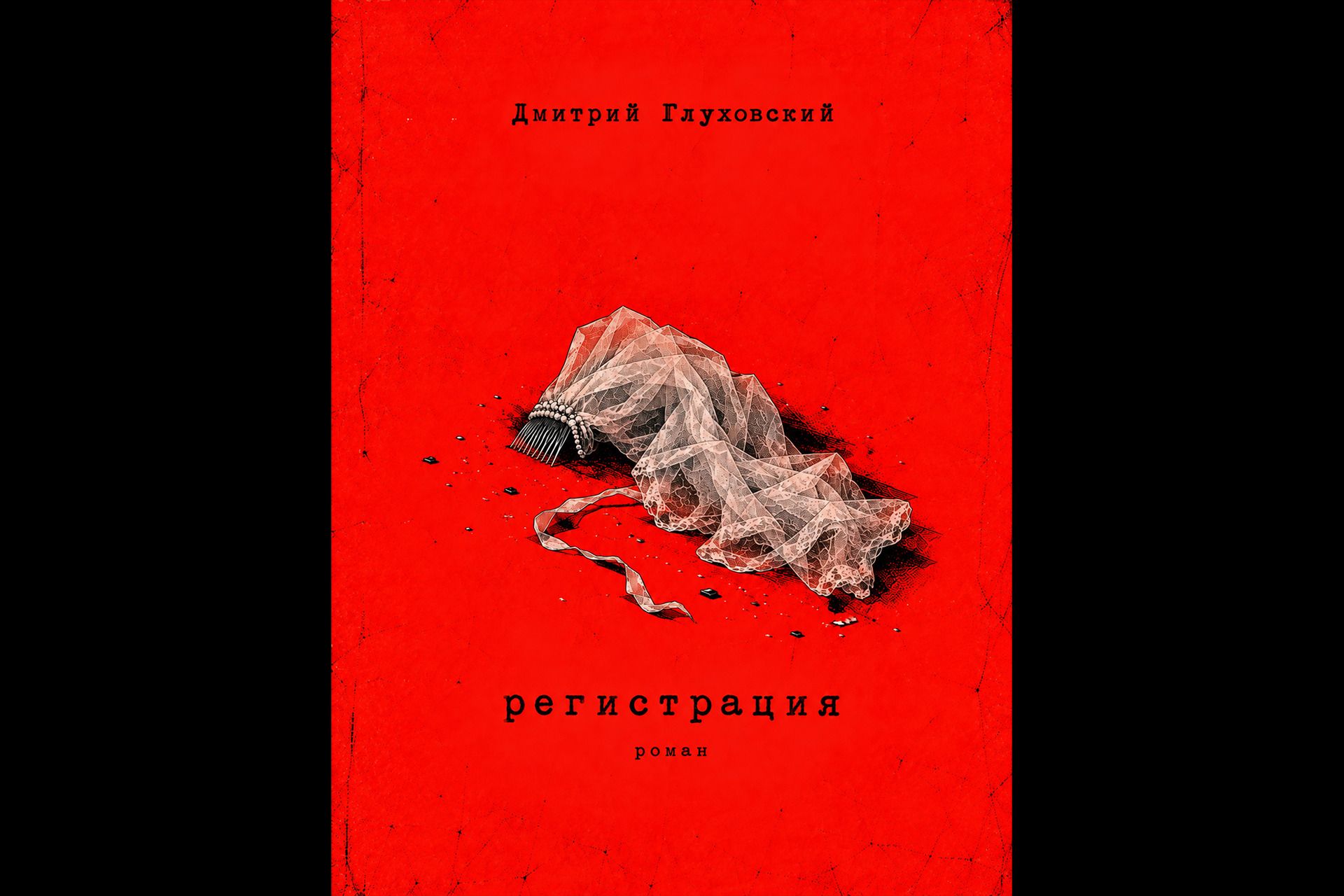
Illustration: Seedream 4.5
The decline in student numbers, which has been noted with concern by economist Nikolay Kulbaka, is an important but far from the only symptom of the illness affecting Russia’s higher education system. This problem didn’t start today, or even yesterday.
University classrooms have emptied out before. In 2017, only 920,000 students were admitted to the first year of Russian universities; of them, 505,000 were on government-funded spots, and 415,000 were paying tuition. While these numbers can be explained by the “demographic pit” of the late 20th century—universities were enrolling children born in the turbulent ‘90s—the unprecedented drop in applicants last year is unlikely to be due to demographics.
“According to preliminary data, 904,000 high school and college graduates were admitted to universities, including more than 440,000 to government-funded spots and 464,000 on a paid basis,” reported Minister of Science and Higher Education Valery Falkov at a presidential meeting with the government in September 2025. For comparison: according to the Russian government, in 2024 1.298 million people became first-year students—a third more.
Last year’s dramatic drop in first-year students can be explained by a deliberate state policy where “loyalty is valued over intelligence.” After all, it’s hard to disagree with Brodsky, who said: “For a person who has read Dickens, it is much harder to shoot someone like himself for any idea than for a person who has not read Dickens.”
However, the reasons for the crisis are much more serious.
***
In the late 1990s, after working as a school psychologist, I joined the Department of Sociology and Management Psychology at one of the provincial universities of the Russian Academy of Public Administration, which has now become part of RANEPA.
The motives of officials obtaining a second higher education were clear: they needed a diploma to meet new qualification requirements. That’s how former teachers and officers became media specialists, political scientists, and lawyers. The most ambitious or well-connected didn’t settle for less and defended their dissertations. “By duty, I read all the works,” the academic secretary of the dissertation council in Moscow told me then. “Ninety percent of them could be safely thrown in the trash.” Still, the system ran smoothly: everyone who wanted a diploma got one, and dissertations were defended.
High school and technical college graduates no longer wanted to become “businessmen” or gangsters: a significant part of the so-called “traders,” as businessmen were contemptuously called, had already gone bankrupt, and their iconic crimson jackets, now part of folklore, were being eaten by moths in closets. The fate of the latter was even sadder.
A higher education diploma in late 1990s Russia seemed like a guarantee of a successful and promising career.
At first, that was true. Meanwhile, rectors of small pedagogical institutes were opening new faculties one after another, and teachers were inventing new courses and rewriting teaching guidelines and curricula. Of course, new specialties required teachers with the right qualifications, but the same system of second higher education came to the rescue. It was difficult but possible for a pedagogical institute to get university status: commissions from Moscow were only interested in properly completed paperwork and compliance with ministry requirements—which they themselves formulated.
The university leadership was easy to understand: newly established faculties like law and economics attracted applicants, and their parents were willing to pay for tuition, which, in a time of severe funding shortages, allowed these new universities to stay afloat and teachers to keep working.
Additionally, universities sharply lowered admission requirements: according to an HSE ranking, in 2014, students with below-average math scores (from 35.4 to 39.6) were admitted to programs in “Aviation and Rocket Engineering,” “Light Industry Technologies,” “Transport Vehicles,” “Mechanical Engineering,” “Technological Machines and Equipment,” “Automation and Control,” and “Energy and Power Engineering” at 28 universities. “At the Moscow Aviation Institute, there are freshmen with an average score of 34.7, and at the Baltic Technical University in St. Petersburg—36.3,” wrote the magazine Ogonyok at the time.
The process continues: last year, the average Unified State Exam score among paying students fell to a seven-year low of 61.9, while for government-funded students it was 69.8.
All this has led to the university diploma no longer being a “social elevator,” as Nikolay Kulbaka rightly points out. A degree is still required, but it’s no longer the only condition for professional success. Moreover, today the Russian economy, in a state of so-called “negative growth,” cannot absorb so many young people with diplomas, which often no longer guarantee real knowledge or skills.
It seems that schoolchildren and their parents have already realized this.
Instead of spending many years studying and ending up as taxi drivers, couriers, salespeople, or security guards with higher education, young people are becoming “blue-collar workers” after school.
According to the press service of the Russian Ministry of Education, in 2025, 1.3 million people enrolled in colleges and technical schools—63% of ninth-graders. Currently, 3.9 million students are studying in secondary vocational education. “We have reached these record numbers for the first time in fifty years,” said the ministry. “Only in the 1970s were there 4 million students in technical schools and vocational colleges.”
***
Is this good or bad? In my opinion, it’s good.
First, let me remind you: in Soviet times, the competition for accounting or medical colleges was not much lower than for some faculties at teacher-training institutes; as a result, not only C-grade students enrolled there.
Second, to work as an accountant for a small company or as a bank operator, you don’t need to know how the stock market works.
And third, studying at college gives you time to seriously consider: is it worth continuing your education (which is always an option)—or is what you’ve learned already enough? A job as a pharmacist in a pharmacy or a skilled worker at a factory is a perfectly respectable and pragmatic choice.
Even if we assume that the current focus on secondary vocational education will help improve the quality of higher education, it won’t solve the most important problem.
In a situation where Russia spends no more than 1% of its GDP on research and development (R&D), significantly lagging behind world leaders—Israel (6.02%), South Korea (5.21%), the USA (3.59%), and China (2.8%)—soon even highly qualified specialists of any educational level will simply have nowhere to realize their potential. To fix the situation, according to presidential advisor Anton Kobyakov, the country now needs “a qualitative breakthrough in this direction: tenfold, twentyfold.“
A reduction in the number of people with higher education diplomas alone won’t turn Russia into Carcosa from Ambrose Bierce’s story—a hopeless place abandoned by everyone, with no prospects.
But the desire to achieve incomprehensible goals at any cost, to the detriment of development (whether due to a banal lack of money or something else), just might.
If you enjoyed this article, consider making a donation — one-time or, even better, monthly. Your support helps us motivate our authors and become better with every article.
Our organization is recognized by the Internal Revenue Service (IRS) as a 501(c)(3) tax-exempt, charitable organization, which means that all contributions made to us are tax-deductible to the fullest extent permitted by U.S. law. Individuals may generally deduct charitable contributions of up to 60% of their Adjusted Gross Income (AGI) for cash donations made to qualifying 501(c)(3) organizations. For donations of appreciated assets (such as stocks or other long-term capital assets), the deduction is typically limited to 30% of AGI, based on the fair market value of the asset. C-corporations may deduct charitable contributions of up to 10% of their taxable income for donations made to eligible charitable organizations.
By submitting a donation, you confirm that you have read and accept the following documents: Privacy Policy and User Agreement, and also give consent to the processing of your personal data.
If you would like to unsubscribe from a monthly donation, please email us at: [email protected]