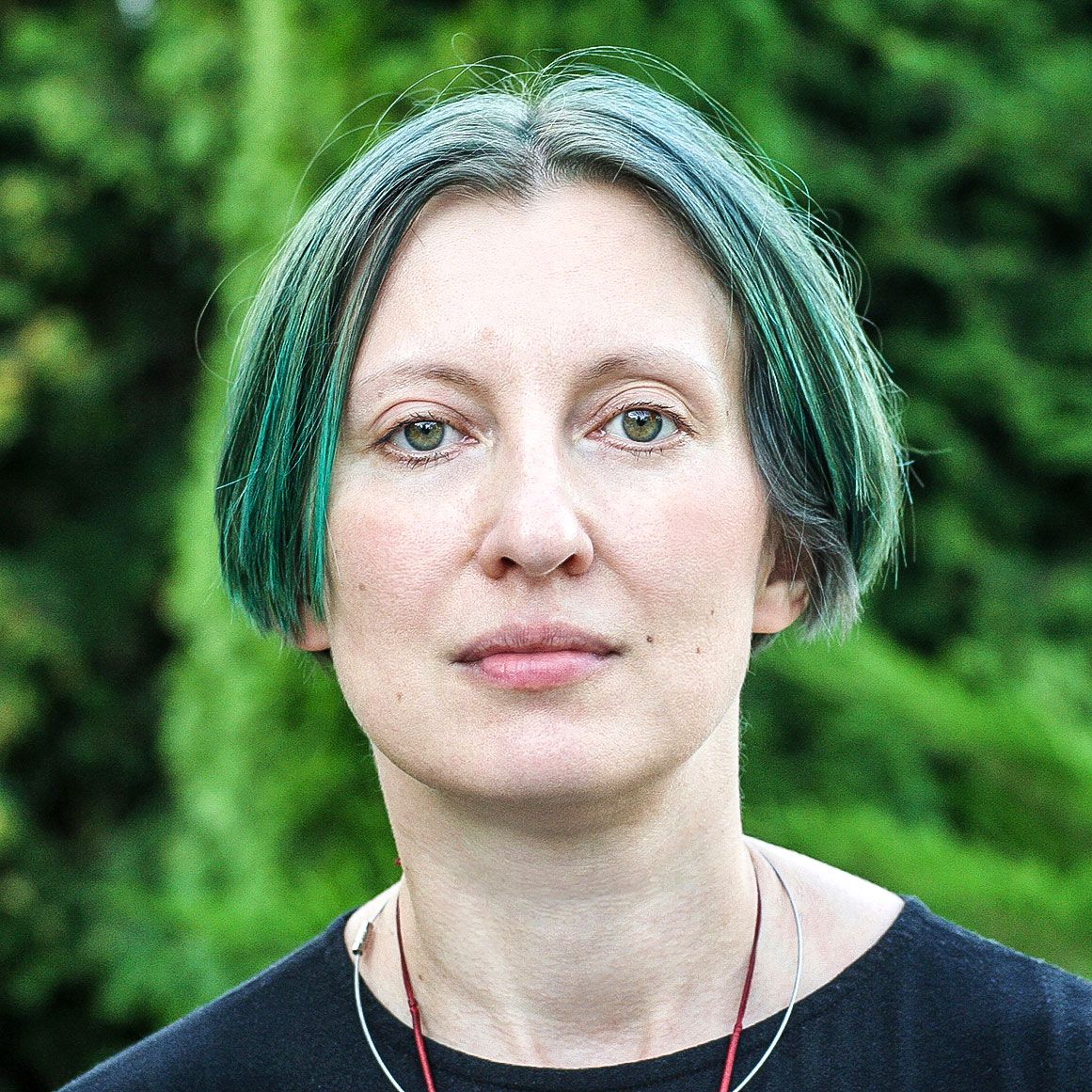
“I have three criminal cases, and the court appointed me as the head of an extremist organization, even though I’m an anarchist and against hierarchies,” Maria Alyokhina says with a smile, describing how she is currently being persecuted by Russian authorities. In 2023, the Icelandic parliament granted her citizenship, allowing her to travel freely around the world with her show. Riot Days (idea and creative producer — Alexander Cheparukhin) has been performed about 500 times on all continents and has won numerous awards, including all the main prizes of the Edinburgh Festival. Before the new European tour, which starts today in Paris, we spoke with one of the most famous members of Pussy Riot about Russian protest art after their punk prayer.
- How are you living now, as an Icelandic citizen?
- An Icelandic citizen doesn’t live in Iceland. I’m incredibly grateful to the Icelanders for giving me a travel document for free movement. I left Russia, first of all, not wanting to leave, and secondly — I had an electronic bracelet and no international passport.
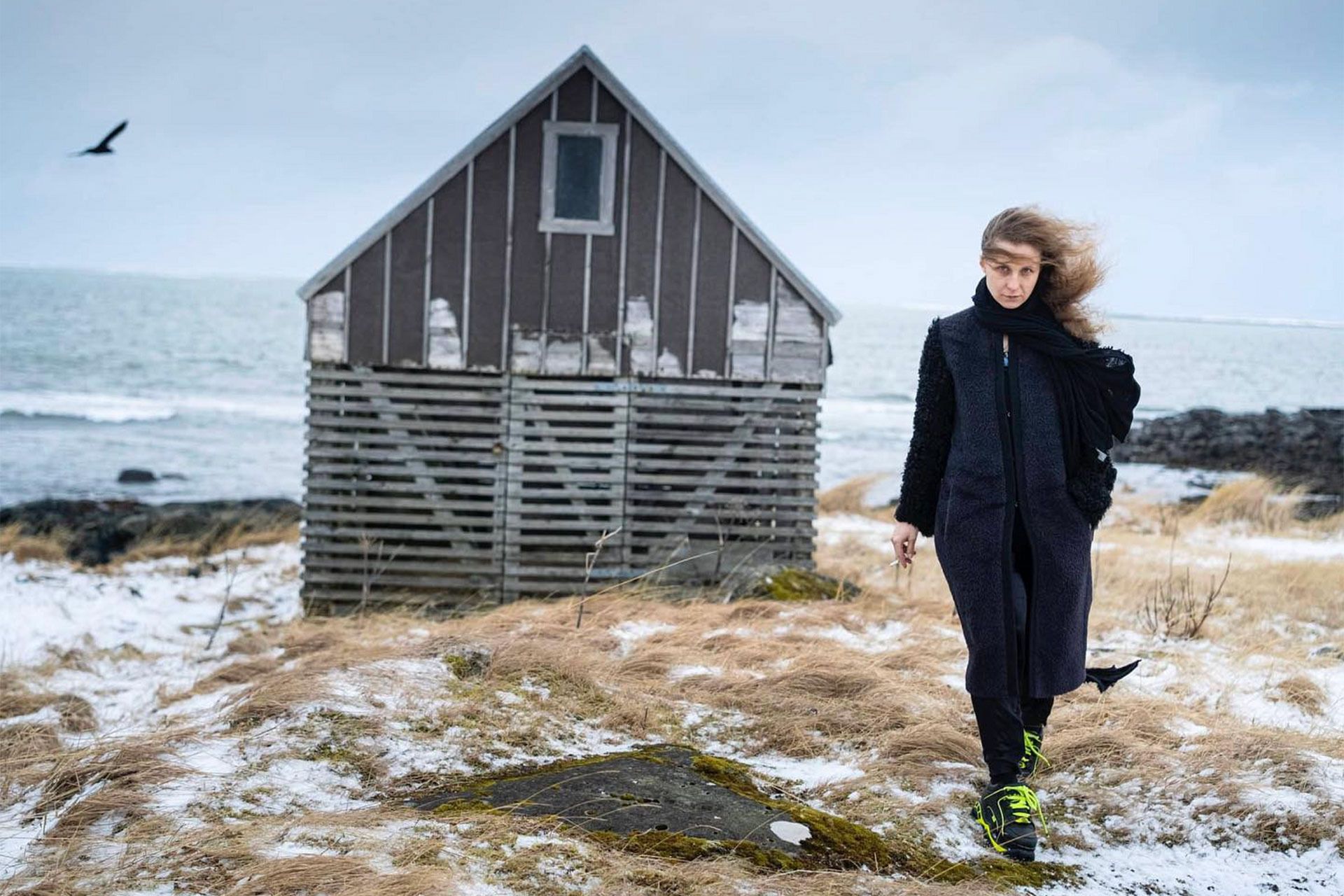
The fact that they gave me citizenship makes it possible to perform, including with this show, and to fly freely around the world. They really helped me a lot. But I don’t live there. I don’t really live anywhere — and at the same time, everywhere. Dozens of apartments, hundreds of hotels, friends’ couches, guest rooms of loved ones. I haven’t chosen anything yet. It’s not some kind of statement — it just happened that way.
We’ve been performing Riot Days since 2017. Back then, we made a show based on my first [eponymous] book about the 2012 “punk prayer” action, the song “Mother of God, Drive Putin Away,” and my prison adventures. In 2025, we did a reconstruction — removed some fragments and added new ones from the second book, which is about everything that happened afterwards.
I work with amazing people, a very strong team. Alina Petrova — not the newest member anymore, she’s been with us since 2023. An academic musician, violinist, with a protest soul. Taso Pletner — a non-binary person, actor from the Brusnikin Studio, LGBTQ+ activist, a very talented person with a sensitive soul. In February there was an appeal, and five Pussy Riot members received sentences. Alina and Taso got their first terms: eight and eleven years respectively, for a music video and an anti-war performance.
Eric [Breitenbach] has been with us since last year, he’s from Canada. When Alina couldn’t perform due to participating in Zhenya Berkowitz’s play based on Lena Kostyuchenko’s book, Eric learned the whole show in a month. The music isn’t a single track — it’s dozens of audio switches tied to Russian lines. Explaining all this wasn’t easy.
My life used to look like this: we’d do a show in the West, I’d return to Russia, bring money to political prisoners, participate in actions, rallies, end up in police stations. Then that stopped. And the money from merch — T-shirts, books — we started sending to Okhmatdet, a children’s hospital in Kyiv, which we supported for three years.
The point is, I stopped coming back — I just kept going. And I guess I still live that way.
- It was a revelation for me that Riot Days doesn’t sound at all like what’s associated with Pussy Riot. Everyone remembers the punk prayer, “Putin chickened out” — and here it’s a full-fledged musical show. How did you come to this?
- I didn’t come to it myself. I have a friend, Nastya — she’s the one who brought me into Pussy Riot. In the first actions — on trolleybus roofs, on the roof of the detention center, in the “anti-glamour tour” — I didn’t participate. I joined when the idea for the action on Red Square with the song “Putin chickened out” appeared, that was January 2012.
Nastya has been my friend since school. I went to six schools, was a problem child, and from my first school, I have one friend left — her. She participated in the group “Voina.” When “Voina” broke up and it became clear there would be a new project, Nastya was in it from the very beginning. She’s a professional musician, bassist. She had a studio at home where the songs were recorded. She has a powerful voice — the “punk prayer” is mostly recorded with her voice, about 85% of it.
If we go back to the fact that the songs sound different, and return to 2017, when we made Riot Days — we put it together with Nastya, her musical partner Max, and Kirill, who came to us from the Belarus Free Theatre.
Nastya is the person who sings the punk prayer, but didn’t participate in the action in the church herself. With her and the whole team, we made versions of the songs that are played in Riot Days. I wouldn’t call them arrangements — rather, they’re separate versions.
- So, Nastya is the Bassist from your first book. Does she participate in Riot Days now?
- No. She and Max left in 2018. They wanted to focus more on their own tours. Now Nastya has a child. We’ve been in touch less, especially since the war began.
- Tell me, is Pussy Riot still alive as a project? Or have you split up and everyone does their own thing?
- Everything changed a lot after we were imprisoned. A small anonymous group from Moscow turned into a global image — three girls in a cage.
A lot has happened since then. But in short: as long as people are doing something — it’s alive. Anyone can be Pussy Riot. There have been many new actions, many new people who brought their ideas and started projects. And it’s not just actions — it’s also humanitarian and human rights initiatives. After prison, that became a significant part of what we do.
- After the criminal cases and sentences in absentia, do new members still join? How do people join Pussy Riot now?
- There’s no closed community. It’s not a membership. For me, it’s like this: anyone can consider themselves Pussy Riot. In December 2025, the Supreme Court recognized Pussy Riot as an extremist organization. This means that any like, repost, comment, or symbol can lead to up to five years in prison for someone in Russia. So we can only talk openly about those outside Russia. But if you care — please welcome.
- When you were arrested for “offending the feelings of believers,” your son Philip was five. Now he’s 18. What does he do, does he take part in what you’re doing?
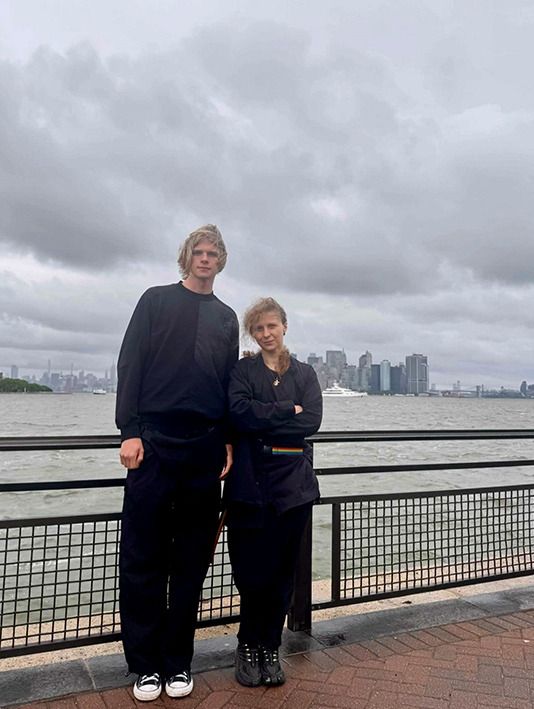
- He’s flying to Paris via Krakow with a friend, he’ll come to our concert. He lives in Vilnius — he moved there on his own. Last year, Iceland also gave him citizenship. And on the very day we flew in to get the passport, my mom sent me a photo of a summons [to court for Maria’s criminal case — Most.Media]. That was an interesting day.
Masha Alyokhina with her son Philip. Photo: Masha Alyokhina’s Instagram
Every time the war touches you directly, it’s impossible to believe it. I’ve been to Kyiv, Kharkiv, Odesa. And every time you go through it physically, it’s an indescribable set of very strong feelings.
- Did you perform there, or just visit?
- Just visited. I went to Okhmatdet, to friends. I wanted to see and feel as much as possible.
- Can you put into words what you felt?
- I was struck by people’s kindness — despite constant missile strikes and endless funerals. People don’t give up. They thank you for help. And it’s a very strong feeling — when you realize you’re a citizen of a country that’s bombing them, and they still say “thank you.” That can melt any heart.
- Is it possible for your show to be performed in Ukraine while the war is ongoing?
- Technically — no, because of the [Russian] language, it’s the law. I haven’t even seriously discussed it. I’d be more interested in learning something there — tactical medicine, for example. But not performing.
- You talk about endless funerals in Ukraine. In Russia, on a different scale, the same is happening. How do you see Russia now, in the fifth year of the war?
- I think first of all about political prisoners — about people who get huge sentences and are held in horrific conditions.
I think about the hidden network, essentially concentration camps, in the occupied territories. Tens of thousands of people are held incommunicado. When they are transferred to regular institutions, details of torture come to light that were unimaginable. Speaking of documents — Victoria Roshchina’s diaries are probably the most powerful I’ve seen.
I also think about people who do underground resistance actions. For me, they are the real citizens of the country.
As for the majority — it’s the trauma of being a witness. People are physically in the country, but can’t exist there politically. This is the opposite of many who left: they can act politically, but are not at home. And that’s a trauma too. I wish people would write about it — so there would be testimonies left.
As for those who sign a contract and go to fight — my position from the very beginning has been to support Ukraine. Peace and love — that’s not really about me.
- Fourteen years ago, during your punk prayer, the possibilities for artistic reaction to what was happening in Russia were completely different from today. In 2026, they are vanishingly small. Of the latest high-profile actions, perhaps only Pavel Krisevich’s AI protest on Lobnoye Mesto comes to mind — because real protest would have meant another arrest. There’s Naoko and “Stop Time“...
- I really like them. Even though we have different positions, they’re great.
- Why different positions? - First of all, regarding military support for Ukraine.
- Yes, they have a pacifist position, basically — against all wars.
- When Eric and I were doing readings from my second book in London, and at the same time there was a concert by two other groups, we raised money for the guys while they were in the detention center. I’m in touch with them, they’re cool and really good people. I really liked their street song videos in those conditions, when [in Russia] there is no [public] protest at all.
- In any case, in Russia, high-profile protest actions involving art since the start of the war can be counted on one hand. There’s the story of Masha Moskalyova’s anti-war drawing and Pavel Talankin’s documentary film “Mr. Nobody Against Putin,” which won an Oscar. That’s all.
- Well, no, I don’t quite see it that way. The fact that a director from Karabash won an Oscar [for best documentary] — that’s just cool! The chance that something like this could even happen in the world is pretty small, but it did.
Maybe I’m an optimist, who knows, but here’s what I think. In the 90s, there was a whole cohort of contemporary artists in Russia, but nine years with two wars, with inflation, with chickens, damn it, in the kitchen — that’s too little time and it’s unrealistic for Russia to become an independent country in principle. The chance that it could work out with a Chekist who wants to reproduce a new version of the Soviet Union was small. Another matter is whether a real revolution is possible in the globalized world of the 21st century with Donald Trump as president of America? Big question. But again, I think a bit of optimism wouldn’t hurt here either.
Many years ago, when I was a student at the Literary Institute and a member of two poetry circles, at some point I wondered: why are there amazing, super-strong poet groups from the early 20th century, the 1930s, there are interesting communities from the 50s, rather dark and cool, like Satunovsky’s barrack lyricists — but almost nothing since the war? Of course, there’s war prose, but there’s no art as such. Why is that? Is it possible to make art when you’re physically in a state of catastrophe? Art assumes the catastrophization of life and turning it inside out. But if life has already become a catastrophe, what can art do with it? It’s an open question, and it would be interesting to think about it.
Schedule of the new Riot Days European tour is here. In Paris, the show will take place on April 2 at 7pm at La Marbrerie Center.
If you enjoyed this article, consider making a donation — one-time or, even better, monthly. Your support helps us motivate our authors and become better with every article.
Our organization is recognized by the Internal Revenue Service (IRS) as a 501(c)(3) tax-exempt, charitable organization, which means that all contributions made to us are tax-deductible to the fullest extent permitted by U.S. law. Individuals may generally deduct charitable contributions of up to 60% of their Adjusted Gross Income (AGI) for cash donations made to qualifying 501(c)(3) organizations. For donations of appreciated assets (such as stocks or other long-term capital assets), the deduction is typically limited to 30% of AGI, based on the fair market value of the asset. C-corporations may deduct charitable contributions of up to 10% of their taxable income for donations made to eligible charitable organizations.
By submitting a donation, you confirm that you have read and accept the following documents: Privacy Policy and User Agreement, and also give consent to the processing of your personal data.
If you would like to unsubscribe from a monthly donation, please email us at: [email protected]