Back then, no one thought that war would turn out to be only the first — the Second Chechen War began in August 1999. Both key participants in the Khasavyurt Accords did not live to see its end.
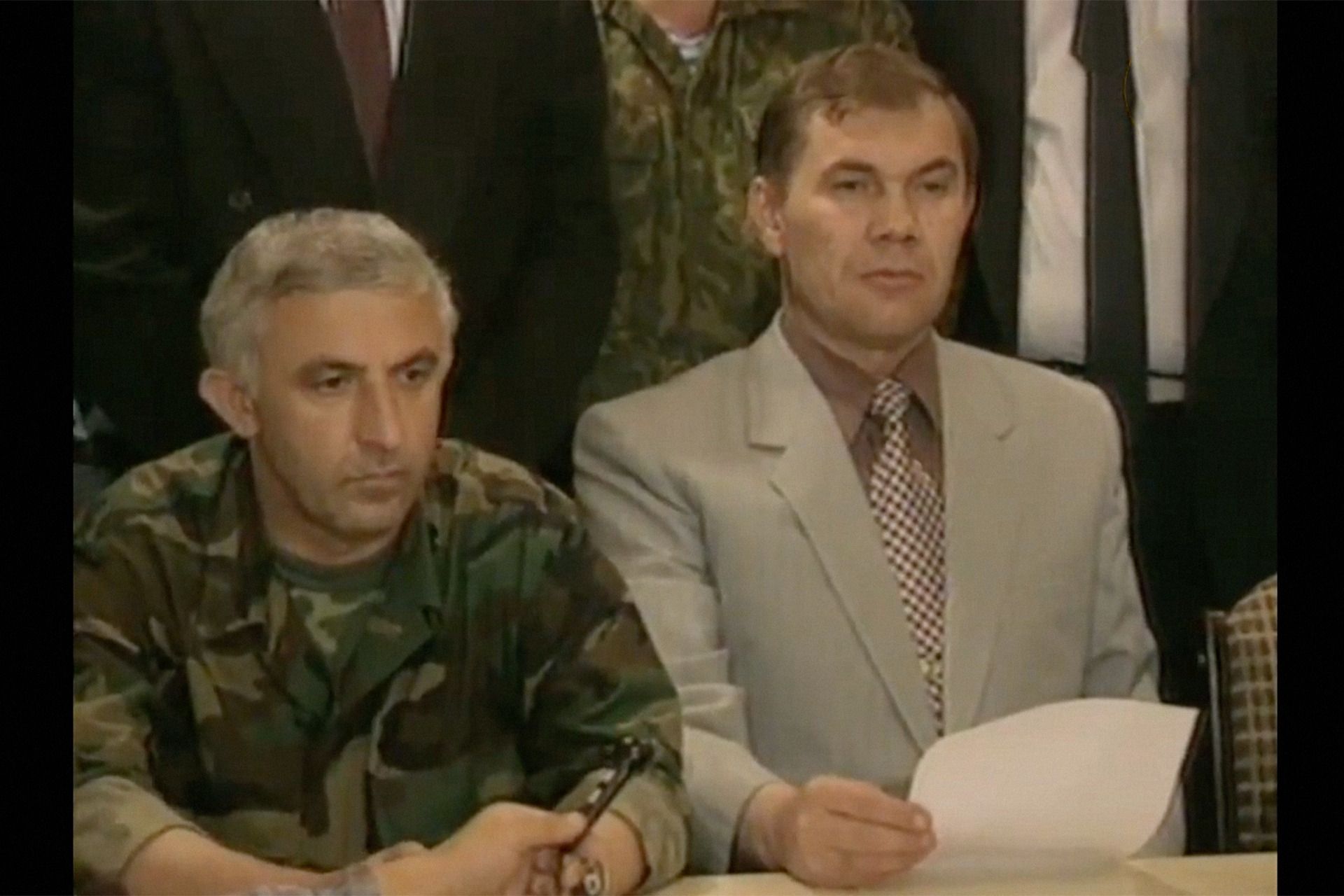
Signing of the Khasavyurt Accords, August 31, 1996. Frame from video: YouTube
Exactly 30 years ago, on August 31, 1996, in the Dagestani city of Khasavyurt, the Secretary of the Russian Security Council, Alexander Lebed, and the President of the Chechen Republic of Ichkeria, Aslan Maskhadov, concluded agreements that brought the Russian-Chechen war to an end. The issue of Chechnya’s state status was postponed until December 31, 2001. By that deadline, relations between Moscow and Grozny were supposed to be defined on the basis of international law.
This was a unique event in Russia’s post-Soviet history. Yeltsin’s RSFSR in 1991 easily recognized the sovereignty and independence of all the other union republics of the USSR. But when it came to its internal structure, Yeltsin remained an absolute imperialist.
Yes, in 1990 in Kazan he declared: “Take as much sovereignty as you can swallow”. But that was only a nice slogan. In reality, the Chechen Republic (which was governed by General Dzhokhar Dudayev, who had returned from Estonia) was precisely the one that “swallowed” the maximum amount of sovereignty by proclaiming itself an independent country. But this greatly alarmed Yeltsin, and in December 1994 he sent tanks there.
It should be noted that the Chechen Republic did not sign the Russian Federation Treaty of 1992 and therefore, de jure, could not be considered part of the Russian Federation. Chechnya also did not vote for the Russian Constitution of 1993. Nevertheless, the Yeltsin administration declared the formal pretext for the invasion of Chechnya to be the “restoration of constitutional order”.
This was a clear revival of imperial thinking, disguised as the formal legal pretexts of Soviet times. The idea was that if the Chechen-Ingush ASSR was part of the RSFSR, then it must remain part of the Russian Federation as well. And if the republic wanted to be independent, that was separatism and had to be suppressed.
Here it is appropriate to recall the story of General Alexander Lebed. In the early 1990s, he was portrayed as a kind of imperial hawk. And he himself gave grounds for that: in 1995 his book, “It’s a Shame for the State”, was published, in which he deeply lamented the collapse of the USSR. But in that same year, Lebed resigned from the Russian army, won a seat in the State Duma, and became an independent politician. He said that a general’s mission is not to start wars, but to end them. And he openly opposed the Chechen war, to the surprise of those who considered him a “militarist”.
In the first round of the 1996 presidential election, Lebed came in third. This was a clear demand from society for a “Russian de Gaulle” — incidentally, Lebed openly sympathized with this historical figure.To attract the general’s electorate in the second round, Yeltsin appointed him Secretary of the Russian Security Council. In this role, Lebed made contact with Maskhadov and in August agreed to negotiations in Khasavyurt (by then, Dudayev had already been killed four months earlier in a pinpoint missile strike by the Russian Air Force).
On August 31, 1996, Lebed and Maskhadov ended the Chechen war. Back then, no one thought it would turn out to be only the first. The Second Chechen War began in August 1999 after the forces of Shamil Basayev and Khattab invaded Dagestan. And after the September apartment bombings in Russian cities, which the authorities linked to Chechen terrorists, the military campaign received broad public support. It also helped boost the ratings of Yeltsin’s successor, Vladimir Putin.
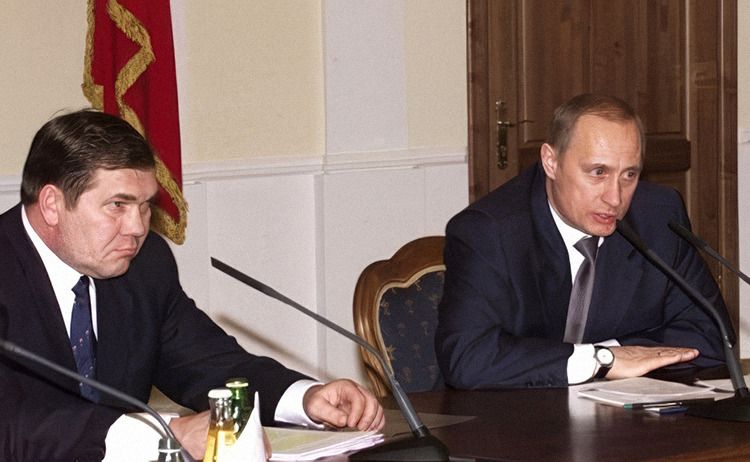
Vladimir Putin and Krasnoyarsk Krai Governor Alexander Lebed at a meeting on the social and economic development of the region. Krasnoyarsk, March 22, 2002. Photo: kremlin.ru
By then, General Lebed had already been governor of Krasnoyarsk Krai for more than a year (Yeltsin had dismissed him from the post of Security Council Secretary back in October 1996). In his new position, he continued to maintain relations with Aslan Maskhadov and proposed returning to the issue of the special status of the Chechen Republic, as provided for by the Khasavyurt Accords. And in September 1999, in an interview with the French newspaper Le Figaro, Lebed said that he was almost convinced of the Russian authorities’ involvement in the apartment bombings (though later he said that the newspaper had distorted his words and taken them out of context).
Full-scale combat operations in the Second Chechen War mostly ended in the spring of 2000, after which the conflict shifted into a years-long guerrilla and counterterrorism phase (formally, the war ended only nine years later, when the Russian authorities lifted the counterterrorism operation regime). Both key participants in the Khasavyurt Accords died in the early 2000s, and both died violently. In April 2002, a helicopter crashed in Krasnoyarsk Krai with General Lebed on board. Maskhadov was killed in the spring of 2005 during an FSB спецoperation in Chechnya.
Chechnya remains a subsidized region: in 2025, about 80% of the republic’s revenue came from transfers from the federal center and budgets of other levels. No one has long since remembered the independence of the Chechen Republic or the norms of international law.
If you enjoyed this article, consider making a donation — one-time or, even better, monthly. Your support helps us motivate our authors and become better with every article.
Our organization is recognized by the Internal Revenue Service (IRS) as a 501(c)(3) tax-exempt, charitable organization, which means that all contributions made to us are tax-deductible to the fullest extent permitted by U.S. law. Individuals may generally deduct charitable contributions of up to 60% of their Adjusted Gross Income (AGI) for cash donations made to qualifying 501(c)(3) organizations. For donations of appreciated assets (such as stocks or other long-term capital assets), the deduction is typically limited to 30% of AGI, based on the fair market value of the asset. C-corporations may deduct charitable contributions of up to 10% of their taxable income for donations made to eligible charitable organizations.
By submitting a donation, you confirm that you have read and accept the following documents: Privacy Policy and User Agreement, and also give consent to the processing of your personal data.
If you would like to unsubscribe from a monthly donation, please email us at: [email protected]