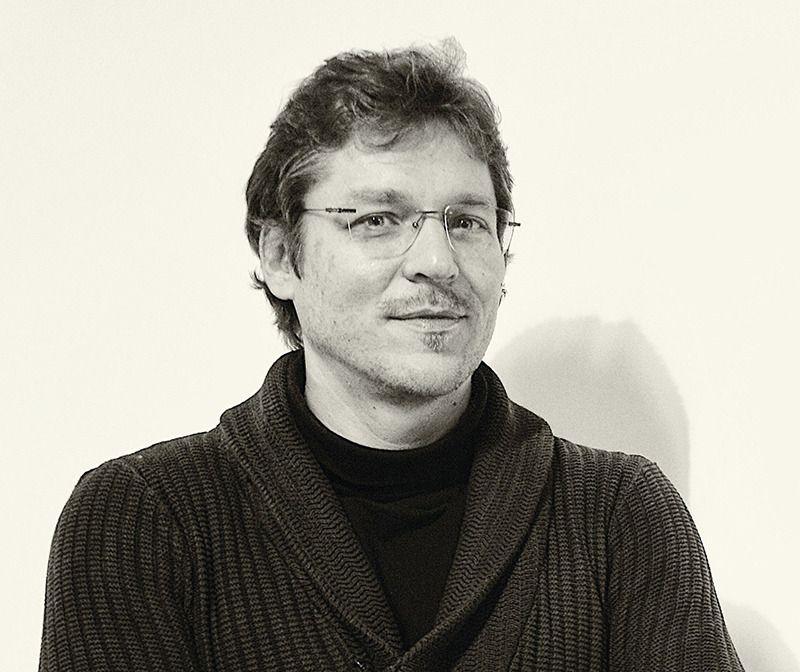
Associate researcher at the Paris Center for Studies of Russia, the Caucasus, and Central Europe, Alexander Bikbov has been studying France’s contemporary protest movement since the late 2010s. In his view, it was at that time that the authorities gave the police permission to use ultra-violence. In essence, the Élysée Palace was frightened by the spontaneous mobilization of the “yellow vests” — and chose to suppress street protests rather than adjust the political course in light of citizens’ demands. This fits perfectly into the global trend toward strengthening state control over public activity. What distinguishes France from many countries is that society here continues to resist.
Frame from the video: YouTube / FRANCE 24
- The protests of high school students that began this autumn in France are accompanied by excessive police violence. How typical is this for France and for the history of the French protest movement in particular?
- Officially, there is no police violence in France. In general, this is the position that the Ministry of the Interior has followed more or less consistently since the late 2000s. Before that, police officers could still be prosecuted for excessive use of force, there were investigations — and to this day courts are hearing cases involving police officers.But since 2019, that is, since the “yellow vests” movement, the official position of the French authorities — the Interior Ministry with the direct involvement of the Élysée Palace — has been that police actions are justified in any case. Unfortunately, this reminds us of some sad zigzags in the evolution of Russia’s institutional system.
And if throughout the 1970s, 1990s, and even the 2000s the voice of the street was listened to in the Élysée Palace and a demonstration often served as that final loud argument that forced the government or parliamentary parties to revisit previously made decisions, then the “yellow vests” — a popular, spontaneous, grassroots, uncontrollable mobilization — became a turning point after which even trade union demonstrations began to be regulated and suppressed quite harshly.
There has been more and more derivative police violence on the streets, and it is very noticeable that the French government today prefers to suppress rather than treat the demands brought by the street as legitimate and worthy of being taken into account in the process of making government decisions.
- How is that possible? France is a republic after all. How did the Fifth Republic come to such disregard for public opinion?
- That is exactly the question the “yellow vests” asked themselves. I interviewed people on the streets during the mobilizations of 2018-19 — and very often, as the protest developed and was suppressed by the police, the question was heard: are we even in France or where? What is happening?
Let’s go back a few steps in history to understand what a street demonstration is. We are used to taking it for granted — in the sense that if people are unhappy about something, they go out into the street, and in France people, as they say, can’t be kept away from the street.
In fact, the street demonstration has a rather short history.In the form of peaceful and regulated expression of one’s political opinion that we know today, it appears in France only in 1935. Before that, there is either a strict ban on any protest activity in street space, which is suppressed with complete ruthlessness, or spontaneous gatherings — crowds, masses that take to the street in extreme cases, express their opinions spontaneously and irresponsibly, and quite often end for the participants with injuries or even death.
1935 is a turning point, when confrontation between the far right and far left intensifies in the streets. On one side — the Communist Party, which is growing, and the labor movement, which is taking on an increasingly politicized form. On the other — numerous leagues of the far right, monarchists, fascist-leaning right-wingers, those who look at the development of right-wing movements in Germany and are inspired by them. It comes to what happened some time ago in America [in January 2021, when supporters of the defeated Trump tried to seize the Capitol]. The far right at some point comes to parliament and tries to break in.
And then the government — still not socialist, the socialists will come to power only in 1936 — takes three main measures.First: any demonstration cannot be spontaneous; it must be declared in advance to the police. Second: a demonstration has responsible persons who must sign their application to hold the demonstration. And third:the organizers themselves must ensure public order. These fundamental requirements, of course, do not allow for any spontaneous protest actions.
This does not lead to an immediate change in the nature of protests at that moment. Clashes between right-wing leagues and working groups on the streets of Paris continue. But over time, with the coming to power of the socialists and generally with the evolution of France’s institutional system, this restrictive, rather repressive decree brings very important changes to the French way of taking part in politics and expressing one’s opinion. From spontaneous forms of discontent, the demonstration turns into a political institution. Roughly the same as elections or the creation of associations. As demonstrations become more orderly, peaceful, and regulated, applications for the demonstration route also become mandatory.
And what we are seeing today is, on the one hand, a fairly logical tightening of those attempts to limit the voice of the street that were already undertaken in the 1930s. Logical in the sense that if you add one more requirement, one more restriction — the framework within which political opinion can be expressed becomes narrower and narrower. On the other hand, this is of course a violation of the democratic pact that was upheld over the following decades, when demonstration was regarded as a right.
Alexander Bikbov. Photo from personal archive
At the same time, one of the requirements strongly supported by trade unions is maintaining order by their own means. And if demonstrators start breaking windows, setting fire to trash bins, and so on, the applicants may face serious problems — from fines to imprisonment.This is also, in general, a familiar scheme known to us from Russian practice. That is why trade union demonstrations are often held surrounded by their own order forces and are declared closed, finished once the time interval specified in the application has been reached.
Then what is called a wild demonstration may begin, when participants in a trade union rally remain on the street, climb onto some pedestals or plinths, throw bottles or chunks of asphalt at the police, and so on. This may happen, or it may not. But if it is not organized by a trade union, if there are no own order forces, as in the case of high school demonstrations, if the demonstrators themselves do not announce that the demonstration is over, this formally gives the police grounds to claim that the rules for holding the action have been violated.
And then the police begin to use their entire arsenal, which is probably one of the harshest and most brutal in Europe.
This arsenal includes not only tear gas with a very high concentration of irritants, which, incidentally, was increased during the mobilization of the “yellow vests” — I remember this from my bodily reflexes from demonstration to demonstration. It also includes rubber bullet guns, which today leave demonstrators not just with a couple of days in bed with severe bruises, but in some cases with shattered bones, including facial bones, lost eyes, and so on.
In this sense, the “yellow vests” demonstrations were a very brutal harvest. There were hundreds of injured people. And now, in the high school demonstrations, we are seeing the same dynamic, which the Interior Ministry in turn explains by saying that the high school students injured themselves while holding banners or being hit by chunks of asphalt flying from their own comrades.As already said, there is officially no police violence.
We are witnessing a clash of two logics.On the one hand, a departure from the mechanism of legal demonstration, which was established back in 1935. On the other hand, police violence, for which the government effectively gave a carte blanche at the end of 2018. Because the “yellow vests” movement, which initially did not declare demonstrations, did not provide names of responsible persons, and did not indicate its routes, greatly worried the French authorities. In some sense, this was unheard of since 1935: you have such a legal mechanism, and yet you are doing who knows what here.
In addition, this was a very serious grassroots movement: people acted very decisively, chose as their targets places usually considered untouchable, such as the Élysée Palace. And this greatly frightened the French authorities, unleashing the police. It was granted permission to suppress a movement that, to use a Russian ideological term, was unwilling to compromise.
Probably this ghost of an uncompromising demonstration, a demonstration that does not follow the rules and from which something more serious can grow, is the explanation for why today the police act so fiercely and so with impunity.
- Tell me, at what point did the “yellow vests” movement begin to decline? I’m asking because I’d like to somehow predict how the high school movement will end. Or is it incorrect to compare them?
- Comparing different movements, asking yourself what in sociological professional language is called the repertoire of protest action — is completely justified. Only by asking such questions can one understand how justified it is to compare them. I would say that [in this case] the comparison will not be easy, since the “yellow vests” movement had no institutional base at all.That is, there were no preliminary forms of association, no common places from which people came into the street. In that sense, they were more like the white-ribbon movement in Russia. With only one difference: the social composition [of the participants] was different — and, accordingly, the demands of the white-ribbon protesters were more about television, whereas the “yellow vests” had clear demands about the refrigerator. These were people who often had to make ends meet from paycheck to paycheck, if they had a paycheck at all.
- But the “yellow vests” also did not get their demands met, did they?
- They did not get satisfaction; they got a postponement. The movement was so determined, massive, and effective that the government was forced to freeze some of the measures that had brought it into being. Fuel taxes were not raised for a year and a half while the movement was active.
Again, the police suppressed the movement very harshly. I understand that I am entering delicate territory, because even when I discuss with some of my French interlocutors the brutality of the French police, the brutality of the measures taken against demonstrators, people start looking at me with slight suspicion. And within the framework of the comparison that Kremlin-aligned television put in the foreground back in 2012 — that in Europe things are worse anyway — this can sound a bit disingenuous. But there are results of systematic observation and generalization of the horizon within which the social movement in France exists today. And they precisely show that police action, the form of suppression, including what happens in the courts, today works in France in such a way as to suppress as quickly, effectively, and not always legally as possible a protest directed against a major political course.
I am afraid this is a global trend.We have seen how much American democracy has deteriorated in recent years. We observe how this is happening in some other countries. And it seems that France should remain the last island of freedom thanks to its great tradition of uncensored expression of political opinion.
But unfortunately, France is seeing the same technologies of control and suppression unfold, simply on slightly different ground. That is precisely why we still see mass demonstrations in France — and note that they are declining in other countries. So this is not a difference in control technologies, but rather a difference in the social environment, the structures that resist such technologies.
And in that sense, the high school movement differs from the “yellow vests” in that it has its own infrastructure. First and foremost, the school itself. And the associative, barely visible or invisible networks of communication between high school students and their older, more politicized comrades — students, activists with experience — that sustain the existence of this high school movement. This was very clearly visible in some other protests that took place under general political slogans.
In general, over the past two or three years it has become clear that protest in France is getting much younger. And this is a protest against the privatization of the public sector, a protest against cuts in social spending and social support. A protest against the destruction of the hospital system, the postal system, and other public institutions that make up the sphere of non-profit services, or at least did so 10 years ago.
In the 2010s, the protesters were mainly people in their 30s. Two or three years ago, anti-fascist youth began to play an increasingly visible role in these protests on the streets of Paris — and not only Paris. Young people who are receiving their first experience of political socialization right now. This includes first-year university students and, as was characteristic literally in the last year, more and more high school students.
A political socialization of a new generation is taking place in a new cycle, which also includes high schools. This was typical, for example, of the anti-Le Pen movement of the 2000s — when, without exaggeration, million-strong demonstrations took to the streets, and high school students played a very noticeable role in the anti-Le Pen movement. And now we can see that high school, or even middle school — 12-14-year-olds — plays a very important role in spreading political information, albeit somewhat primitive and caricatured.
Today middle school students know who Mélenchon is and who Bardella is.Not only because they read news summaries from some major TV channels or newspapers like Le Monde or Liberation, not at all. All this is now circulating in the form of memes on social networks, in WhatsApp groups, on TikTok, which receive special attention from middle school and high school students. Already at 12-13, a teenager begins, without understanding politics, to get used to the existence of political oppositions and contrasts. And when a teenager moves from middle school to high school, they become a bearer of a more serious attitude toward politics.
This is visible in the drawings of high school students. From time to time, I come into the classrooms of French high schools, having arranged it with teachers, and we hold such sessions: the students draw society. It is very clear that between the ages of 14-15 and 16-17 there is a rather sharp leap in political awareness, and schoolchildren move from ideas about personal happiness and success to ideas of social inequality. We observe these ideas in the form of slogans in French public space at high school demonstrations.
- What could these demonstrations end with? Will the state negotiate with the high school students or simply crush their movement?
- This particular movement will die down just like many others did — both as a result of repression and as a result of what could be called the organic cycle of school life. This happened with many other movements that developed on an even more coherent structural basis — for example, university ones. Because in universities, unlike high schools, there are also student self-government bodies, little known to us from Russian life.
These are not only student councils — they are ethics committees against ethnic, gender, and racial discrimination, which are of course highly politicized. And many student movements that arise in France almost every year break out of these structures of routine management of student life, and then are sucked back in as the street phase of the protest declines. High schools do not have such self-government institutions.
High school students who are currently protesting most actively are future graduates. They need to spend time finishing their studies, taking final exams, and entering universities. It is quite likely that within a month there will be no trace of this movement on the streets.
But the fact that high school students have shown themselves again, that a new generation has taken to the streets and declared its existence, tells us that in a year or two there will be larger and more active student protests. That is the first point.
Second. The police do not allow themselves to suppress high school protests with the same brutality as happened with the “yellow vests”.The French press, including the center-left, quite unfairly pushed them exclusively into the framework of street violence. Any “yellow vests” demonstration that took place in Paris was accompanied by reports of how many cars were burned, how many tags were left on monuments in the center, and how many shop windows were smashed. And very rarely, except in the format of the so-called big report, was there any mention at all of who these people were, what brought them into the street, and what their demands were.
With high school students the situation is somewhat different, ambiguous for both the police and all participants in the conflict.Because on the one hand, they are little savages who are constantly breaking things, climbing somewhere, running around in uncontrollable herds, and so on. On the other hand, they are still children. And to beat, disfigure, maim children is, of course, a crime.
That is the difference from what happened with the yellow vests: they had no positive image. They were simply troublemakers in the face of institutions. And I observed how the “yellow vests” were tried after arrests in minute-long hearings at the Paris tribunal.The judges’ attitude toward the participants in the demonstration was not much different from what we call telephone justice, to be honest.
- How do you think everything that is happening now will affect next year’s presidential election?
- Yes, that is an excellent question. It is often discussed in France. Precisely because it is the subject of very dense debates and speculation about the near future, it is the hardest to answer using a sociological lens.
It is quite obvious that this is a school of politicization on the left for a new generation entering the public sphere and professional life.
One of the demands being made today, written on homemade cards and in petitions from the high school movement, is the rejection of the algorithmic university admissions system, the so-called Parcoursup. Unlike the old system, where graduates chose institutions themselves, came and enrolled in universities, Parcoursup — a machine for calculating probabilities and academic performance — directs these flows into universities of the appropriate profile on its own.That is, a school student in their final year, according to their academic record, a profile that takes into account grades in different subjects and to a much lesser extent their own wishes, receives a list of five to seven institutions where they may be a fit. It turns out to be very difficult to overturn these prescriptions.
At the same time, if the educational trajectory were fully algorithmized, future students probably would not need to do anything at all — it would be enough to tick the appropriate boxes in a list of several options. In reality, it is not like that. In reality, it requires quite a lot of bureaucratic work of self-organization on the part of graduates, collecting documents, trying to correspond with the relevant institutions to which the algorithm directs you, and obtaining confirmation, which requires a fairly large amount of human effort.It turns out that this algorithmization of the educational trajectory creates an additional burden of self-control for all participants in the process. For schoolchildren, graduates, future students, for the academic departments of institutions, which in a sense must confirm the results of this algorithmic choice and justify it to the students, and so on. And this is a wonderful illustration of how the use of algorithms today does not free up time for all sides, but on the contrary involves them in an even more confusing, disorienting, and burdensome work of self-presentation and correction of errors caused both by the algorithm and by the intersection between the algorithm and human paperwork, and so on.
And what is happening in high schools today, among other things, is a growing burden of responsibility on the students themselves, which in some cases even leads to suicide.You understand that you have to be impeccable for the algorithm to direct you to the best places. This now depends almost not at all on you personally, on your effort in the final year, on preparation for exams — it depends on how you lived your life in high school over the previous two or three years.
This constant tension that has to be lived with during school years leads to very ugly, distorted forms of chasing grades, to the degradation of the psychological climate in schools. Two years ago this caused local protests, which the high school administration more often suppressed than tried in some way to cooperate or reach out. But today high school students are already demanding a review of the system itself. That is, to leave people free to make their own human choices, rather than also taking on the burden brought by the machine.
This is only one of the demands.The second, most obvious one, is to stop cutting funding for educational institutions and restore it to a more decent level.
Overcrowded classes, a shortage of computers, broken printers — this is very typical of the French educational system. It creates a heavy burden, including bureaucratic and technical ones, when teachers have to take on tasks that were previously not typical for them. We know very well from Russian experience that this affects the quality of education.
On the one hand, today’s protest is reactive; it responds to some specific, targeted changes in the school system. On the other hand, it is obvious that the demands to abolish or revise the algorithmic Parcoursup, the demands to improve or end underfunding of schools, to improve material conditions, go back to a situation that was discussed and even protested against five years ago.
This is a protest within conditions that leave less and less room for protest.
- Are there political forces in France, candidates in the presidential election, who include fulfillment of these demands, some systemic reforms in education, in their program?
- In France this is rarely built the way you just presented it, although that would be very nice. Usually it is less a response to an expression of political opinion that is heard here and now, and more an attempt to take it into account in programmatic form, in broader categories. It is clear that the left-wing candidate, Jean-Luc Mélenchon, and his party La France Insoumise have throughout their existence insisted that state priorities should lie not in military spending and banking, but in education, healthcare, and social support — typical left-wing demands.
How realistic this program is within the current system of budget balance remains an open question. On the one hand, there are economists, including those with left-wing views, who advocate introducing a basic income for citizens of European countries — a minimum and decent monetary allowance that does not depend on labor invested in the national economy. And if a citizen wants to earn more, they show entrepreneurial activity that leads them to the heights of economic success. This thesis is already 10, if not 15, years old, but it remains avant-garde and La France Insoumise does not put it on its banners.
On the other hand, there is realpolitik: the reality of the budget process and the balance of political forces, including non-political agents such as large corporations and state bodies, which today are increasingly organizing their work according to commercial templates. For example, they require universities to generate income or find money for self-sufficiency. The system has gone quite far down this path — you cannot simply transfer the necessary funds from one budget category to another overnight without disrupting the process. This requires quite a lot of expert effort and technical reconfiguration of the system. I suspect that in France no political force has such a tool that would allow this to be done in three months — or, as Yavlinsky once promised in the USSR, in 500 days.
Unfortunately, the current global dynamic is such — and France, like Russia, is part of it — that people have less and less free time for reflection, for self-activity, for forms of civic action, including protest, despite the fact that obligatory labor is becoming less and less. In the basic mathematical formula, where obligatory labor decreases and, accordingly, leisure should increase, something is broken. And I believe that this is not only the result of some mistakes or an incorrect, not very rational adjustment of existing institutions, but also a quite firm or conscious calculation. Governments are afraid of people who have too much free time.
If you enjoyed this article, consider making a donation — one-time or, even better, monthly. Your support helps us motivate our authors and become better with every article.
Our organization is recognized by the Internal Revenue Service (IRS) as a 501(c)(3) tax-exempt, charitable organization, which means that all contributions made to us are tax-deductible to the fullest extent permitted by U.S. law. Individuals may generally deduct charitable contributions of up to 60% of their Adjusted Gross Income (AGI) for cash donations made to qualifying 501(c)(3) organizations. For donations of appreciated assets (such as stocks or other long-term capital assets), the deduction is typically limited to 30% of AGI, based on the fair market value of the asset. C-corporations may deduct charitable contributions of up to 10% of their taxable income for donations made to eligible charitable organizations.
By submitting a donation, you confirm that you have read and accept the following documents: Privacy Policy and User Agreement, and also give consent to the processing of your personal data.
If you would like to unsubscribe from a monthly donation, please email us at: [email protected]