The war, announced as possibly the longest in modern Israeli history, ended after just 12 days. It's the perfect time to understand its background and the prospects for relations between the two hostile states.
Let's start by looking at the history of Iran-Israel relations.
By the time the State of Israel was proclaimed in 1948, the Pahlavi dynasty ruled Iran. The attitude towards Jews in the country was traditionally fairly tolerant. Shah Reza Pahlavi (1925-1941), on one hand, removed all discriminatory laws against Jews, but on the other, influenced by Nazi propaganda, became fascinated in the 1930s with ideas of Aryan racial superiority. As a result, antisemitic ideas became popular among Iran's educated class at that time; however, these ideas extended to all Semites, not just Jews but also Arabs.
After a coup in Iran in 1941 by Soviet and British forces brought Reza Pahlavi's son, Mohammad, to power, antisemitic propaganda subsided for a time.
After World War II, Iran's representative was part of the UN Commission assessing the situation in Palestine, which in 1947 developed a plan to partition this then British-mandated territory. The Iranian delegate was one of three members of this Commission who voted against the idea of dividing Palestine into two states—Jewish and Arab. At that time, Tehran supported the idea of federalization.
Together with other Muslim countries, Iran voted against the UN resolution on the partition of Palestine on November 29, 1947, effectively opposing the creation of an independent Jewish state. On May 11, 1949, Tehran, as part of the Muslim bloc, also opposed Israel's admission to the UN. Nevertheless, the new country was admitted to the United Nations by majority vote.
During the First Arab-Israeli War of 1947-49, Iran provided material support to the Arab coalition, aiding mobilization and sending Muslim volunteers to Palestine, but did not participate directly in combat.
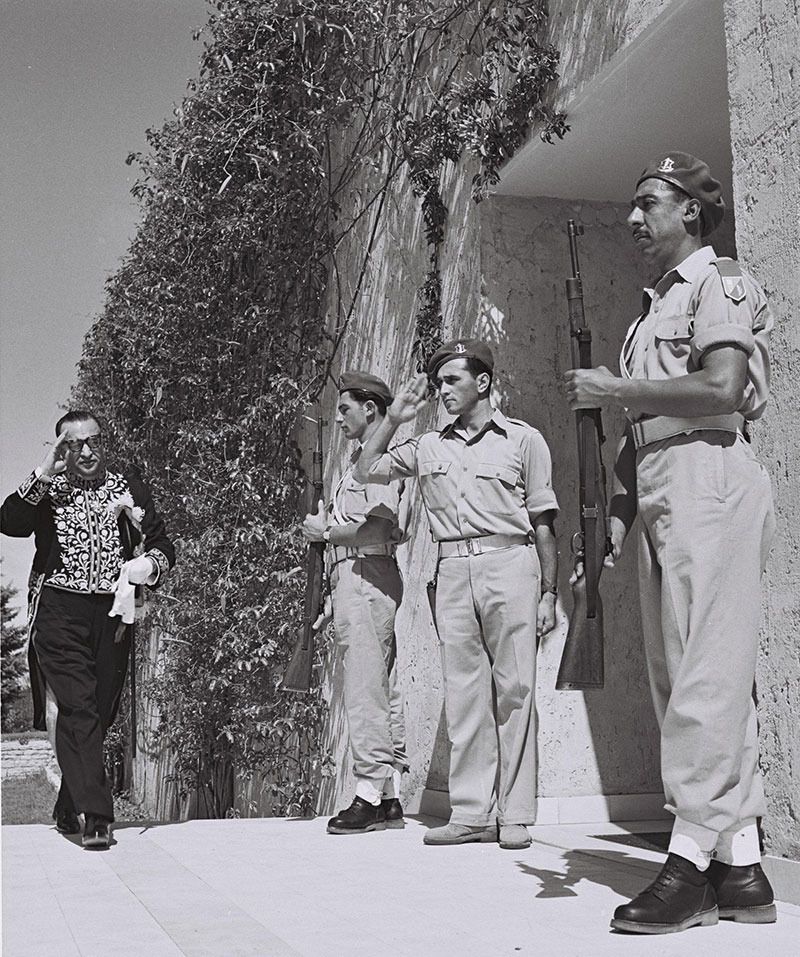
In 1949, Tehran unofficially began exploring recognition of Israel. The Shah's government recognized Israel on March 6, 1950, while the Majlis was on New Year holidays, becoming the second Muslim country after Turkey to do so.
Iranian diplomat Reza Safinia arriving at the residence of the President of Israel, April 23, 1950. Photo: Public Domain
But Iran fundamentally could not be an ally of Arab states for a long time, as it is ethnically and religiously very different from them. Arabs are Semites. The main population of Iran is Indo-European Persians. Most Arabs follow Sunni Islam, while Shiism prevails in Iran.
In 1952, the so-called July Revolution occurred in Egypt. Gamal Abdel Nasser came to power, influencing the entire spectrum of relations among Arab countries, Middle Eastern states, and Central Asia. Nasser pursued building an Arab variant of national socialism, called Nasserism, involving nationalization of industry and trade, combining socialist ideas with pan-Arab nationalism ideologically. To strengthen his position domestically, Nasser moved closer to the USSR and other Eastern Bloc countries.
Under the influence of events in Egypt, similar coups occurred in other Arab states: Algeria, Libya, Syria, Iraq.
All this greatly worried the Iranians. In 1955, the country joined the pro-Western SENTO bloc (also known as the Baghdad Pact), whose members included Turkey, Pakistan, Iraq, and the UK, with the US as an associate member. Thus, Tehran found itself in a bloc with Western and pro-Western Asian countries. At that time, Israel was viewed by Shah Iran as an important opponent of the growing popularity of Nasserism in Arab states.
The period from 1955 to 1979 was the heyday of Iran-Israel relations. Iranian specialists trained at Israeli universities, and Israeli companies carried out large-scale construction in Iran. For example, in the 1970s, the Israeli company RASSCO, with the participation of Iranian Hadish, linked to the Shah's family, built facilities in the Iranian ports of Bandar Abbas and Bushehr on behalf of the Iranian Navy. Joint Israeli-Iranian projects developed in medicine, agriculture, and energy. In particular, an oil pipeline was built from Iran to Israel. Regular air service was established between the two countries.
Bilateral relations also developed in security matters. Mossad helped establish the Shah's intelligence agency SAVAK… Israel helped create a modern air defense system in Iran. At that time, with Israeli specialists' help, the foundation of Iran's missile program was laid. Historians of the 1973 Yom Kippur War also cite an episode: during a critical phase of the fighting, when Israel needed to increase its aircraft fleet, Iran transferred 25 Phantom fighter jets to Israel, wrote Israeli Middle East scholar Professor Vladimir Mesamed in 2007. According to him, “Recently, Israel declassified archival materials showing Israel was one of the countries at the cradle of nuclear energy development in Iran.”
Apparently, this was part of the US “Atoms for Peace” program aimed at cooperation in peaceful nuclear energy use. In 1957, Iran joined this program and became a member of the International Atomic Energy Agency (IAEA) in 1958, and in 1968 signed the Treaty on the Non-Proliferation of Nuclear Weapons (NPT).
In 1960, the Shah of Iran publicly announced diplomatic recognition of Israel. The following year, Israeli Prime Minister David Ben-Gurion visited Iran. This caused a deterioration in Iran's relations with Arab countries. For example, Egypt severed diplomatic relations with Iran in response to its pro-Israel policy.
However, the worsening of Iran-Israel relations began even before the Islamic Revolution in Iran.
In 1975, Iran's representative at the UN voted in the General Assembly for Resolution 3379, equating Zionism with racism, which caused outrage in Israel. But the radical change in relations happened, of course, when Islamic fanatics led by Ayatollah Khomeini came to power during the 1979 Islamic Revolution.
Almost immediately, on the wave of this event, a mob, with the new authorities' approval, ransacked the Israeli embassy in Tehran, and its building was handed over to the Palestine Liberation Organization. Pogroms and repression against Jews began in the country, including arrests and executions.
Vladimir Mesamed explains that this approach “stems from the very essence of the historical-philosophical concept of Shiism, which gained state status in Islamic Iran.” This branch of Islam is based on the idea of “forming a global Islamic state,” and the founder of the Islamic Republic of Iran, Ayatollah Ruhollah Khomeini, considered Israel—the heart of the Islamic world—as the main obstacle to this goal.
Despite this, Tel Aviv long tried to maintain normal relations with the Islamic Republic. It is enough to say that Israel was one of the first countries to recognize the new “revolutionary” Iranian government in 1979, even though it publicly declared the destruction of the “Zionist entity” as its goal. Moreover, during the Iran-Iraq War, Israel supplied fundamentalist Iran with American weapons through intermediaries, including as part of the infamous “Iran-Contra” affair (“Irangate”).
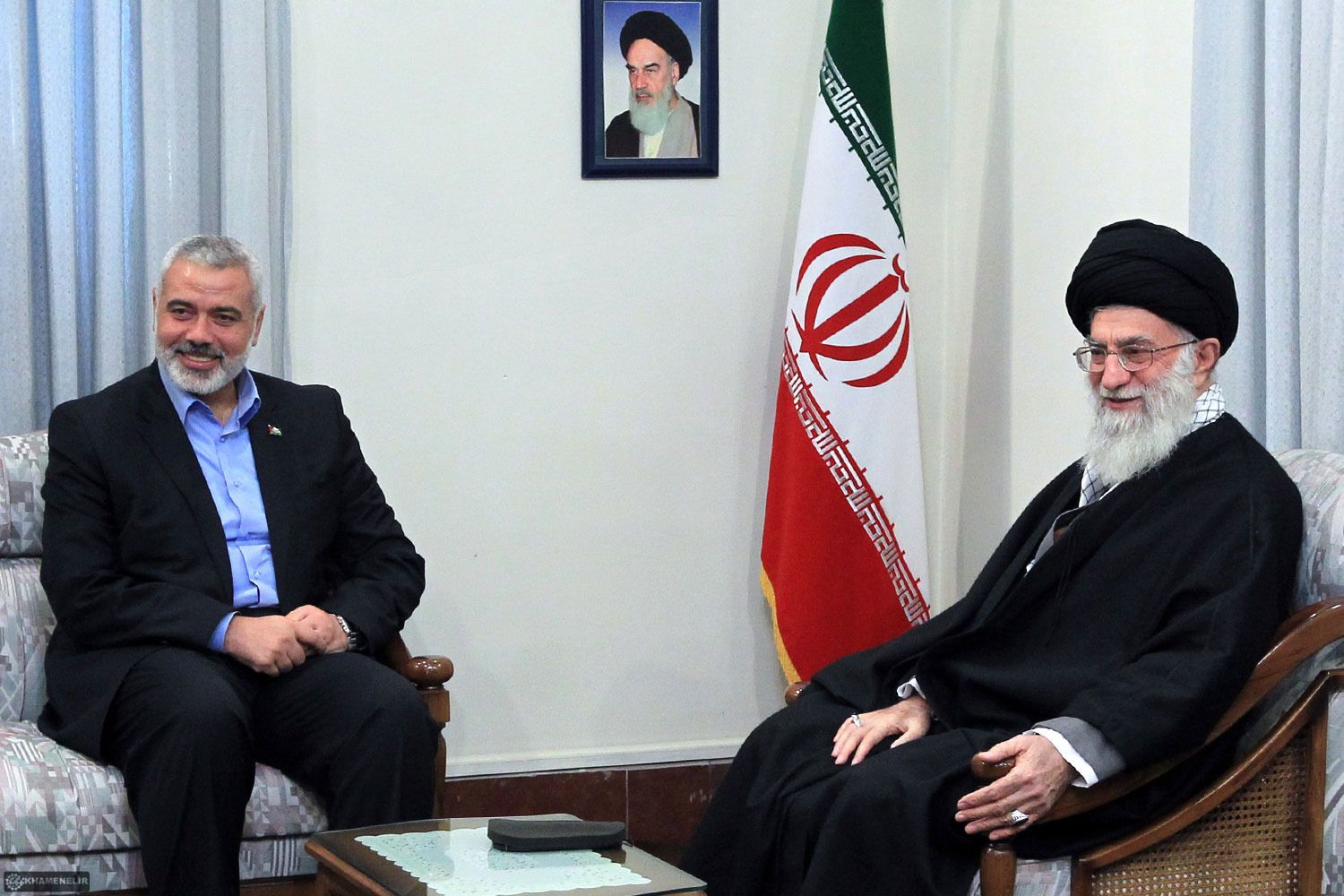
Since the early 1990s, Iran has massively financed and directly supplied terrorist organizations Hezbollah and Hamas with weapons. Thanks to Tehran's policy, Hezbollah transformed from a small terrorist group into a full-fledged, well-armed army numbering tens of thousands of fighters.
Hamas leader Ismail Haniyeh and Iran's Supreme Leader Ali Khamenei in 2012. Photo: Khamenei.ir / CC BY 4.0
During the civil war that began in Syria in 2011, Iran supported the government of Syrian dictator Bashar Assad, who consistently held an anti-Israel stance, both directly—with weapons supplies and its own troops—and through its Lebanese proxies in Hezbollah, which actively participated on the side of the Syrian regime.
Iranian Atom
The problem was also that Iran continued developing its nuclear program. As noted, Israel had helped the Shah's government with this. However, after the Islamic Revolution, this program was effectively frozen, partly due to the departure of Western and Israeli specialists working on it. Additionally, during the Iran-Iraq War, the under-construction nuclear plant in Bushehr was bombed by Iraq.
After the Iran-Iraq War ended and Khomeini died in 1989, Iran's nuclear program was resumed. Given that its military component was primarily aimed at Israel, it became a major headache for Tel Aviv for many years ahead.
Pakistan helped with building the Bushehr nuclear power plant at that time and, according to Mesamed, supplied Tehran with equipment for a centrifuge manufacturing plant used for uranium enrichment.
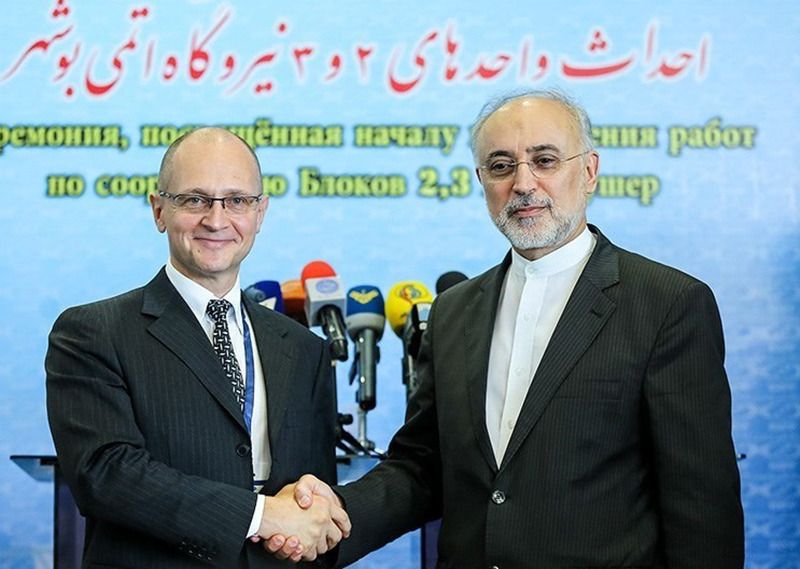
From 1992 to 1995, Russia actively joined Iran's nuclear program, including building the Bushehr nuclear power plant. In 1995, a Russian-Iranian agreement was signed to build a nuclear reactor in Iran.
Vice President for Atomic Energy, head of the Atomic Energy Organization of Iran (AEOI) Ali Akbar Salehi and head of Rosatom Sergey Kiriyenko at the ceremony marking the start of construction of the second phase of the Bushehr nuclear power plant. Bushehr, September 10, 2016. Photo: Tasnim News Agency / CC BY 4.0
Officially, it was proclaimed that Iran would use nuclear energy only for peaceful purposes, but as early as 2000, the scientific research project “Amad” began developing a nuclear warhead for a ballistic missile. This was only suspected until 2018, when Mossad managed to steal secret Iranian documents related to this project.
This was the reason for US President Donald Trump to withdraw from the 2015 Joint Comprehensive Plan of Action (JCPOA) nuclear agreement with Iran in 2018.
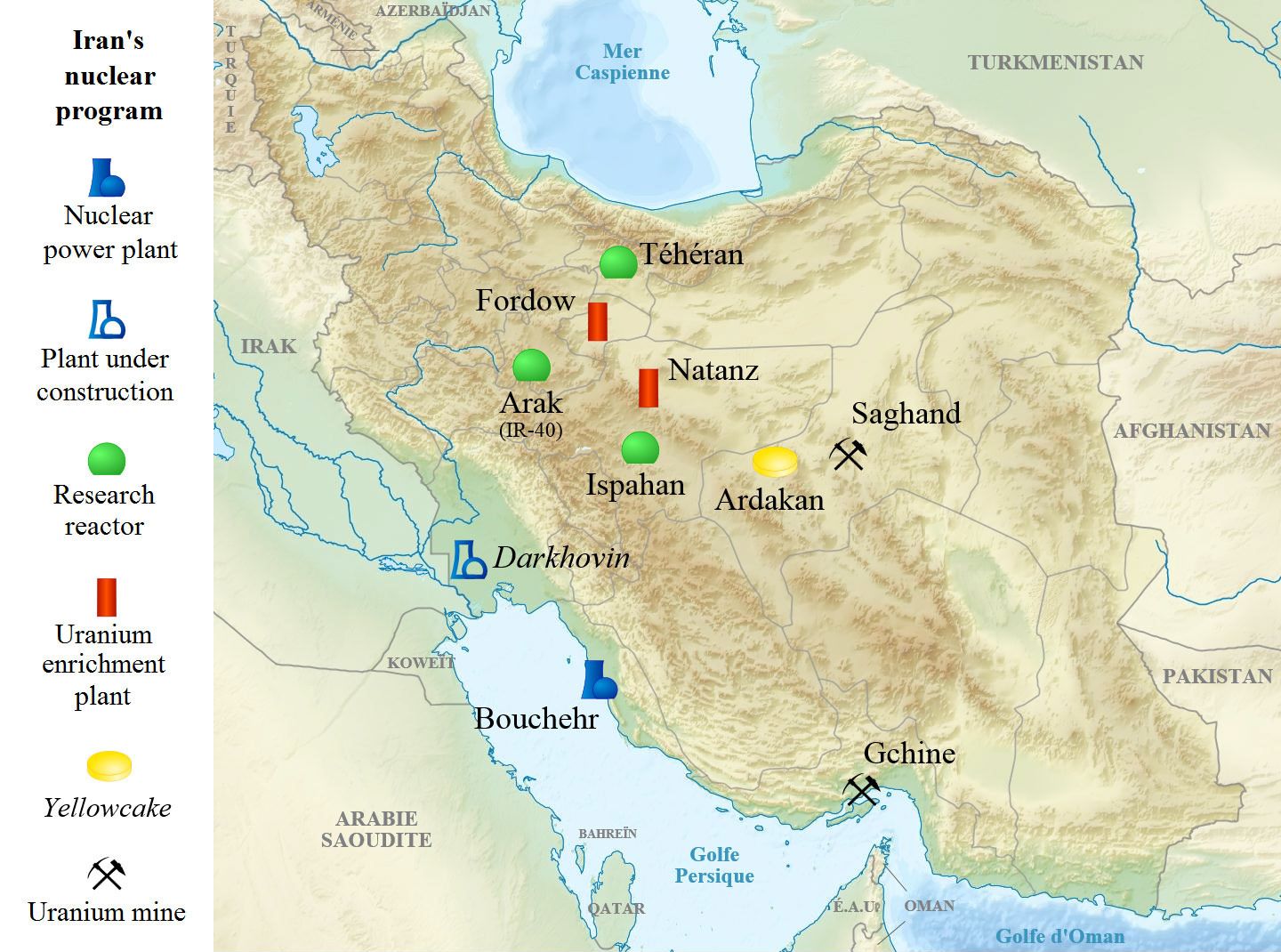
In 2019, Iran also began withdrawing from its JCPOA commitments, resuming uranium enrichment at Natanz, Arak, and Fordow.
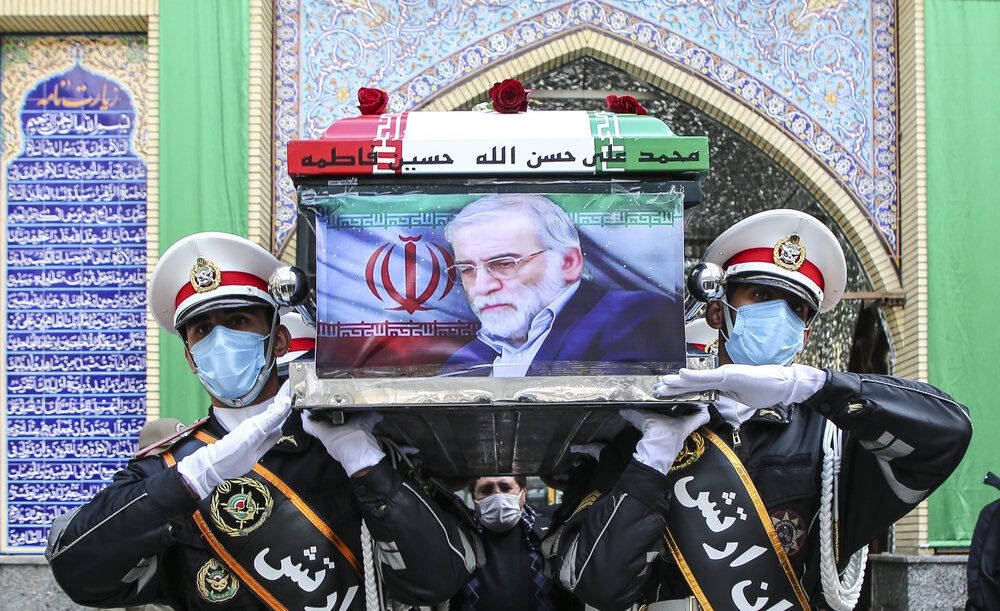
In 2020, Iranian nuclear physicist Mohsen Fakhrizadeh—the presumed head of Iran's nuclear program—was assassinated by a Mossad agent.
Funeral of Mohsen Fakhrizadeh, November 30, 2020. Photo: Wikipedia / Mehr News Agency
In 2021, Tehran effectively suspended IAEA inspections of its nuclear sites and began enriching uranium up to 60%, several times higher than enrichment levels for energy needs.
The administration of President Joe Biden tried to bring Iran back to a new nuclear deal but was unsuccessful. Moreover, since February 2022, its attention was focused on supporting Ukraine, which faced a full-scale Russian invasion.
In March 2025, Donald Trump, having returned to the US presidency, sent a letter to Iran's Supreme Leader Khamenei urging him to conclude a new nuclear deal within two months. Commenting to Maria Bartiromo of Fox News, Trump was clear: “We cannot allow them to have nuclear weapons. Something will happen very soon. I would prefer a peaceful agreement over the alternative, but the alternative will solve the problem.”
Iranian leadership did not take this threat seriously in the following two months, despite repeated warnings from the American leader. On June 13, Israel launched the first strikes on Iran, after which US strategic bombers joined the attacks on the Islamic Republic.
The Landscape After the Battle
The 12-day war victory was celebrated by both official Tehran and Washington. There is logic in this.
Authoritarian regimes that survive a war consider it an achievement. Just recall Saddam Hussein's Iraq. In February 1991, it suffered a crushing defeat by the Western coalition in Kuwait, but the Iraqi people were told they had won. The people were happy.
On the other hand, wars outside US borders have been unpopular with Americans at least since Vietnam. Public opinion, congressmen, and even some White House members, including Vice President J.D. Vance and National Intelligence Director Tulsi Gabbard, opposed Washington's entry into this war. Under these conditions, Trump needed a quick, visually impressive, and low-contact victory.
But to complete the picture, we must recall the goals set by Israel and the US in this war and see if they were achieved.
Both Netanyahu and Trump named the destruction of Iran's nuclear weapons production as the main goal. Fierce debate on this issue raged in the American establishment and media for several days.
The American president and his administration claim that Iran's nuclear program was completely destroyed or at least set back many years, and the US strikes achieved their goals. Some American media question these claims.
“Iran's nuclear program was destroyed, dismantled, ruined—choose the term you prefer,” Pentagon chief Pete Hegseth assured. “Call it what you want; it's still a historic success,” BBC quoted him. He described the results of the US attack on Iranian nuclear sites as “serious damage,” “destruction of facilities,” requiring “years” to restore.
“Unlike conventional ground bombs, you won't see a crater from the strike because they are designed to penetrate deep underground before detonating,” explained US Joint Chiefs Chairman Dan Keane, showing impressive footage of the strikes. According to him, all six munitions dropped on each shaft at Fordow hit their targets precisely.
“The CIA can confirm reliable intelligence indicates Iran's nuclear program was seriously damaged by recent targeted strikes,” said CIA Director John Ratcliffe.
US National Intelligence Director Tulsi Gabbard also stated that Iran's nuclear sites at Natanz, Fordow, and Isfahan were completely destroyed, and rebuilding would take years. They would have to be rebuilt from scratch, DW reported her saying.
According to Axios, Israeli intelligence assessed the damage from US bombs on Iran's nuclear sites as “quite significant.” However, the source emphasized that no final conclusions about the damage have yet been made.
The Israeli Atomic Energy Commission reported that the US strike disabled the uranium enrichment facility at the Fordow nuclear site.
At the same time, the Financial Times, citing a Western intelligence source, noted that the US strike did not destroy Iran's stockpile of enriched uranium. According to the source, intelligence indicates that 408 kg of uranium enriched close to weapons-grade was stored not only at Fordow but dispersed across various sites at the time of the attack.
And this despite the JCPOA, which the US left in 2018, allowing Iran to store up to 300 kg of uranium enriched to 3.67%, sufficient for civilian nuclear energy and research purposes but not for a nuclear bomb.
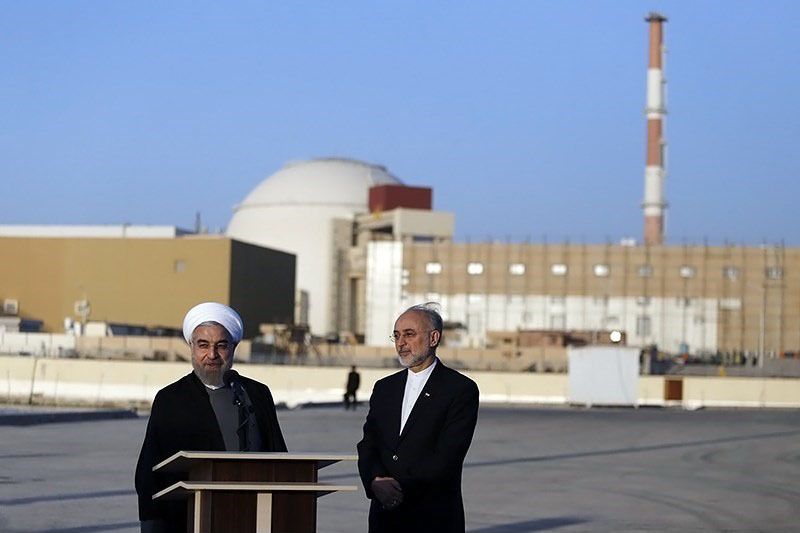
Iranian President Hassan Rouhani and head of the Atomic Energy Organization of Iran (AEOI) Ali Akbar Salehi at the Bushehr nuclear power plant, January 13, 2015. Photo: Tasnim News Agency / CC BY 4.0
Other media also reported that Iranians removed enriched uranium from Fordow before the US strikes. This likely refers mainly to uranium enriched to 60%, which is very close to weapons-grade. Energy (peaceful) uranium used in many nuclear plants is usually enriched to no more than 5%-20%.
However, the IAEA found uranium enriched to 83.7% at the Fordow site during inspections in February 2023. This meant the country was just steps away from weapons-grade uranium (above 90%). Moreover, the IAEA considers uranium enriched to 60% can also be used to create nuclear weapons.
Meanwhile, on June 17, a threatening Iranian propaganda video appeared online. It shows someone in camouflage stroking a warhead equipped with a nuclear tip, with the Persian caption “Maybe.” At the same time, Iranian state TV announced the world should expect a surprise it will remember for centuries.
Given the uranium enrichment level Iran had reached two years before the 12-day war, it is possible that Tehran already possesses some nuclear warheads.
Moreover, a source in Iran's security sector told the Russian news agency RIA Novosti that “uranium enrichment will continue—this is a red line for Tehran despite the damage. Any negotiation process must be based on recognizing Iran's legitimate right to enrichment.”
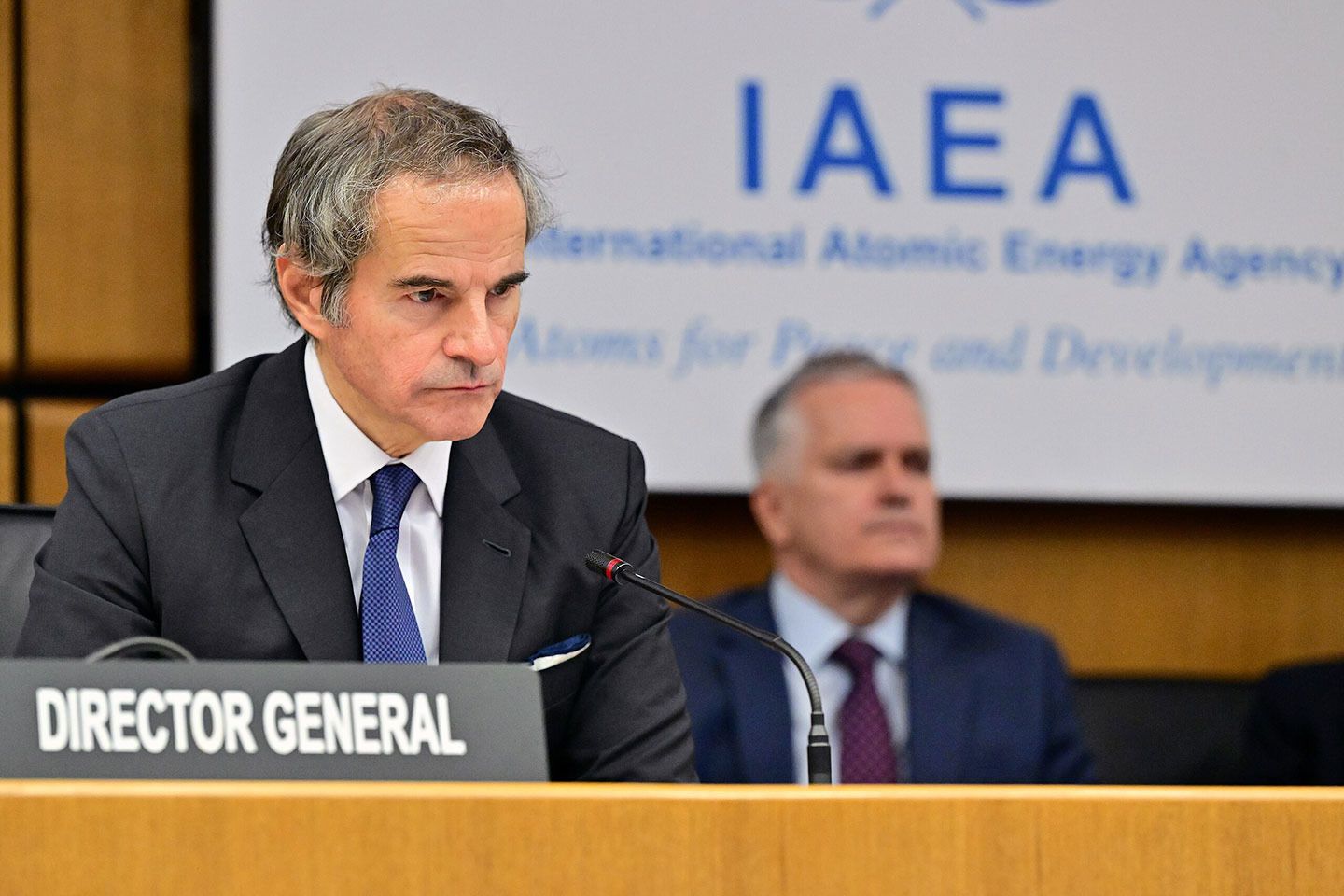
The Guardian on June 29 quoted IAEA Director General Rafael Grossi, who believes that despite serious damage to Iran's nuclear sites, the country will be able to resume uranium enrichment within a few months.
IAEA Director General Rafael Mariano Grossi delivers a statement on receiving news of military actions initiated by Israel, including attacks on nuclear sites in Iran, June 13, 2025. Photo: Dean Calma / IAEA Copyright
“I would say that within a few months, they will be able to start several cascades of centrifuges producing enriched uranium, or even less,” Grossi said.
Meanwhile, Trump stated he is “certainly, without a doubt, absolutely” ready to strike Iran's nuclear sites again if intelligence detects signs of uranium enrichment.
Another main war goal was, in essence, regime change in Iran through the physical elimination of its current lifelong “spiritual leader.” Trump hinted transparently at this possibility: “We know exactly where Iran's spiritual leader Khamenei is hiding. He's an easy target but is safe now. We won't kill him, at least not now,” said the US president.
Israeli Defense Minister Israel Katz was more candid in an interview with Channel 13. He said that if the opportunity arose, the IDF was ready to kill Iran's Supreme Leader: “We wanted to eliminate Khamenei, but there were no operational possibilities.” When asked if Israel sought US approval for such a step, Katz noted: “We don't need permission for these things.” Accordingly, this war goal was not achieved.
One may ask why the war, which Netanyahu announced as possibly the longest in modern Israeli history, ended after just 12 days?
According to Bloomberg, Iranian strikes on Israel caused $3 billion in damage to the Jewish state. The scale of Iran's missile and drone bombing response was unprecedented.
It's not just that Tehran launched hundreds of rockets and drones, but that the famous Israeli Iron Dome air defense system, which previously destroyed over 90% of Iranian rockets and drones, handled them far less successfully this time.
Footage of large-scale destruction in Tel Aviv and other Israeli cities went viral worldwide. Iranian and Russian media also reported missile hits on Mossad buildings in Herzliya and the Israeli military intelligence logistics center in Glilot. Reports spoke of the deaths of several high-ranking Israeli intelligence officers. Israeli media did not comment on these reports, but it is clear these strikes were painful in all respects, including propaganda. Until now, Israel was considered well protected from air attacks.
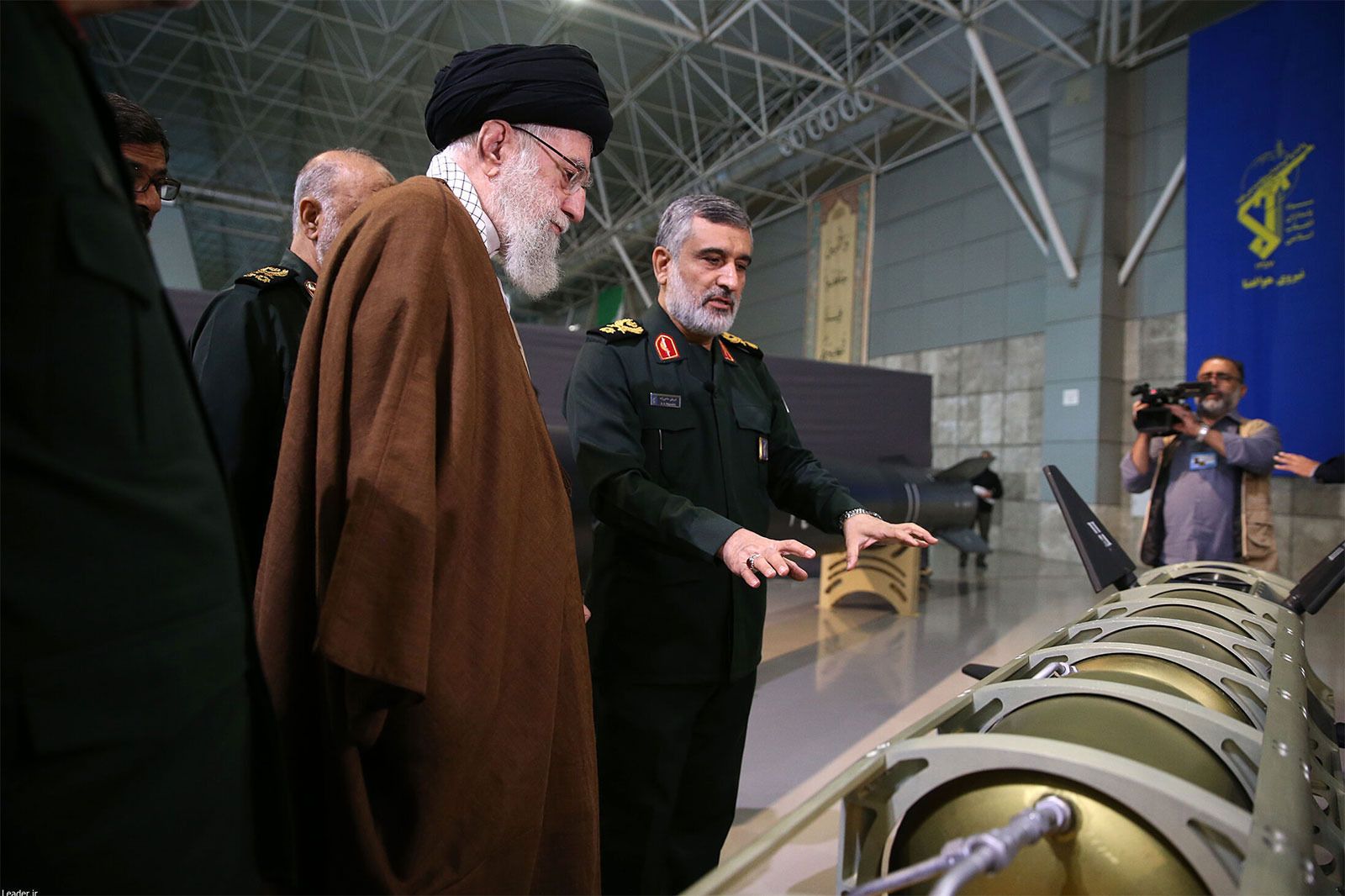
It is possible that the current effectiveness of Iranian missile attacks on Israel is due to Tehran's use of hypersonic Fattah-1 and Fattah-2 missiles. Presumably, Russia shared hypersonic technology with Iran.
Commander of the Iranian Air Force and IRGC Aerospace Forces General Amir Ali Hajizadeh (killed in the Israeli attack on June 13, 2025) demonstrates the hypersonic Fattah-2 missile to Ayatollah Ali Khamenei, November 18, 2023. Source: sahebkhabar.ir
Several years ago, one of Russia's leading specialists on Iran and Iran-Israel relations, senior researcher at the Institute of Oriental Studies of the Russian Academy of Sciences Vladimir Sazhin, told me that Israel is generally unprepared for a long war. Its military doctrine relies on quickly defeating enemies by the technical superiority of the IDF over the armies of its opponents from Arab countries and Iran.
The territories of Israel and Iran are incomparable—28 thousand km² and 1,648 thousand km², respectively. This also means much greater possibilities for Iran to disperse its military and military-industrial facilities and much fewer such opportunities for Israel.
Map of major sites of Iran's nuclear program Source: Wikipedia / Yagasi / Sémhur / CC BY-SA 4.0
The mobilization resources of the two countries are also incomparable, even though women in Israel are subject to military service. Iran's population is about 90 million, Israel's just over 9 million.
As noted, US entry into this war with bombing strikes on Iranian nuclear sites caused dissatisfaction in American society and elite. Moreover, it turned out this was a costly affair.
According to Military Watch Magazine, Americans used between 15% and 20% of their THAAD missile interceptor stockpile during the 11 days of war to defend Israel and their military bases in the Middle East. THAAD is a more advanced counterpart to the famous Patriot system, designed to protect the US and its allies from the armies of the “axis of evil” countries—Russia, China, North Korea, and Iran.
The rapid winding down of hostilities by Trump, supported by Israeli leadership, seems logical. The war's outcome is that Israel and the US partially achieved their goals: they significantly damaged Tehran's nuclear weapons production capabilities but failed to overthrow the ayatollah regime.
Iranian Deputy Foreign Minister Majid Takht-Ravanchi noted that uranium enrichment would continue in his country. Meanwhile, Iranian Foreign Minister Abbas Araghchi wrote on social media on June 28 that talks with America are possible but that the US president “must abandon his disrespectful and unacceptable tone towards Iran's Supreme Leader.”
Trump responded that if Iran continues uranium enrichment, the US “may repeat” its operation and remarked that the Supreme Leader should be grateful to him because Trump spared him.
The Iran-Israel war once again demonstrated that missile and bombing strikes alone cannot bring about regime change. However, it is possible that the Iranian people themselves will accomplish this task in time.
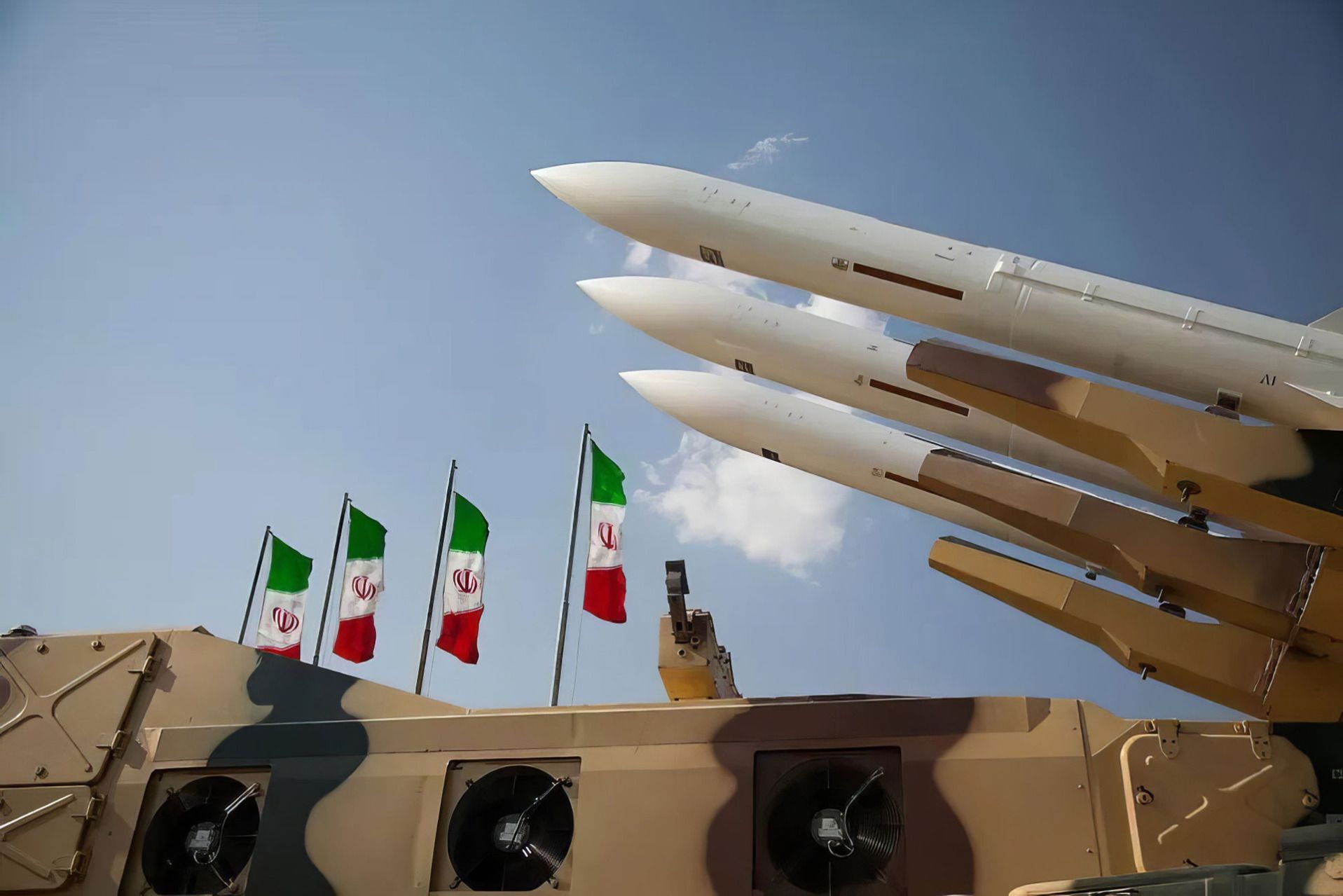
Main photo – Iranian ballistic missiles. Photo: DR
If you enjoyed this article, consider making a donation — one-time or, even better, monthly. Your support helps us motivate our authors and become better with every article.
Our organization is recognized by the Internal Revenue Service (IRS) as a 501(c)(3) tax-exempt, charitable organization, which means that all contributions made to us are tax-deductible to the fullest extent permitted by U.S. law. Individuals may generally deduct charitable contributions of up to 60% of their Adjusted Gross Income (AGI) for cash donations made to qualifying 501(c)(3) organizations. For donations of appreciated assets (such as stocks or other long-term capital assets), the deduction is typically limited to 30% of AGI, based on the fair market value of the asset. C-corporations may deduct charitable contributions of up to 10% of their taxable income for donations made to eligible charitable organizations.
By submitting a donation, you confirm that you have read and accept the following documents: Privacy Policy and User Agreement, and also give consent to the processing of your personal data.
If you would like to unsubscribe from a monthly donation, please email us at: [email protected]