The Trump administration is revising its approach to human rights assessments, excluding mentions of abuses in countries it does not wish to criticize excessively from its annual reports. Thus, in Russia, persecution of LGBT people and violence against women are no longer mandatory topics for coverage.
U.S. Secretary of Defense Marco Rubio delivers a speech at a gala evening dedicated to the fifth anniversary of American Compass in Washington, D.C., June 3, 2025. Photo: U.S. Department of State via Flickr.com
The U.S. State Department’s 2024 human rights report concerning Russia was unexpectedly shorter than usual. For the first time in many years, all mentions of LGBT rights violations and domestic violence issues disappeared entirely. While in the 2023 report the LGBT topic was mentioned 36 times, and domestic violence six times, these sections are now simply excluded.
The new human rights report on Russia is more than twice as short as last year’s, prepared under the Biden administration: 41 versus 101 pages. In particular, any mentions of alleged cases of violence and discrimination against the LGBT community have been removed, and the wording regarding other violations has been softened. As The Washington Post notes, the draft lacks references to gender-based violence—that is, violence against women, including domestic violence—which is especially striking in the context of Russia.
A State Department spokesperson explained the revised content as an effort to make the report “more concise” and focused on “key issues.” However, such explanations are not very convincing to human rights advocates.
Excluding LGBT and domestic violence topics from the official human rights report on Russia appears as politically motivated censorship, reflecting a shift in priorities in Washington.
The administration of President Donald Trump is revising its approach to human rights assessments, excluding mentions of abuses in countries it does not wish to criticize excessively from its reports. Simply put, certain violations—including persecution of LGBT people and violence against women—are no longer mandatory for coverage. It is known that the new administration ordered the removal of points from human rights reports that are not legally required. However, it is not clarified which points must be included and which may be omitted.
The politicization of the new report on Russia’s situation is obvious compared to previous years. The final State Department report for 2023, released under Biden, detailed cases of violence and oppression of LGBT people and the widespread issue of domestic violence. Now these sections are simply crossed out—which, in experts’ words, became a “blatant omission.”
The Russian leadership has repeatedly accused previous U.S. State Department reports of politicization and “imposing values.” Paradoxically, the 2024 report shows political considerations differently: by silence on painful topics that may not fit Washington’s new rhetoric. As a result, it creates a misleading impression that there are no serious problems regarding LGBT rights and protection from domestic violence in Russia. In reality, these issues worsened last year.
New Repressions Against the LGBT Community in 2023-2024
The absence of the topic of LGBT persecution in the State Department report looks especially strange against the backdrop of real events in Russia. LGBT rights in 2024 faced an unprecedented attack, as acknowledged by both Russian and international observers. The climax was the Russian authorities’ initiative to declare the very existence of the LGBT movement as “extremism.” On November 30, 2023, the Russian Supreme Court granted the Justice Ministry’s claim and recognized a certain “international public LGBT movement” as an extremist organization, banning its activity in Russia. This legal fiction—since there is no formal unified “LGBT movement”—opened wide opportunities for arbitrary persecution of people for their non-traditional sexual orientation.
The consequences were immediate. The Supreme Court decision took effect instantly, and already in the first weeks of 2024 Russian courts issued the first guilty verdicts based on it. Even the use of symbols came under attack.
The Russian Supreme Court verdict declared the rainbow flag a banned extremist symbol. As a result, people across the country began to be fined and arrested literally for the colors of the rainbow.
For example, in January 2024 in Nizhny Novgorod, a court jailed a young woman for five days simply because she wore earrings in rainbow colors—the pretext was that an aggressively minded man attacked her in a café because of those earrings. Instead of protecting the victim, the authorities punished her for displaying “extremist symbols.” Around the same time, a court in Volgograd fined someone for a photo with a rainbow flag on social media, and in Saratov a woman was fined for an online image of a rainbow. Effectively, public expression of LGBT identity or solidarity now risks punishment on par with support for terrorists.
Human rights defenders call these measures legal absurdities and gross human rights violations. Human Rights Watch notes that the Supreme Court decision provides “unlimited opportunities for arbitrary persecution” of gays, lesbians, bisexuals, transgender, and queer people and all those who defend their rights.
In February 2024, HRW’s Deputy Director for Europe and Central Asia, Tatiana Lokshina, stated: “For many years, Russian authorities tried to push the LGBT community out of the public space, but now they have effectively declared LGBT people illegal.” These words are no exaggeration. After the court ruling, at least three human rights groups assisting LGBT people were forced to cease activities, fearing criminal prosecution. A wave of police raids swept through gay clubs; remaining support initiatives had to go underground, and many people deleted old photos and posts on social media, fearing that rainbow symbols in archived publications would become grounds for charges. Thousands—if not more—are under threat simply for having once openly spoken about their sexual orientation or supported LGBT friends and relatives.
At the same time, the state continued to tighten legislative screws. As early as December 2022, President Putin signed a new law fully banning so-called “LGBT propaganda”—whereas previously only “propaganda of non-traditional sexual relations” among minors was prohibited, the censorship now covers any positive or neutral mention of LGBT to audiences of any age. Moreover, the law expanded liability: violations now carry draconian fines—up to 400,000 rubles for individuals and up to 5 million rubles for organizations. Transgender people were also targeted: the law bans “propaganda of gender change,” and in 2023 a separate law was adopted effectively prohibiting legal gender change and many medical procedures for transgender persons. These measures are presented by authorities as protection of “traditional values,” but in practice lead to increased stigmatization and violence.
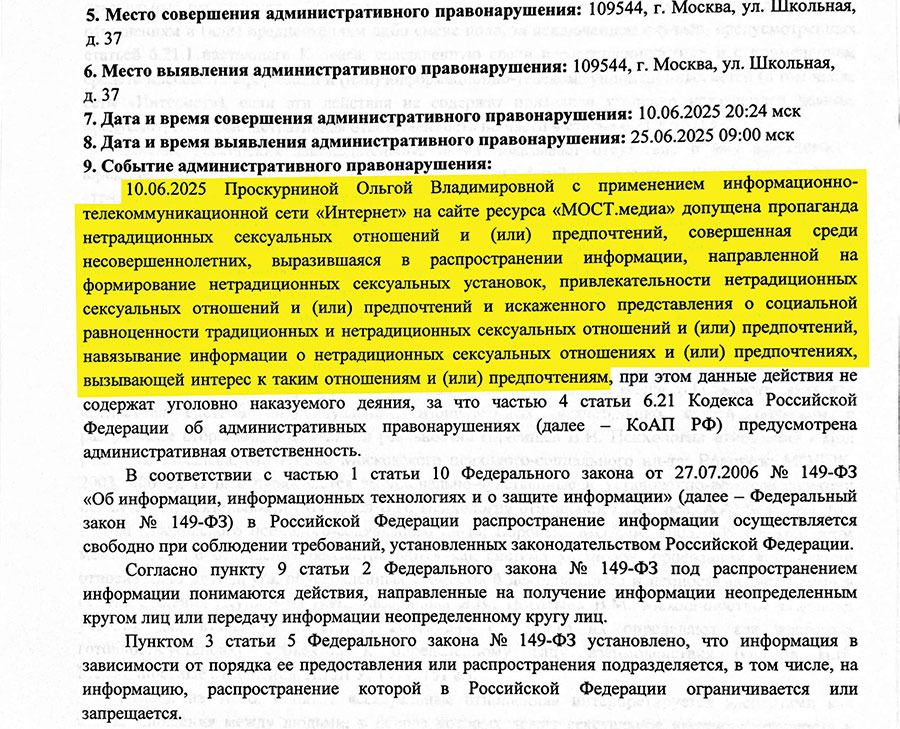
“Most” is also persecuted for “LGBT propaganda”: the pretext was the article “You Sit and Think God Will Punish You“ about how queer people in Russia try to preserve their identity despite state pressure.
In 2024, the state legalized discrimination against the LGBT community by equating it with combating extremism. Human rights defenders note a sharp increase in cases related to “LGBT propaganda” after 2022. Cases of physical violence motivated by homophobia and transphobia remain unpunished or are even encouraged by an atmosphere of impunity. In other words, the situation with LGBT rights in Russia is not only still relevant—it has sharply deteriorated compared to previous years. Excluding this topic from the American report has no objective grounds: this is not progress but merely the current U.S. administration’s unwillingness to focus attention on this type of human rights violation.
Domestic Violence: The Scale of the Tragedy and Lack of Progress
The problem of domestic violence in Russia remains just as acute, although it is not mentioned at all in the 2024 State Department report. Statistics and facts refute any illusion that the situation has improved. According to data from the “No to Violence” center, every 10 minutes a violent crime occurs in a Russian family. Domestic violence is not rare isolated cases but a widespread phenomenon. Human rights defenders analyzing official Ministry of Internal Affairs data concluded that about 21-24% of all investigated murders in Russia occur within families—that is, nearly every fourth murder is committed by a partner or close relative of the victim.
In 2023, around 1,200 cases of women being killed by relatives or partners were recorded, and in the first half of 2024, about 650 such cases.
Journalists from the publication “Verstka” analyzed a large body of court documents and found that in the first half of 2024, there was not a single weekday in Russia when courts did not issue at least one ruling related to domestic violence. Over six months, more than 5,000 judicial decisions on partner violence cases were made. Of these, 245 sentences were for murders of wives or girlfriends by men. In other words, almost every day a new verdict is issued for a murder committed within a family.
Even more alarming is the justice system’s attitude toward these crimes. Punishments for domestic abusers are often mild or symbolic. After the controversial decriminalization of domestic beatings in 2017, the first instance of beating a close relative is no longer considered a criminal offense—only an administrative violation, similar to minor hooliganism. As a result, the most common “punishment” for beating a wife or child is a 5,000 ruble fine. According to “Verstka,” in 66% of administrative cases for beatings, judges imposed exactly this fine—five thousand rubles—and in 8% of cases, limited themselves to a verbal warning. Only in rare cases are aggressors administratively detained for several days (7% of cases). Thus, the vast majority of domestic tyrants avoid any serious responsibility, especially when the case is treated as administrative.
Even when it comes to serious crimes, judicial practice often sympathizes with the aggressor rather than the victim. Among the 245 murder convictions mentioned, in 73% of cases the killers received relatively mild sentences—less than 10 years imprisonment (although the maximum penalty for murder can be 15 years or more). Courts widely apply mitigating circumstances for wife-killers: in 67% of such cases, the perpetrator’s remorse was considered mitigating, in 70% “cooperation with the investigation.” Moreover, in one in six cases (17%), judges cited “immoral or unlawful behavior of the deceased woman” as a mitigating factor. In other words, the victim herself was posthumously blamed for being killed. The accused’s characteristics, presence of young children, and sometimes even participation in combat (in 3% of cases killers referred to service in the “special operation” in Ukraine and received leniency) are also taken into account.
Such practice indicates a deeply rooted tendency to devalue the severity of domestic violence—it is often perceived as a “family conflict” in which the victim supposedly could have provoked the aggressor. Laws still do not provide victims with adequate protection.
Repeated beating (if the aggressor has already been held accountable) is formally criminally punishable under Article 116, Part 1 of the Russian Criminal Code, but even here the situation is far from ideal. As “Verstka” found, 13% of criminal cases on repeated beatings were dismissed due to reconciliation of the parties—that is, women withdrew complaints, often under pressure from aggressors themselves or due to lack of faith in protection. And for criminal cases of intentional infliction of minor bodily harm (Article 115 of the Criminal Code), as many as 44% of cases were dismissed in court due to reconciliation. This statistic aligns with lawyers’ statements: the vast majority of victims either fear taking the case to verdict or are not allowed to do so—neither partner nor system supports them. Sometimes police themselves ask to withdraw complaints, saying “make peace, everything will be fine.”
At the same time, society recognizes the seriousness of the problem. In June 2024, the research company Russian Field, in cooperation with the “New People” party, conducted a survey showing record unanimity: 95% of women and 83% of men supported the law. Twenty percent of respondents had personal experience of domestic violence, and another 34% reported such cases in families of their acquaintances. More than half the population thus knows about the problem firsthand. For comparison, in 2019 the Russian Public Opinion Research Center (VCIOM) recorded 70% support for the idea of a law against domestic violence—now, according to surveys, it is almost 90%.
Even the Russian Ombudsman for Human Rights, Tatyana Moskalkova, openly stated in 2024 that “this problem exists” and that responsibility for domestic violence should be reinstated even in cases “where the harm caused does not meet the threshold of a crime.” At a plenary session of the Federation Council in June 2024, Moskalkova told senators that in 2023 she received more complaints about domestic violence than the previous year (although only “a few dozen” official complaints). She acknowledged that without visible bodily injuries it is very difficult to punish the offender and cited a telling detail: Moscow has only two state crisis centers for domestic violence victims, each with about 100 places, and all are full. Even by scarce official measures, all shelters are overcrowded—and that is just Moscow. The Ombudsman proposed opening additional support centers and legislatively reinstating punishment for domestic violence causing moral and physical harm not reaching the level of a serious crime. These seem obvious measures, but even they stall.
The law on prevention of domestic violence has still not been adopted despite years of activists’ and some deputies’ efforts. Attempts in the early 2020s met fierce resistance from conservative circles that demonized the bill, claiming it would “destroy the family.”
As a result, the draft developed by the end of 2019 was never submitted to the State Duma. In 2021, the topic was effectively frozen. Only in 2023-2024 did some deputies again speak about targeted measures: for example, in May 2024 a group of deputies proposed a bill that would prohibit closing cases of minor bodily harm (beatings) if the victim withdraws the complaint. This measure would prevent victims from (effectively forced) refusing to prosecute the aggressor. Mari Davtyan, a lawyer and head of the Center for Protection of Domestic Violence Victims at the Consortium of Women’s NGOs, assessed this initiative as “one brick” in the fight against violence, noting that currently women have to collect evidence and support prosecution in court themselves—often for many months—otherwise the case will simply be closed.
Against this background, excluding the topic of domestic violence from the U.S. State Department report looks like deliberate ignoring of one of the most acute humanitarian problems in modern Russia.
Politically Motivated Silence and Its Consequences
The disappearance of LGBT and domestic violence topics from the annual document of the U.S. department is a step not conditioned by the real situation in Russia. Neither of these problems lost relevance in 2024; on the contrary, we see negative trends.
Traditionally, the U.S. loudly declared support for democracy, minority rights, and media freedom worldwide. But the new team sees this as interference in internal affairs and wants to move away from the “left-liberal” human rights agenda.
A Washington Post publication asserts that under Trump, the State Department increasingly moved away from promoting democracy and human rights of the old style, instead focusing on criticizing aspects that align with the administration’s ideological goals (for example, freedom of speech for right-wing movements in Europe, etc.). This logic does not include protection of LGBT rights or emphasis on women’s rights—these topics are perceived as “leftist” and thus reduced. At the same time, Washington does not want to overly irritate allies or even some opponents with excessive criticism: it is noted that the draft report on, for example, El Salvador states the absence of “significant violations,” while a year earlier serious problems were noted there. The chapter on Israel omits mentions of corruption and judicial reform. Thus, politically motivated deletions affected not only Russia.
It should be emphasized: such an approach undermines the objectivity and value of the human rights report itself. State Department reports have traditionally been authoritative sources documenting rights violations across a broad spectrum, cited by researchers, courts, and international organizations for nearly 50 years! By excluding entire areas of problems for censorship reasons, the 2024 report’s authors devalue its reputation.
Moreover, this essentially strikes at those suffering from these violations in Russia. When an international report omits LGBT persecution, Russian authorities may interpret this as a signal: the topic is not in focus, so repression can continue without extra attention. When the report says nothing about thousands of beaten and killed women, domestic violence fighters lose an important ally on the global stage. The political climate here plays into the hands of those interested in denying the problem’s existence.
Ironically, the Russian embassy in the U.S. previously called American reports biased, “one-sided and politicized,” accusing Washington of using human rights rhetoric for pressure. The current report is politicized in the opposite way—by silence on violations previously blamed on Moscow.
The reality is that the problems of LGBT rights violations and the domestic violence epidemic in Russia in 2024 have not disappeared—they have worsened. Thousands of people still live in fear because of their sexual orientation or gender identity, facing state persecution and social hostility. Hundreds of women die each year at the hands of partners, tens of thousands suffer beatings and abuse without adequate protection.
Ignoring these facts distorts the entire picture of human rights conditions. Politically motivated selectivity demoralizes victims and activists, playing into the hands of abusers and those who want to further tighten the repressive course. Ultimately, such selectivity can cause significant damage to the international reputation of the United States as a country traditionally positioning itself as a defender of human rights and democratic values.
If you enjoyed this article, consider making a donation — one-time or, even better, monthly. Your support helps us motivate our authors and become better with every article.
Our organization is recognized by the Internal Revenue Service (IRS) as a 501(c)(3) tax-exempt, charitable organization, which means that all contributions made to us are tax-deductible to the fullest extent permitted by U.S. law. Individuals may generally deduct charitable contributions of up to 60% of their Adjusted Gross Income (AGI) for cash donations made to qualifying 501(c)(3) organizations. For donations of appreciated assets (such as stocks or other long-term capital assets), the deduction is typically limited to 30% of AGI, based on the fair market value of the asset. C-corporations may deduct charitable contributions of up to 10% of their taxable income for donations made to eligible charitable organizations.
By submitting a donation, you confirm that you have read and accept the following documents: Privacy Policy and User Agreement, and also give consent to the processing of your personal data.
If you would like to unsubscribe from a monthly donation, please email us at: [email protected]