After the Compiègne Armistice and the Treaty of Versailles, it seemed that German militarism had been ended forever. Only 20 years passed — and the Second World War began.
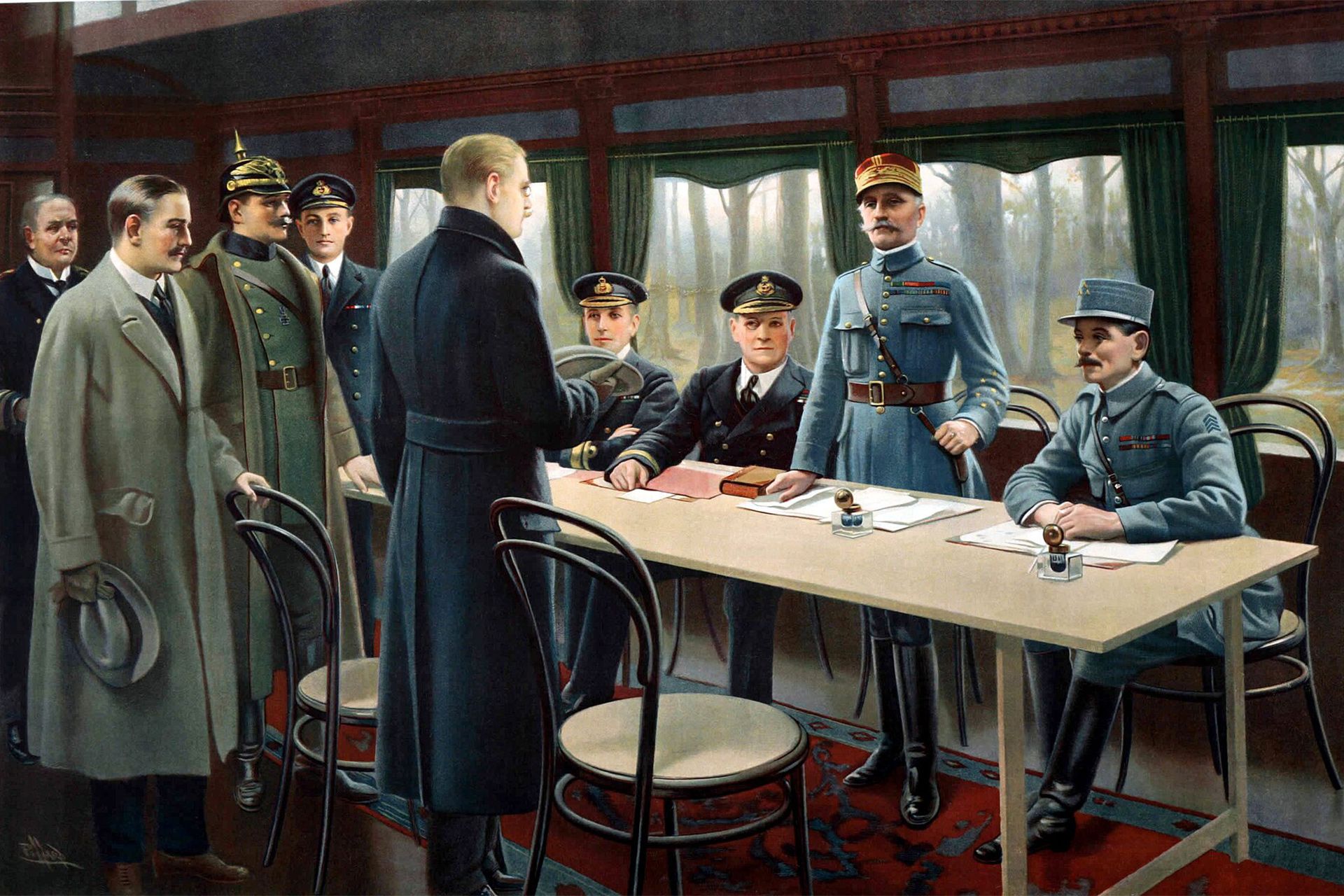
Maurice Pillard Verneuil. Signing of the Compiègne Peace (c. 1920)
Today in Europe and Great Britain, the end of the First World War is celebrated: on November 11, 1918, the Compiègne Armistice was signed, marking the surrender of Imperial Germany. The Germans acknowledged their defeat and agreed to accept all the demands of the Entente powers.
The bloody First World War ended with the unconditional victory of France, Great Britain, the United States, and their allies. In the summer of 1919, the Treaty of Versailles was signed. Under its terms, Berlin undertook to pay enormous reparations. Germany was forbidden to have tanks, aircraft, heavy artillery, or submarines. The size of the German army, which after mass demobilizationDuring the First World War, the German army numbered in the millions. However, after the Compiègne Armistice on November 11, 1918, mass demobilization began. had numbered about 400,000 men, was to be reduced to 100,000 soldiers. It seemed that the Germans were broken, ruined, and no longer posed any danger to their neighbors.
But in 1939, the Second World War began. Germany's war machine was reborn in an even more terrible form. The number of victims, both military and civilian, was many times greater. So what fatal mistake did the victors make?
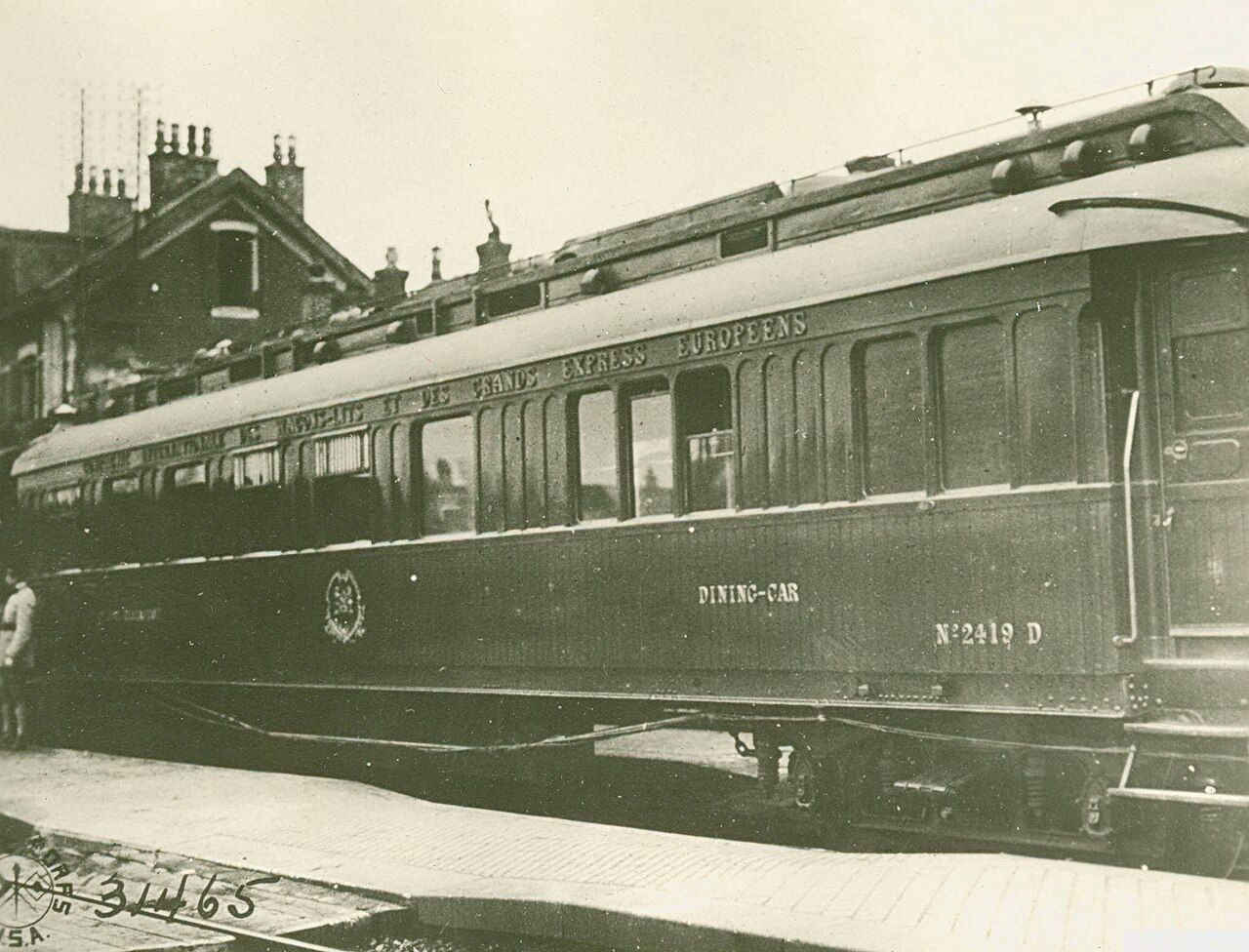
The sacred railcar in the Compiègne Forest
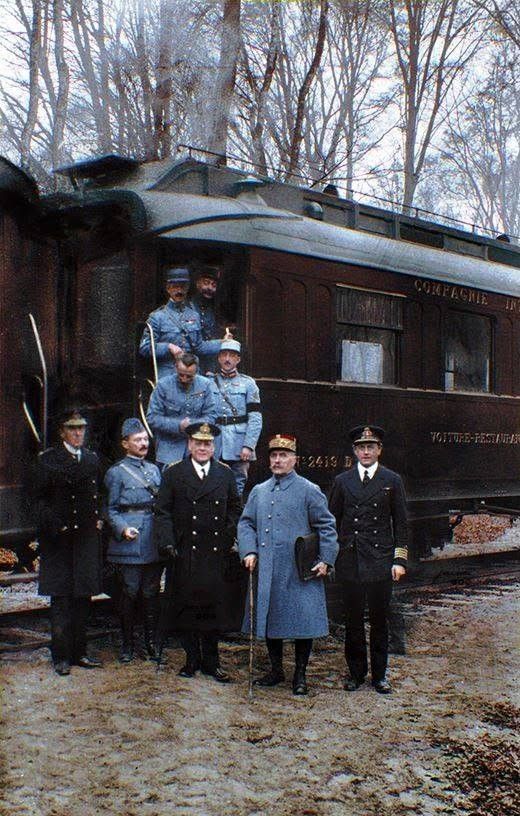
By the time the armistice was signed, Germany no longer posed any danger to its enemies. The front had collapsed, and the Germans were retreating everywhere. At times this retreat turned into a chaotic flight. Revolution was raging inside the country. Karl Liebknecht announced the creation of a Soviet republic in Germany. Kaiser Wilhelm II fled to neutral the Netherlands (where he soon abdicated the throne). The German delegation that arrived for negotiations was forced to accept the ultimatum set by the Entente powers. The details of the actual surrender were discussed not in spacious offices, but in a small staff railcar. This detail was well remembered in Berlin. We will return to it later.
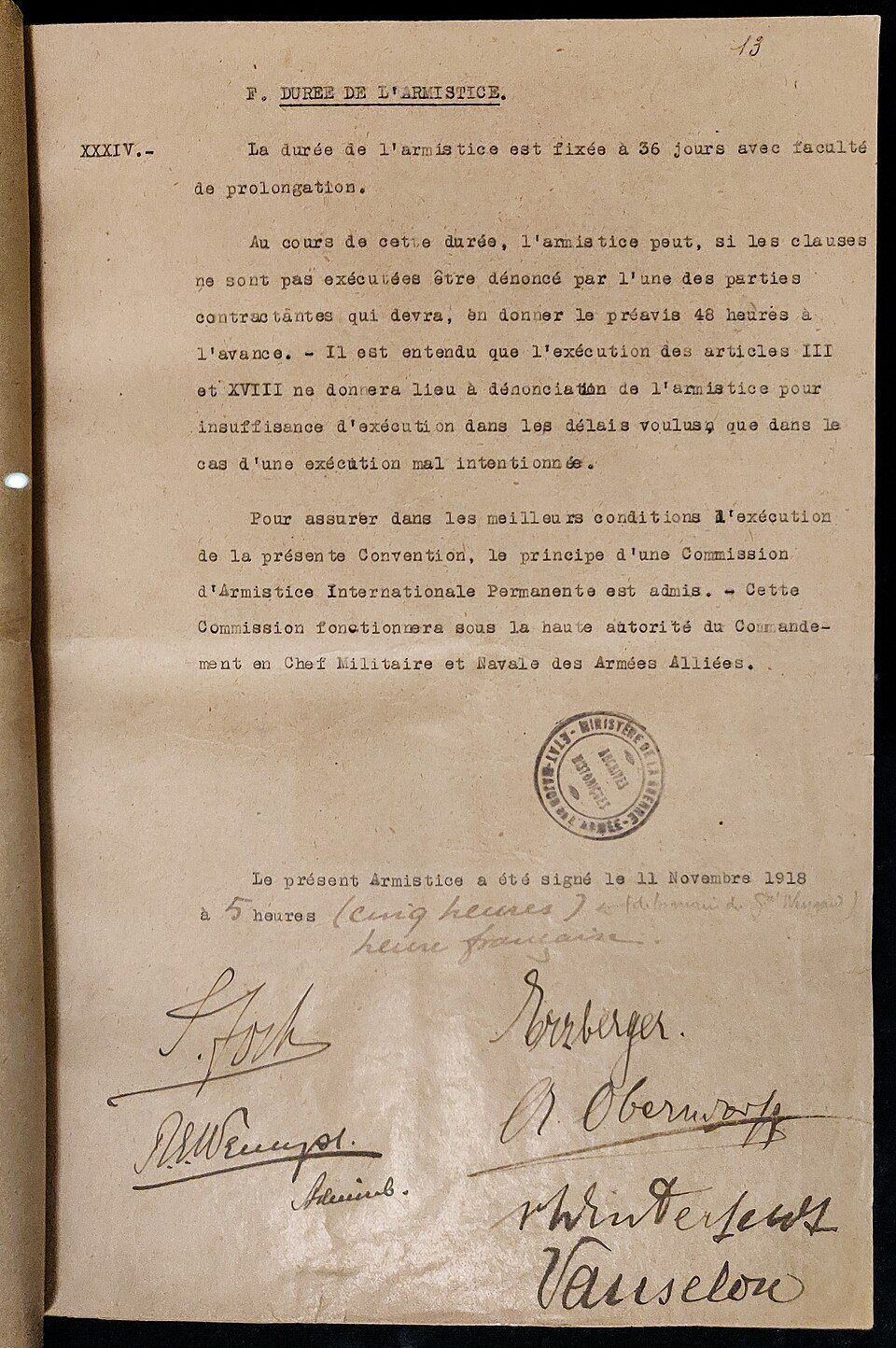
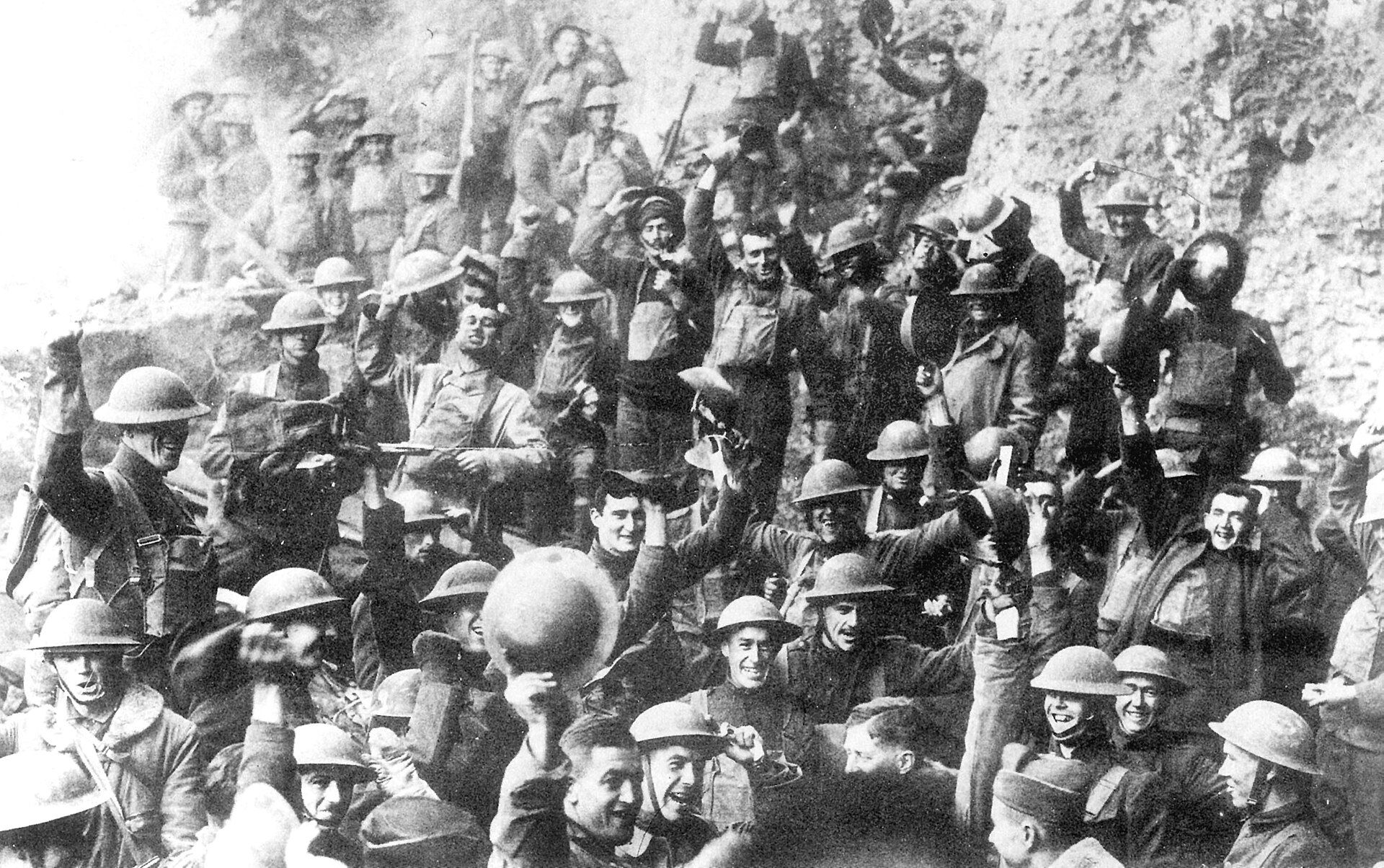
Entente representatives at the signing of the Compiègne Armistice. Colorized photograph.The railcar in which the armistice was signed.The last page of the signed armisticeAmerican soldiers rejoicing on November 11, 1918, at the conclusion of the Compiègne Armistice
It is important to keep in mind that by the autumn of 1918, Germany was under a severe economic blockade. Millions of the country's citizens were starving. By November, all of Berlin's allies had capitulated (including Austria-Hungary and the Ottoman Empire).
However, within Germany itself, the war was felt very weakly. All the fighting took place in other countries. No one saw enemy soldiers. There were no bombings of German cities. Yet until November, propagandists confidently reported that everything was fine and the Kaiser’s army was invincible. After all, as early as spring 1918, Russia had acknowledged its complete defeat. Under the Treaty of Brest-Litovsk, the Germans received colossal territories and a gigantic indemnity. All that remained was to hold out a little longer and crush the enemies on the Western Front.
In short, millions of citizens never really understood why they suddenly had to accept the humiliating terms of the Treaty of Versailles. Was this not a treacherous betrayal by the “fifth column”?
The burden of humiliation
Most often, the Nazis’ rise to power is attributed to the excessively harsh terms of the Treaty of Versailles. Supposedly, the Germans could not come to terms with their humiliation, the excessive payments, and the unjustly drawn new borders. That is why millions of people in Germany voted for Adolf Hitler and entrusted him with power. And if the victors had shown humanity and not been greedy, there would have been no new war.
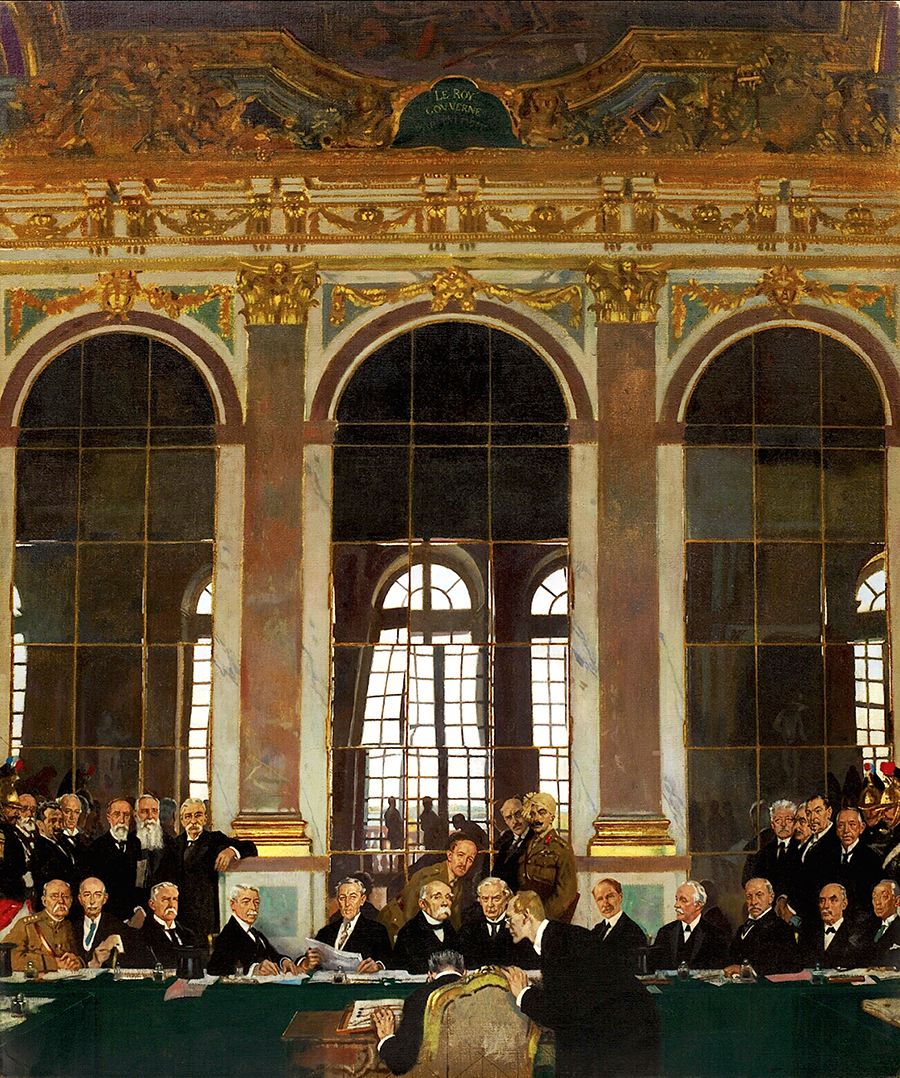
William Orpen. Signing of the Treaty of Versailles in the Hall of Mirrors (1919)
Such claims are profoundly mistaken. German revanchists would have found a pretext anyway to seize power, rebuild a strong army, and spread total militarism.
As the sad experience of the Weimar Republic’s transformation into the Third Reich showed, preventing the revival of aggressive powers requires not only peace treaties but also other measures. And those were precisely what the Entente neglected.
However, in mid-1919, nothing foreshadowed disaster. When German delegates tried to soften the terms of the Treaty of Versailles, representatives of France and Britain threatened to invade the interior of Germany. Moreover, the politicians who came to power in Berlin managed on their own to suppress the Marxist uprisings and began implementing radical reforms. All this created the illusion that democratic change was irreversible.
Only hundreds of thousands of front-line veterans did not disappear, and no one could explain to them why they had shed blood, rotted in the trenches for years, and in the end were left with nothing. And, of course, there was no sudden sobering among millions of ordinary Germans. After all, before the First World War, Germany went from victory to victory. The unification of scattered kingdoms and principalities into a powerful state took place. Before 1914, colonial conquests expanded. As a result, the burghers could not and would not understand why they suddenly had to accept the onerous terms of the Treaty of Versailles.
Guarantees of lasting peace?
Of course, London and Paris feared Germany’s revival and a new war. One of the most reasonable options for weakening the German empire could have been to divide it into independent states. In fact, a united Germany appeared on the maps relatively shortly before the First World War. By the middle of the 19th century, the fully independent kingdoms of Bavaria, Saxony, Prussia, Württemberg, and Hanover, as well as more than two dozen sovereign duchies and principalities, existed peacefully. And in some regions there were very strong separatist sentiments. Why not restore the old borders?
However, there was a devastating argument against this plan. How would reparations be collected from different states? How could one determine the proportions in which the burden of payments should be divided? By population? By economic potential? In the end, the division of Germany was abandoned. It is much easier to demand the full amount from one place. Thus Berlin remained the capital of a united country.
True, in Paris they came up with another plan for their own security. To prevent a new German invasion of France, it was necessary not only to demilitarize the left bank of the Rhine, but also to create a separate state entity in that territory under Entente control. But this plan also had opponents. In London, they were very concerned about France becoming too powerful. In Great Britain, they could not forget the ruinous Napoleonic Wars. Would the French awaken their old expansionist ambitions? Thus, no Left Bank Rhine Republic came into being either.
Germany remained united. But it was a democratic republic known as the Weimar Republic (named after the city where the constituent assembly of the reformed Kaiserreich took place). Reasonable people came to power, people who did not want another bloody slaughter. All this created the illusion of a stable, long-term peace in Europe.
Coups and the victory of the republic
Already in March 1920, a coup broke out in Germany, named the Kapp Putsch after one of its organizers. The military rebellion was led by generals, supported by thousands of former front-line soldiers. The putschists seized Berlin’s government quarter. Some members of the Reichstag fled the capital in panic. However, there was no unity among the leaders of the uprising about further actions. Most officials refused to carry out the rebels’ orders. Massive strikes began. In the end, the putsch failed. Its leaders fled abroad or hid in the countryside.
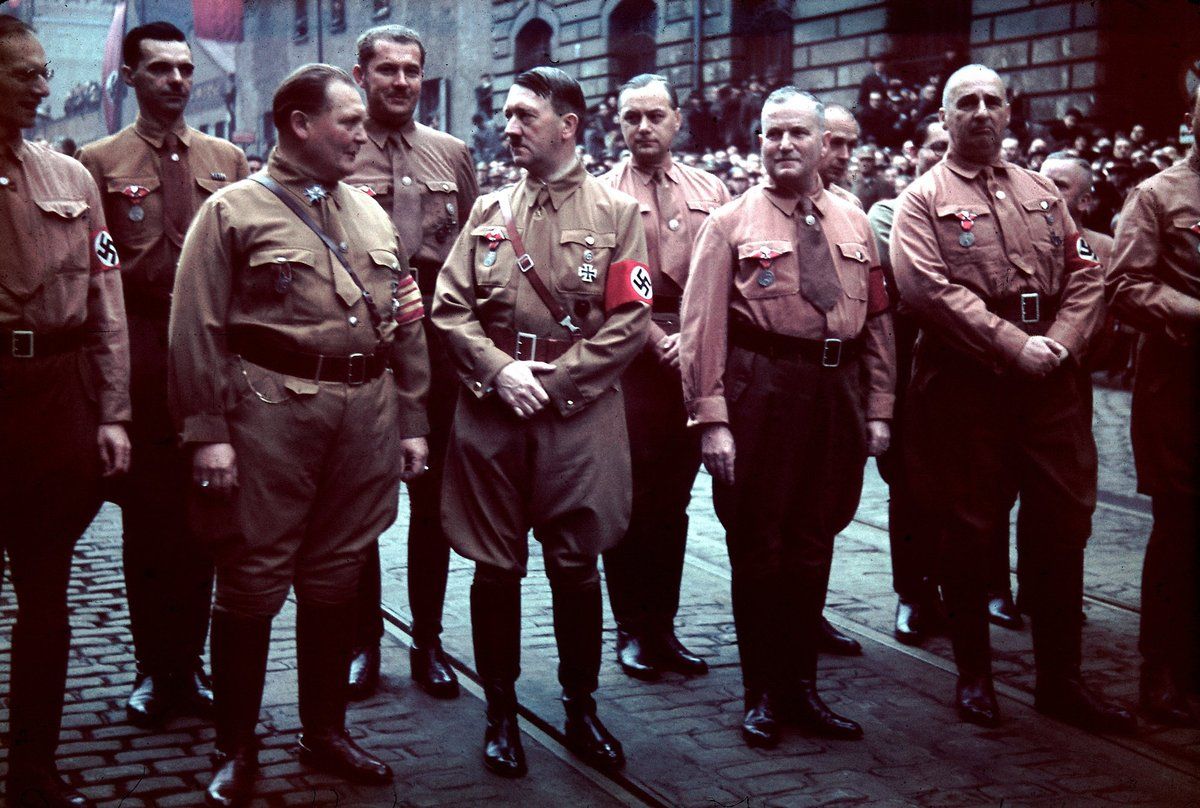
In November 1923, another coup broke out. It went down in history as the “Beer Hall Putsch”. This time, the center of the revanchist uprising was Munich. Among the leaders of the rebellion was the little-known former front-line soldier Adolf Hitler. It came to armed clashes with casualties on both sides. However, once again the authorities of the Weimar Republic managed to keep the situation under control. The revolt was suppressed, and its leaders were arrested. Adolf Hitler was charged with treason and sentenced to five years in prison.
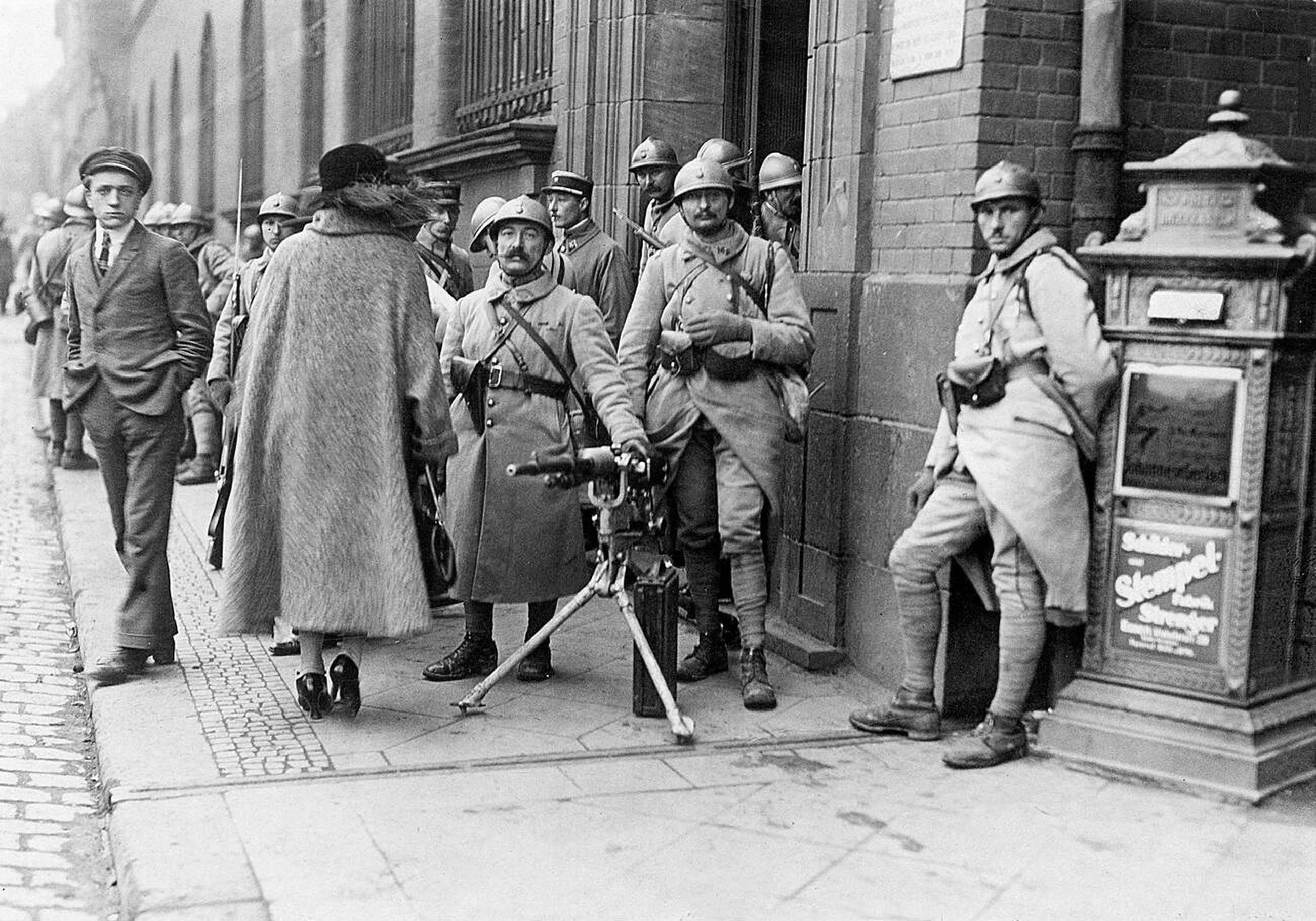
Another important event took place in 1923. Berlin failed to pay the agreed reparations on time. In Paris, this was seen as an intentional act by the German government aimed at sabotaging peace. As a result, a large contingent of French and Belgian troops entered the Ruhr region to seize coal, timber, and steel as reparations by force. German troops did not dare resist them. The region was effectively occupied. In Berlin, workers were called upon to engage in passive resistance, that is, to strike. But this threw Germany’s economy into complete disarray. A wild hyperinflation began. In the end, the Reichstag was forced to compromise (the so-called Dawes Plan). The government of the Weimar Republic resumed reparations payments (including in resources). Only after that did the Entente soldiers leave the Ruhr.
French soldiers during the occupation of the Ruhr in 1923Hitler and his associates in Munich in 1938 during the celebration of the Beer Hall Putsch anniversary
All these events led British and French politicians to believe in the irreversibility of democratic change in Germany, in the ability of the Weimar Republic to deal with revanchists on its own, and in their own military might.
People like Adolf Hitler drew their own conclusions as well. He decided that power had to be won by legal means.
The Nazi leader spent only a few months in prison and was released under amnesty. Already in 1924, he actively entered political struggle at the head of the NSDAP party.
The victory of the revanchists
In his propaganda, Adolf Hitler began exploiting the “stab in the back” theme. Supposedly, victory in the First World War was close, but because of the betrayal of the “fifth column”, everything ended in Germany’s humiliation. The Nazi leader named Jews and communists as the main culprits of the surrender. Hitler’s fiery speeches found an echo in the hearts of a significant number of Germans. Many people also liked his biography. The man had fought honestly, been wounded, and later ended up in prison for his beliefs. As a result, the popularity of the NSDAP began to grow. Already in 1924, party members entered the Reichstag after the elections.
Hitler’s openly revanchist rhetoric initially did not greatly worry the leaders of France and Great Britain. They wanted to believe that most Germans did not want another war. In particular, in 1929, Erich Maria Remarque’s novel All Quiet on the Western Front was published. This book was in huge demand and became the best-selling in the country’s history. The author’s revelations about the horrors of trench warfare became a vivid manifesto of pacifist ideas.
The Entente rulers had other reasons to consider the rise in Nazi popularity a lesser evil. For example, in the 1928 parliamentary elections, NSDAP representatives won less than 3% of the vote. Meanwhile, more than 10% of voters cast their ballots for the communists. In this regard, politicians in Paris and London were much more alarmed by the prospect of Marxists coming to power. At the same time, the Social Democrats led in the number of votes; they sharply condemned militarism and revanchism. This made it possible to hope that a new aggressive Reich could not be revived in Germany.
Probably, a major economic crisis played a fatal role in the subsequent events. The Great Depression crippled all the leading powers. But in Germany, which was forced to pay enormous reparations, the situation was especially critical.
Hitler and his supporters blamed Jews for all the troubles and promised to quickly turn things around for the better. The popularity of the NSDAP again began to rise sharply. At the same time, Germans became increasingly disillusioned with the Social Democrats, who were unable to cope with the economic problems.
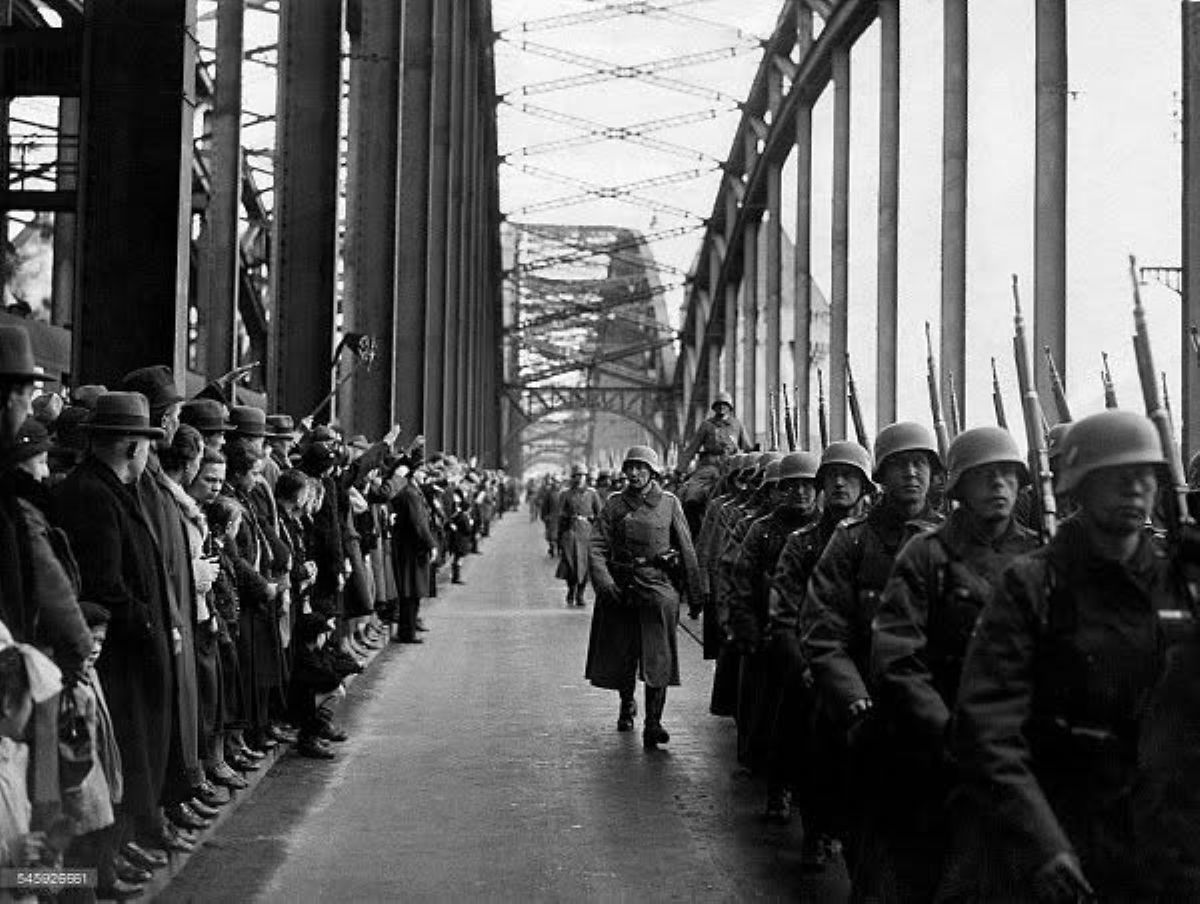
The Nazi party never managed to win a majority in Reichstag elections. But nevertheless, Hitler succeeded in having himself appointed Reich Chancellor. Having received serious powers, he immediately began building a dictatorship. The activity of all parties except the NSDAP was banned. Violations of the terms of the Treaty of Versailles began immediately. The size of the army began to grow sharply. Production of tanks and military aircraft started. In 1935, Hitler publicly announced the denunciation of the Treaty of Versailles. A year later, he sent troops into the demilitarized Rhineland.
Entry of German troops into the Rhineland in 1936
Sadly, London and Paris did not dare to take active action with the involvement of their armies. First of all, no one wanted to believe that Hitler would dare to unleash open war again. In France, the commanders who achieved victory over Germany in 1918 were still alive. In Paris, they sincerely considered their army invincible, and the Maginot Line built on the border with Germany impregnable. Moreover, the rulers of France and Britain believed Hitler’s 1938 promises to preserve lasting peace in exchange for the annexation of the Sudetenland (the western part of Czechoslovakia, inhabited by Germans).
The consequences are well known. On September 1, 1939, Wehrmacht units invaded Poland. France and Great Britain were forced to declare war on Germany. True, in London and Paris no one suspected that as early as August the Soviet Union had become the de facto ally of the revived Reich.
In the spring of 1940, the Germans bypassed the Maginot Line through Belgian territory and invaded France from the north. In the short campaign, the Anglo-French army was defeated. At Hitler’s insistence, they found that very railcar in which the Compiègne Armistice had been signed. To humiliate the French, they were forced to accept surrender in it. And ahead, the world faced long years of the bloodiest war in human history.
Lessons learned
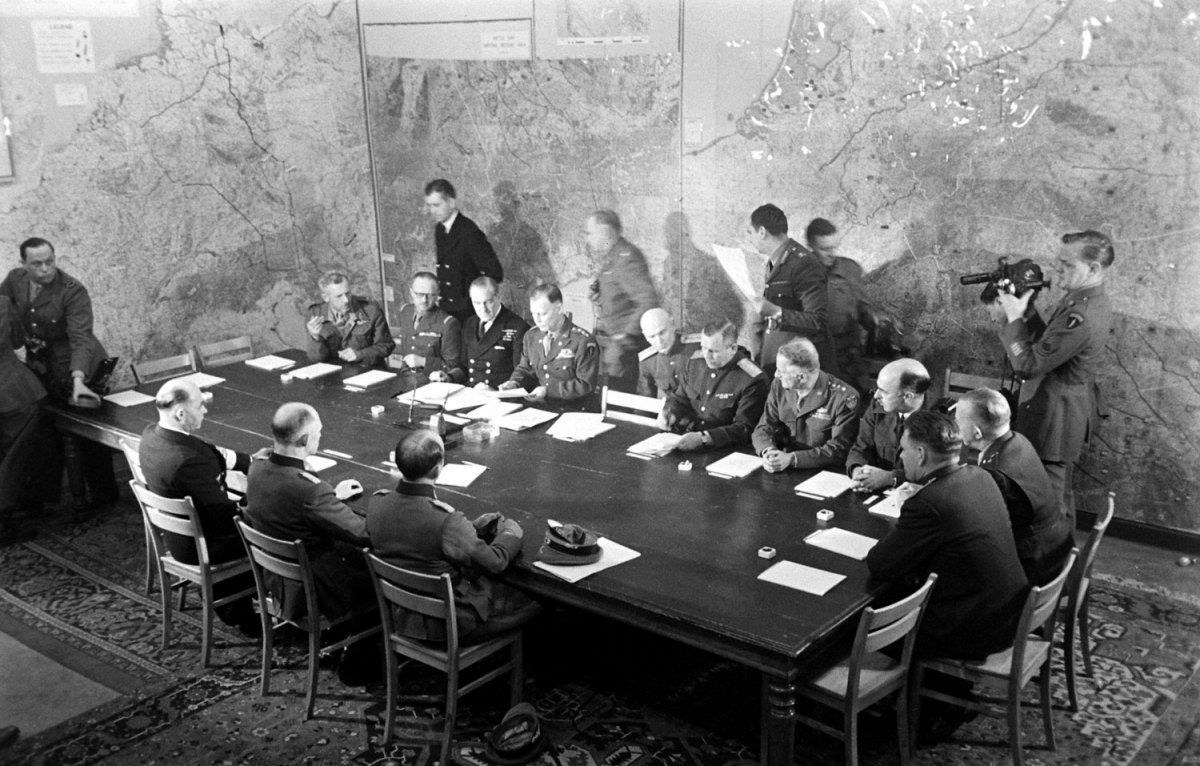
By May 1945, the allies of the anti-Hitler coalition were able to defeat Hitler’s army. After the assault on Berlin, representatives of the Wehrmacht agreed to sign unconditional surrender. After that, much was repeated according to the pattern of the Treaty of Versailles. Germany was stripped of part of its territory, forbidden to have a full army, and obliged to pay enormous reparations.
Signing of Germany’s instrument of surrender in May 1945
Only this time there was something else as well. The victors did not repeat the mistakes of 1918. No one wanted to leave Germany to itself anymore. The memory of the military uprisings of German veterans of the First World War and of the revanchists’ entirely legal rise to power was too fresh. Therefore, Allied troops did not leave the occupied territories. And US military bases remain there to this day. Germany was divided into four parts and placed under external administration. In each of the occupation zones — American, British, French, and Soviet — processes of forced denazification began.
The consequences of the decisions made in 1945 are clearly visible today. At least on the territory of the former Third Reich where the Federal Republic of Germany was formed. Under the strict control of the occupation administrations, which controlled all areas of life in postwar German society, it was possible over several decades to radically change the attitudes of the defeated. The ideas of revanchism, imperialism, and national superiority were done away with.
This experience is very important to take into account today. The mistakes of the Treaty of Versailles must not be repeated after the military defeat of Putin’s Russia in the war against Ukraine.
Hundreds of thousands of front-line soldiers will not disappear anywhere (and in essence, mercenaries, murderers, looters, and sadists). Nor will there be a sudden sobering-up in Russian society. Millions of citizens of Putin’s empire are poisoned by propaganda of greatness and the special mission of the Russian world. After defeat, they will easily believe a yesterday’s front-line soldier (a hypothetical Strelkov-Girkin) that victory was close and that the defeat was the result of the actions of the “fifth column” (foreign agents and other traitors).
If you enjoyed this article, consider making a donation — one-time or, even better, monthly. Your support helps us motivate our authors and become better with every article.
Our organization is recognized by the Internal Revenue Service (IRS) as a 501(c)(3) tax-exempt, charitable organization, which means that all contributions made to us are tax-deductible to the fullest extent permitted by U.S. law. Individuals may generally deduct charitable contributions of up to 60% of their Adjusted Gross Income (AGI) for cash donations made to qualifying 501(c)(3) organizations. For donations of appreciated assets (such as stocks or other long-term capital assets), the deduction is typically limited to 30% of AGI, based on the fair market value of the asset. C-corporations may deduct charitable contributions of up to 10% of their taxable income for donations made to eligible charitable organizations.
By submitting a donation, you confirm that you have read and accept the following documents: Privacy Policy and User Agreement, and also give consent to the processing of your personal data.
If you would like to unsubscribe from a monthly donation, please email us at: [email protected]