“Most.Media,” in collaboration with the magazine “Region.Expert,” launches a regular weekly review of events occurring in the fields of regional politics, economy, and culture. For many Russian media, as well as for free Russian-language publications outside Russia, this topic often still seems secondary and provincial. But such a snobbish-centralist approach has repeatedly failed — throughout various historical changes, Russia’s geographical borders have shifted, and many former provinces of the empire became independent countries. If we aim to look to the future, some promising trends need to be tracked and analyzed today.
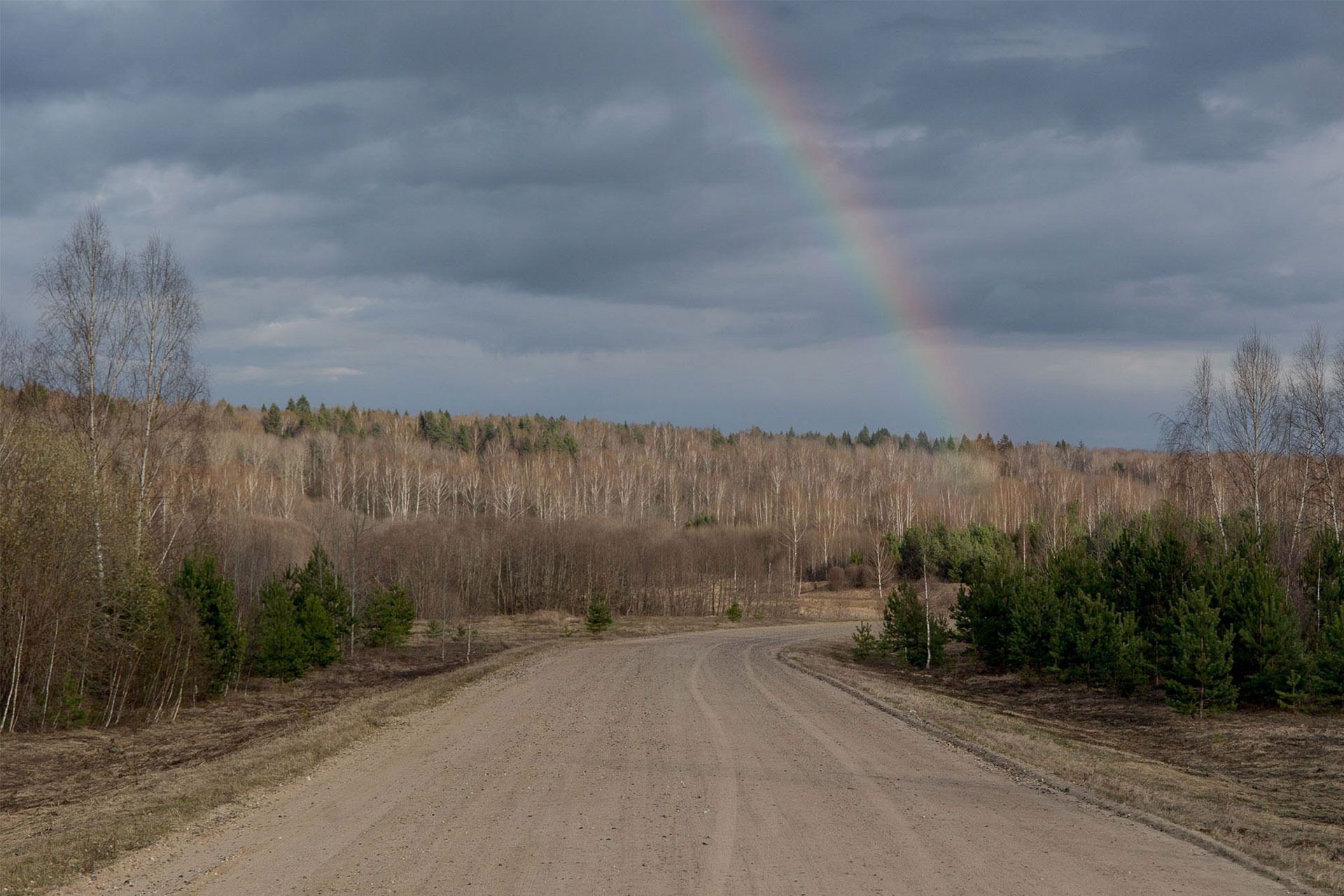
Photo from the Most.Media collection
Today, in political emigration, there are many regional and national movements developing projects for their future independent countries. One can be skeptical about this, but it’s useful to remember that during Soviet times, political emigrants from Ukraine or the Baltic countries were also underestimated in the West — yet in the end, they prevailed. And this story could well repeat at a new stage when the Russian empire approaches its next collapse.
And within Russia itself, any discussions about regional self-government are effectively banned today and carry criminal penalties for “calls to violate territorial integrity.” Although many regional activists demand not the “breakup of the country,” but merely genuine federalism, the current “Russian Federation” does not live up to its official name.
Within this project, we will try to show our readers the viewpoints of residents from various cities, oblasts, and republics. And create their symbolic bridge with those who were forced to leave their homeland due to political repression.
We hope that free discussions between them will help develop real post-imperial strategies. They were once called “post-Soviet.” Now, perhaps, the time has come for “post-Russian”?
An anthology about new countries in place of Russia was presented in Europe
At the beginning of the year, Jamestown Foundation senior researcher Yanush Bugayski published an anthology “Free Nations, New States: The Final Stage of Russian Colonialism”. This is a fairly voluminous, nearly 500-page collection of articles by representatives of various Russian regions in exile, as well as European and American experts, about possible prospects for another breakup of the Kremlin empire.
In response to accusations that most texts in this anthology are written in the style of wishful thinking—attempting to pass wishes for reality—the editor usually replies that it is not wishful but willed thinking — a volitional mindset typical of fighters for independence across countries and eras.
A significant part of the collection consists of speeches by participants of the Forum of Free States of Post-Russia, held since 2022 in various countries, sometimes at quite high political levels, in their parliaments. Russian propaganda TV channels tirelessly denounce this forum. Curiously, some opposition media abroad also readily join the criticism of this event. It seems they share a one-man Moscow-centrism as something “taken for granted.” And the post-Russian Forum precisely breaks these molds, showing residents of different countries that
Russia is by no means some geopolitical “monolith.” It is more a conglomerate of very different regions, which the Kremlin metropolis has turned into powerless colonies.
And according to the Forum’s founder, Ukrainian public figure Oleg Magaletsky, as long as this empire persists, it will inevitably unleash wars against its neighbors and threaten the entire free world.
In September, Yanush Bugayski’s anthology presentation took place in the Baltic and Scandinavian countries — Lithuania, Latvia, Estonia, Finland, Sweden, Denmark, and Norway. All these events were led by Oleg Magaletsky, whose interview we plan to publish in the next issue of our review. We invite interested readers to send their questions.
Against “United Russia,” but for a united Russia?
Recently, Yulia Navalnaya published a column in The Economist magazine arguing that Europe needs a long-term strategy toward Russia. This is beyond doubt, but one of her arguments surprises with its complexity: “One should not threaten the division of Russia into many parts, because Putin has always accused his opponents precisely of such plans, thus consolidating Russian society.”
By this logic, if Putin accuses someone of something, the accused are truly guilty. But it’s hard to imagine any Western politician or political scientist speaking in terms of “threats to divide Russia.” Even the mentioned anthology by Yanush Bugayski about prospects of Russian de-imperialization is not threats but discussions about possible futures, which, by the way, are banned inside Russia itself.
Yulia Navalnaya has shown heightened concern for Russian state integrity more than once. Last year, she expressed similar ideas at a strategic forum in Slovenia, which she also mentions in her new article. Then she criticized representatives of political emigration who called for Russia’s decolonization.
Of course, Navalnaya opposes the war with Ukraine. But does she not notice that this rashist war is precisely colonial in nature, continuing the imperial strategy of “gathering lands around Moscow”? Putin’s Russia sees itself as a direct continuation of the Russian Empire, from whose perspective all other post-Soviet republics are not considered truly independent states and international law can be easily violated in relation to them.
The strategy Yulia Navalnaya proposes requires preserving the current Russia as a unified state. In her view, aggressive Putinism with its wars against neighbors and threats to the world is some accidental excess, not a consistent return of Russian history to its imperial path.
In general, this autocratic patriotism of some political emigrants strongly resembles the Stockholm syndrome that won’t let them go. You managed to escape prison — yet you dream of preserving its walls and bars. Interestingly, Alexei Navalny gradually evolved toward recognizing regional self-government. For example, in 2020, he sharply opposed the appointment of a Muscovite, Degtyarev, as governor of Khabarovsk Krai. But unfortunately, his widow and political heir continues to hold Moscow-centric views, which are unlikely to help her find common ground with various regional movements.
Another recent initiative by Yulia Navalnaya — a campaign against the “United Russia” party for the 2026 Duma elections — seems completely out of time. Such projects were only relevant in the 2000s, but in the era of full-scale war they look like a monstrous anachronism. The entire Russian electoral machine today is absolutely predictable and basically allows no “surprises.” At the September regional “elections,” United Russia even kindly yielded some districts to their formal opponents to create an illusion of multi-party democracy. And in supporting the war, they differ in nothing. What kind of voting in this parody can be called “smart”?
The war has plunged Russian regions into economic recession
The ongoing full-scale Russian-Ukrainian war, now lasting more than three and a half years, inevitably generates an economic crisis that hits the regions hardest. Although centralized statistics may show at least minimal GDP growth (around 1%), in reality these aggregated data resemble the “average temperature” in a hospital. They conceal a deep imbalance between different territories. For example, the situation of acute budget deficit, which economists call “unprecedented,” today affects the majority of Russian regions — 67 out of the official 89.
Natalia Zubarevich, an economic geographer from Moscow State University, sees one cause of this situation in the total hyper-centralization of the Russian economy. According to her data,
income growth rates are observed only in Moscow — 11% per year. For comparison: in the northwest and most Siberian regions of Russia, they grew by at most 2%.
At the same time, transfers to regions from the federal center have been decreasing for the third consecutive year. Nevertheless, Moscow continues to extract natural resources from there.
Igor Lipsits, a former professor at the Higher School of Economics living in Lithuania after his books were banned in Russia, claims: “Moscow started the war, but Tatarstan will pay the price.” Indeed, oil exports from the republic to Europe have practically ceased, and instead it is now forced to produce Iranian combat drones.
The official rating agency “Expert RA” in September published a generally “optimistic” monitoring of regional budgets. However, observers from the independent publication The Moscow Times saw a very different picture in the figures — half of Russian regions have slid into an industrial recession. In some republics and oblasts, the decline is catastrophic: —53.9% in the Komi Republic, —33.3% in Chelyabinsk Oblast, which are large industrial regions.
The main traditional source of Russian income — export of natural raw materials — is sharply shrinking, and not only due to European sanctions: the Kremlin’s “strategic partnership” with China doesn’t help either.
For example, Chinese coal is cheaper than Russian, and if Russian Kuzbass wanted to export it there, it would have to set prices below cost. Karelia used to send trains of timber to neighboring Finland, but now the EU has closed that import. China is interested in timber supplies, but transportation costs across the huge Eurasian distances make Karelia’s forest literally gold-plated.
The Republic of Karelia and other Russian regions bordering the European Union (Kaliningrad, Leningrad, and Pskov oblasts) traditionally conducted cross-border trade with European countries and developed mutual tourism. But the war has eliminated these opportunities. Now, instead of promoting their own regional economic specificity, these oblasts and republics, by Kremlin order, are actively militarizing their industries, which brings no profits to local budgets.
And about repressions
This summer, a series of unexpectedly large protest rallies took place in Gorno-Altaysk (both by the standards of the small Altai Republic and by today’s standards in general). Local residents protested against the de facto liquidation of local self-government and the arbitrariness of the Kremlin’s appointee Turchak, who is selling off the protected Altai lands to Moscow “investors.”
Civil activist Aruna Arna, who spoke vividly at these rallies, was added in August to the registry of “terrorists and extremists,” and in September she was detained with a criminal case opened against her.
In the Komi Republic, professor Nikolai Zyuzev, a researcher of the scientific heritage of his great compatriot — sociologist Pitirim Sorokin — was arrested already this summer. His arrest became publicly known only in September. Zyuzev taught for a long time in Canada and even obtained citizenship there, but returned to his native republic in 2016 — and now he is accused of “espionage.” This is a tragic rhyme of the times: Pitirim Sorokin was almost executed by the Bolsheviks in his day.
However, current repressions sometimes look tragically comical. In September, a resident of Surgut was fined 90,000 rubles for a statement about handing over the Ural Federal District to U.S. President Donald Trump. His case was considered under the article on “public calls for actions aimed at violating the territorial integrity of the Russian Federation.”
Prosecutors, monitoring Telegram chats, found a comment under news about the U.S. planning to seize Greenland from Denmark. The Surgut resident wrote there: “Trump, better take the Ural Federal District, we’ll pay you extra.”
If you enjoyed this article, consider making a donation — one-time or, even better, monthly. Your support helps us motivate our authors and become better with every article.
Our organization is recognized by the Internal Revenue Service (IRS) as a 501(c)(3) tax-exempt, charitable organization, which means that all contributions made to us are tax-deductible to the fullest extent permitted by U.S. law. Individuals may generally deduct charitable contributions of up to 60% of their Adjusted Gross Income (AGI) for cash donations made to qualifying 501(c)(3) organizations. For donations of appreciated assets (such as stocks or other long-term capital assets), the deduction is typically limited to 30% of AGI, based on the fair market value of the asset. C-corporations may deduct charitable contributions of up to 10% of their taxable income for donations made to eligible charitable organizations.
By submitting a donation, you confirm that you have read and accept the following documents: Privacy Policy and User Agreement, and also give consent to the processing of your personal data.
If you would like to unsubscribe from a monthly donation, please email us at: [email protected]