If we set aside ideological grievances against Elon Musk and try to impartially look at the path he has taken over the past few years, it can be quite disheartening. Not so much because of his series of personal failures, which ultimately led to the erasure of his reputation and distancing from the White House, but because of the failure of the very concept of bridging innovative business with politics. A concept that until recently seemed so meritocratically attractive and promising.
The media, now noting the “sunset and fall” of Musk and accusing him of totalitarian management methods, looked at him quite differently in the 2010s: as an innovator and bold initiator of futuristic projects. In 2015, amid discussions about Silicon Valley gaining hypothetical autonomy from the U.S., The Atlantic surveyed entrepreneurs about a possible presidential candidate for such a “subject” – and Elon Musk emerged as the favorite.
“Honestly, I don’t think tech leaders have much chance of becoming good presidents… Their main goal is to ‘disrupt’ on an international level, and if you mix that quality with political influence, you get a recipe for world domination,” reasoned Jim Yu, CEO of marketing company BrightEdge, who was skeptical about the survey idea. Musk became a living confirmation of these words and created a precedent that will discredit both the concept of compatibility between power and tech business, and tech business as a whole, for a long time.
Because Elon Musk of the 2020s was entirely about disruption, chaos, and claims to global dominance, even if without presidential levers of influence, but in the status of a close, if controversial, ally of the White House’s owner. The entrepreneur’s public reputation began to form about ten years ago, when he, among other things, became one of the signatories of a high-profile letter on the social consequences of artificial intelligence, and journalist Ashlee Vance published his first book biography “Tesla, SpaceX, and the Road to the Future.”
To put it mildly, complimentary: in it, Vance placed Musk alongside Thomas Edison and Henry Ford, creating a portrait of an asocial “classic know-it-all” whose genius revived declining industries like electric transport and solar energy. According to the author, this explains why Musk looks down on everything and everyone – being absolutely confident in his ability to succeed in any field, from finance to space exploration.
“To everyone I’ve offended, I want to remind you that I reinvented electric cars and plan to send people to Mars on a spaceship. Did you really think I was just some guy with nothing remarkable about him?” – this is a Musk quote that served as the epigraph to his second biography, written by Walter Isaacson and published in fall 2023. That is, a year before Musk’s appearance in American politics, preceded by almost a decade of widespread glorification of the billionaire as an extremely “remarkable guy.” Starting from 2013, when the media began mentioning him as an uncompromising environmentalist, up to the “Twitter” 2020s, when Musk had his own media platform and – incidentally – a tool to block his opponents, the remarkability was contested.
Such an intoxicating informational background may explain why, finding himself in Trump’s circle, and later heading the Department of Government Efficiency (DOGE), Musk even by his own exaggerated standards began making openly crazy statements. For example, that DOGE could cut the federal budget by $2 trillion, which the businessman announced at a campaign rally in New York, or that the American social security system is “the biggest financial pyramid scheme of all time.”
In fact, Musk’s political decisions are characterized by the same degree of madness as his statements or public appearances (wielding a chainsaw or appearing on stage wearing a hat shaped like a piece of cheese).
As Bill Gates put it, the rough budget and USAID staff cuts initiated by DOGE earlier this year looked like “the richest man in the world killing the poorest children in the world,” and the scandal was also triggered by attempts by people in Musk’s department to access confidential data of American taxpayers, while DOGE’s demands such as weekly progress reports from civil servants met sharp resistance.
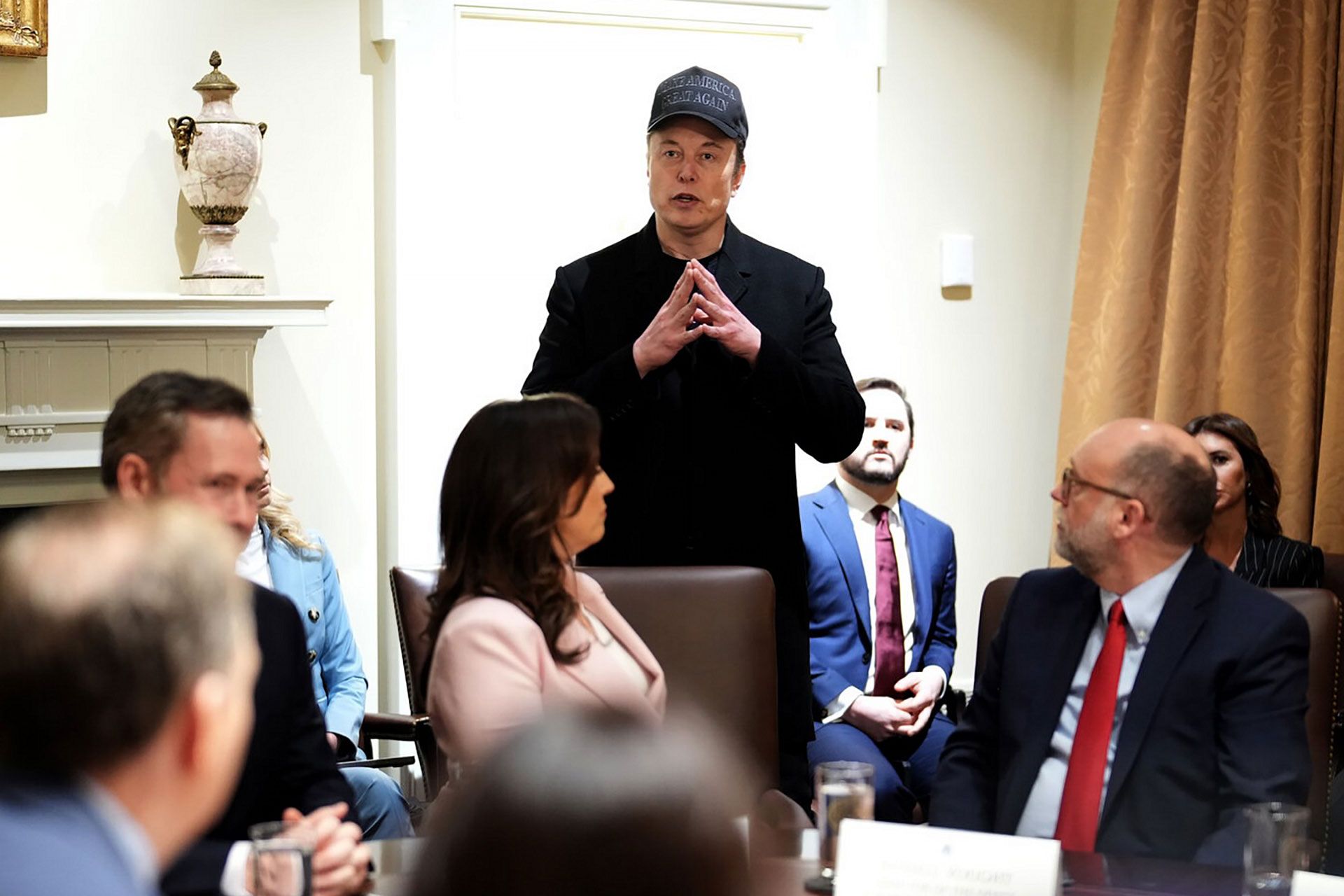
Elon Musk at the White House, February 27, 2025. Photo: Donald Trump’s Facebook
“How many people were fired because they didn’t send their three achievements per week or some other nonsense?” – one of Trump’s advisors complained in a conversation with The Atlantic. Such measures, against a backdrop of DOGE’s overall results far from the declared $2 trillion, led to Musk’s unpopularity both at the White House and in American society. Around April, Trump and prominent Republicans almost completely stopped mentioning the billionaire on social media, a nationwide poll showed that most voters disapprove of Musk and DOGE’s activities, and within the presidential circle there were even open clashes: Treasury Secretary Scott Bessent triple told off Elon over his attempt to push his candidate for head of the Tax Administration.
Under such circumstances, the entrepreneur announced his intention to significantly reduce his political spending (he spent a record $288 million supporting Trump) and focus on business, continuing to lead Tesla for at least another five years.
In 2021, Musk’s company ranked eighth in the reputation rating of American business compiled by Axios. Now it’s 95th. Meanwhile, Tesla’s shares have fallen almost by half compared to their peak in December 2024, and total quarterly sales dropped by 13%, making the start of 2025 the worst period for the company in recent years.
In Europe, the figures look even worse – in April, sales plunged by 81% year-over-year in Sweden, 67% in Denmark, and 62% in the UK (despite overall growth in demand for electric vehicles in the European market). Musk, however – despite calls to boycott Tesla over his support for Trump, arson attacks on the company’s factories by activists, and expert positions – is reluctant to accept personal responsibility for the destruction of his own brand.
In his view, sales have indeed declined in Europe and among a certain segment of consumers with left-wing political views, but overall “sales are doing well.” “When you buy a product, how much do you even care about the CEO’s political views? Are you even aware of them?” Musk wondered live on CNBC. But this is a case where investors really are aware of these views, which is why many commentators tend to consider Tesla’s shares “speculative meme stocks” – that is, traded at prices exceeding their estimated value due to their popularity.
“Tesla’s decline was observed even before the DOGE era… It was a brand built around the looming threat of climate change, a symbol of environmental care… It was a brand people were proud of, and I don’t know how to wash off the stain caused by Musk’s behavior now,” Brand Federation consulting firm founder Kelly O’Keefe told CNN. In fact, Musk himself was until recently quite a prominent figure in the “green” community: in 2017, he publicly withdrew from White House councils because Donald Trump decided to exit the Paris Climate Agreement. In 2013, Musk left the FWD.us initiative, which unites several well-known tech entrepreneurs, due to its support of advertising for oil drilling in Alaska.
It’s not quite clear what result Musk expected by radically breaking with his past public image as a scientific progressivist in favor of the image of a toxic right-wing populist. One who fully agrees with the man who, in the first hundred days of his administration, initiated over 145 decisions to roll back environmental regulations.
Unlike SpaceX or The Boring Company, Tesla really targets private consumers rather than government customers, so the scale of reputational damage from Musk’s behavior will likely require his removal as CEO.
Not long ago, The Wall Street Journal reported that the company’s board has already begun searching for a new CEO, and despite a swift denial, it seems to be only a matter of time.
All these consequences might have been avoided if Musk’s eccentricity had remained confined to his business or Twitter posts – specifically Twitter, not X, since after the social network’s rebranding, the entrepreneur’s media presence has taken on an increasingly ideological and didactic character. Signaling that a truly talented but egocentric person with unlimited resources can at some point throw them into realizing rather peculiar social and political projects. And that there are no sufficiently influential figures in his circle to convince him that he knows less about fighting corruption than about building rockets.
This is the curse of a businessman in power that Ross Perot managed to avoid – one of the first well-known tech entrepreneurs in the U.S. whose romance with politics did not damage his reputation. Because it never really got serious – limited to creating a small party, a couple of humanitarian gestures, and two unsuccessful election campaigns, Perot left the political arena and left in popular memory only populist sayings about America’s revival from Norman Rockwell paintings. Commenting on them, National Review founder William F. Buckley noted that there is no connection between business success and political intelligence – and Musk sacrificed his once positive reputation to prove that.
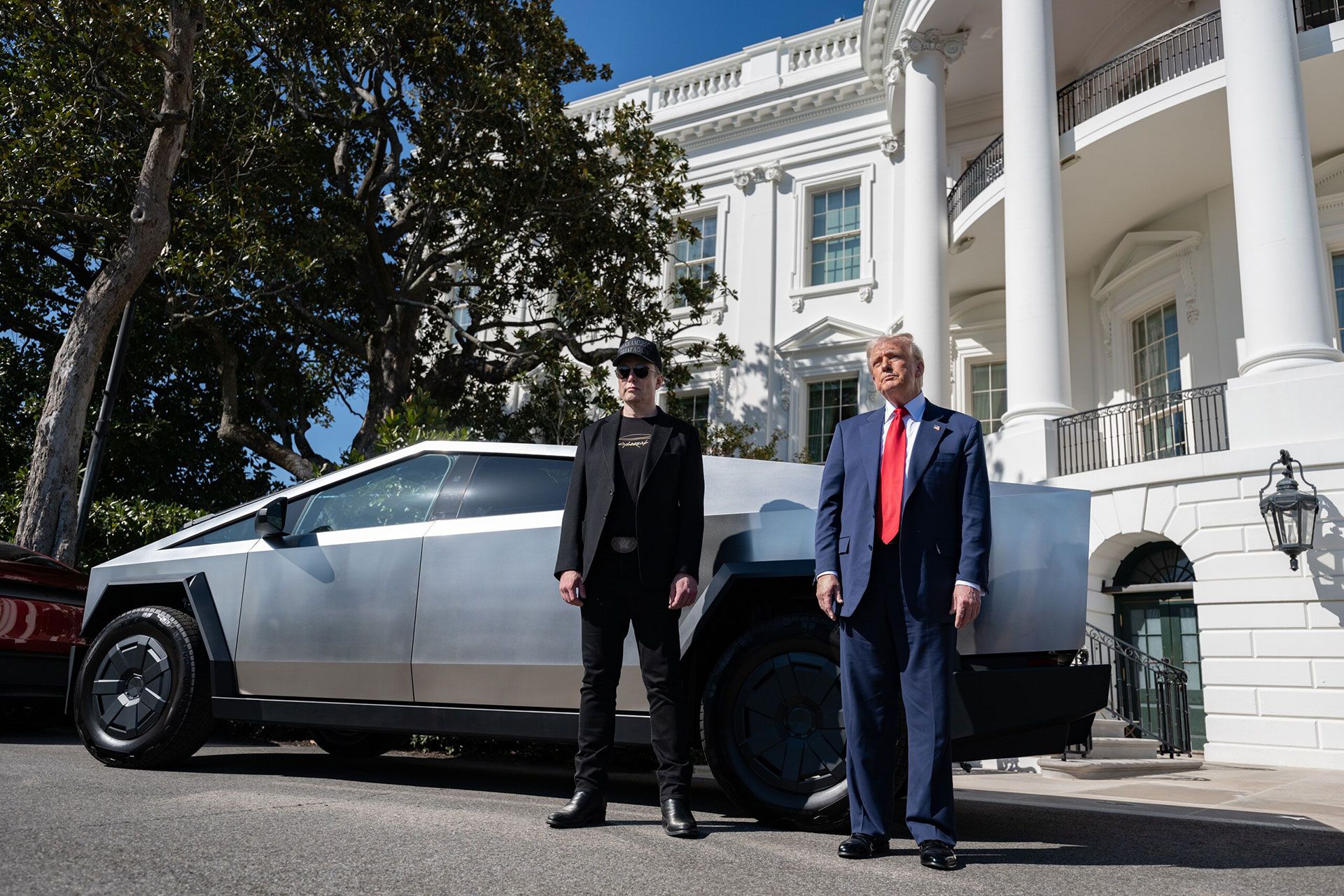
Main photo – Elon Musk, Donald Trump, and a Tesla SUV at the White House, March 11, 2025. Source: White House website
If you enjoyed this article, consider making a donation — one-time or, even better, monthly. Your support helps us motivate our authors and become better with every article.
Our organization is recognized by the Internal Revenue Service (IRS) as a 501(c)(3) tax-exempt, charitable organization, which means that all contributions made to us are tax-deductible to the fullest extent permitted by U.S. law. Individuals may generally deduct charitable contributions of up to 60% of their Adjusted Gross Income (AGI) for cash donations made to qualifying 501(c)(3) organizations. For donations of appreciated assets (such as stocks or other long-term capital assets), the deduction is typically limited to 30% of AGI, based on the fair market value of the asset. C-corporations may deduct charitable contributions of up to 10% of their taxable income for donations made to eligible charitable organizations.
By submitting a donation, you confirm that you have read and accept the following documents: Privacy Policy and User Agreement, and also give consent to the processing of your personal data.
If you would like to unsubscribe from a monthly donation, please email us at: [email protected]