The Ministry of Finance announced the initial budget parameters for 2026 and 2027-28, as well as changes in tax legislation that will help implement this budget. And this is a wartime budget.
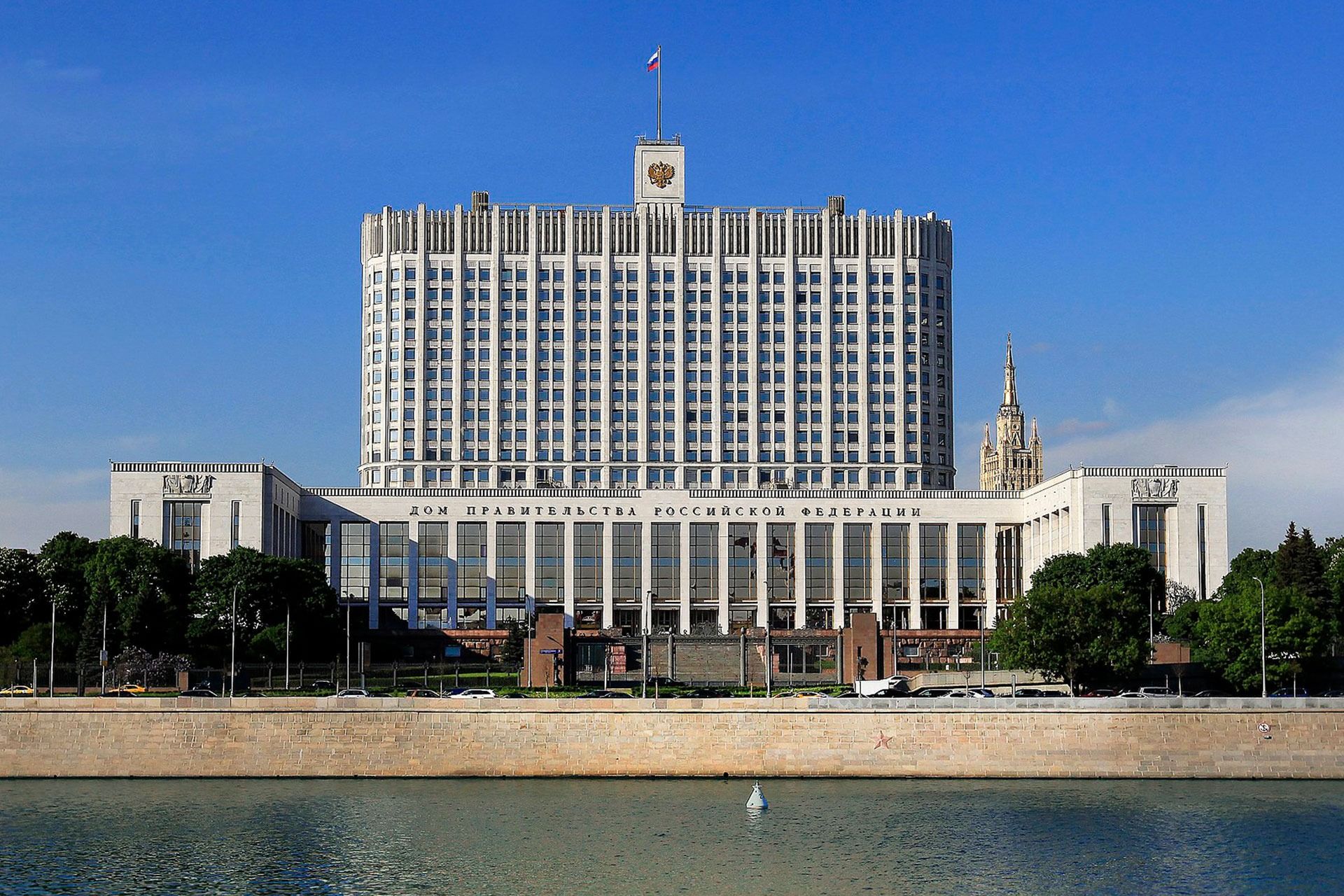
House of the Government of the Russian Federation, Moscow. Photo: Wikipedia / Ivan Krylov / CC BY-SA 4.0
The Russian Ministry of Finance does not hide that all budget parameters are adjusted for the continuation of the war. “The strategic priority is the financial support of the country’s defense and security needs, social support for families of participants in the special military operation,” it is written in the ministry’s press release in bold. “Another important direction of the budget is ensuring technological leadership and infrastructure development,” it also states, but let’s be realistic: this concerns technologies and infrastructure that allow the war to continue.
At first, the Ministry of Finance lists good news – for example, promising to fulfill all social obligations. Ten trillion rubles are planned to be spent on children (including maternity capital and subsidizing family mortgages); however, this is a total expenditure figure over several years. One trillion will be added to healthcare, but over six years. Of this, 900 billion is for the “Long and Active Life” program over three years and 94 billion for the development of children’s healthcare facilities. That’s basically almost the entire trillion. It is worth noting that subsidies for family mortgages were practically predetermined by already issued loans, and plans for further issuance may be adjusted simply by reducing subsidy quotas for banks.
Regarding life expectancy, it’s possible to guess why this topic ended up in the Ministry of Finance’s focus: everyone remembers Putin’s conversation with Xi about the possibility of living up to 150 or even forever. And obviously, who will get this money first: Putin’s eldest daughter Maria Vorontsova has already been awarded a grant of 30 million rubles this year for life extension research.
The information on education expenses is even more cunning. Promising to direct funds primarily to the modernization and construction of schools and kindergartens (just recently a part of a school collapsed in the Novosibirsk region and, by pure chance, there were no casualties), the Ministry of Finance calls for spending during 2026-28 and even up to 2030 in its press release. Which part of the announced sums will come next year is unclear. Maybe none at all.
Of course, the most interesting figures are the budget expenses for that very “strategic priority,” the war. But these are not published. However, it is reported that 1.9 trillion rubles are allocated to technological leadership, of which 567.8 billion rubles are planned for 2026.
117.8 billion rubles will be allocated to machine tool building over three years, 87.9 billion to drones. It seems these expenses can safely be added to military spending.
For comparison: more than 160 billion rubles are planned to be spent over three years to eliminate emergency housing stock, and 182.3 billion rubles for modernization of the already chronically failing communal infrastructure during the same period.
Of course, a full analysis of planned expenditures and expected revenues can only be made based on the budget draft itself. I remind you, it should be published on September 29.
But already now, the Ministry of Finance has left no illusions about where it intends to get the money — from taxes.
Just last year, after raising personal income taxes and corporate profit taxes, promised that taxes would not change until 2030. And here we go: from January 1, 2026, VAT is proposed to be increased from 20% to 22%. This immediately puts Russia into the top 5 countries with the highest VAT. The reduced 10% rate remains only for socially significant goods — food, medicines and medical products, children’s goods, and others.
VAT is an inflationary tax ultimately paid by consumers. Recall that VAT was already raised in 2018 from 18% to 20% — and in 2019 the Central Bank calculated that the VAT increase added 0.55–0.7 percentage points to inflation. But then inflation was 3%, and now it is 8%. Then the economy was slowing down (and completely stalled during the COVID years 2020-2021), and now only the civilian sector is slowing, and growth in traditional weapons production is decreasing.
However, growth continues in categories like “finished metal products” (mostly bullets, shells, rockets) — 6.8%, “computer, optical and electronic products” (including guidance systems, control, electronic warfare, etc.) — 7.8%, and in “other transport equipment,” which includes drones, growth is as much as 1.5 times. Initial forecasts predict inflation will rise by 1-2 percentage points due to the VAT increase.
Another “rich” source for increasing tax revenues is the sixfold reduction of the income threshold for applying the simplified tax system: from 60 million per year to 10 million.
Only very small businesses with income (not to be confused with profit — this is before deducting expenses, including taxes) less than one million per month will remain on the simplified system. Others will have to pay taxes fully — including the same VAT.
Tax benefits on insurance contributions for small and medium businesses in trade, construction, extraction, and other non-priority sectors are being removed. Benefits remain for military and military-supporting industries: processing, manufacturing, transport, electronics, etc. Considering there are already few small businesses in these areas, it can be stated that they will be the victims of the new tax reform.
And the main victim is the ordinary Russian citizen. According to experts’ calculations, the tax burden on citizens earning less than 200 thousand rubles per month will increase to 65%. This is a level typical of European countries with fairly high taxes, but there are no pensions of 280 dollars there, and medical treatment is not funded by SMS donations.
Nevertheless, Russians will now have to live with this, and for a long time. Possibly until the next tax increase.
However, there is one more sector chosen to be “pinched” — the betting business. Here the maximum profit tax rate of 25% will apply. Additionally, a turnover tax of 5% on bets accepted by bookmakers is introduced. One could be glad that not only the poor will be squeezed. But it’s mainly the poor who go to bookmakers: they have no hope to earn enough, no loans are given, so the choice remains: to play or to go perish in the war.
In fact, all the parameters of the new budget listed by the Ministry of Finance say exactly one thing: money will be squeezed primarily from the weakest, the most vulnerable.
And this is a fully conscious policy: military factories need working hands, the front needs living people. And apparently, the Ministry of Finance no longer pretends that everything will be different in a year.The president’s press secretary Dmitry Peskov has already commented on the budget innovations: there is a war and it must be won “for the sake of our children and grandchildren.” One wants to add to the tune of an old Soviet joke: obviously, for the sake of your children and grandchildren.
A telling detail: immediately after the Ministry of Finance’s publication, the Ministry of Economic Development published updated economic development forecasts — and immediately deleted them. This sad forecast spoke of economic stagnation. Combined with inflation, which will now certainly remain high, stagflation awaits Russia.
If you enjoyed this article, consider making a donation — one-time or, even better, monthly. Your support helps us motivate our authors and become better with every article.
Our organization is recognized by the Internal Revenue Service (IRS) as a 501(c)(3) tax-exempt, charitable organization, which means that all contributions made to us are tax-deductible to the fullest extent permitted by U.S. law. Individuals may generally deduct charitable contributions of up to 60% of their Adjusted Gross Income (AGI) for cash donations made to qualifying 501(c)(3) organizations. For donations of appreciated assets (such as stocks or other long-term capital assets), the deduction is typically limited to 30% of AGI, based on the fair market value of the asset. C-corporations may deduct charitable contributions of up to 10% of their taxable income for donations made to eligible charitable organizations.
By submitting a donation, you confirm that you have read and accept the following documents: Privacy Policy and User Agreement, and also give consent to the processing of your personal data.
If you would like to unsubscribe from a monthly donation, please email us at: [email protected]