The author of “The Bridge” spent the day under sirens and shelling. A personal account
View of Haifa port in northern Israel after Israel announced a preemptive strike on Iran. Video still: YouTube / Reuters
The first siren wailed at thirteen minutes past eight, just as Shabbat began. It was quiet, softer than usual, and I was tempted to stay in bed—maybe it was an alert in a neighboring area? But then the phone notifications howled, and I had to drag myself to the miklat.
A “miklat” is a protected room, a bomb shelter accessible to anyone nearby. In residential buildings, it’s usually a basement or semi-basement, but there are also public miklats in shops, schools, and even separate windowless concrete cubes, for example, along highways. New buildings are now required to have “mamads”—a reinforced room inside the apartment. There’s also “mamak”—a protected space on the floor, deep inside the building, usually between the elevators.
Our house is old—no mamads, no mamaks, no elevators. Residents go down to the miklat in pajamas and only inside do they finally read the messages on their phone screens. This wasn't an alarm requiring an urgent dash to the shelter, but an informational message: “Due to the security situation, please make sure you know where the nearest protected room is, install the Home Front Command app, and avoid unnecessary travel.”
Israelis know what this means—even before they check the news. Six months ago, everyone was woken by exactly the same message. Shabbat Shalom, war has begun.
We go back to our apartments. Got to get as much done as possible before the bombing starts. First thing: go to the bathroom. Who knows when there’ll be another chance. Then I throw a warm sweater over my pajamas, go down to my neighbor Hana—she has trouble walking after a hospital stay—grab her dog and take it out for a walk. The street is crowded. It seems like the whole neighborhood ran out with their dogs at once. There’s competition for every bush. Still, no one panics or gets nervous—people are used to this. The only thing I worry about: in the rush, I forgot to bring a bag, which is embarrassing. I return the dog, Hana asks me to let her know when there’s a real alarm. Hana is elderly and very hard of hearing.
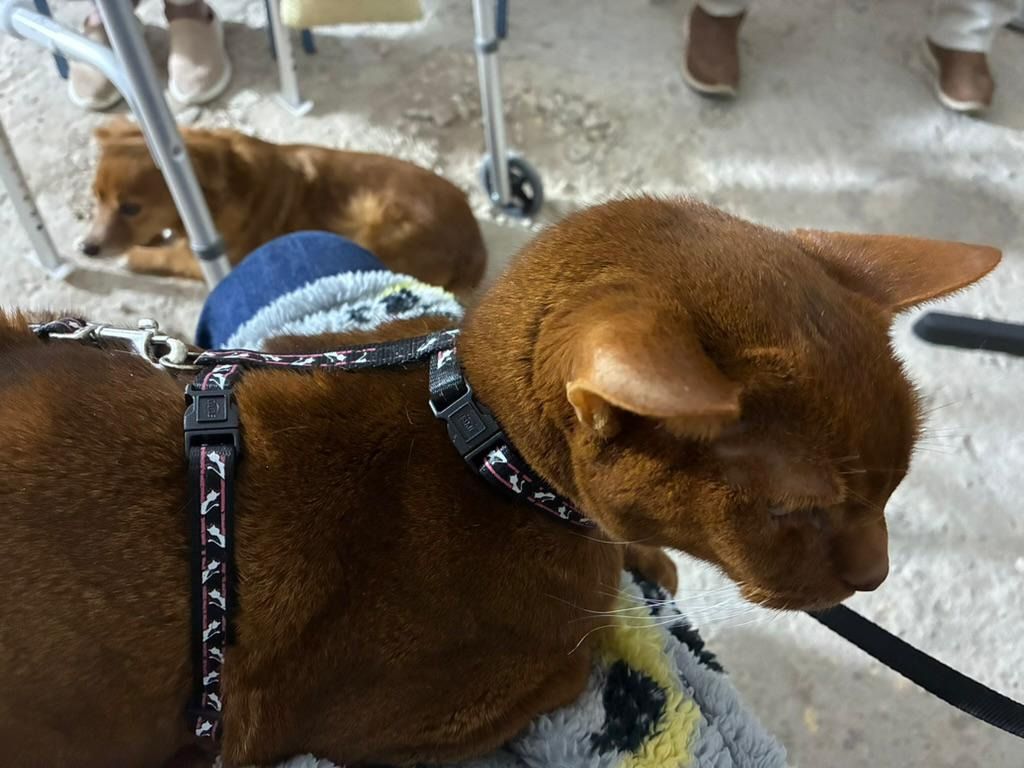
The second siren blares at 10:10. Perfect timing: in two hours I managed not only to walk the dog, but also to heat water in the boiler and take a shower. That’s all I managed, though. I jump out of the shower in my bathrobe, towel on my head, grab the cat, shove him in the carrier, and run to the miklat just like that. After putting the carrier on a chair, I go back to Hana. Together with the neighbors, we help her down to the basement. She moves slowly, with a walker, but that's okay: the siren is a warning, it sounds when a launch from Iran is detected. The flight time is a few minutes—enough to get there calmly.
“Leat-leat,” says the head of the building, helping Hana. It means: slowly, little by little, don’t rush. “We have time, we’ll make it.”
***
Photo: Mira Shifman
It’s cold in the miklat today. Outside it’s probably 16 degrees, and in the concrete box it’s 2–3 degrees colder. Almost all the neighbors are in pajamas, only I’m in a bathrobe with a wet towel on my head.
Hana slowly lowers herself onto a chair. It hurts her to sit down and to sit, but she can’t be left in the apartment: six months ago, a ballistic missile from Iran already landed near our house, and you can’t shelter from that by pressing against a load-bearing wall. The house survived, but all the doors and windows were blown out, shards and debris tore through the apartments, embedded in walls and furniture, and for months we kept finding them in every corner. But all the residents who were in this miklat at the time were unharmed.
Our building is small, only five apartments. Hana lives on the first floor with her dog named Dvash. Dvash means “honey”—the dog has honey-colored fur and a fluffy tail. I live on the second floor with my cat. In the third apartment is a noisy, cheerful family of immigrants from Canada. A huge curly-haired dad, a thin, almost transparent mom, and a bunch of kids, each smaller than the last. They’re not in the miklat now, which means they’re not home. During ballistic attacks, everyone goes down to the shelter. Above me lives a single father, who, as always, has come down with his two kids. Under the roof lives the head of the house, Yael, with her daughter. For a long time, I thought her daughter was about fourteen, until I saw her get behind the wheel a couple of months ago.
“Where’s your daughter?” Hana asks Yael in Hebrew.
“In miluim,” Yael replies emotionlessly, and we all fall silent. “Miluim” means “army reserve,” and during war everyone knows what that means.
Meanwhile, another siren wails outside, and all the phones in the miklat echo it, interrupting each other. Everyone has several apps for alerts. Only Hana’s phone is silent, but Yael has already grabbed it and is busily installing an app so it will scream too.
We swipe away notifications and sit. We’re not scared—we’ve found the most protected room, just as recommended, and we’re already in it.
***
As soon as we sit down, everyone starts calling and texting loved ones. Similar conversations echo in different languages:
“Good morning! Are you okay?”
“I’m in the miklat!”
“Me too, I’m in the miklat!”
I spoke to my daughter and my mother (one in a miklat, the other in a mamad), scroll through channels and chats on my phone. Israeli chats are lively, everyone sharing jokes and funny stories that happened on the way to the shelter. In a volunteer chat, where more than half the participants are in shelters like me, there’s a wild discussion about food. This is one of the most common reactions to shelling. Once you’re safe, you tell everyone about the breakfast you managed to eat—or didn’t. And what are the life hacks for a quick breakfast between sirens? Tons of suggestions. At the same time, memes and jokes start flying. Maybe it’s nerves, but these chats are never as lively as during wartime.
Still, there are serious messages too: people tried to get into the “metro” (not a subway, but an underground cable car, though in Haifa it’s called the metro), which was supposed to be open for use as a shelter. But someone closed it before Shabbat, and the automatic opener didn’t work. People broke a window in the lobby, opened the doors, and went underground. Later, one of the more hysterical and hasty Telegram news channels would report that the “metro” was hit by a rocket, illustrating it with a photo of shrapnel. There was no rocket strike there.
The kids start getting restless. The dog whimpers. The cat fidgets in his carrier. Hana groans softly—it hurts her to sit, but she refuses help. We can’t leave yet. Usually—when it’s Hamas attacking from the south or Hezbollah from the north—you wait 10 minutes after the siren and then go home. But Iran is firing ballistic missiles with cluster munitions, and every channel reminds us: do not leave the shelter until you get a special all-clear signal.
Photo: Mira Shifman
Instead of the all-clear, a new siren wails. Another attack. And another. And another. I managed to do everything—except have breakfast. The cat is yowling for the same reason—it’s the second hour in the miklat, and upstairs his feeder has already dispensed food, but it’s there and we’re here. The sirens go off one after another. Sometimes there are loud noises: in both Hebrew and Russian, people call them the same—boom. The booms aren’t very close or loud yet, but they’re regular. My daughter, who lives in the center of the country, says it’s much louder there.
“Are you okay?” I ask.
“Yes, I’m in the miklat.”
“Me too, I’m in the miklat.”
The neighbor’s kids are desperate to use the bathroom. There’s no toilet in our shelter—it’s just a concrete box, a semi-basement. We brought in chairs, water, a fan, ran electricity, but the miklat is still just a concrete box. Finally, the dad gives in and offers to “run quickly” with the kids. I suggest they “run” to my apartment—it’s open and a whole floor closer. They go, and when they return, the Home Front Command gives permission to leave the shelter.
***
We come out—not knowing for how long, the day has just begun. Yael helps Hana back to her apartment. I take the cat home so he can finally eat, and return to the miklat with blankets. It’s really cold in there, and clearly we’ll be spending a lot more time inside. Then I go outside and light a cigarette—I thought I was calm, but my hands are shaking a little. Across the street, kids who just ran out from the neighbor’s miklat are already rollerblading.
Before sunset, we’ll go back to the shelter many more times. But I’ll manage to drive to my mom’s (10 minutes by car) for lunch and get back just in time for the next siren (parking during a siren is a bit nerve-wracking). After sunset, the sirens will come more often, but they’ll let us out of the shelter more quickly after each alert. According to preliminary data, between 100 and 150 rockets were fired at Israel during the day. Two hit residential buildings, but no one was killed. Eighty-nine people were injured, many while running to shelters. By night, in Tel Aviv, a rocket will hit a residential building, and a minute before midnight, news channels will report that a woman seriously injured in the strike has died. She was a caregiver who decided not to leave her elderly bedridden charge, who couldn’t reach a shelter. The woman’s name was Marie Ann de Vera, and she was a citizen of the Philippines. Her charge survived; rescuers pulled her from the rubble.
***
No one expects a peaceful night—everyone will go to bed in pajamas, so as not to waste time getting dressed. My cat carrier sits open in the hallway, Hana’s dog leash is in plain sight in her corridor. The siren will wake us up at five minutes past two in the morning.
If you enjoyed this article, consider making a donation — one-time or, even better, monthly. Your support helps us motivate our authors and become better with every article.
Our organization is recognized by the Internal Revenue Service (IRS) as a 501(c)(3) tax-exempt, charitable organization, which means that all contributions made to us are tax-deductible to the fullest extent permitted by U.S. law. Individuals may generally deduct charitable contributions of up to 60% of their Adjusted Gross Income (AGI) for cash donations made to qualifying 501(c)(3) organizations. For donations of appreciated assets (such as stocks or other long-term capital assets), the deduction is typically limited to 30% of AGI, based on the fair market value of the asset. C-corporations may deduct charitable contributions of up to 10% of their taxable income for donations made to eligible charitable organizations.
By submitting a donation, you confirm that you have read and accept the following documents: Privacy Policy and User Agreement, and also give consent to the processing of your personal data.
If you would like to unsubscribe from a monthly donation, please email us at: [email protected]