On February 27, 2015, politician Boris Nemtsov was shot dead in the center of Moscow. Since then, Russia has changed radically—not only politically, but morally as well. This crime became the point after which the authorities realized: nothing will happen for killing an opponent.
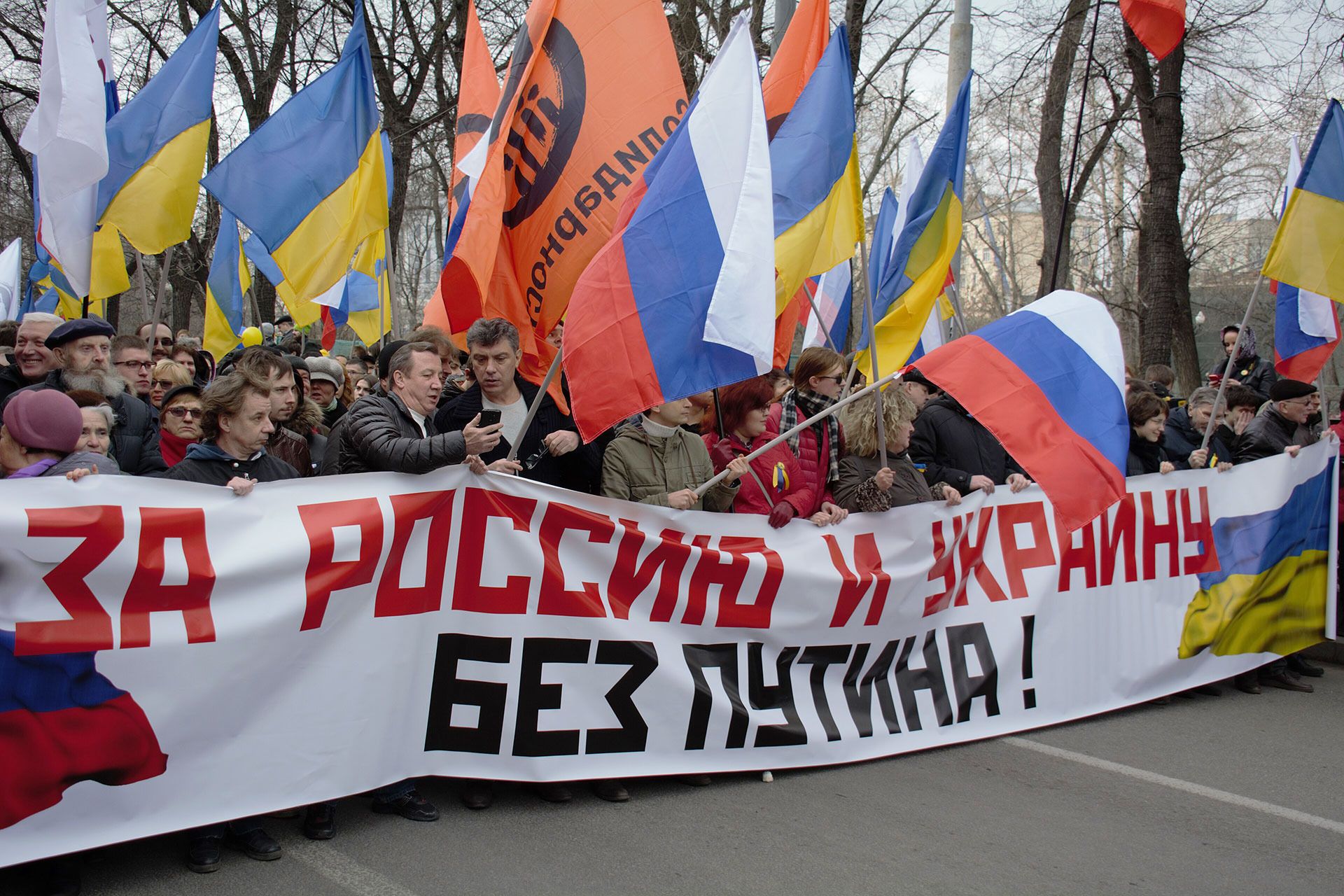
“March of Peace” in Moscow, March 15, 2014. Photo: Wikipedia / Dhārmikatva / CC BY-SA 3.0
It's very simple to tell who is a real politician and who is just pretending. In 2015, Boris Nemtsov was killed. The names of those who ordered the murder have not been revealed to this day. There can only be one reason for this: those who investigated were the ones who killed. There are no other reasons not to find the killers, and real politicians talk about this openly. But those who pretend to be politicians look away.
It's simple: one murder opens the door to everything else, and there should be no surprises about it. If someone is willing to kill for their petty, nasty goals, they will commit any other crime. And how funny—no, you know, how shameful it is to hear every time: “Would they really go that far?” Oh, they would—absolutely! They decided that everything is allowed for them.
You know, like Raskolnikov: he didn't kill the old woman just to get rich. He needed something else entirely—to find out whether he had any limits or if he could do whatever he wanted.
With Dostoevsky, Raskolnikov realized: no, that's not allowed. But our Raskolnikovs realized: yes, you can! And everything they've done since is explained by this.
The murder opened the road to impunity for them. No one punished them. Not conscience, not the court. So, they can keep going. And after them, we learned a lot of new things about ourselves.
We agreed to be ruled by murderers, and after that we shouldn't be surprised by anything—not war, not lies.
We simply accepted that anyone can be killed and nothing will happen for it. Anyone means any one of us. But it's frightening to even think about it. That's why many have pushed the murder out of their memory. They remember once, out of duty, on the occasion. On the anniversary of the murder.
They shake their fists at the sky, but each year their fists get weaker. And the sky presses down harder and harder.
We did not achieve justice and now we are paying the price. Today's troubles are the result of our indifference, our willingness to put up with criminals in power. With the fact that murderers rule.
Why Nemtsov in particular?
Many people knew him personally. Let's not use grand words—over the years, they're like varnish on an icon, hiding the paint. There's one simple truth: Boris was not part of the elite.
Today's democracy is a struggle for the rights of specific democrats. Ask such a fighter—what do you really want? And they'll honestly answer: some want money, some want a post, some are happy just to be on TV. But Boris—he already had all that, after all, he was a former deputy prime minister, governor, almost a successor. And he gave it all up. Gave it up easily, because he didn't want to be one of the cannibals, among those who either give orders to kill, or know about it and stay silent. Who unanimously vote for every meanness. And this is not sainthood—it's self-respect. It's a sense of dignity, when you do what you believe is right, not what you are ordered to do. Not what is profitable right now, at this moment.
And how do you bargain with someone like that, tell me? What can you bribe him with? Conscience isn't for sale.
Unfortunately, he was one of the few like that.
And another thing: it's rare for a politician to know how to talk to people. Not to prepare in advance, but just come out and talk. Truly, I don't remember Boris ever insulting an ordinary person or just being rude. Pushing someone away with arrogance. That never happened.
I really don't want to paint Boris as a saint here, but he behaved in a way that others do not. He remained a normal person among Raskolnikovs. That's why there's the Nemtsov bridge, that's why there's memory.
Sometimes I bitterly wonder—what would our Russia be like with Nemtsov as president?
Russia started two wars under Putin—one seemingly under Medvedev, but we all understand. And here is everything—falling incomes, torture, emigration. Russia's dignity is now dissolving like sugar in tea.
And Boris, who easily let go of power, was the country's chance for the first voluntary change of supreme leader in its history. A change according to rules, not according to criminal codes.
We really could have become Europe. It's not about the euro, as many think, and not about Schengen visas. It's about political culture, where it all starts. When politicians take the people into account, not just use them all the time.
We had that chance—and we lost it. The quiet little man from the FSB turned out to be more important, turned out to be more profitable.
Wasn't that murder, tell me, also an act of revenge? For the fact that a successful presidential candidate could never forgive the one who failed. Like a crooked reflection in a mirror cannot forgive the original for its ugliness.
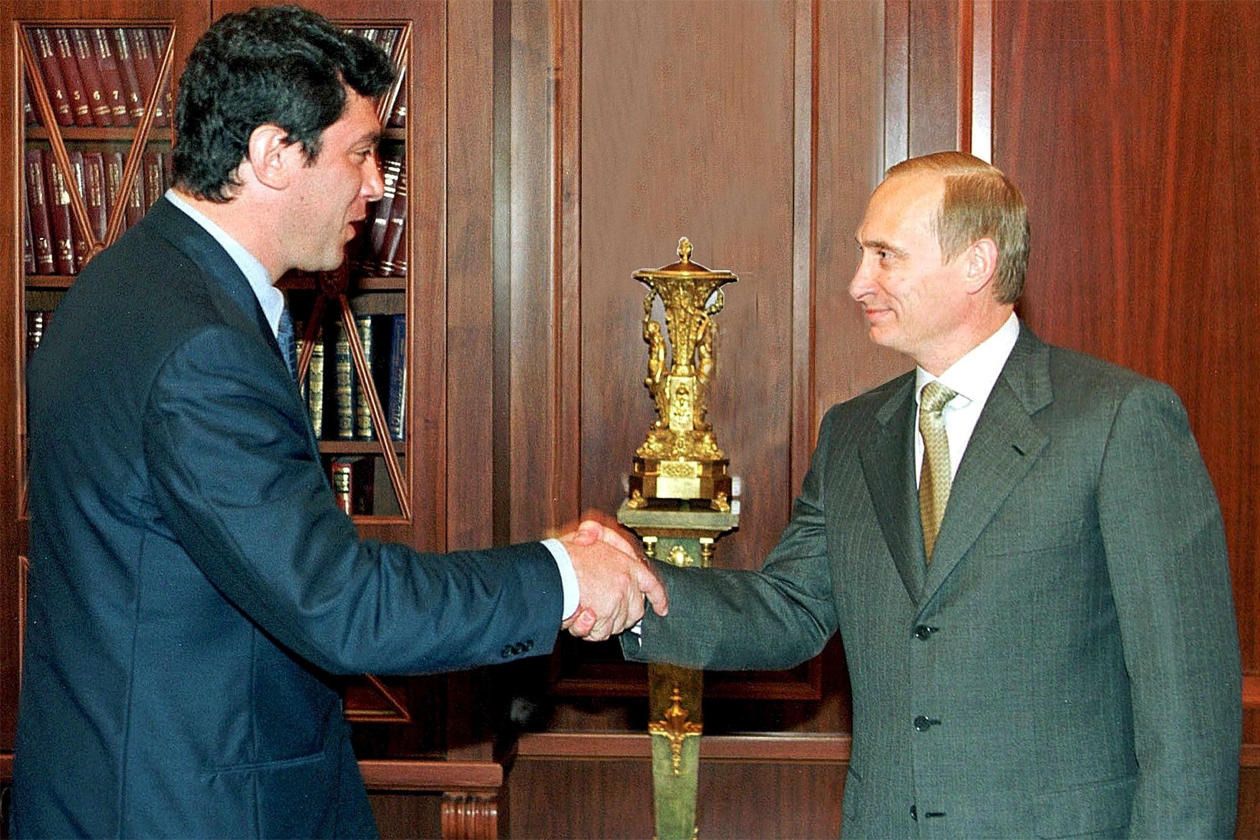
Boris Nemtsov with Russian President Vladimir Putin, July 4, 2000. Photo: kremlin.ru
Nemtsov collected 1,000,000 signatures against the war in Chechnya. 1,000,000! Which politician today could do that? The so-called “special military operation” has been going on for four years. Some welcome this war, others painfully try to formulate their position, while others try to do something but end up with a bad joke.
Why did Nemtsov succeed? Simply because he believed in what he was doing. He did everything absolutely sincerely. And the current ones keep trying to guess how it will affect their career or bank account. The account may be big, but the people are small. They are not meant to win, but they don't even try.
But Boris wanted to, knew how to, and could.
I remember now how he went down into the metro to hand out leaflets. On the one hand, it's so natural, but on the other hand, who else does that? Who is able to just appear in public without security, if they once worked as a high-ranking official?
They all know and fear the people's love.
But Boris wasn't afraid of anything, because he had nothing to be ashamed of. All his decisions were his own, not imposed on him.
Like in the film about him—“Too Free a Man”? Good title! It's very accurate.
Freedom is not loved now, it's feared. In the State Duma in February 2022, 400 deputies voted to recognize the LNR and DNR, that is, for war. Not a single free person was found.
That's how our government degenerated. And who can say how much those shots on the bridge influenced this? How many people realized that if Boris was killed, then they too would just be trampled and not noticed? And how many people traded freedom for comfort, safety, and a lack of conscience?
Again, it's simple—Boris wasn't afraid. And when he died, there was no one left to look up to.
The blow was struck true. The ugly reflection reached out and touched the original.
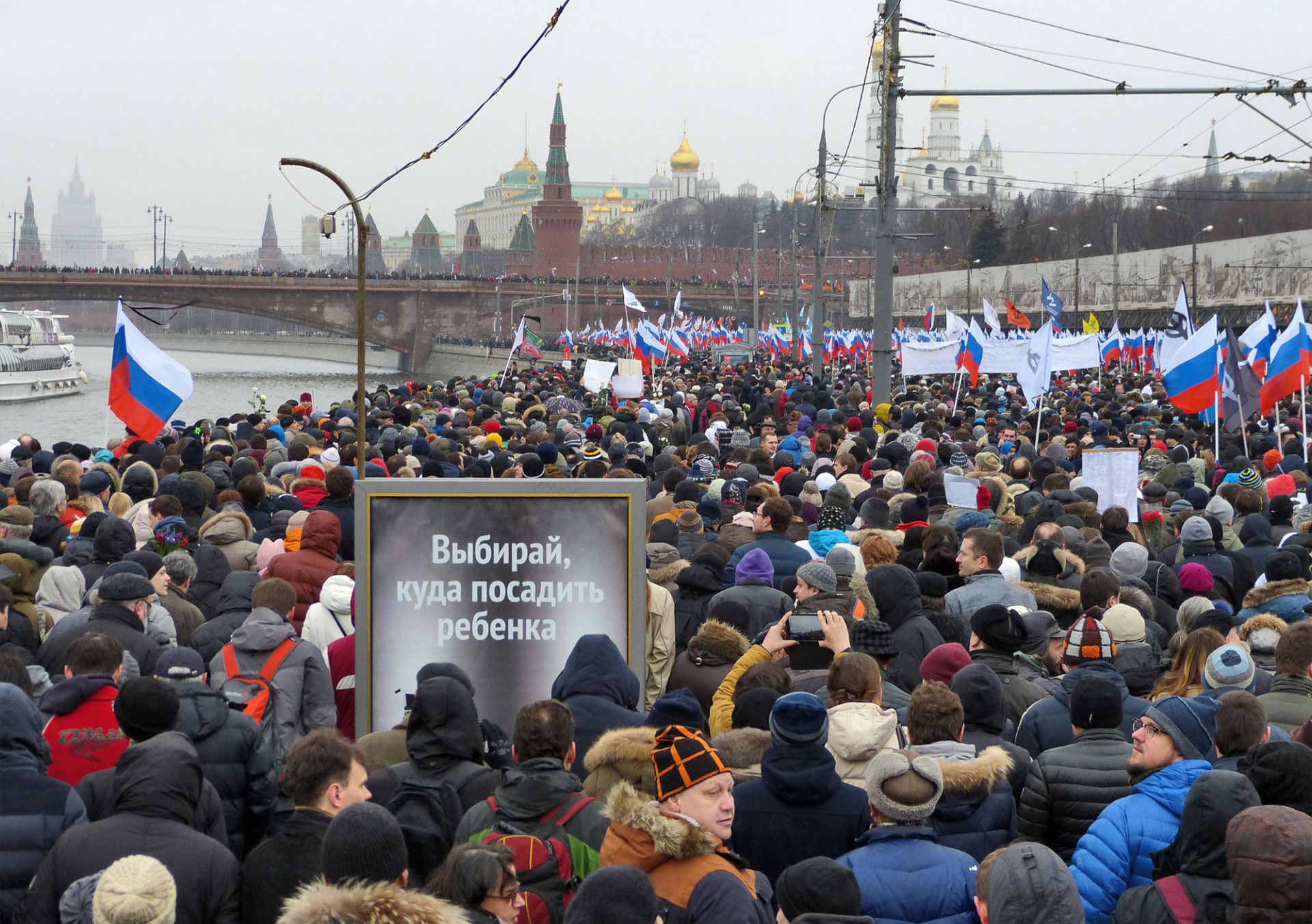
A march of thousands in memory of Boris Nemtsov, March 1, 2015, Moscow, Moskvoretskaya Embankment, Bolshoy Moskvoretsky Bridge. Photo: Wikipedia / ПОКА ТУТ / CC BY-SA 4.0
Now we are even forbidden to remember Boris. The memorial on the bridge is constantly destroyed. Instead of a march—“all right, you can lay your flowers under police escort.”
They even forbid us to remember!
So who killed him? And will this person really never be punished for the crime?
However it was done—by written order, verbal directive, or just a silent nod—don't stay silent and don't nod. Everything starts with agreeing to a crime.
My deep respect and eternal memory to Boris Nemtsov.
If you enjoyed this article, consider making a donation — one-time or, even better, monthly. Your support helps us motivate our authors and become better with every article.
Our organization is recognized by the Internal Revenue Service (IRS) as a 501(c)(3) tax-exempt, charitable organization, which means that all contributions made to us are tax-deductible to the fullest extent permitted by U.S. law. Individuals may generally deduct charitable contributions of up to 60% of their Adjusted Gross Income (AGI) for cash donations made to qualifying 501(c)(3) organizations. For donations of appreciated assets (such as stocks or other long-term capital assets), the deduction is typically limited to 30% of AGI, based on the fair market value of the asset. C-corporations may deduct charitable contributions of up to 10% of their taxable income for donations made to eligible charitable organizations.
By submitting a donation, you confirm that you have read and accept the following documents: Privacy Policy and User Agreement, and also give consent to the processing of your personal data.
If you would like to unsubscribe from a monthly donation, please email us at: [email protected]