In January 1986, the newly elected General Secretary of the CPSU Central Committee, Mikhail Gorbachev, proposed that all countries in the world give up nuclear weapons. In 1988, in his book, he directly stated that universal human values are more important than class values. These ideas gave rise to the concept of “new thinking,” which changed much in international politics. Why didn’t these changes work, and why, forty years later, have we fallen into a historical abyss?
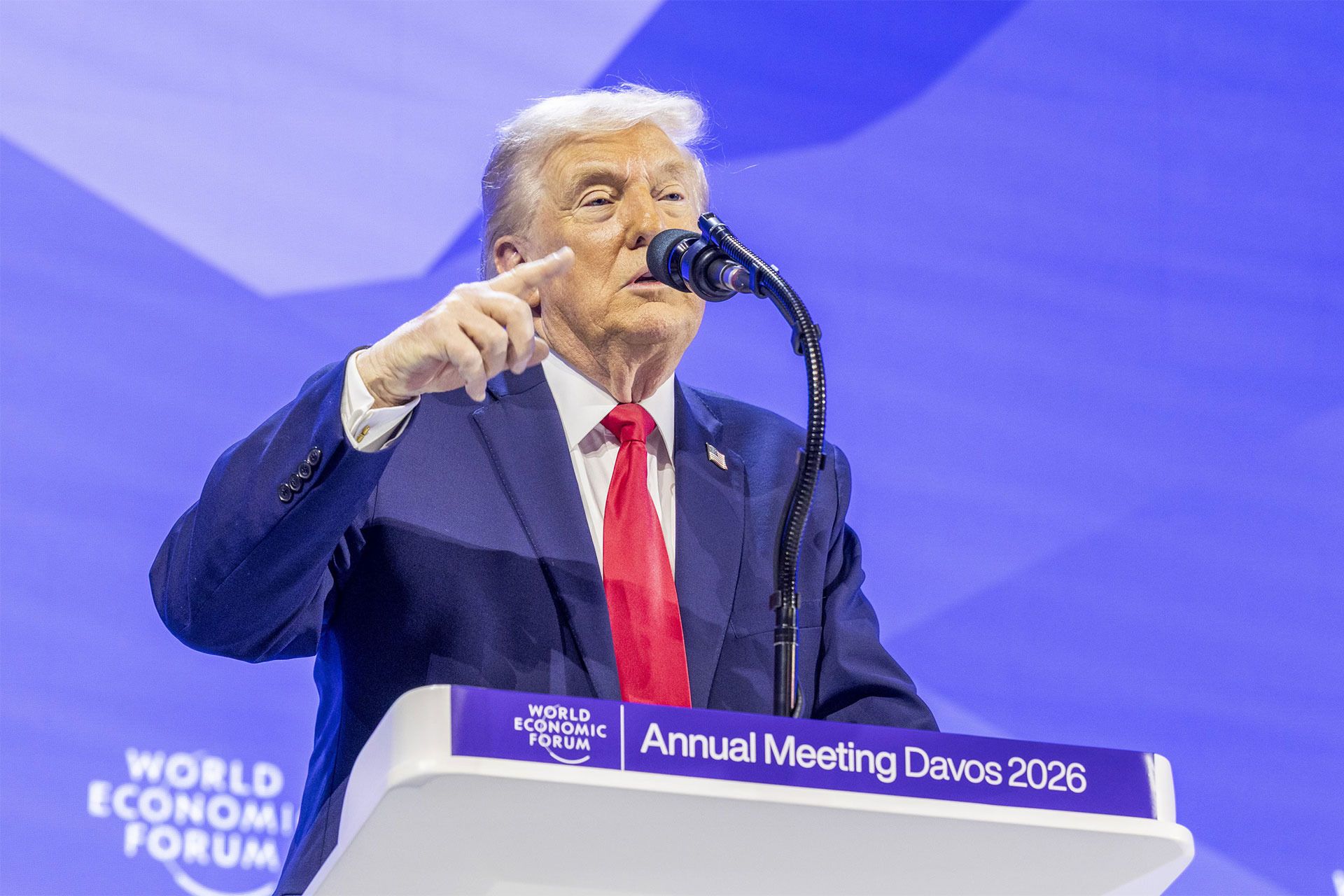
Donald Trump at the World Economic Forum in Davos, 2026. Photo: World Economic Forum/Benedikt von Loebell
Donald Trump’s project to create a “Peace Council,” initially aimed at resolving the Middle East situation, is rapidly taking on global dimensions. The activities of this body are expected to extend across the entire planet. The “Peace Council” is seen as “an international organization seeking to promote stability, restore reliable and lawful governance, and ensure lasting peace in areas affected by conflicts or under threat.”
In terms of ambition, this idea is reminiscent of another project exactly 40 years ago. In January 1986, the then newly elected General Secretary of the CPSU, Mikhail Gorbachev, proposed a global renunciation of nuclear weapons by all countries. Clearly, Gorbachev’s statement was unfeasible. After all, the Cold War was not quite over, and no Western countries (the USA, the UK, France) would have given up their nuclear arsenals. Even Soviet generals would hardly have agreed to such an “overly idealistic” proposal from the General Secretary.
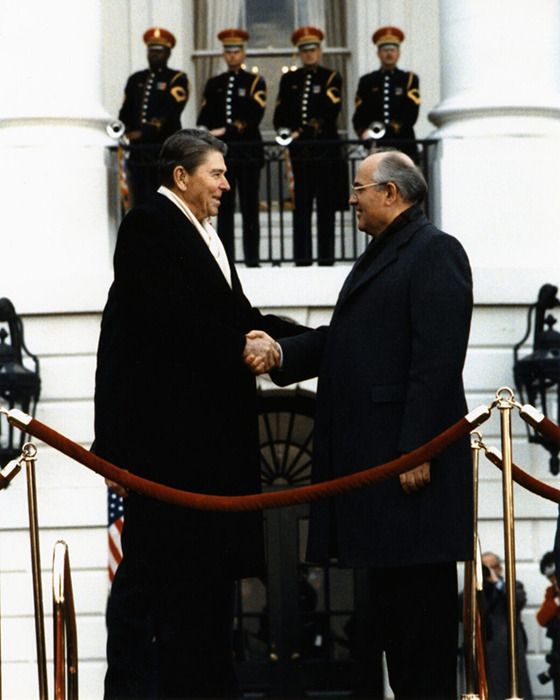
Nevertheless, this proposal laid the foundation for subsequent Soviet-American nuclear disarmament talks. Several fundamental missile reduction treaties were signed, and Ronald Reagan was surprised by Gorbachev’s willingness to negotiate. This set him apart, for example, from long-serving Soviet Foreign Minister Andrei Gromyko, whom the West called “Mr. No.” Reagan even abandoned his famous definition of the USSR as an “evil empire.”
However, the “Peace Council” proposed today is a fundamental semantic opposite of the attitudes of those years. Neither Reagan nor Gorbachev would have thought to demand a billion dollars for peacekeeping initiatives, as Trump intends to do. His “Peace Council” resembles an elite golf club for billionaires.
Business logic, so openly transferred into politics, completely replaces all values with prices. Perhaps this is the political thinking of today, which is often defined by businessmen.
For example, the “special representatives” of the US and Russia—Steve Witkoff and Kirill Dmitriev—are people with financial, not diplomatic, backgrounds. So they discuss “deals” rather than treaties.
But forty years ago, political thinking was trying to be different. That was when Gorbachev’s term “new thinking” entered usage, changing much in international politics.
However, Gorbachev’s longtime foreign policy adviser Anatoly Chernyaev recalled that “new thinking” projects had appeared in Soviet power as early as the 1970s, against the backdrop of détente and the Helsinki Final Act. Of course, they were quite cautious for their time and did not provide for any renunciation of Soviet communist ideology, but were limited to “easing” international tensions.
This was also aided by the economic background—it was in the 1970s that gas and oil pipelines were laid from Western Siberia to Western Europe, and it became clear that there would be no Soviet tanks at the English Channel.
Ronald Reagan and Mikhail Gorbachev during the latter’s official visit to the US in December 1987. Photo: Ronald Reagan Presidential Library and Museum/NARA
But Gorbachev went further. In his book, published in 1988, he directly stated that universal human values are more important than class values. Neither the USSR nor the outside world expected such a radical conclusion from the CPSU General Secretary. This was the first time such words were heard in the entire 70-year history of Soviet power.
The historical paradox, however, is that in the post-Soviet era, “class values” returned. Only now, not as the former “proletarian” ones, but quite the opposite.
Lenin would have called them “bourgeois,” but Trump and Putin are not just the bourgeoisie of past centuries, but a clan of global billionaires. That’s why they understand each other perfectly well. And these “values” of global businessmen have gone hand in hand with neo-imperial ones.
I am very close to the conclusions reached in his analysis by Vladimir Pastukhov: Unfortunately, we have reached the point where it is no longer possible to ignore the essential similarity of the political-philosophical foundations of the MAGA ideology and the ideology of the “Russian World.”
First and foremost, their general ideological principles coincide:
Both firmly prioritize the “national interest” at the expense of “universal human values,” in which they do not believe at all and which they consider the invention of liberal radicals.
Both view ultra-conservative clerical values and principles as universal and the only acceptable ones.
Both regard all other values and principles, except ultra-conservative ones, as hostile and subject to eradication, along with all media interfaces that promote them.
Both are essentially anti-democratic, or rather, democratic only in the strictly Leninist sense of the word—that is, they see democracy as the dictatorship of their own clan.
Both are apologists for the right of force, both in domestic and foreign policy.
Such a worldview in the era of “new thinking” would have seemed like a complete dystopia. Yes, Gorbachev was a progressive, Reagan a conservative, but they managed to get along. And it was based precisely on universal human values, not the reactionary nonsense of MAGA and the “Russian World.”
What went wrong? Why didn’t “new thinking” win? Why did we fall into this historical abyss? Different researchers have different views on this topic. I’ll share mine, though of course I don’t claim to be “objective.” I welcome meaningful discussions.
In my opinion, all international and even interregional treaties are ceasing to work today. I don’t want to sound like a panicked alarmist, but the facts are as follows:
Post-Soviet Russia has completely lost its understanding of federalism. Real federalism arose precisely during the Perestroika era, when free elections were held in all the union republics instead of the CPSU monopoly. In 1990, the chairmen of the Supreme Soviets of their countries became the nonpartisan musicologist Vytautas Landsbergis in Lithuania and former Soviet dissident Zviad Gamsakhurdia in Georgia. And Gorbachev did not interfere in these elections at all. But today, across the vast Russian territory from the Baltic to the Pacific, we see nothing of the sort. Although, officially, the Russian Federation consists of more than 80 regions (not counting the annexed Ukrainian ones). But everywhere there is frozen political silence or timid complaints to the Kremlin “tsar.” And widespread repression.
The United Europe that emerged in 1992 never developed a sense of collective subjectivity. When pro-Russian figures like Viktor Orbán can veto pan-European decisions, the entire EU political machine grinds to a halt. Yet it is Europe today that upholds international law. Above all—the inadmissibility of annexations, as in Ukraine or Greenland. The EU has supported Ukraine for four years of war. But despite the economic and military potential of the EU countries being far greater than Russia’s, there does not seem to be a turning point in this war. I would venture to suggest: this is the result of European leaders not listening closely enough to Gorbachev’s ideas about a “common European home.” Yet it was Perestroika that broke down the Berlin Wall and made a united Europe possible.
Perhaps Europeans should have been more active in supporting the idea of a democratic confederalization of the USSR and its subsequent integration into Europe? Because the brutal collapse of the USSR led to the revival of the Russian Empire and all the horrors we see today. Russia has effectively stopped recognizing its neighboring former union republics as independent states. They must either be obedient vassals, or risk military aggression, as in the case of Ukraine.
The song “Goodbye, America!“ by Nautilus Pompilius was taken ironically during Perestroika. On the contrary, everyone wanted to wear American stonewashed jeans, listen to American music, and chew American gum. America was welcomed by all. But now, perhaps, it really is ”goodbye.“ Maybe professional historians will figure out later—why did a country created as an anti-colonial federal republic become the hostage of its own mad ”emperor“?
If you enjoyed this article, consider making a donation — one-time or, even better, monthly. Your support helps us motivate our authors and become better with every article.
Our organization is recognized by the Internal Revenue Service (IRS) as a 501(c)(3) tax-exempt, charitable organization, which means that all contributions made to us are tax-deductible to the fullest extent permitted by U.S. law. Individuals may generally deduct charitable contributions of up to 60% of their Adjusted Gross Income (AGI) for cash donations made to qualifying 501(c)(3) organizations. For donations of appreciated assets (such as stocks or other long-term capital assets), the deduction is typically limited to 30% of AGI, based on the fair market value of the asset. C-corporations may deduct charitable contributions of up to 10% of their taxable income for donations made to eligible charitable organizations.
By submitting a donation, you confirm that you have read and accept the following documents: Privacy Policy and User Agreement, and also give consent to the processing of your personal data.
If you would like to unsubscribe from a monthly donation, please email us at: [email protected]