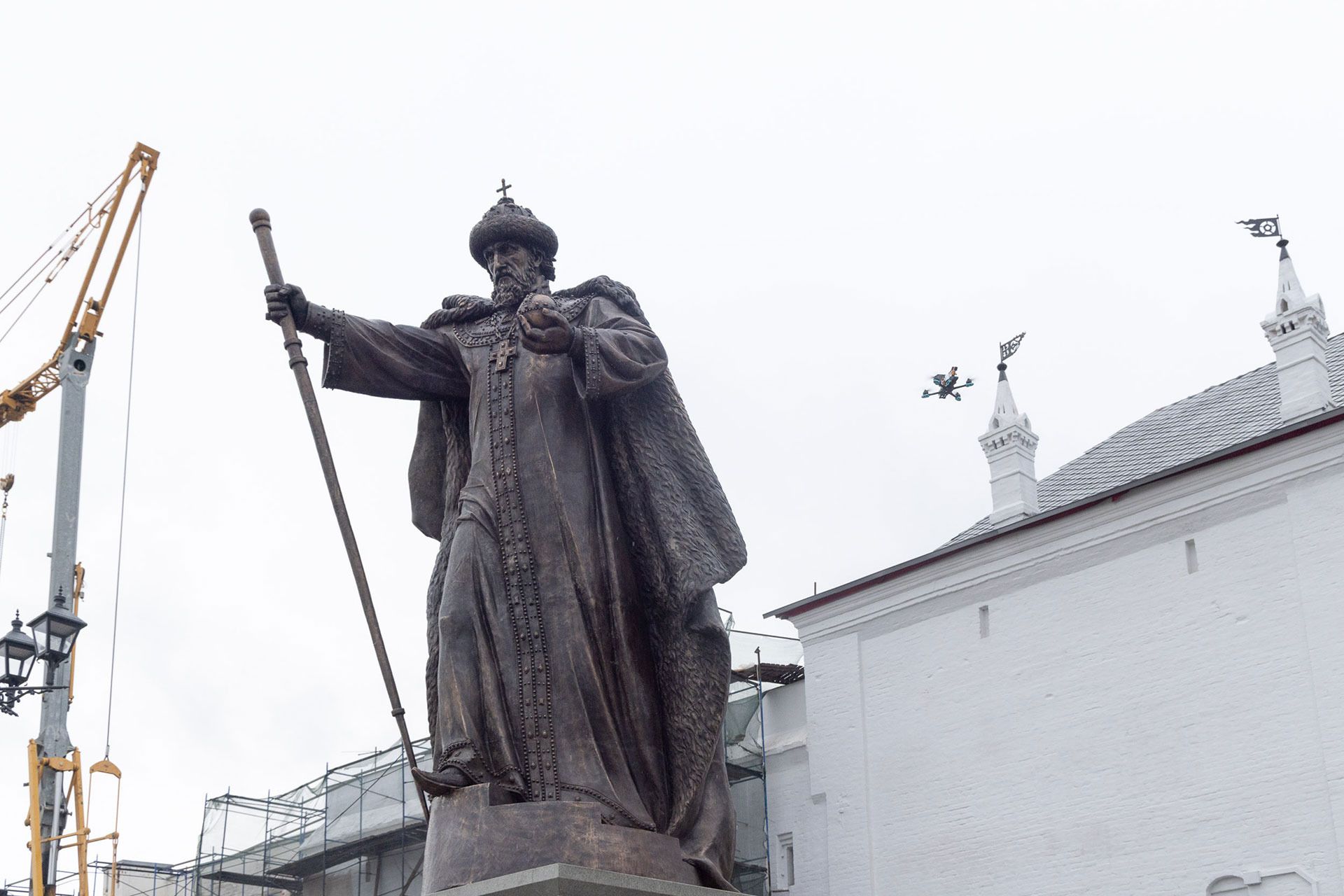
On National Unity Day, a correspondent from “Most” visited Vologda for the unveiling of a monument to the most famous dictator of Russian medieval times. A monument to Stalin has long been there
According to legend, Ivan IV, whose monument was unveiled on November 4 in Vologda, died while playing chess. Perhaps that’s why in the reserved seat car to Vologda, each table has a chessboard print. I ask the conductor where to get the pieces and if all the cars have chessboards. She doesn’t know about the boards and has no chess pieces.
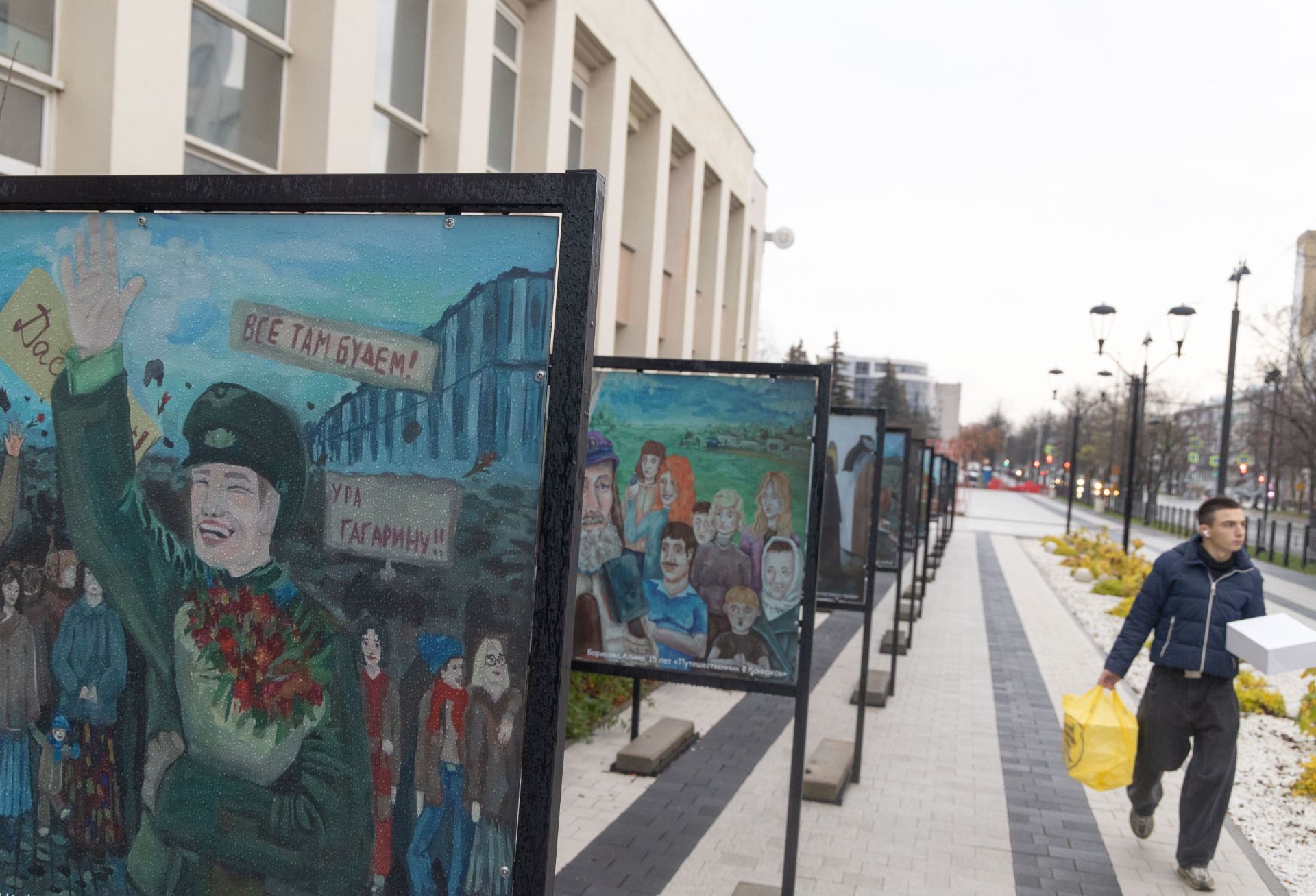
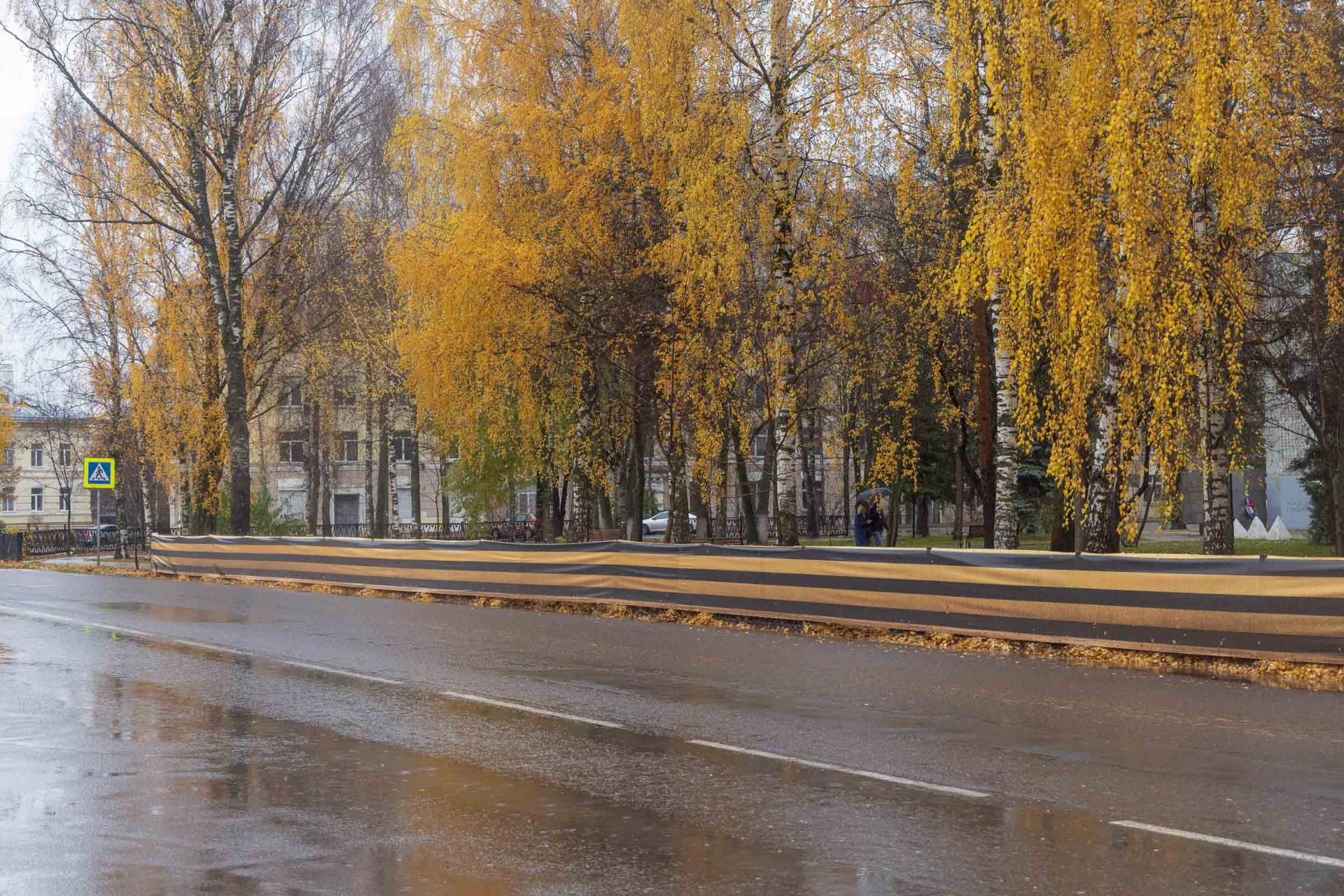
In 2027, celebrations are planned in Vologda for the 880th anniversary. That’s why the city is currently undergoing repairs, making it difficult to walk along the main streets. Behind the administration building, near a small museum, stands a modest monument to Stalin. Opposite the administration is an outdoor exhibition of children’s paintings. The range of themes spans from jubilation on Red Square after Yuri Gagarin’s return and the trial of the Petrashevsky Circle to the filming of the music video by the group “T.A.T.U.”
The uncovered monument to Ivan the Terrible already stands in Vologda’s central square—it was installed the night before. Across the street, soldiers are erecting a temporary tent for those wishing to sign up for military service under contract. It’s raining.
Alcohol sales are banned in the city all day: the local news portal reports that November 4 in Vologda is one of 11 “dry days” a year alongside Knowledge Day, Children’s Day, Russia Day, and other memorable dates. Drinking is only allowed in cafes or restaurants and must be consumed immediately—no takeout, only inside the establishment. Some places have either stern or caring reminders advising to plan purchases in advance.
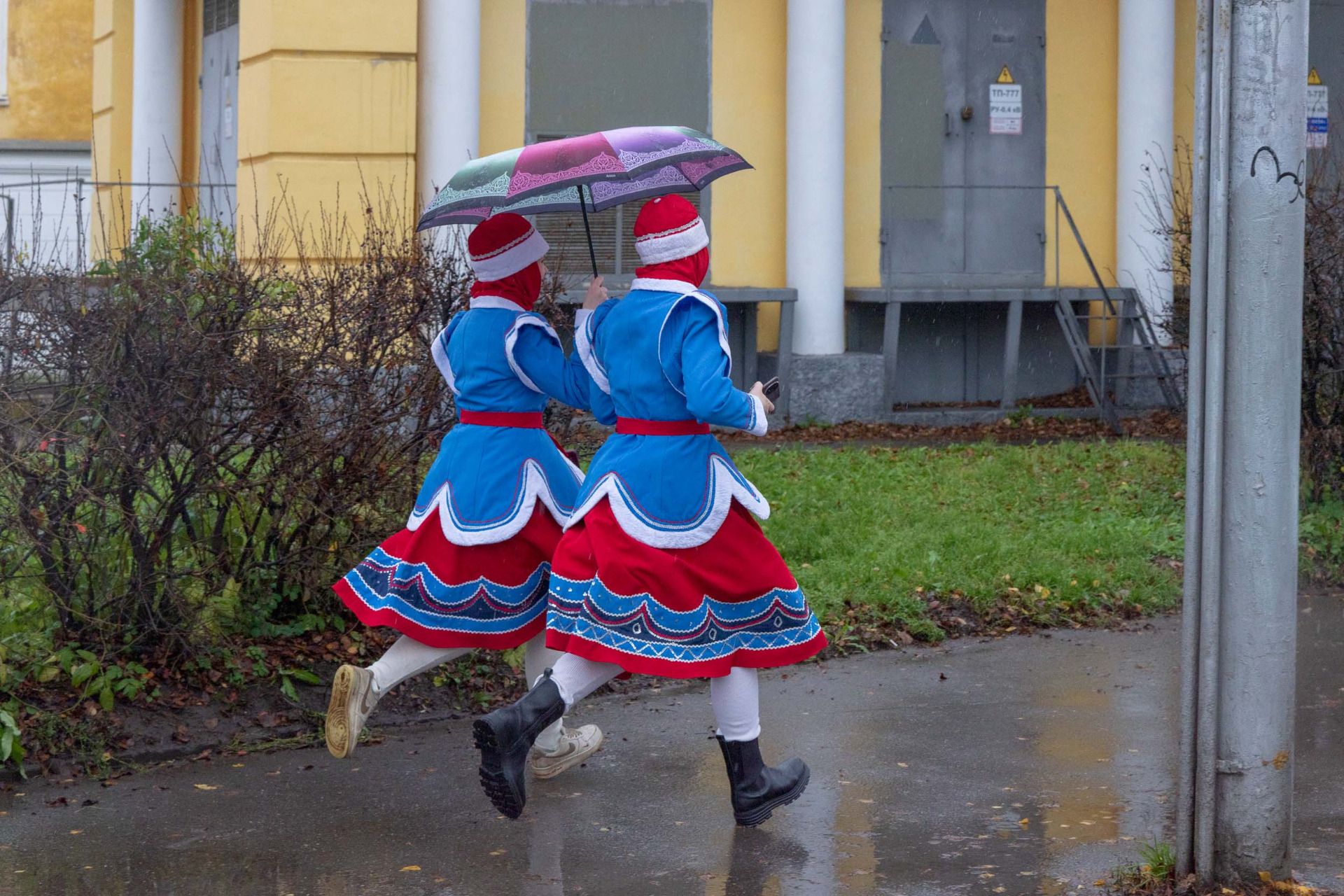
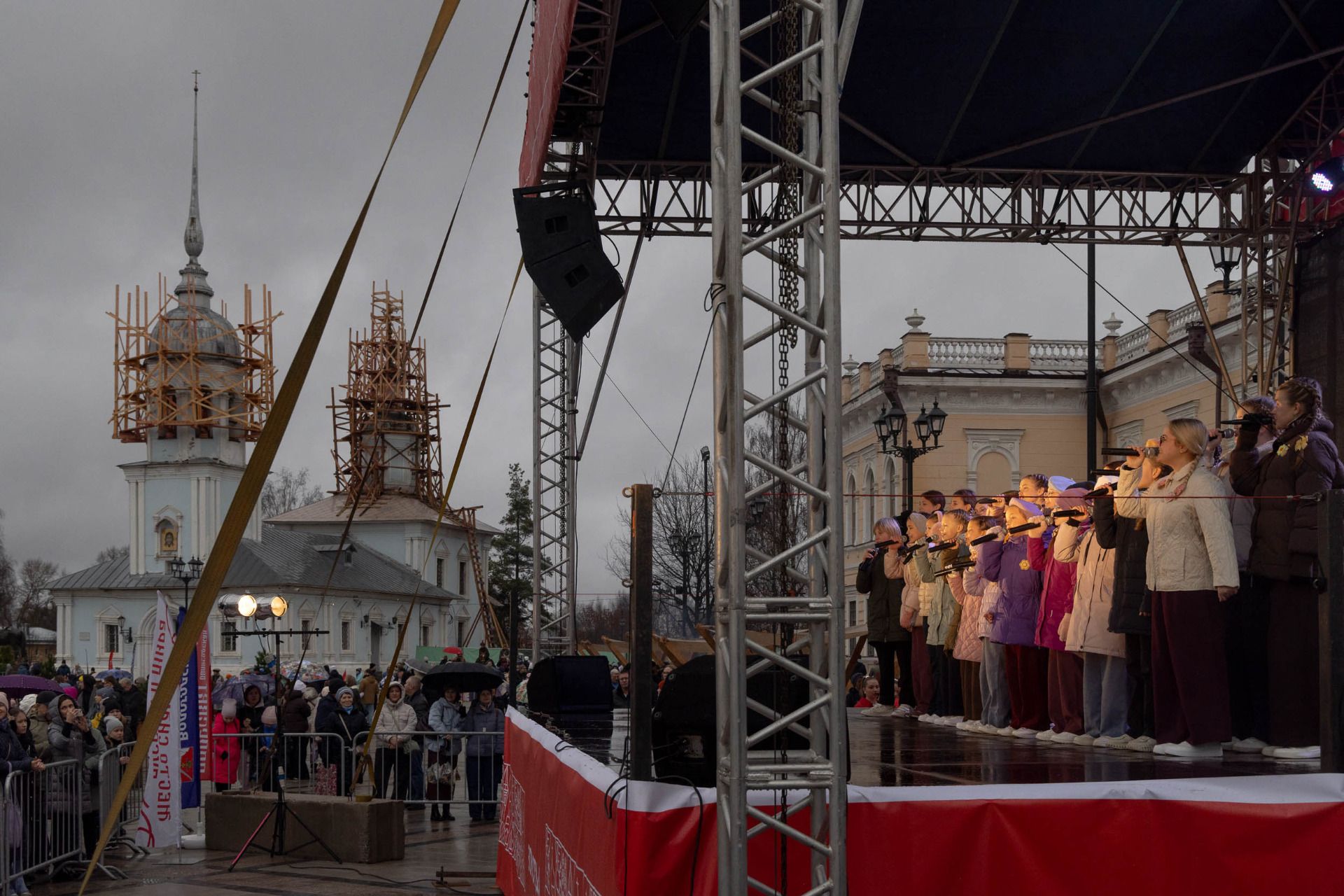
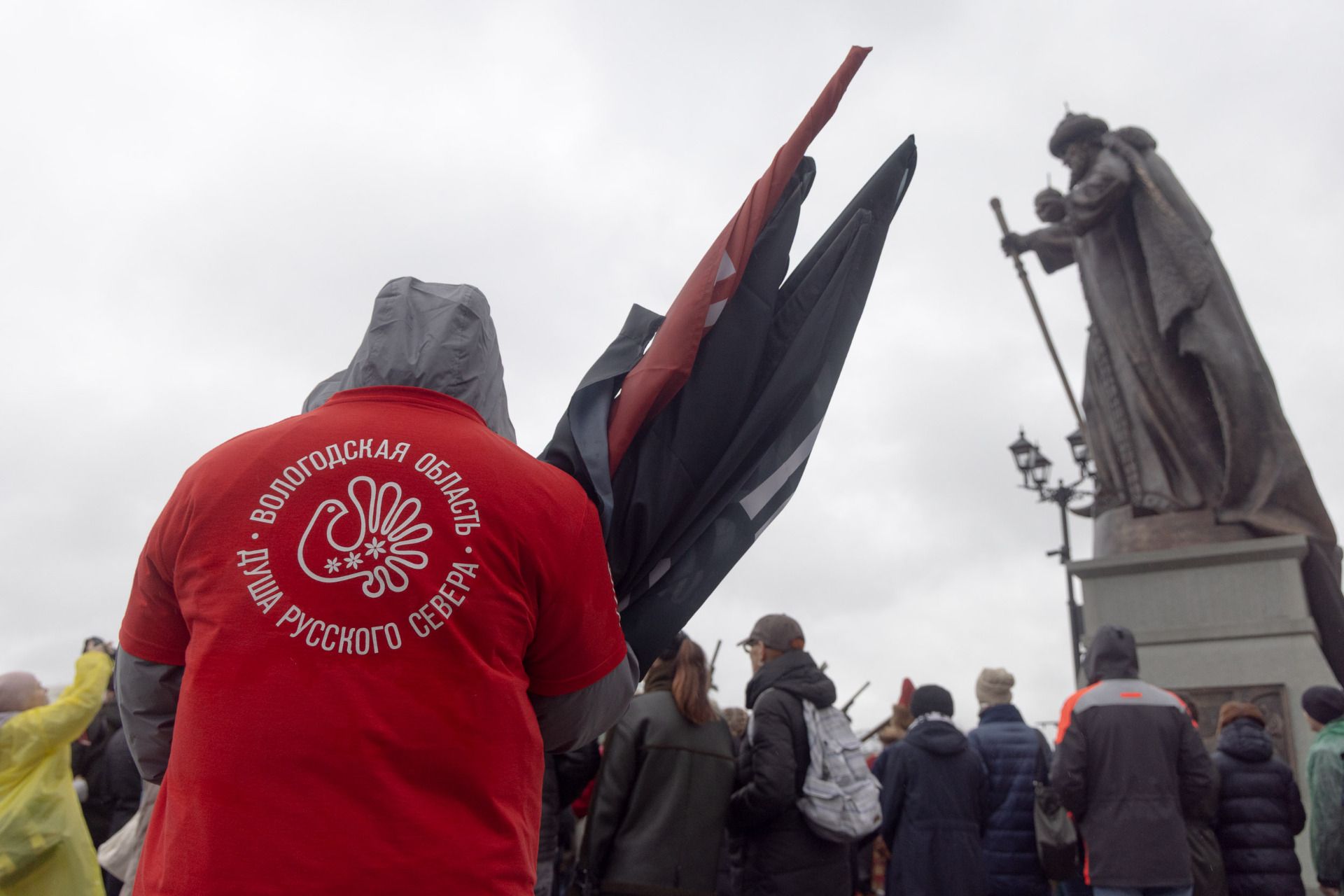
People gather on the freshly restored Kremlin Square. Something is already brewing, heating, cooking, and playing all sorts of ancient Russian (and not so ancient) games. Reenactors and people dressed in costumes from Ivan IV’s era are visible. Correspondents from “Russia 1” interview a man by a fire where wax is melting. Children’s groups begin performing on stage; some spectators methodically unfold Russian flags, but only in one specific spot—this spot remains flagged throughout the event. In other parts of the crowd, no state flags are seen; instead, banners of the far-right “Russian Community” and “Peresvet,” as well as the Russian Military-Historical Society, are waving.
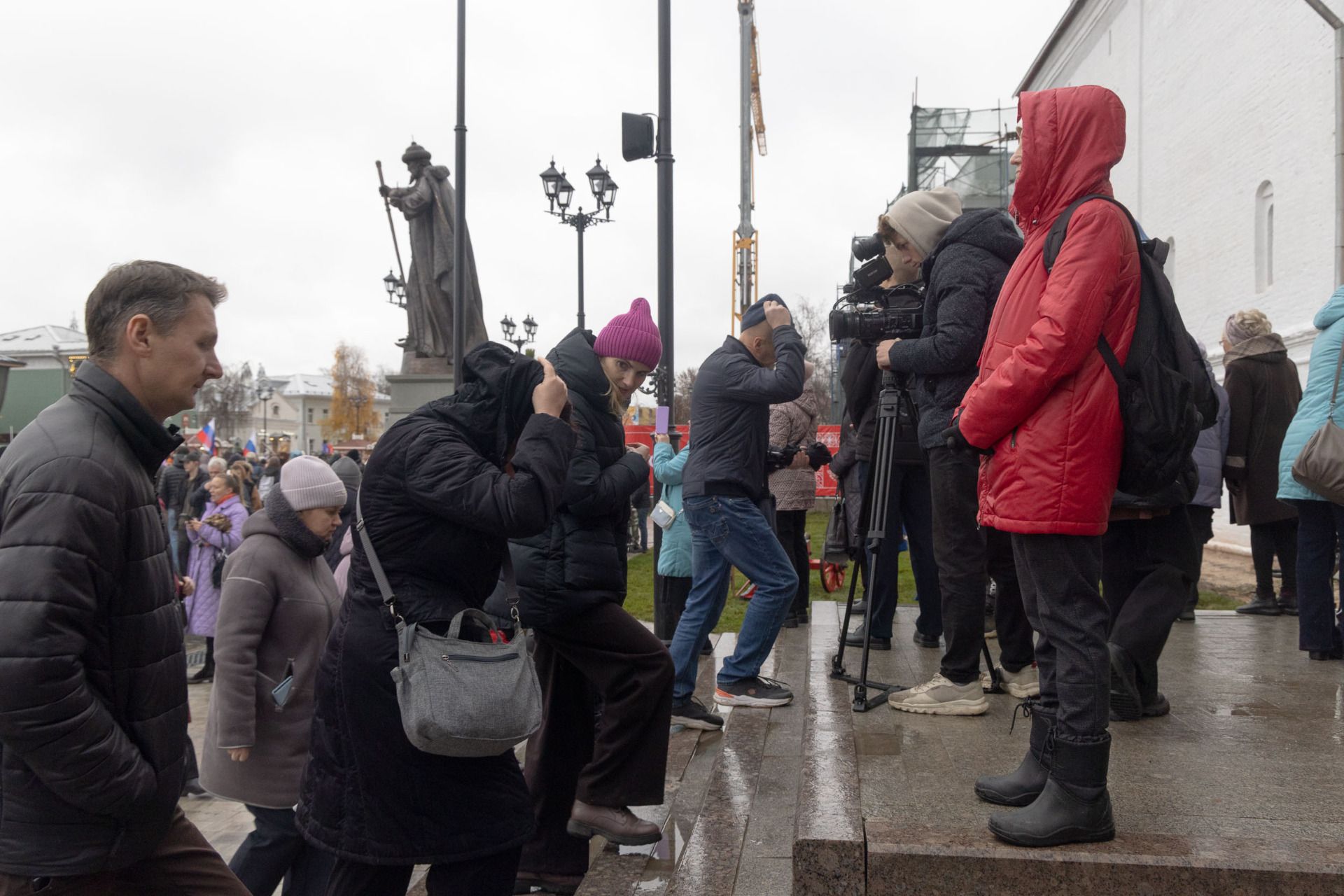
Children are replaced by “patriotic rap performers”; the event approaches its climax—the unveiling of the already effectively opened monument. The best view of the stage is from the steps of the Resurrection Cathedral—there are fewer people and the vantage point is slightly higher, but the impression is strange: from the open doors of the cathedral, prayers and psalms mix with patriotic rap and equally patriotic speeches on stage. A cameraman stands on the steps with a camera, and a little to the right on the lawn, a couple of Ivan the Terrible’s druzhinniki stand with a cannon.
Around noon, Governor Georgy Filimonov swiftly appears on stage—the very man who approved the unveiling of the Stalin monument and restricted alcohol sales in Vologda. Addressing the audience as “brothers and sisters,” he urges them to “perceive history as a whole, integrally, systematically, as a single indivisible chain of interconnected links of the historical process,” as well as “a flourishing complexity.” Only in this way, he believes, will we be strong and only this way will we win.
The theme of strength will appear repeatedly in speeches by other speakers and beyond. The sector with Russian flags applauds the governor’s speech most enthusiastically. Slogans and chants behind the governor are most vigorously echoed by the sector with flags of the “Russian Community” and “Peresvet.”
Filimonov concludes his speech promising to “continue doing everything so that the Russian spirit, Russian weapon, Russian meaning, and Russian world triumph! So that our great Russia, a multinational, multicultural, and multilingual state, continues to win—win in every sense.”
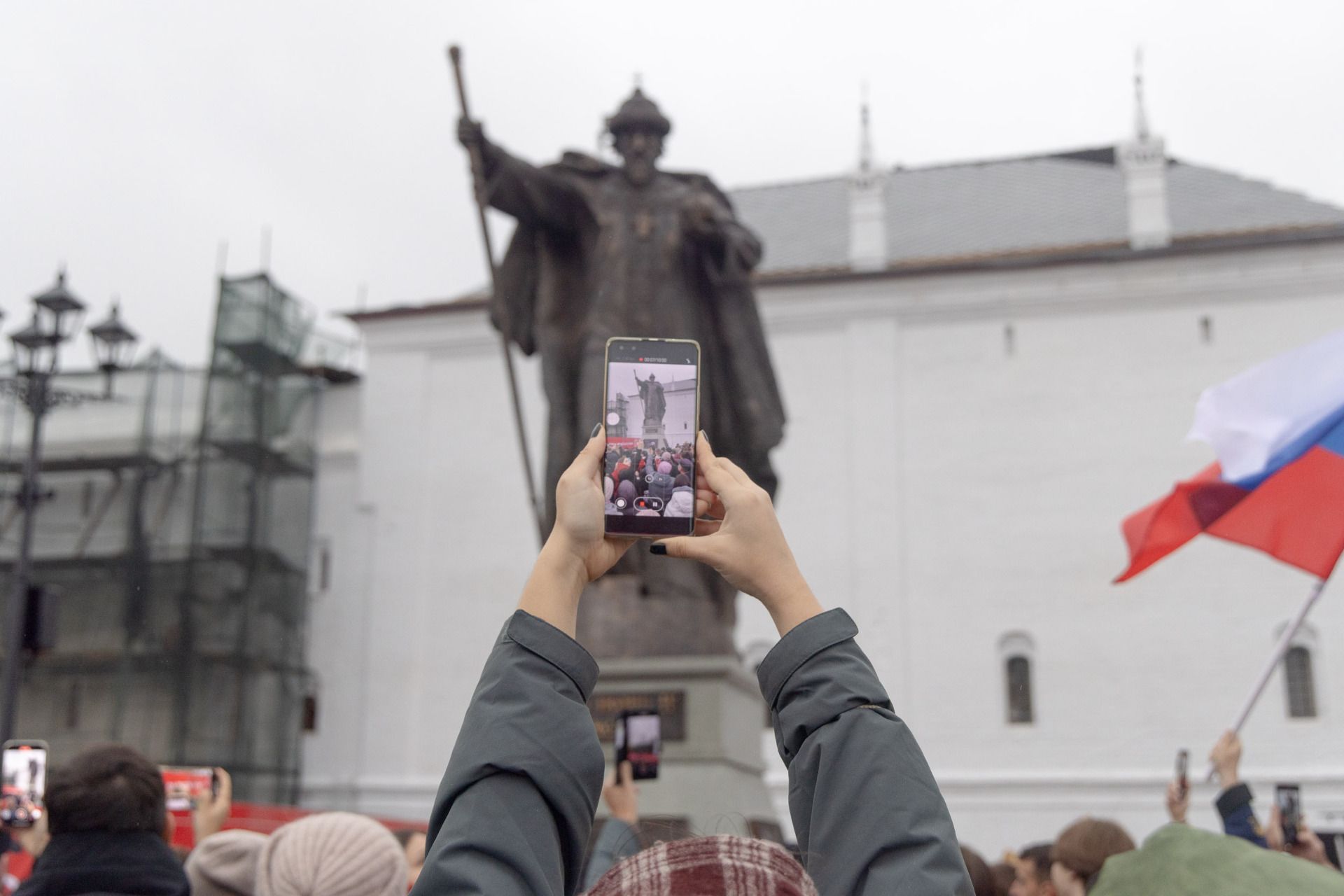
Afterward, he briefly congratulates those gathered on “the Day of the Kazan Icon of the Mother of God” and descends from the stage into the crowd to unveil the monument. The crowd turns from the stage to the monument—dozens of smartphones rise above heads.
From the stage, it is announced that a cannon salute will mark the unveiling. Many flinch at the blast, and someone grumbles discontentedly: “They should give a warning!” This marks the end of the official monument unveiling ceremony. After taking photos by the monument, many leave hurriedly. Soon the rain resumes.
Part of the square, where restoration work is still underway, is covered with red banners repeating the region’s motto—“Place of Power of the Russian World.” The same motto is painted on many city buses. Soldiers at the mobile contract enlistment point hold strength competitions—several kettlebells of different weights are placed on the asphalt. Nobody wants to ask about the prizes.
The caretaker of one of the churches in the center willingly comments on today’s event: she notes that Ivan the Terrible didn’t exactly found and build the Kremlin. Yes, he laid its foundation, but then while inspecting the construction, a piece of plaster fell on him, which he took as a bad omen and stopped the work. Yes, Tsar Ivan has certain merits, but the monument is more a reflection of the governor’s vision, and in general, the woman thinks Filimonov sees himself in this monument. And there have been quite a few bans lately, she adds after a brief pause.
By evening, the network store near Kremlin Square is deserted. Near the cash registers is a long shelf with alcohol, not fenced off, but nothing can be bought—the register won’t let it pass; purchases had to be planned in advance. Suddenly, over the store radio, which usually plays unobtrusive music or sausage promotions, a calm voice begins to reflect that in autumn the body seeks rest—it’s time to slow down, spend more time with loved ones, practice yoga, and it wouldn’t hurt to write down your thoughts in a diary.
Taking a bottle of mineral water, I leave the store. Kremlin Square has emptied, the stage is half dismantled, and the soldiers’ tent is gone. Ivan IV is lit from below, making him look truly Terrible.
If you enjoyed this article, consider making a donation — one-time or, even better, monthly. Your support helps us motivate our authors and become better with every article.
Our organization is recognized by the Internal Revenue Service (IRS) as a 501(c)(3) tax-exempt, charitable organization, which means that all contributions made to us are tax-deductible to the fullest extent permitted by U.S. law. Individuals may generally deduct charitable contributions of up to 60% of their Adjusted Gross Income (AGI) for cash donations made to qualifying 501(c)(3) organizations. For donations of appreciated assets (such as stocks or other long-term capital assets), the deduction is typically limited to 30% of AGI, based on the fair market value of the asset. C-corporations may deduct charitable contributions of up to 10% of their taxable income for donations made to eligible charitable organizations.
By submitting a donation, you confirm that you have read and accept the following documents: Privacy Policy and User Agreement, and also give consent to the processing of your personal data.
If you would like to unsubscribe from a monthly donation, please email us at: [email protected]