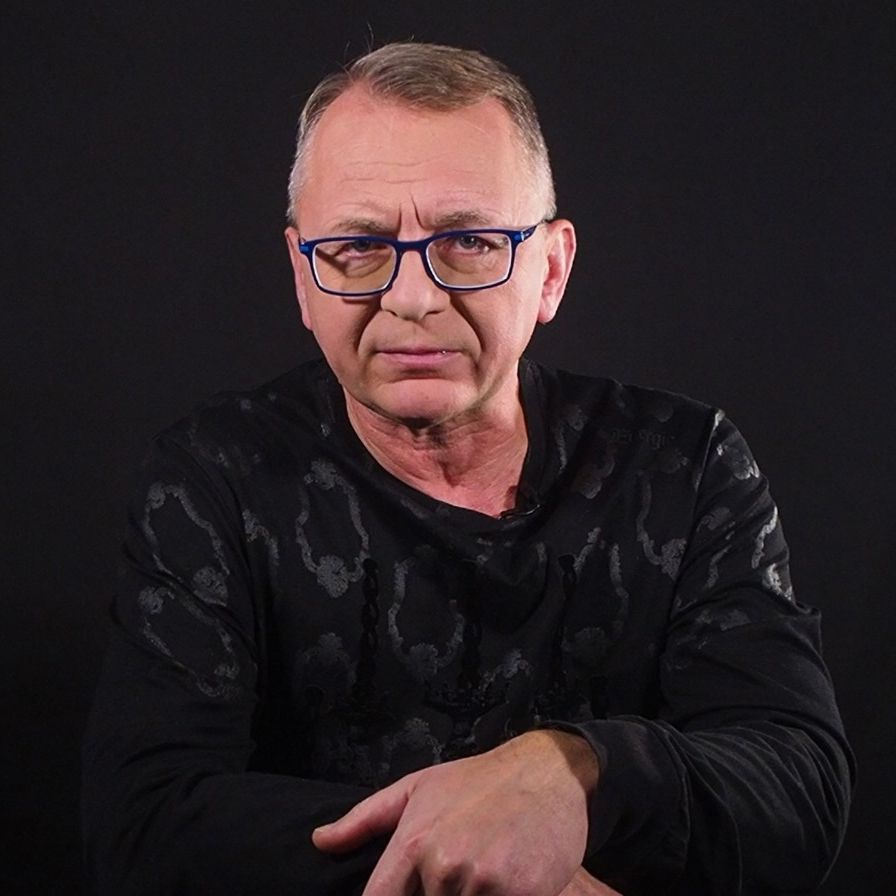
In the early 1990s, Dmitry Gubin worked at the magazine “Ogonyok,” which was then headed by Korotich — and he has memories to share about the legendary editor who passed away this week.
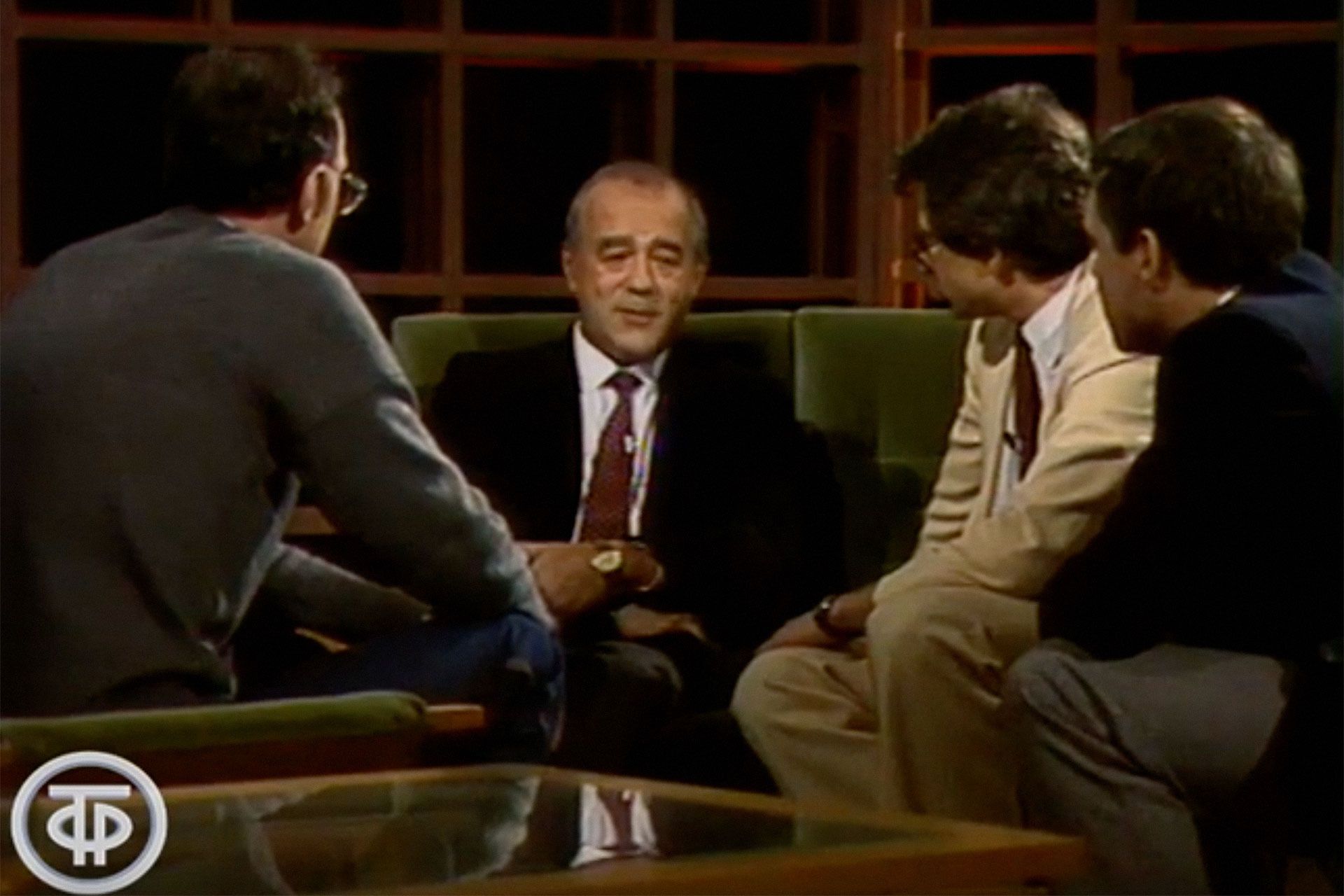
Frame from the video: Gosteleradiofond / YouTube
Korotich, I suspect, would have preferred to be remembered as a writer or poet — yet he is primarily known as the chief editor of “Ogonyok.” The magazine he edited from 1985 to 1991, whose ember went out in 2020. Yes, there was colossal reader success; yes, the circulation of “Ogonyok” tripled under Korotich to 4.5 million copies; yes, it was the flagship of perestroika and the harbinger of glasnost — but Korotich as a historical figure is somewhat about something else.
Vitaly Korotich was neither a bold revolutionary (my texts about the dead ends of Brezhnev’s USSR were published enthusiastically, while the first attempt to question Leninism was suppressed), nor a liberal or democrat in the Western sense. No one raised in the USSR understood the meaning of Western ideas back then: you cannot understand the taste of kiwi if you have never tried it. However, even if he did not fully understand, he sensed how the boundaries of his talent related to the limits of perestroika freedoms — and therefore fought sincerely for the expansion of both boundaries.
“Ogonyok” was a magazine of a transitional time, and Korotich became its perfect chief editor. He used old, familiar to everyone in the USSR, forms of large essays, literary longreads — but filled with new meanings.
When I became a laureate of the “Ogonyok” award at 24, along with me received a similar medal (looking almost like a Lenin jubilee medal, but with different content) Sergey Khrushchev, Ales Adamovich, Viktor Erofeev, Svetlana Alexievich, Lyudmila Petrushevskaya, and the then-famous anti-corruption investigators Telman Gdlyan and Nikolai Ivanov. The time for new names and new forms had not yet come. The young and bold publishing houses “Kommersant,” Independent Media, and “Afisha” would take care of that. But that would be after the coup, after independence, after the legalization of private press, after 1991. And these would be new media aimed at niche readers — while a nationwide magazine like “Ogonyok” would never be born in Russia again.
In 1991, Korotich’s time ended: his own editorial team removed him from his post. When the coup began, the journalists of “Ogonyok” expected arrests. However, despite fear, everyone came to the office, some even flew in from abroad. Korotich was in America at the time, working as a visiting professor (he had been editing the magazine remotely for a long time). And Korotich, of course, strongly spoke out against the coup leaders in America but did not return to Moscow and even gave up the ticket he had bought.
At that time, I despised him for cowardice along with everyone else.
Now I understand that it was, rather, wisdom that appeared as cowardice.
Korotich as a fate is the story of a man who understands that historical time for the unfolding of talent means more than talent itself. And it is the story of a man who soberly assesses himself against the backdrop of his era.
I don’t know what exactly prompted Korotich to work in the USA at the time. An opportunity that came up (it would have been a sin to miss), Russian perestroika poverty, a chance to earn some money, or simply curiosity. But in fact, he left to practically study that life in Western democracy that everyone in the USSR dreamed of but no one knew.
Later he returned from America, but no longer to an editorial chair. His rather limited talent as a writer (Korotich’s texts in “Ogonyok” were noticeably weaker than the magazine’s hits) and his sensitive editorial caution resonated with Big History only in the transitional era. In the country that began to rapidly form in the 1990s, he turned out to be a Gorbachev: out of place. And if he didn’t fully understand this, he certainly felt it very well. I repeat, he had no illusions about either the time or himself.
When in the mid-2010s, after Crimea, I realized that from a country heading for disaster it was necessary to jump into emigration, I asked Korotich for a meeting. A Kiev native, he often visited Moscow, staying in his apartment. His heart was not doing well; he said it was necessary to see Moscow doctors. He lamented that he had practically lost his American connections but advised looking for universities in the USA that might be interested in the course he once taught himself: The West and The Rest — “The West and Everyone Else.” He said it was insanely interesting. You can compare what school, family, leisure, childhood, journalism mean in different civilizations. “You can freely use this title; consider it a gift from me to you.”
Now Korotich is gone, and I’m afraid I won’t be teaching in America. But it would be good if a visiting professor, a Russian-speaking emigrant, telling about life experience in the Rest and the West, appeared at one of the universities.
If you enjoyed this article, consider making a donation — one-time or, even better, monthly. Your support helps us motivate our authors and become better with every article.
Our organization is recognized by the Internal Revenue Service (IRS) as a 501(c)(3) tax-exempt, charitable organization, which means that all contributions made to us are tax-deductible to the fullest extent permitted by U.S. law. Individuals may generally deduct charitable contributions of up to 60% of their Adjusted Gross Income (AGI) for cash donations made to qualifying 501(c)(3) organizations. For donations of appreciated assets (such as stocks or other long-term capital assets), the deduction is typically limited to 30% of AGI, based on the fair market value of the asset. C-corporations may deduct charitable contributions of up to 10% of their taxable income for donations made to eligible charitable organizations.
By submitting a donation, you confirm that you have read and accept the following documents: Privacy Policy and User Agreement, and also give consent to the processing of your personal data.
If you would like to unsubscribe from a monthly donation, please email us at: [email protected]