The film about Peter the Great has already been personally approved by Vladimir Putin. And here, it would seem, the “Serov exhibition effect” should have kicked in, when after the president’s visit to the exhibition at the New Tretyakov Gallery, people lined up for it like they did for the Mausoleum in Soviet times. But no.
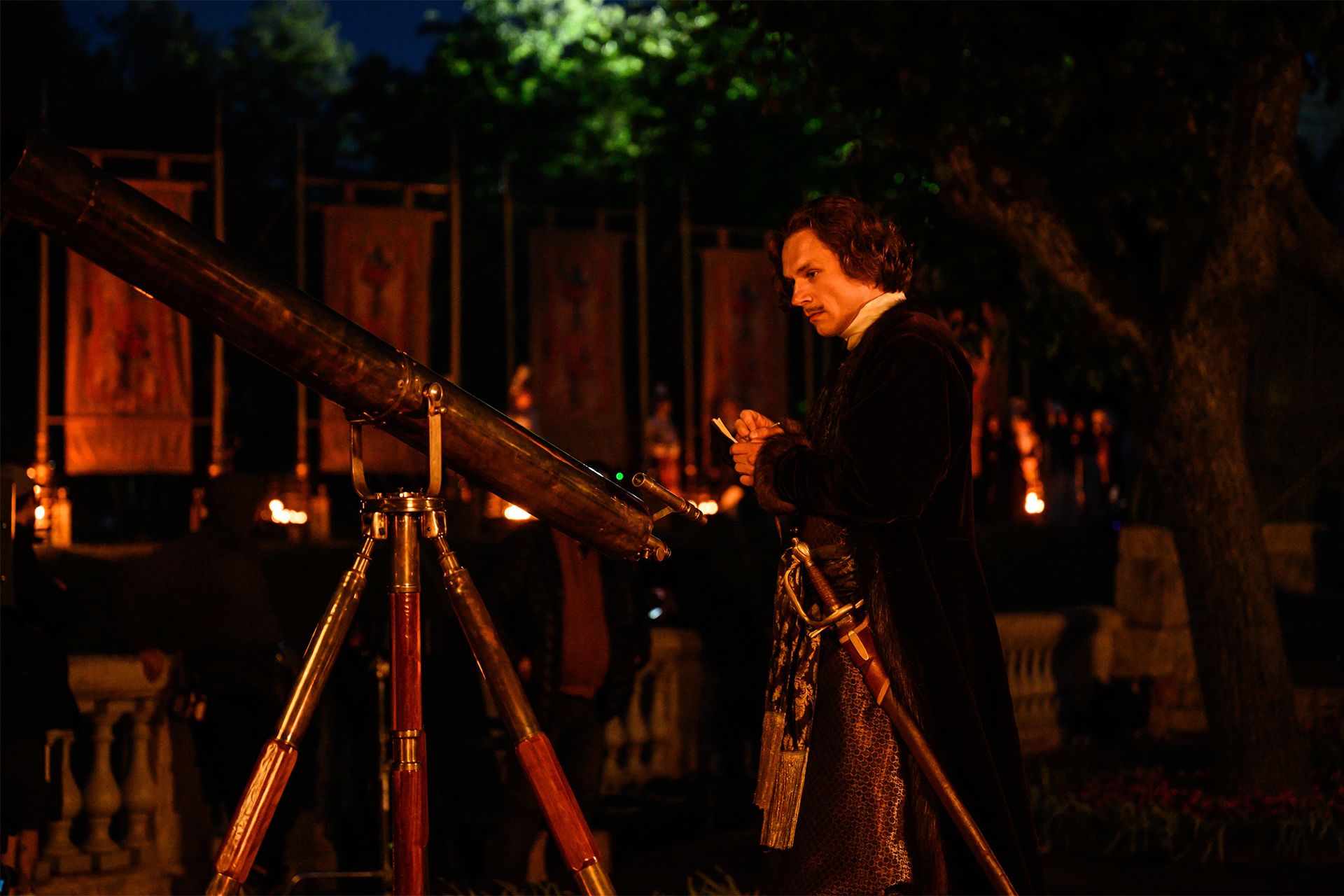
Photo from the filming of Andrey Kravchuk’s film “The Birth of an Empire” (2026). Source: kinopoisk.ru
Andrey Kravchuk’s “The Birth of an Empire” has a wonderful promoter — “Gosuslugi”. Between a debt notice and a doctor’s appointment, the citizen is offered another government service: to fall in love with the empire.
“This is a story about faith and loyalty, an unbending will to victory, and our great ancestors”, the service imposed on the potential viewer explains. Vladimir Putin has already personally taken part in promoting the film product, calling “The Birth of an Empire” a work of art. However, in the first nearly two weeks of release, box office receipts amounted to about 600 million rubles. Industry analysts consider a final gross of over 1 billion rubles in Russia and the CIS quite likely. The sum is impressive in itself, but quite modest relative to the film’s budget of 2.12 billion, of which 800 million are non-repayable state subsidies.
Rosneft served as the general partner, and among the producers are Nikita Mikhalkov, Leonid Vereshchagin, and Anton Zlatopolsky. A rather imposing state-corporate council for dissecting hot Russian history with the cold hands of cultural Cerberuses. Of course, it did not go without patronage from the presidential adviser on culture, Vladimir Medinsky.
And with a high degree of probability, one can assume that profitability of the historical blockbuster is not the main thing for this company.
The plot of the state-service film covers the years from Peter’s return from the Grand Embassy to the Battle of Poltava — the Northern War, the defeat at Narva, the building of a new army and St. Petersburg, victory over Charles XII. In between, the tsar loves, suffers, and gives orders. Historical events follow one after another with the businesslike pace of slides in a presentation. A fortress, a cannon, state necessity, the next fortress, and when there is free time — a little love.
At first, he is not very lucky in love — Anna Mons (Yulia Peresild) is obsessed with dresses to roughly the same degree that Medinsky is obsessed with Russia’s greatness, which saddens Tsar Peter, who wants someone by his side in bed who is in his own image and spirit (or at least in Medinsky’s image and spirit). So Anna, having barely chirped about dresses, is dismissed, and in her place comes Marta Skavronskaya (Ksenia Utekhina).
While the nestlings of Peter’s nest are running history, Marta ensures the uninterrupted operation of the main historical engine. The future empress has been reduced to a court sedative — to be taken for headaches and excessive responsibility for the Fatherland.
Official trailer for the film “The Birth of an Empire”
As for Peter himself, played by Alexander Gorbatov, everything human is foreign to him — he bears such continuous responsibility for the state on his face that any everyday, not brutally serious expression would seem like a violation of the job description. This is generally a feature of Russian patriotic cinema: the positive heroes are always frowning. And yet even in the 1937 film “Peter I”, the tsar in his most patriotic form, played by Nikolai Simonov, changed his facial expression and sometimes smiled. But Gorbatov was apparently told that if even one muscle twitches on his face, Russia will twitch with it. So no concessions to the face — let all the muscles work in “I’m an evil and terrible gray wolf” mode.
True,once Peter-Gorbatov does smile — in the scene where Menshikov enters the tsar’s bedroom on his hands, because the tsar ordered that his feet should no longer be there. The first time he was forgiven, and until the finale it did not happen again. There is, after all, a nationwide celebration with collective drinking of strong drinks, and the tsarina brought in a daughter — the hyper-responsible tsar had to relax his facial muscles a little.
The dramaturgy is arranged with astonishing economy and linearity. The tsar is right in advance and always, and subsequent events only confirm his rightness.
Peter Alexeyevich is completely devoid of reflection, and the doubts that sometimes break through the thickness of his righteousness can only delay victory, but its moral meaning is always unshakable. Besides, what reflection can there be if the main argument is cannons? For example, the boyars ask for a respite from wars for the country, but Peter knows better: “It’s too early for us to rest!” — and, of course, in the finale Poltava issues him a certificate of unconditional rightness. In one interview, screenwriter Andrey ZolotaryovScreenwriter of dozens of TV series, the most famous of which is “The Boy’s Word. Blood on the Asphalt”said that he can write anytime, anywhere, and in any condition — and once even edited text while sitting on a cliff drunk. It seems we now know which film’s script is being discussed.
Europe, according to the film’s creators, is arranged in an interesting way. For Peter, it historically was a source of knowledge, technology, and models for reorganizing the country, but today’s official patriotism needs Europe as a territory populated by freaks from whom one should turn away in disgust. So the on-screen Europeans received the standard package from the creators: affectation, self-satisfaction, unreliability. Diplomacy is turned into a costumed briefing: traitors everywhere. The familiar “if we hadn’t attacked, they would have” is right here, like a rabbit pulled from a magician’s hat.
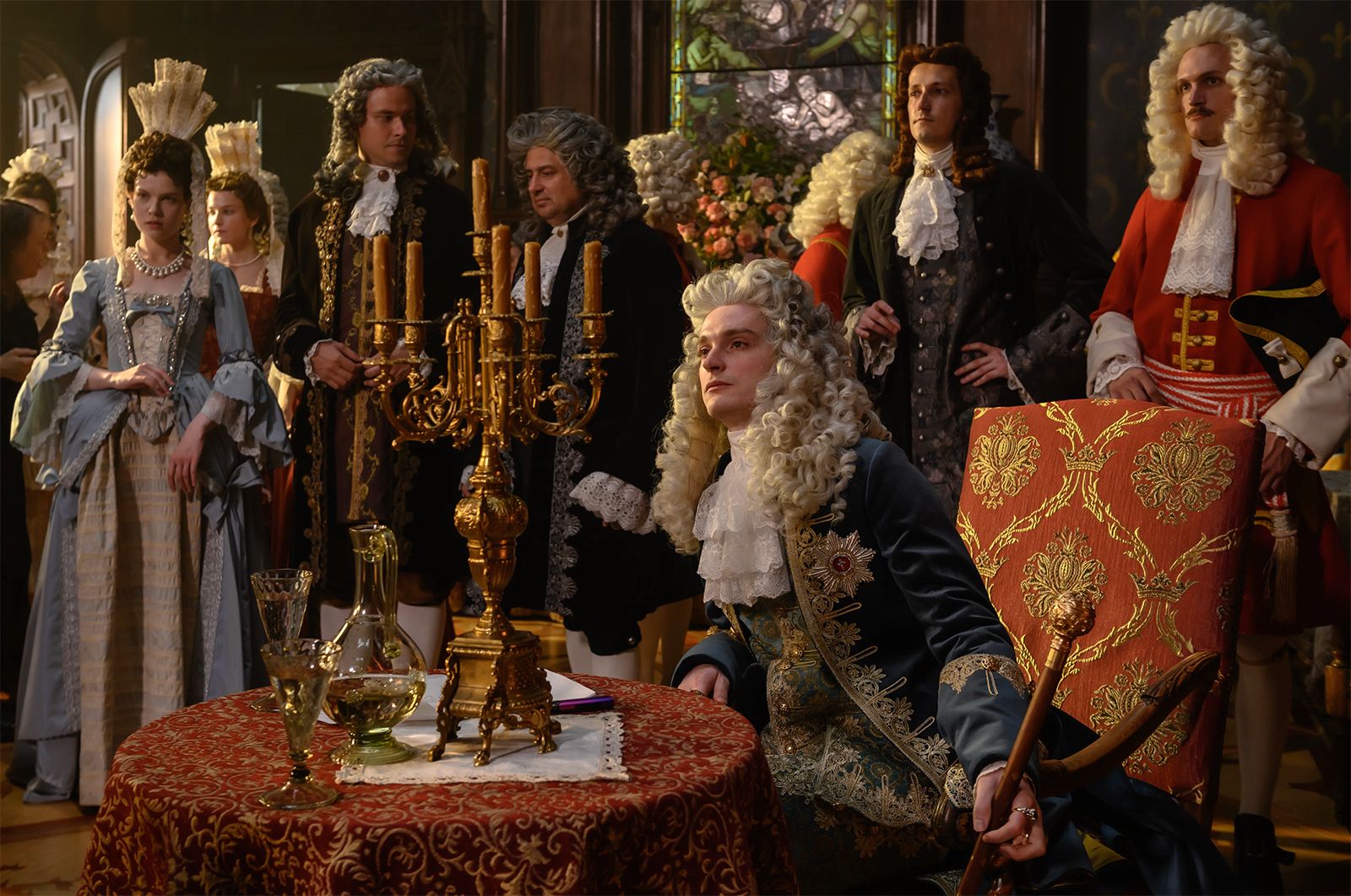
Photo from the filming of Andrey Kravchuk’s film “The Birth of an Empire” (2026). Source: kinopoisk.ru
Allies are useful mainly for demonstrating how dangerous it is to trust allies.
And here he is, the main ally, who is also the traitor — Ivan Stepanovich Mazepa (Alexander Yatsko). Any competent historian will confirm that Mazepa was not a traitor — as a contract-based vassal, he changed suzerains when the latter failed to fulfill the terms of the agreement, as was the case with Peter, who was obliged to protect the Hetmanate from the Poles, as the treaty required. After Peter said, “I won’t give you even ten soldiers, defend yourselves”, Mazepa no longer had any obligations to Peter. But in the minds of film propagandists, any independence from Moscow is read as treason.
But that’s not what this is about now — now it’s about the nightmarish, maximally clichéd depiction of Mazepa. Naturally, he is always frowning too. Only if Peter is forever frowning from awareness of the greatness of the future empire, then Ivan Stepanovich is frowning out of hatred for Rus and readiness for betrayal. But Mazepa was also allowed to smile once, or rather — to smirk crookedly, so that everyone would understand what insidious plans his treacherous little soul was hatching. His cynicism is off the charts — when Peter worries that much Russian blood will be spilled, the hetman calmly reassures him: “Women will give birth!”
Humanism remains with the imperial center, cynicism is kindly handed over to the Ukrainian hetman.
In addition, the creators did not bother to teach the actor to pronounce in Ukrainian the few phrases assigned to him by the script. “Palianytsia”, in which the hetman makes three mistakes, is simply stunning. If this Mazepa had run into a Ukrainian checkpoint in 2022, he would have gotten into serious trouble. In “The Birth of an Empire”, the hetman speaks not even Surzhyk, but a wild mix of Russian and Ukrainian with an unknown dialect — stubbornly repeating “Malorossiya”, for example. Guys, this is a disgrace. Couldn’t they have set aside a modest sum for an editor out of more than 2 billion?! And while they were at it, that editor could have taught Menshikov not to shout “oh my God!”
By the way, about Menshikov (Miloš Biković). Did you think he was some kind of statesman under Peter? You were deceived — he was a court jester. In the film, this courtier is mainly needed to dilute the ominous pathos. His relationship with Peter boils down to a simple formula: messed up, repented, forgiven. Biković has become so attached to his role in “The Servant” that they decided to leave him with it.
As for the Swedish king, there was an ideological shortcoming: while Peter bears the full weight of the state’s greatness on his face, Charles sometimes allows himself to be human. The Swedish king is the only one in the film who looks like a living person rather than a caricature, and he even received some character development, unlike all the other characters. If at the beginning he is simply a young arrogant monarch, a victor accustomed to military success and convinced that the Russian tsar is not his equal, by the end he reveals the traits of a true leader. This is due in no small part to the 26-year-old Italian actor Mate Kabe, who, unlike the others, the seasoned ones (he himself is only starting his career), did not bother to stay within the proposed clichés. The rest of the Swedes and other Europeans are generously treated with a remedy for removing historical half-tones.
To list the historical manipulations, one would have to write a small book. The main one is well known: we are forced, we are hindered, all that remains is to gather as one and win.
There is no military-political calculation here — it is dissolved in the sovereign’s righteous anger. Want a great empire? To hell with borders, blood, diplomacy: roll out the cannons and fire. We are always right. We have a historical mission, the enemy has a bad character. We have greatness, the rival has a corrupt nature. The natural form of Russia’s existence is empire, and we can repeat it. It will soon be five years since they started repeating it, and women are still giving birth. Pride in the present is not working — so let’s shore up the past, and if it resists, edit it for 2 billion and add it to the register of state services.
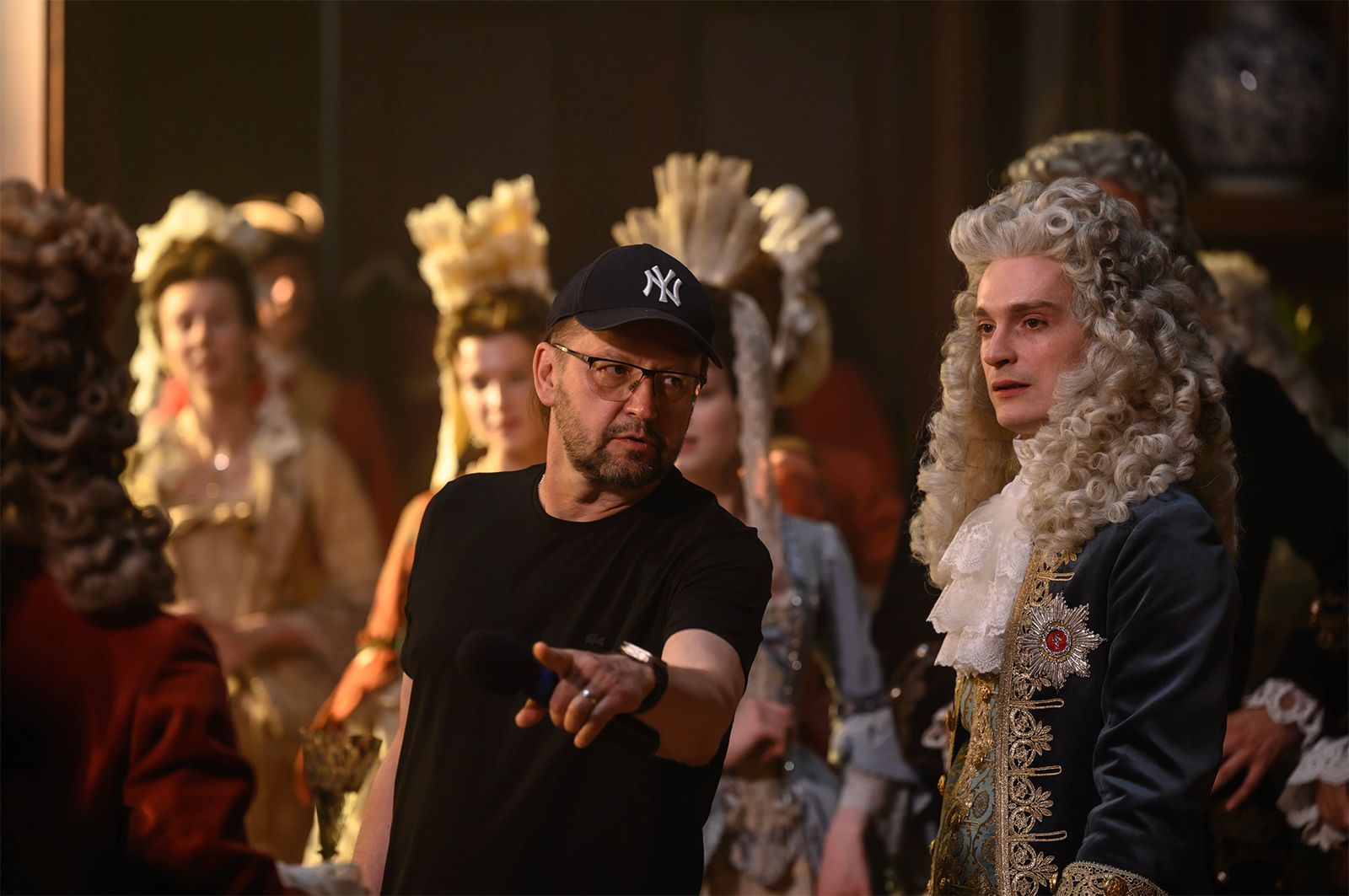
Andrey Kravchuk on the set of the film “The Birth of an Empire” (2026). Source: kinopoisk.ru
The director of this attraction, Andrey Kravchuk, started out very decently. In 2005, he made his debut with the charming melodrama “The Italian“, where a Russian boy adopted by an Italian family goes in search of his birth mother. But then something went wrong, and Kravchuk stepped onto the patriotic path. “The Admiral” about the darling Kolchak was still bearable, although the seeds of patriotic tearfulness had already sprouted there. “Viking” about Prince Vladimir Svyatoslavovich had already gone beyond the bounds of reasonable patriotism, telling a sugary tale for dunces about the baptism of Rus. After “The Union of Salvation“A 2019 film about the Decembrist uprising , which showed how much harm irresponsible rabble-rousers who go out to protest in the square do to the state, and what awaits them afterward, it seemed there was nowhere lower to fall.
But now Kravchuk has made “The Birth of an Empire”, which declares submission a virtue, war of conquest a destiny, and another people’s desire to control their own fate a vile act and betrayal. All this trash is packaged in an insanely expensive historical wrapper and delivered on time to cannon fodder as a special state service — to satisfy the demand for imperial greatness.
If you enjoyed this article, consider making a donation — one-time or, even better, monthly. Your support helps us motivate our authors and become better with every article.
Our organization is recognized by the Internal Revenue Service (IRS) as a 501(c)(3) tax-exempt, charitable organization, which means that all contributions made to us are tax-deductible to the fullest extent permitted by U.S. law. Individuals may generally deduct charitable contributions of up to 60% of their Adjusted Gross Income (AGI) for cash donations made to qualifying 501(c)(3) organizations. For donations of appreciated assets (such as stocks or other long-term capital assets), the deduction is typically limited to 30% of AGI, based on the fair market value of the asset. C-corporations may deduct charitable contributions of up to 10% of their taxable income for donations made to eligible charitable organizations.
By submitting a donation, you confirm that you have read and accept the following documents: Privacy Policy and User Agreement, and also give consent to the processing of your personal data.
If you would like to unsubscribe from a monthly donation, please email us at: [email protected]