Beloozersk is one of the oldest cities of the Russian North. The small town in Vologda Oblast, which can be walked across in an hour, has more than 50 cultural monuments, and its pearl — Lake Beloye — attracts tourists from all over the European part of Russia. But this summer the residents of Belozerye, which can be reached only by road transport, are having a hard time: because of the fuel crisis, five fill-ups of a passenger car cost locals an average monthly salary. A report from “Most”.
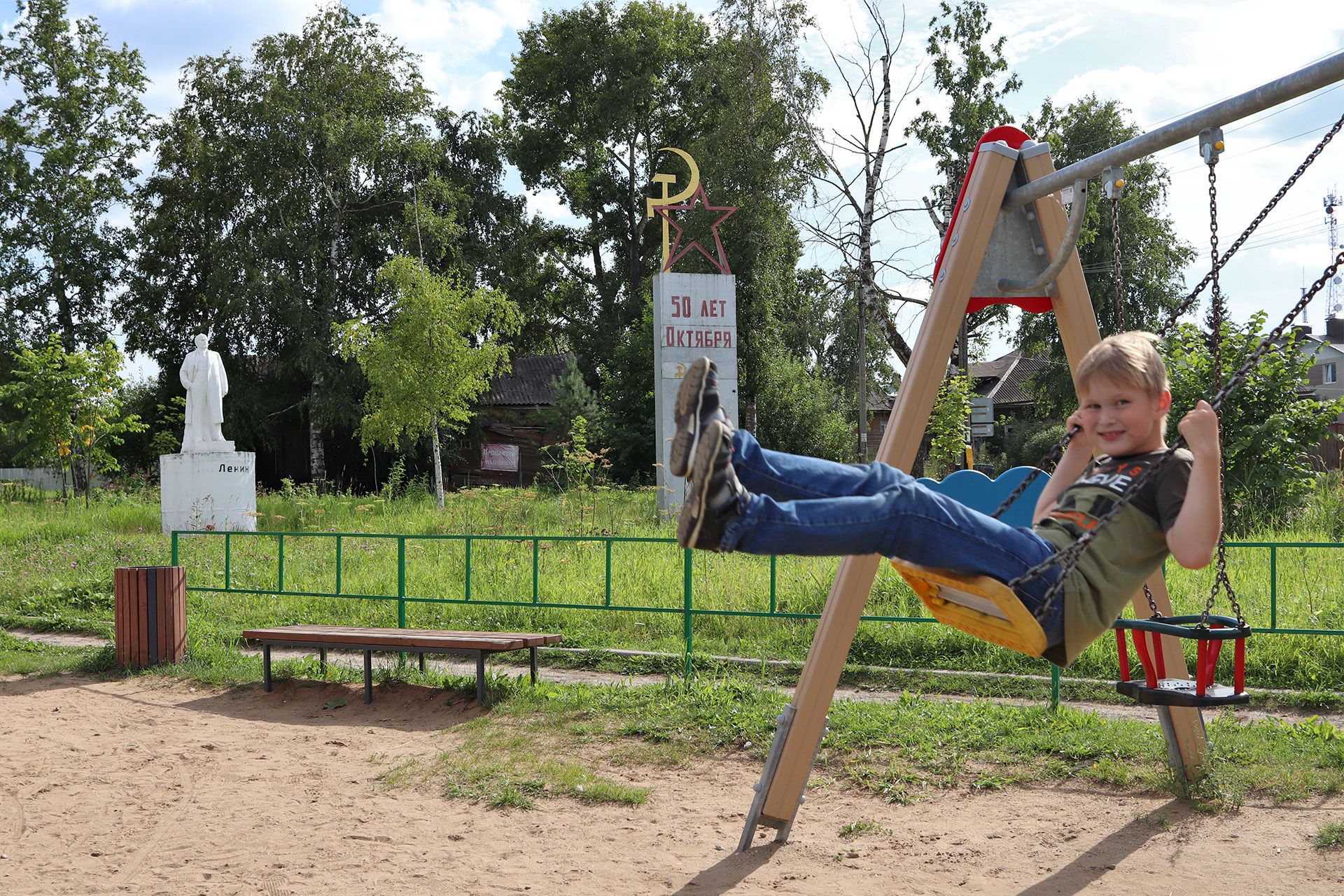
The monument to Lenin and the stele marking the 50th anniversary of October were moved three times in the city. The memorial’s latest location is in a vacant lot behind the playground. Photo: Anastasia Anisina
The crossing over the Sheksna River connects the city of Beloozersk and the village of Lipin Bor in Vologda Oblast. Here, the Monday morning of the drivers of the Beloozersk hospital begins for the second month in a row — on the road for gasoline. The regional Ministry of Health, which oversees the hospital, ordered them to refuel at the nearest Lukoil station — 48 kilometers from the institution.
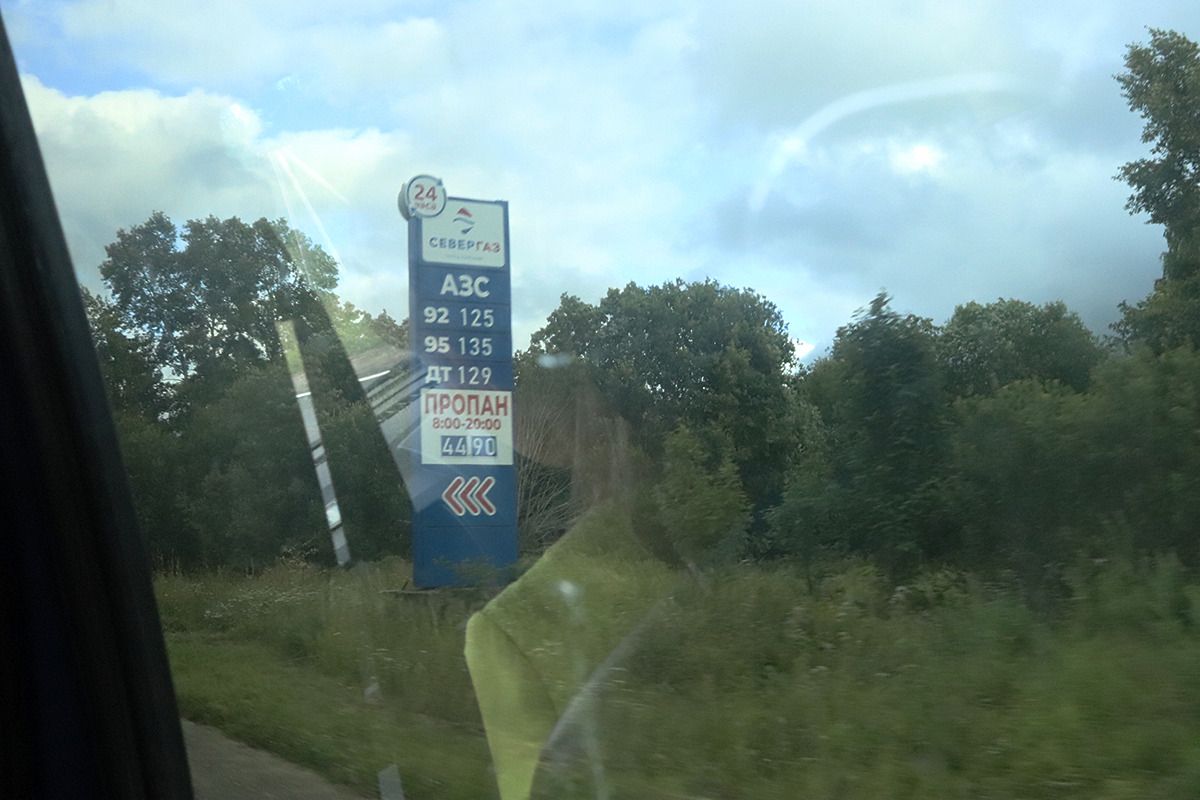
In July, to fill up their cars, residents of Beloozersk in Vologda Oblast were forced to drive 120 kilometers to the nearest major city — Cherepovets. At the beginning of the month, the governor of Vologda Oblast, Georgy Filimonov said that “the fuel situation has stabilized”. Now there is gasoline in Beloozersk: “steadily” at 120 rubles per liter. That is more than twice as expensive as before the start of the massive Ukrainian Armed Forces strikes on Russian oil refineries.
“In the ministry they looked at the map and said: ‘From Beloozersk it’s 40 kilometers to the village of Lipin Bor, go refuel there. If not, then on the way in Cherepovets,’” says ambulance mechanic Andrey. “On Friday I took a patient to Cherepovets, and only at the fourth gas station, can you imagine, did I fill up. Well, nothing, maybe everything will get sorted out. In 30 years, that I’ve worked here, there have been worse times... Our country is unpredictable”.
Mechanic Andrey’s car at the crossing over the Sheksna
There are only three gas stations operating in Beloozersk, and all of them resell fuel from federal chains, continuing to keep double or even triple prices: 120–150 rubles per liter. The administration does not comment on the situation.
***
Along the embankment by the Belozersky Canal, cyclists of all ages race by, and crooked wooden houses flash past. On the other side of the canal, Lake Beloye is visible through the trees — the pearl of this city, to which crowds of tourists flock to Beloozersk on weekends.
Beloozersk is an ancient city. Traditionally, its beginning is dated to 862 — the date of the founding of Rus. According to The Tale of Bygone Years, when Rurik was called to rule, one of the two brothers, Prince Sineus, took the throne right here. The city is famous for its 500-year-old kremlin, ancient churches, and fishing industry.
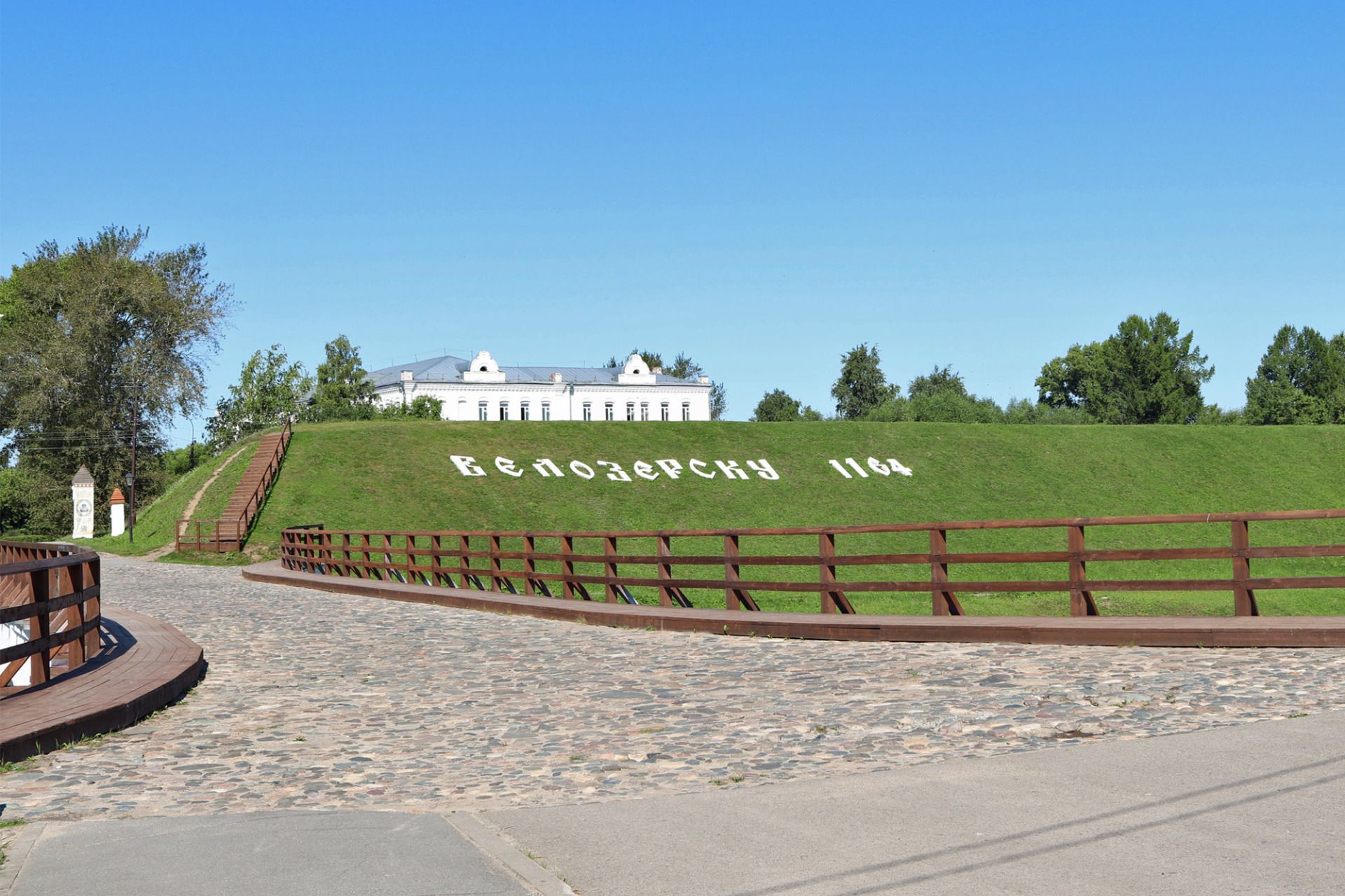
The Belozersk earth embankment
A crowd of boys rushes into the canal at a run — straight from the house opposite. Their grandmother hurries after them.
- Are you отдыхаете here?
- I came to bathe the children. They splash around here 20 times a day.
- And where are you from?
- From St. Petersburg [distance to Beloozersk is 633 km — Most Media]. We have an apartment here, we come to отдыхать. Everyone says this is the best place on earth.
- And for you?
- Well, if you mean the beach, then yes.
Beach on Lake Beloye on Friday afternoon
On Saturday the parking lot by the beach cannot handle the influx of cars. Andrey, a security guard at the Belozersk port, keeps peering out from behind the fence, anxiously watching the growing rows of cars. At the beginning of July, at the height of the fuel crisis, there were practically no tourists, and those who did make it got stuck in the city with empty tanks. So the return of vacationers to the beach seems significant to Andrey.
The permanent population of Beloozersk — a once prosperous port city in Soviet times — is now just under eight thousand, and that number is shrinking every year. In addition to large-scale timber transport, the Belozersk port handled passenger transport and ship repair. After the collapse of the Union, the enterprise began to wither rapidly. In 2014, the port passed into private ownership of the St. Petersburg company LLC “Belozerskoye Parokhodstvo”.
“I can’t say anything good... раньше there used to be five or six steamships here. In the morning, we had people — you open the gate and cars keep coming and coming. And now there is one person in accounting. There is absolutely nobody. Navigation has ended”, says Andrey.
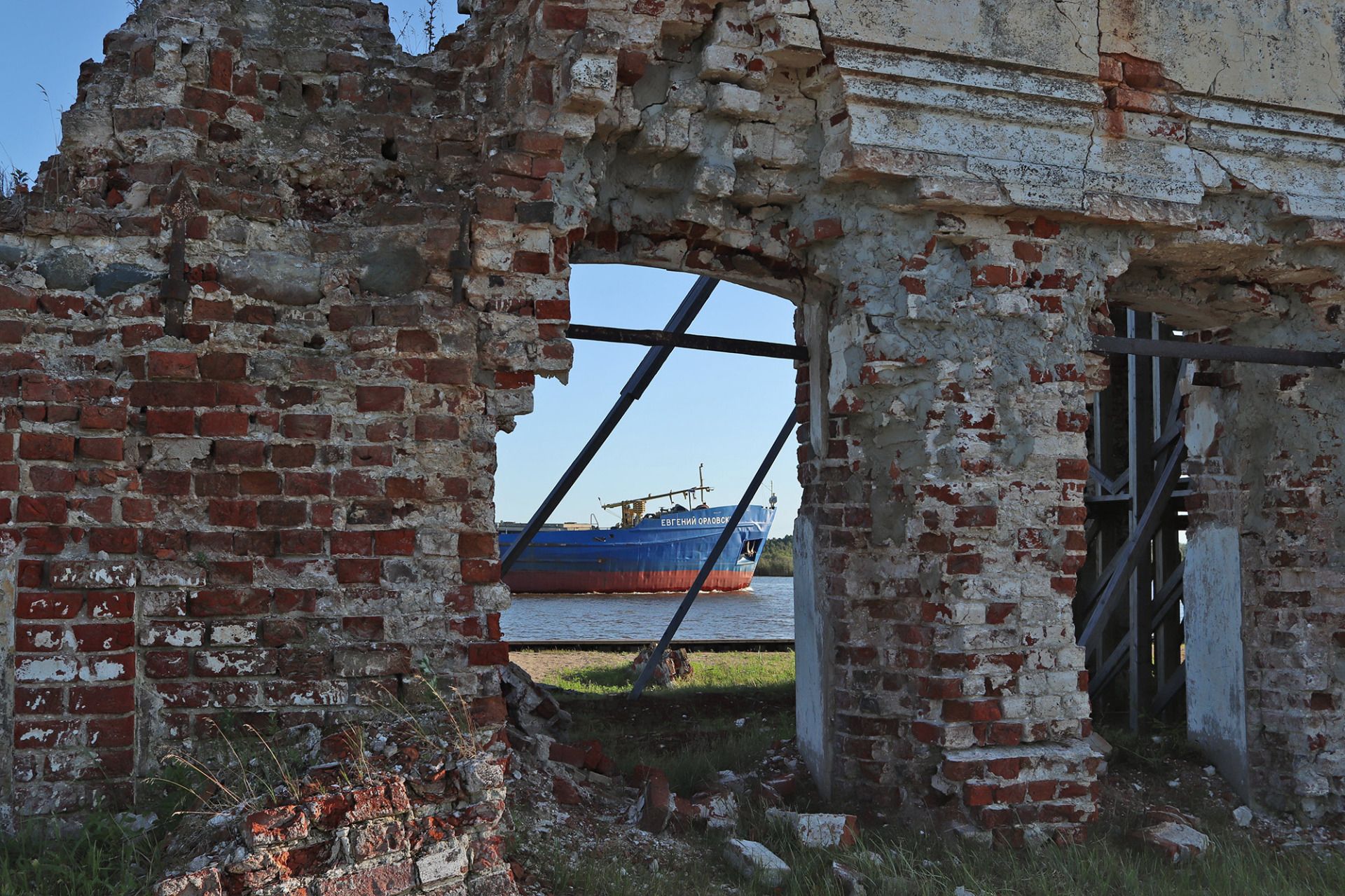
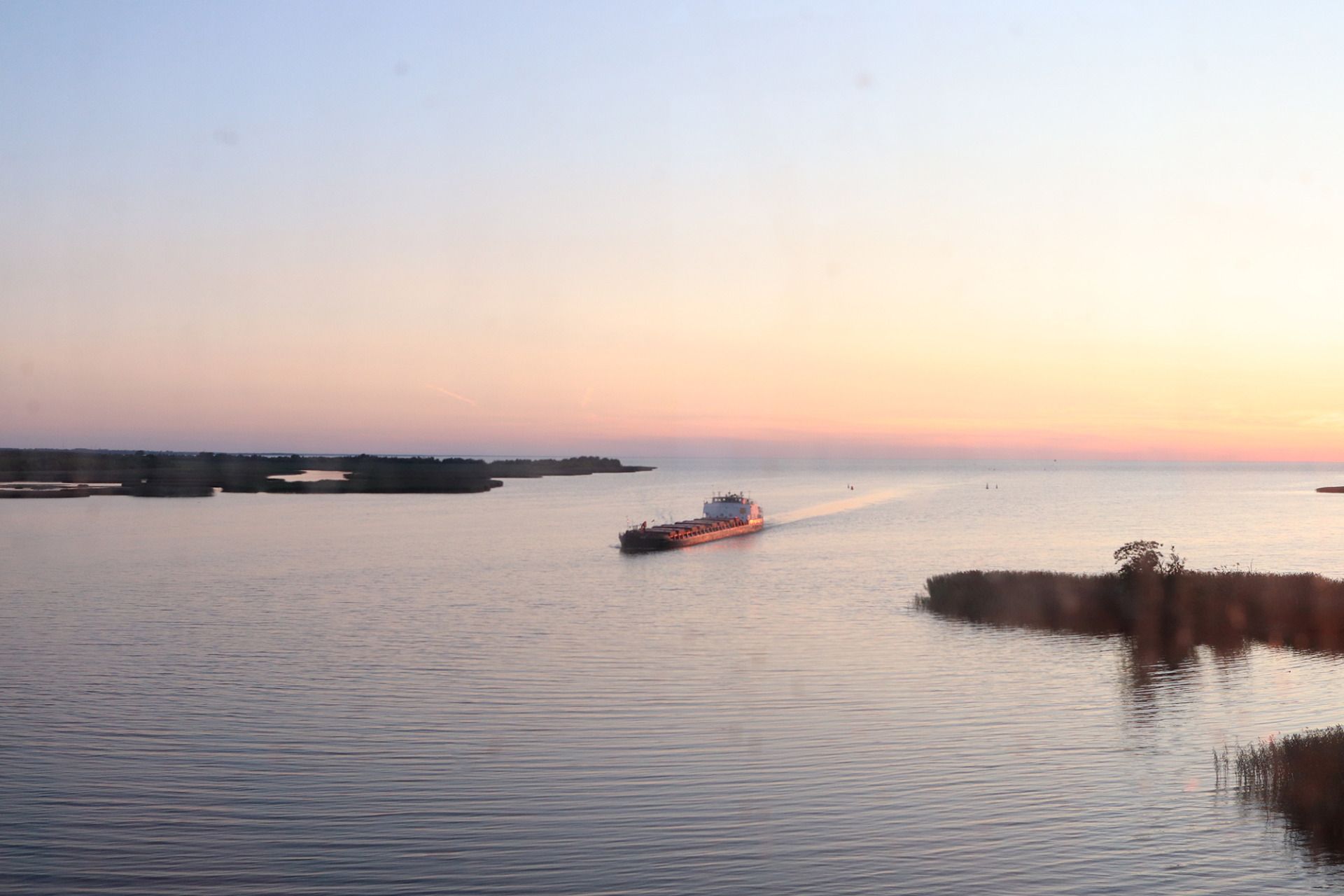
A cargo vessel is moving along the Sheksna. As a rule, ships pass by the Belozersk port on their way to unload in St. Petersburg
Beloozers’ favorite memory is riding on meteor hydrofoils, Soviet high-speed passenger boats, from Beloozersk to Vologda and Cherepovets. According to locals, the last Meteors stopped running between the cities in the early 2000s. Now you can get to Beloozersk either by car or by bus from Cherepovets.
Meanwhile, the port management is preparing new cuts: “Some of our vessels may be laid up because of the fuel shortage”, Andrey says. “That’s it, there will be no work”.
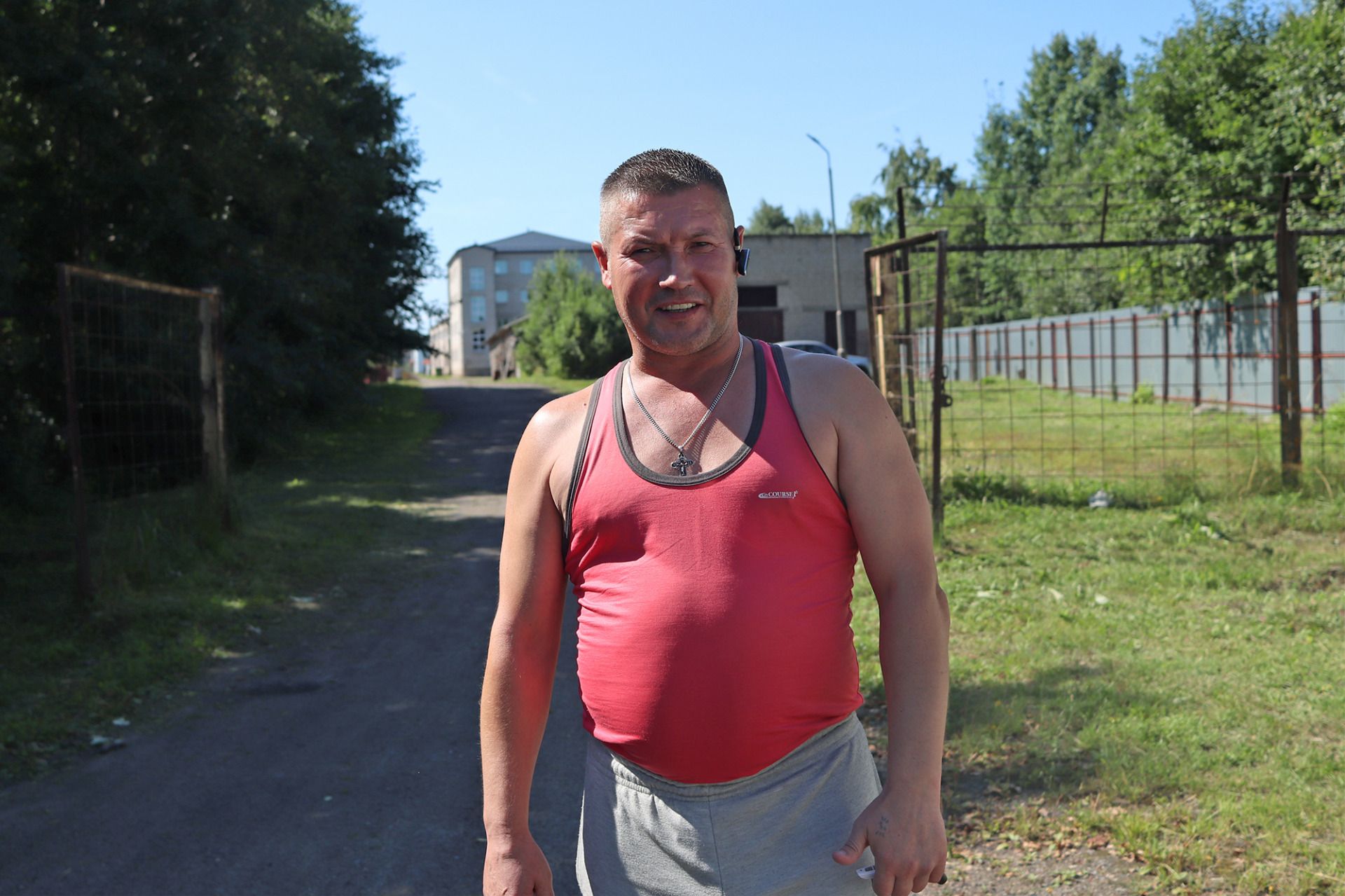
Andrey, the port security guard
Because of the threat of mobilization, Andrey is thinking about returning to work as a guard at the “pyatak” — that is what they call penal colony No. 5 on Fire Island for life-sentenced prisoners here: “At least there’s a ‘reservation’ there, they won’t take you from there”. When asked about the upcoming State Duma elections in September, Andrey says he will most likely go vote (he doesn’t say for whom), but he can’t look that far ahead:“Before I could plan something — a vacation in September, for example. But now I don’t plan anything anymore. Today I’m on shift, and tomorrow I don’t know what will happen”.
***
The Soviet-era building of the Beloozersk bus station. In 2020 the building was bought by a private entrepreneur and now rents part of the space to the Bristol store
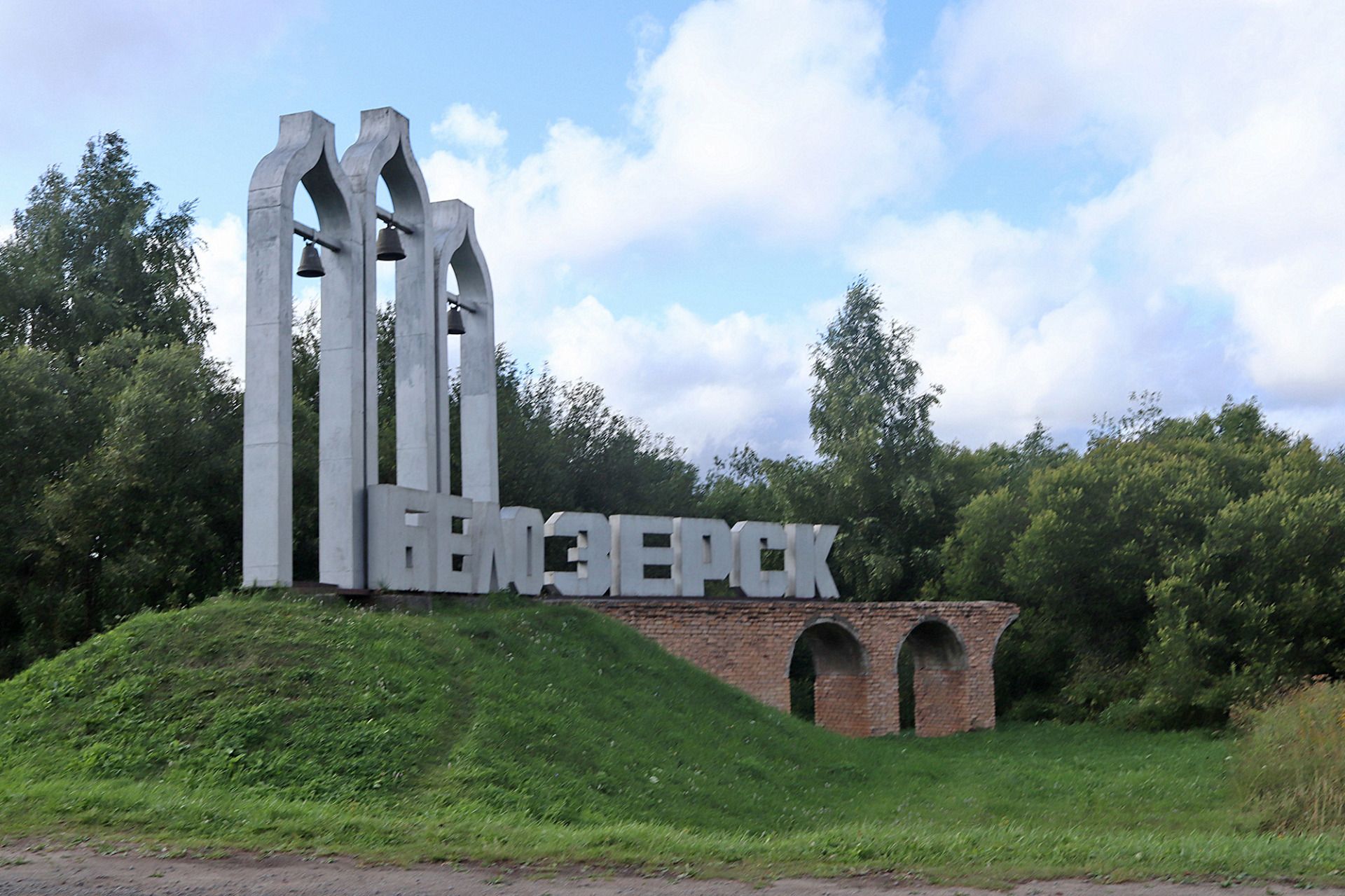
They say that public transport once ran through Beloozersk, but now the bus stops are used by locals mostly for drinking alcohol, and the city bus station building has been bought by a private individual, with part of it leased by the Bristol store. You can get anywhere either by taxi or by hitchhiking. A cheerful young woman without front teeth advised voting near the “three condoms” — that is what Vologda residents call the identical steles at the entrances to the cities of Vologda Oblast, installed at the governor’s order.
Andrey and Tatyana from Beloozersk are going to swim in the lake. Andrey — a smiling, sturdy guy — works in the RZD transport service in St. Petersburg on a rotational schedule. A week there, a week at home. When asked why he doesn’t move to the northern capital for good, he says home is better. Tatyana — a tired, slender woman in a yellow dress just above the knee — works as a kindergarten teacher at the local preschool. When asked about life in Beloozersk, she says bluntly: “Everything is bad here. Everyone who comes is surprised: utilities are twice as expensive as in neighboring cities and villages, and the salary is minimum wage”. According to the information portal Trudko.ru, the average salary in the city is 38.5 thousand rubles.
Indeed, heating tariffs in Beloozersk are among the highest in Vologda Oblast. According to locals, in winter, for a two-room apartment, residents can pay up to 10 thousand rubles for heat alone, whereas in the regional capital, Vologda, the price ranges from 1.5 to 3.5 thousand rubles. In addition to logistical factors, the price is affected by dilapidated housing, which increases heat consumption in apartments.
- Where do you refuel? — I ask.
- We refuel right here — at one hundred twenty, — Andrey replies.
- Why don’t the city authorities regulate gasoline prices at all?
- Try figuring out who’s in that administration now; they send a new one every six months, — says Tatyana.
- Why is that?
- One guy stole enough, and they brought in the next one, — Andrey adds with irony.
Since mid-2025, the district head has changed twice already. The latest — Yury Zhavoronkov — took office in July this year, replacing Dmitry Dolbilov, who had originally been elected for a five-year term. He did not respond to a journalist’s request for comment.
Economist Anna Senina clarifies that regional authorities do not have direct leverage over independent gas stations, although they can negotiate with them and cooperate with the FAS to regulate prices. “During crisis periods, government bodies can agree with certain large chains to restrain prices in priority cities or districts, while independent gas stations remain outside such agreements. FAS. Regional authorities can issue warnings to specific gas stations for overpricing, but these are targeted measures that do not level the entire market”, the expert explains.
***
On the lake island, 20 kilometers from Beloozersk, stands a time-worn lighthouse-church — a lonely свидетельство of the flooded villages of Belozerye. For the past 18 years this building has been trying to be preserved by the founder of the Krokhino Foundation, Anor Tukaeva. Anor, a Muscovite originally from Ufa, first came to Lake Beloye in the late 2000s, when she was 24, and fell in love with these places. Since then she has devoted her life to preserving the church and the memory of the villages flooded in 1961 during the filling of the Sheksna Reservoir. Anor’s project is well known nationwide: in 2013 her story was included in Leonid Parfyonov’s film “Color of the Nation”, and in 2026 — in the documentary film almanac “Hearths”.
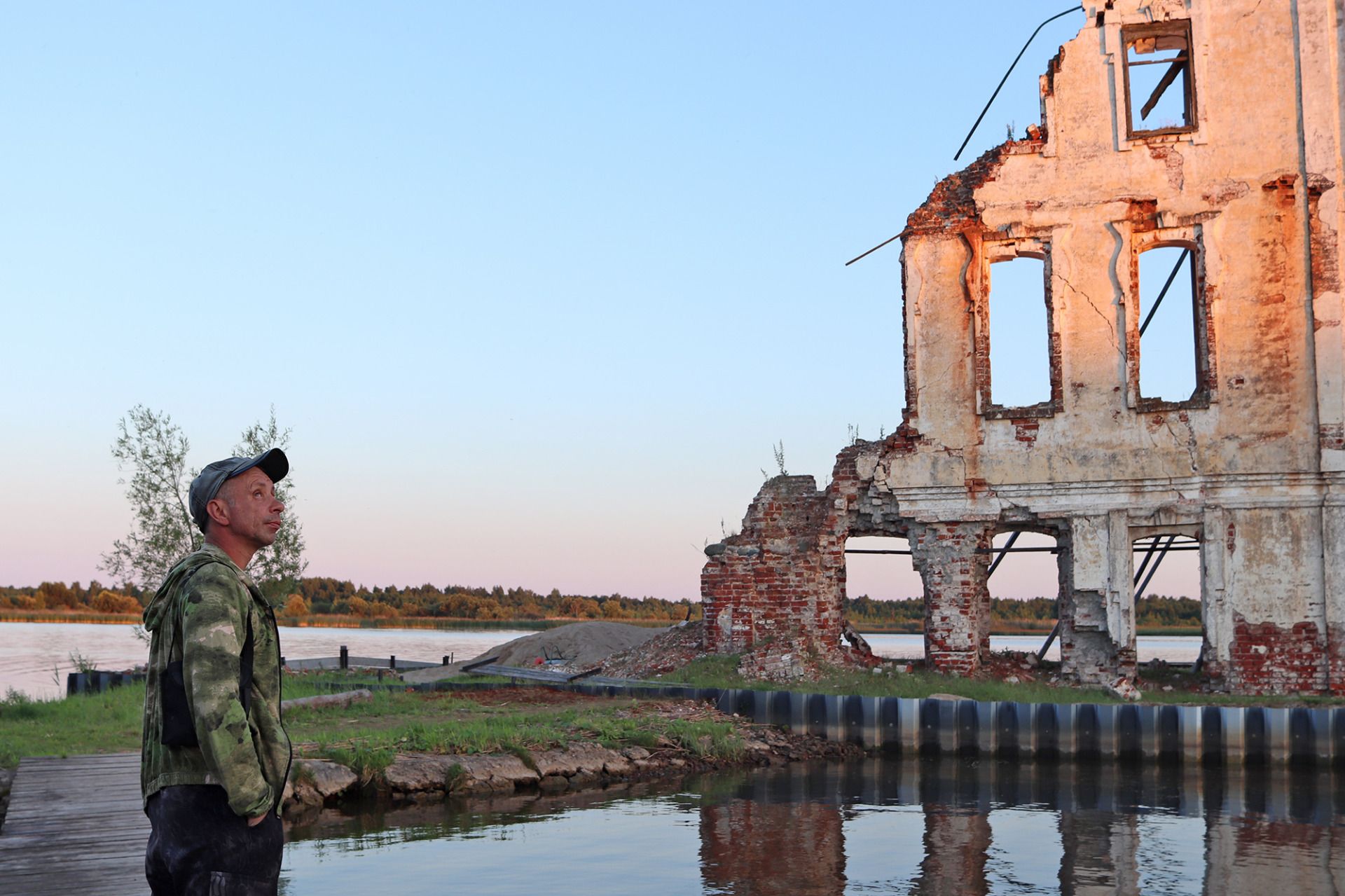
Foundation worker “Krokhino” Pasha against the backdrop of the Krokhino lighthouse-church at sunset
In the warm half of the year, Anor lives with her husband and children near the church - on the bank of the Sheksna River, where in the 19th century there was a small town — Krokhinsky Posad.The preserved foundations of the posad houses gave this land a second life — reeds and a willow forest grew on the islands of river silt, returning soil to the flooded territory. That is where the Krokhino Foundation campus stands: over the years of work, several houses and a visitor center for volunteers and restorers have been set up here.
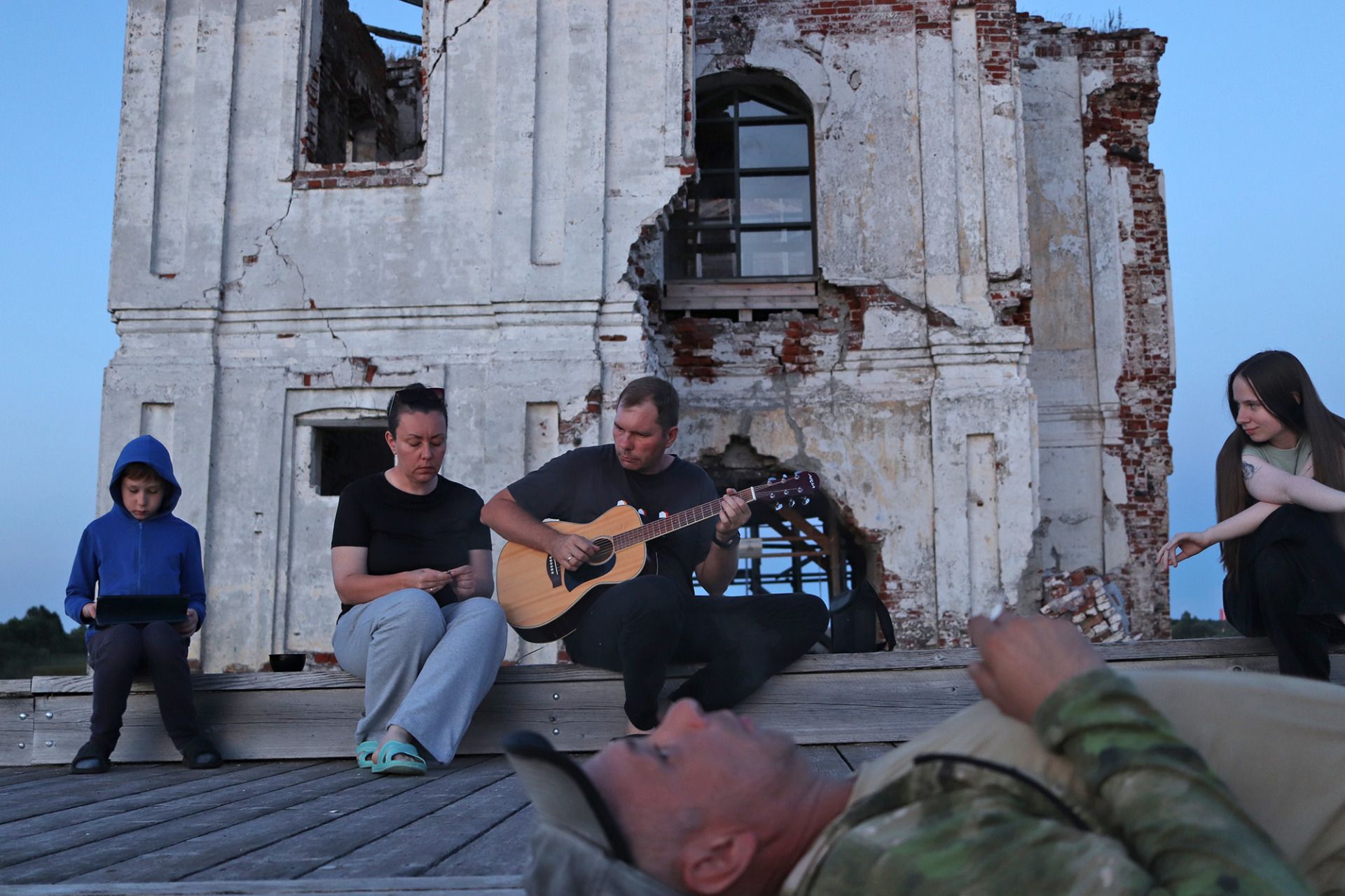
Guitarist on the pier in Krokhino
The only way to get to Krokhino is by motorboat. In the acute phase of the crisis, Anor, like all residents of Belozerye, was forced to go to Cherepovets, 120 kilometers away, just to fill the car and pour gasoline into canisters for the boat. Now it is 40 kilometers, to the nearest Lukoil station near the village of Lipin Bor, where it is possible to pay with a fuel card. For an organization living on cashless donations, a fuel card is the only way to refuel. According to Anor, in July the Belozersk gas stations stopped accepting this payment method. “Now gasoline can only be bought for cash at twice the price it was at the beginning of summer”, Tukaeva says.
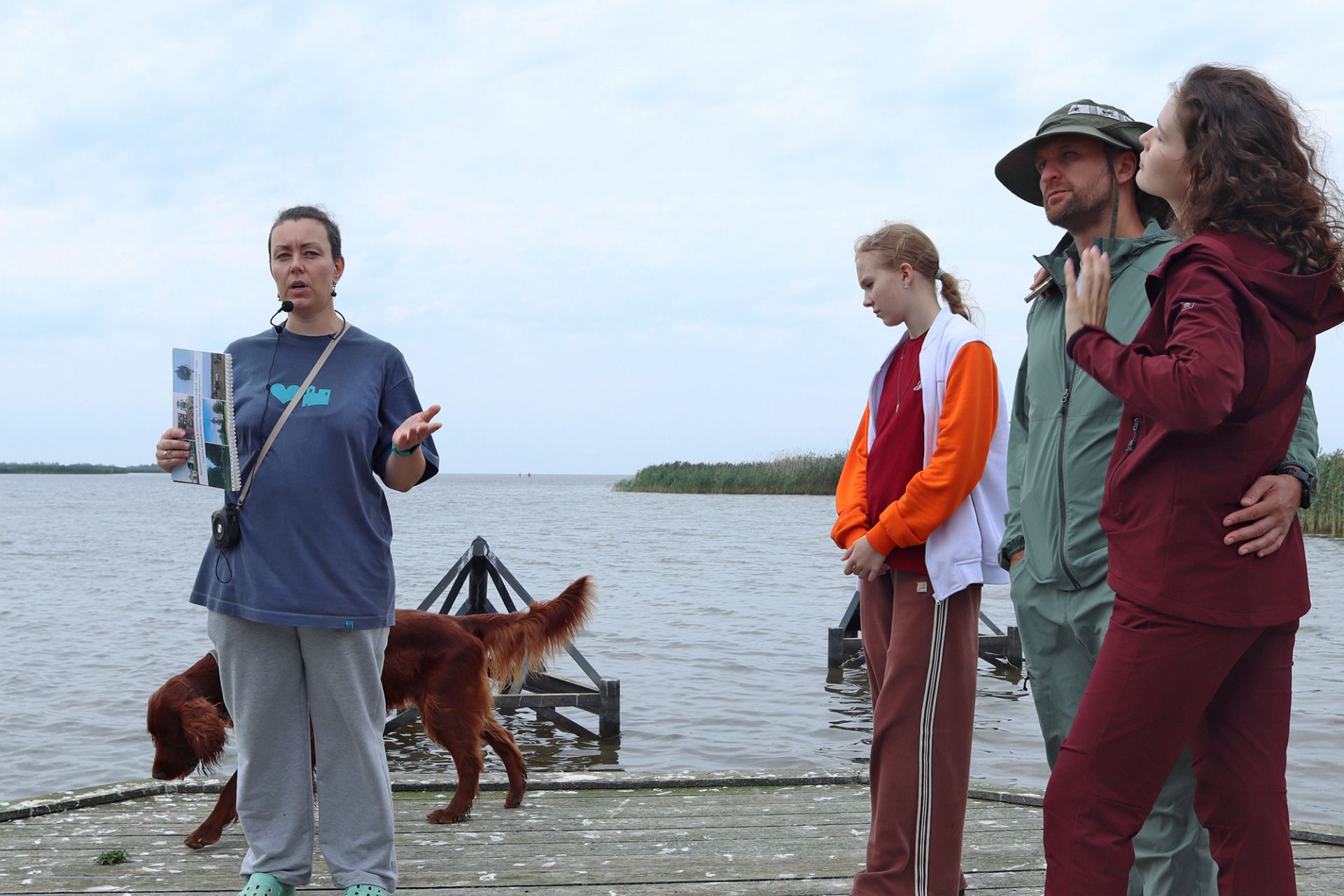
Anor gives a tour in Krokhino
In 2025 the Krokhino Foundation received a grant from the Potanin Foundation to reconstruct the former pumping station in Beloozersk. By 2027, the building is planned to house a museum dedicated to the memory of the flooded villages of Belozerye. Work on this grant is Anor’s only predictable goal for the coming year. “The Krokhino project exists thanks to private donations and donations from companies, and right now it is truly a very difficult stage for attracting attention and funds to such projects at all. They didn’t seem very important or socially urgent before, and now, against the backdrop of other problems and hardships, they have become completely devalued. And as for planning ahead, how can you take into account, for example, a fuel crisis in your own work? Transport service prices have risen three or even four times. If last year we could order a [cargo] truck for 20 thousand rubles, this year it costs 100,000. That is impossible to include in a grant whose budget was calculated two years ago”, Tukaeva says.
View of Lake Beloye from the bell tower of the Krokhino lighthouse-church
According to the report on the state accounting website, in 2025 the budget of the Krokhino Foundation amounted to 10.7 million rubles, half of it being grant money for the construction of the memorial museum. At the same time, by the end of 2025 the foundation received almost three times less in private donations than the year before.
***
Neither the authorities themselves voice any confidence in tomorrow or reasonable gasoline prices. Olga (name changed), an employee of the Beloozersk administration, agreed to talk about the fuel crisis in the city on condition of anonymity. Olga believes that prices have clearly affected the decline in trust toward the regional authorities, but neither the district administration nor the regional governor can do anything to fix the situation — the issue must be resolved at the federal level. Nevertheless, Olga is sure: the situation in the city will only get worse and a new wave of crisis is coming. The woman herself admits that despite the economic situation, she remains in Beloozersk because she is afraid to go with her daughter to a big city, since military actions are taking place across the country. There is no information in open sources about drone attacks on the territory of the Beloozersk district.
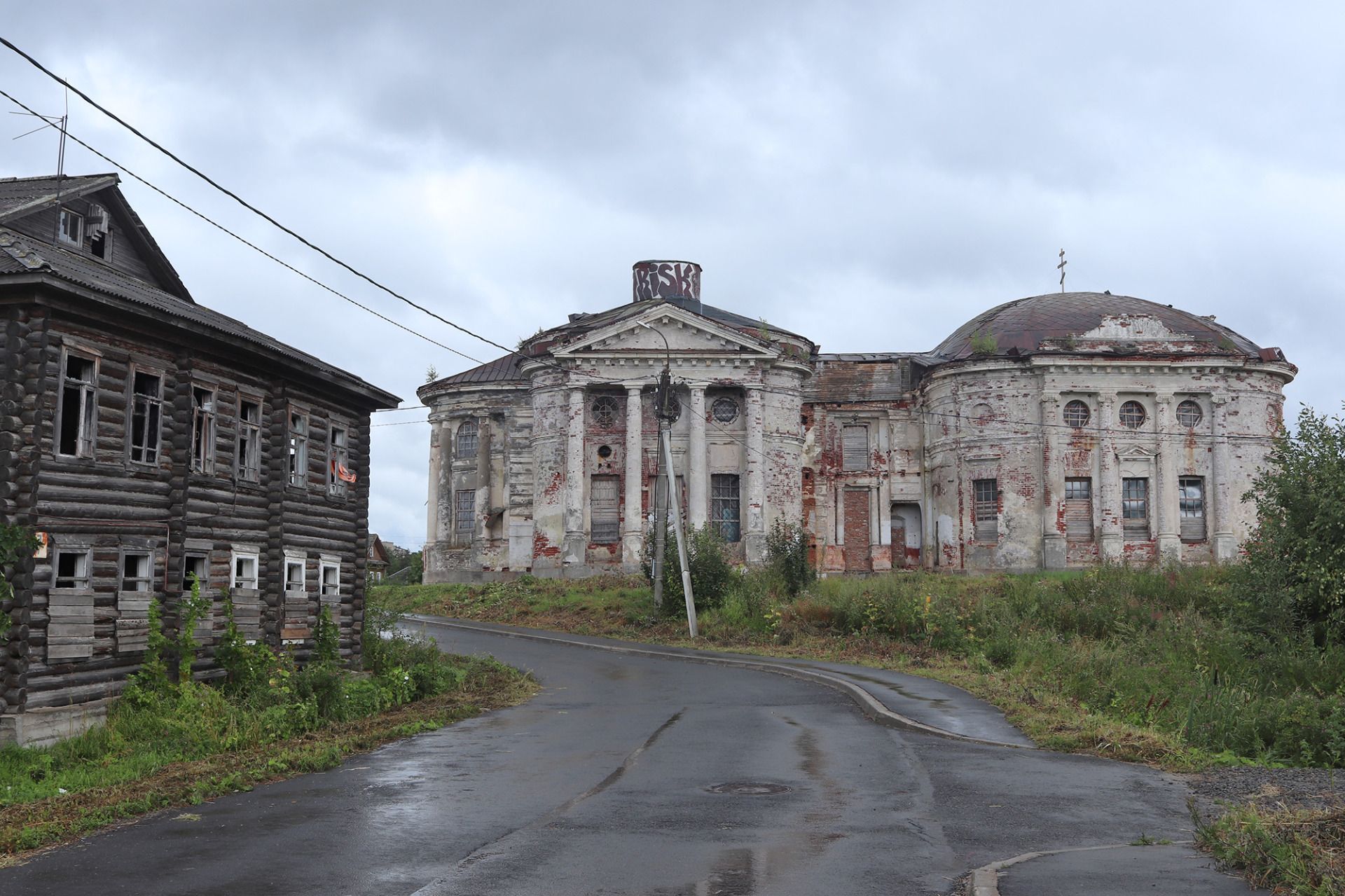
The Church of John the Baptist in Beloozersk is a Russian cultural heritage site of regional significance. Built in 1810, it was converted into a machine-tractor station in the 1930s. In 2016 the church was returned to the Russian Orthodox Church, conserved for reconstruction, and is not in use
Residents of Belozersk express their dissatisfaction with the situation in the city online. The VK public page “Belozerskiye Vesti” is filled with complaints to the authorities about landscaping, utility tariffs and, of course, gasoline prices:
“Almost 100 rubles per liter more expensive than in Cherepovets, yesterday I was driving home from the dacha, in Beloozersk there were no price tags at all, in the city at Tatneft I filled up 95 for 69.56, they’ve completely f@cked up”
“When will there be gasoline in the city already Administration of the Belozersk district ??? At a normal market, reasonable price? Why is the administration making no effort to stabilize the fuel situation in the city?“
“and what will happen after the elections...?(”
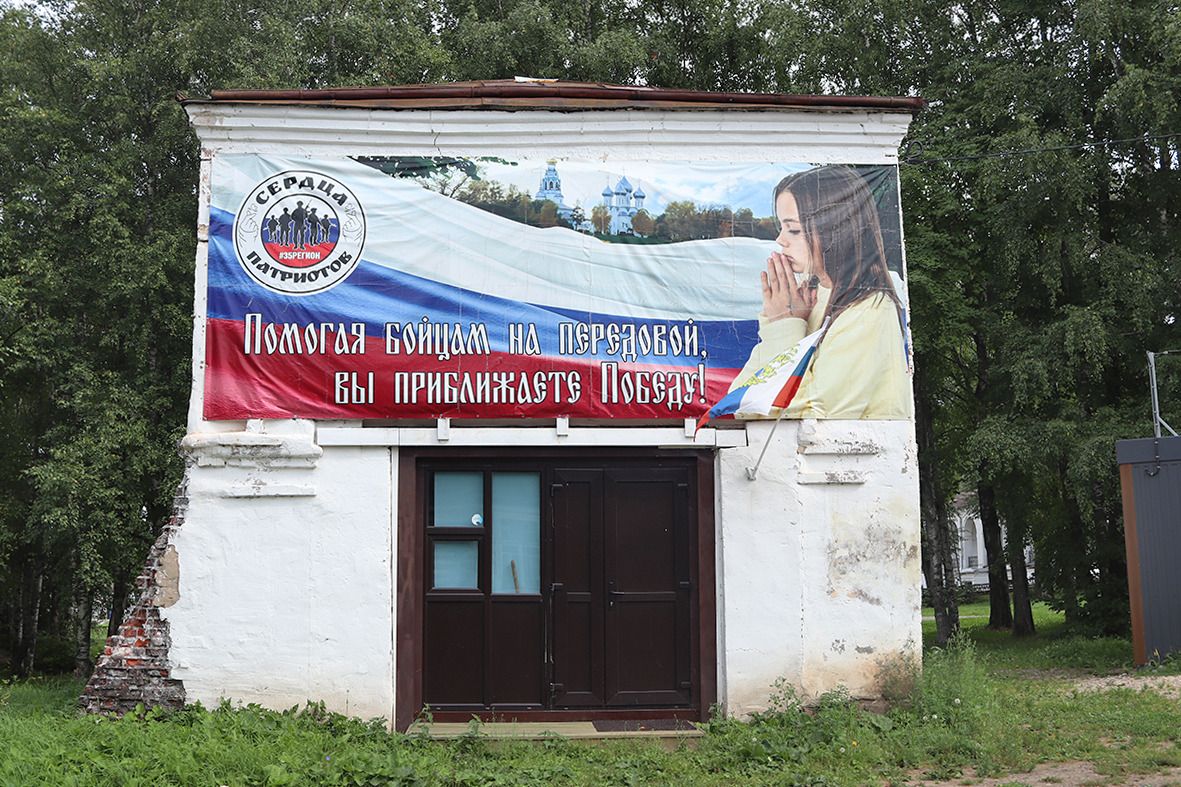
Inscription on the banner: “By helping the fighters on the front line, you bring Victory closer”. The logo on the banner belongs to the volunteer movement “Hearts of Patriots”
People in Beloozersk’s public chats stay silent about the causes of the fuel crisis, but pro-government commentators write about the ongoing war in Ukraine as a reason to remove responsibility from the administration:
“There are gasoline problems all over the country! Have you forgotten that there is a war going on? You should be ashamed to complain about temporary problems. So what if the guys are fighting there so that you can live peacefully and not panic. You can shake up the country and it will be like the year 91 — no jobs, no salaries, banditry, lawlessness. No matter how you feel about the current власти, it does not honor you to write filth about the leaders. If you don’t respect them, then at least respect yourself, without sinking to outright insults”.
One local resident replied to this as follows:
“We haven’t forgotten that there is a war going on. But the authorities keep playing holidays and festivals with us and, it seems, know less than we do about the gasoline problems. So you’re pointing your finger at the wrong people here. Listening to you, it’s as if some can do whatever they want, others can fight, and we will live peacefully and ignore the problems”.
When asked who residents will vote for in September in the State Duma elections, none of the people from Beloozersk who spoke with the “Most” correspondent answered.
If you enjoyed this article, consider making a donation — one-time or, even better, monthly. Your support helps us motivate our authors and become better with every article.
Our organization is recognized by the Internal Revenue Service (IRS) as a 501(c)(3) tax-exempt, charitable organization, which means that all contributions made to us are tax-deductible to the fullest extent permitted by U.S. law. Individuals may generally deduct charitable contributions of up to 60% of their Adjusted Gross Income (AGI) for cash donations made to qualifying 501(c)(3) organizations. For donations of appreciated assets (such as stocks or other long-term capital assets), the deduction is typically limited to 30% of AGI, based on the fair market value of the asset. C-corporations may deduct charitable contributions of up to 10% of their taxable income for donations made to eligible charitable organizations.
By submitting a donation, you confirm that you have read and accept the following documents: Privacy Policy and User Agreement, and also give consent to the processing of your personal data.
If you would like to unsubscribe from a monthly donation, please email us at: [email protected]