Protecting Christians in America and worldwide was one of Trump's campaign promises. Now it is important for him to demonstrate to voters his closeness to the head of the Catholic Church. However, one should not expect a successful symbiosis of secular and spiritual power in the case of the first American pope and the 47th American president.
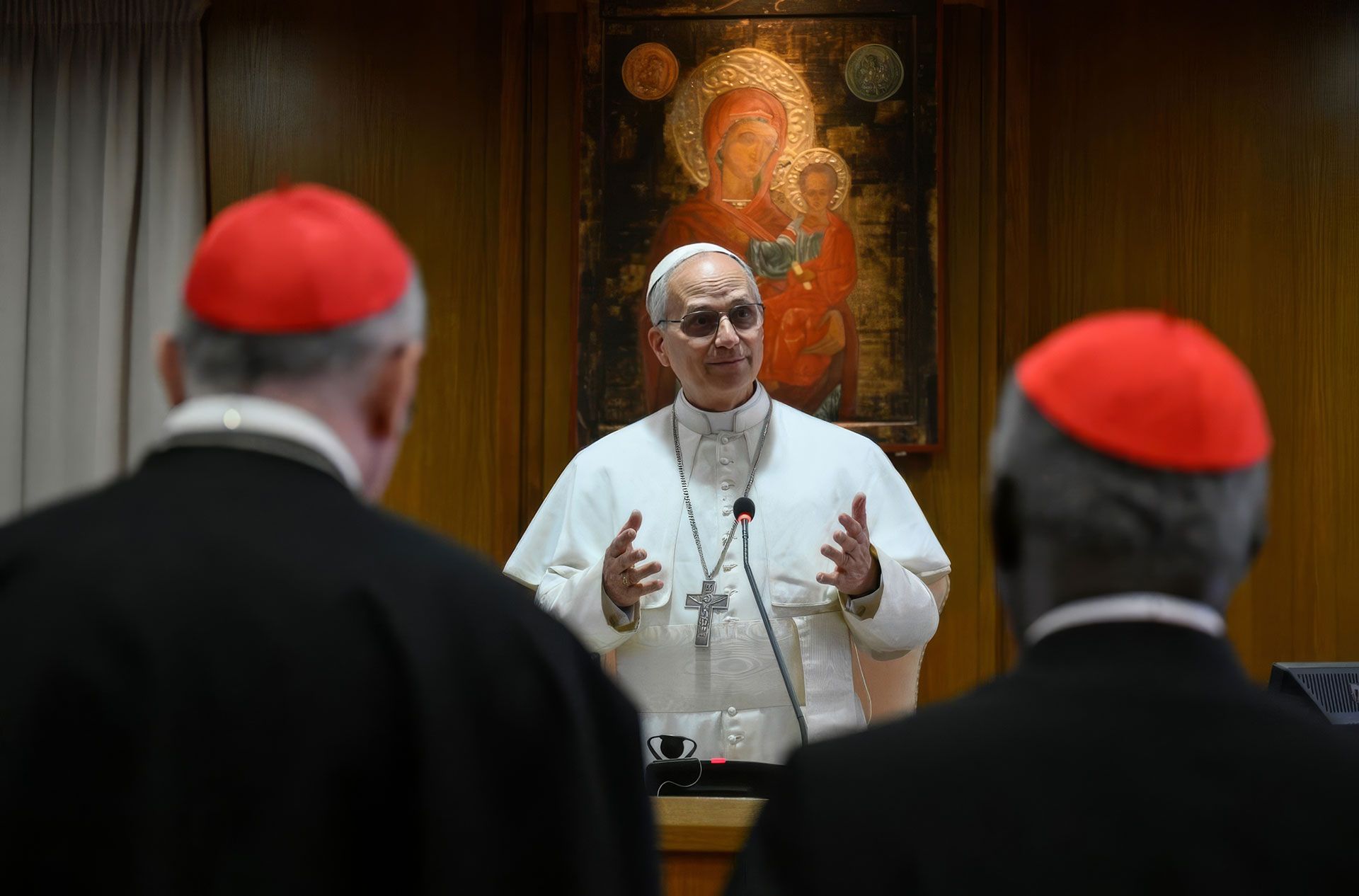
This week, the Catholic Church conclave successfully elected a new pope. The new pope is American Robert Prevost (in the English version — Prevost), who took the throne under the name Leo XIV. He is the first head of the Catholic Church born in the USA. The new pope is originally from Chicago, but he spent most of his life in Peru – first as a missionary, then as an archbishop. In 2015, he also acquired Peruvian citizenship. In 2023, Pope Francis appointed him head of the Dicastery for Bishops. This body is responsible for reviewing candidates for the highest church posts worldwide.
The press notes that the newly elected pope paid much attention to supporting vulnerable social groups, continuing the policy of his predecessor. In his first speech, Leo XIV also referred to Pope Francis, who was able to hear even the “weak voices.” In addition, the new pope called for peace: “disarmed, unarmed, and humble.”
Robert Prevost had previously declared his commitment to peacemaking. In particular, he called Russia’s war against Ukraine “a real invasion, imperialistic in nature, where Russia wants to conquer territory for reasons of power.” The future pontiff also noted that crimes against humanity are being committed in Ukraine.
Great hopes are placed on the new pope to unite different Catholic churches. With French and Latin American roots as well as American citizenship, he is considered by many to be a true “citizen of the world.” Moreover, the pontiff is called a continuer of many of Pope Francis’s traditions.
The closeness of Pope Leo’s views to those of his predecessor is also noted by the Catholic journalists’ site College of Cardinals Report. In particular, it states that the new pope shares a similar stance with Francis on environmental issues, aid to the poor and migrants, and meeting people where they are—that is, active missionary work. Cardinal Prevost was responsible for implementing one of Pope Francis’s most revolutionary reforms, including women for the first time in the influential body involved in appointing bishops.
The election of the new head of the Catholic Church seemingly inspired U.S. President Donald Trump. On his page in his own social network Truth Social, he noted that it is a “great honor” for the country, especially emphasizing that Leo XIV “is the first American pope.”
Trump’s reaction is quite natural if you consider that Christians, and Catholics in particular, form the core of his support base. Protecting Christians in America and worldwide was one of Trump’s campaign points, and some members of his team specifically emphasize their religiosity. For example, in early March, U.S. Secretary of State Marco Rubio appeared on Fox News with an ash cross on his forehead, symbolizing the start of Lent in the Catholic tradition. So it is important for the American president to demonstrate his closeness to the head of the Catholic Church before voters.
The problem is that the successful symbiosis of secular and spiritual power, which Trump apparently hopes for, may not happen in this case.
Back in 2018, Robert Prevost criticized the policy of separating families of undocumented migrants, where children were taken from their parents and placed in cages. The future pope noted that such practice “is nothing even remotely Christian, American, or morally justified.”
Already in February of this year, Prevost argued with U.S. Vice President J.D. Vance, who called first to love those closest and then others. According to Prevost, “Jesus does not ask us to rank our love.”
Another problem that may arise in the relationship between the head of the White House and the Catholic Church is that Donald Trump, in a certain sense, claims not only secular but also spiritual leadership. Ahead of the conclave, he already “trolled” believers by publishing his image as the pope, and a few days before that he said he “would like to be pope.”
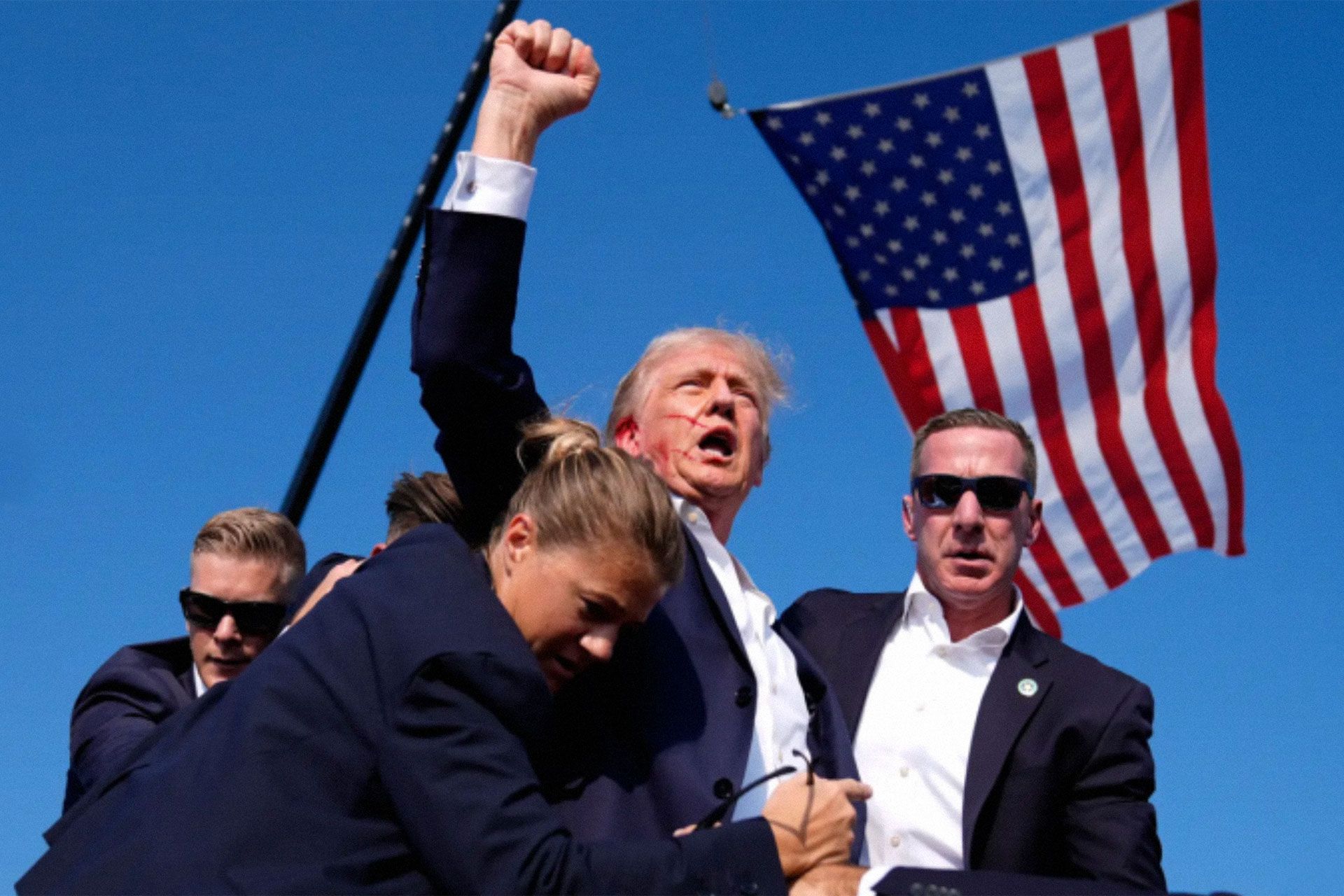
If this particular episode can still be attributed to Trump’s specific sense of humor and usual narcissism, the whole set of his statements suggests a certain “messianism.” As early as 2019, Trump declared that he “did more for Christianity than Jesus Christ.” After losing to Joe Biden in 2020, Trump increasingly began to assume the role of a martyr. Fans of the former and future U.S. president were given Bibles with his autograph, popular Protestant preachers spoke out in his support, and Trump called his survival after the assassination attempt “God’s plan to save America,” which Russian propagandists happily noted.
Donald Trump after the assassination attempt on July 13, 2024. Photo: New York Post
The idea of Trump’s “divine election” is actively supported by his evangelical supporters, who have written more than one book about the “great mission” of the new president. Some have even gone as far as to claim Trump’s divine nature. But most importantly, it seems the head of the White House truly believes in his role as a new messiah or saint, whose actions are guided by someone above.
Therefore, it is hard to imagine that Trump will accept new criticism of his policies from the new pope. Leo XIV, being a devout Catholic, is also unlikely to tolerate if Trump starts creating outright heresies and speaking on behalf of God. This could lead to a conflict between the American president and the pope.
Relations between the new pontiff and Russian Patriarch Kirill (Gundyaev) will most likely also be difficult.
The issue is not only Leo XIV’s previously mentioned statements about the war but also that the Russian Orthodox Church continues to actively construct its “civil religion.” In addition to concepts of sacred patriotism, “Holy Rus,” “holy war,” the unconditional righteousness of the state, and the mandatory salvation of its soldiers, recently postulates about ancestor worship and the sacredness of the oath have been added. While representatives of the ROC denounce Catholicism as “heresy,” they themselves create real heresies with enviable regularity.
Of course, the Orthodox Church is a different confession, and it is not the pope’s duty to teach the fundamentals of faith to an independent religious organization. However, Christian themes will inevitably arise in negotiations between religious leaders, and it is hard to imagine how representatives of such different doctrines will find common ground.
Main photo: Pope Leo XIV before the cardinals, May 10, 2025. Source: @Vatican Media
If you enjoyed this article, consider making a donation — one-time or, even better, monthly. Your support helps us motivate our authors and become better with every article.
Our organization is recognized by the Internal Revenue Service (IRS) as a 501(c)(3) tax-exempt, charitable organization, which means that all contributions made to us are tax-deductible to the fullest extent permitted by U.S. law. Individuals may generally deduct charitable contributions of up to 60% of their Adjusted Gross Income (AGI) for cash donations made to qualifying 501(c)(3) organizations. For donations of appreciated assets (such as stocks or other long-term capital assets), the deduction is typically limited to 30% of AGI, based on the fair market value of the asset. C-corporations may deduct charitable contributions of up to 10% of their taxable income for donations made to eligible charitable organizations.
By submitting a donation, you confirm that you have read and accept the following documents: Privacy Policy and User Agreement, and also give consent to the processing of your personal data.
If you would like to unsubscribe from a monthly donation, please email us at: [email protected]