Few people know about the possibility of getting a deferral from military service for registered candidates for deputy. In practice, only a handful use this method, since electoral commissions easily weed out all non-party and unaffiliated candidates using the signature barrier. However, with the right legal preparation, it is still possible to dodge the draft using election laws. A student from a Moscow university, who asked to remain anonymous, shares his successful personal experience.
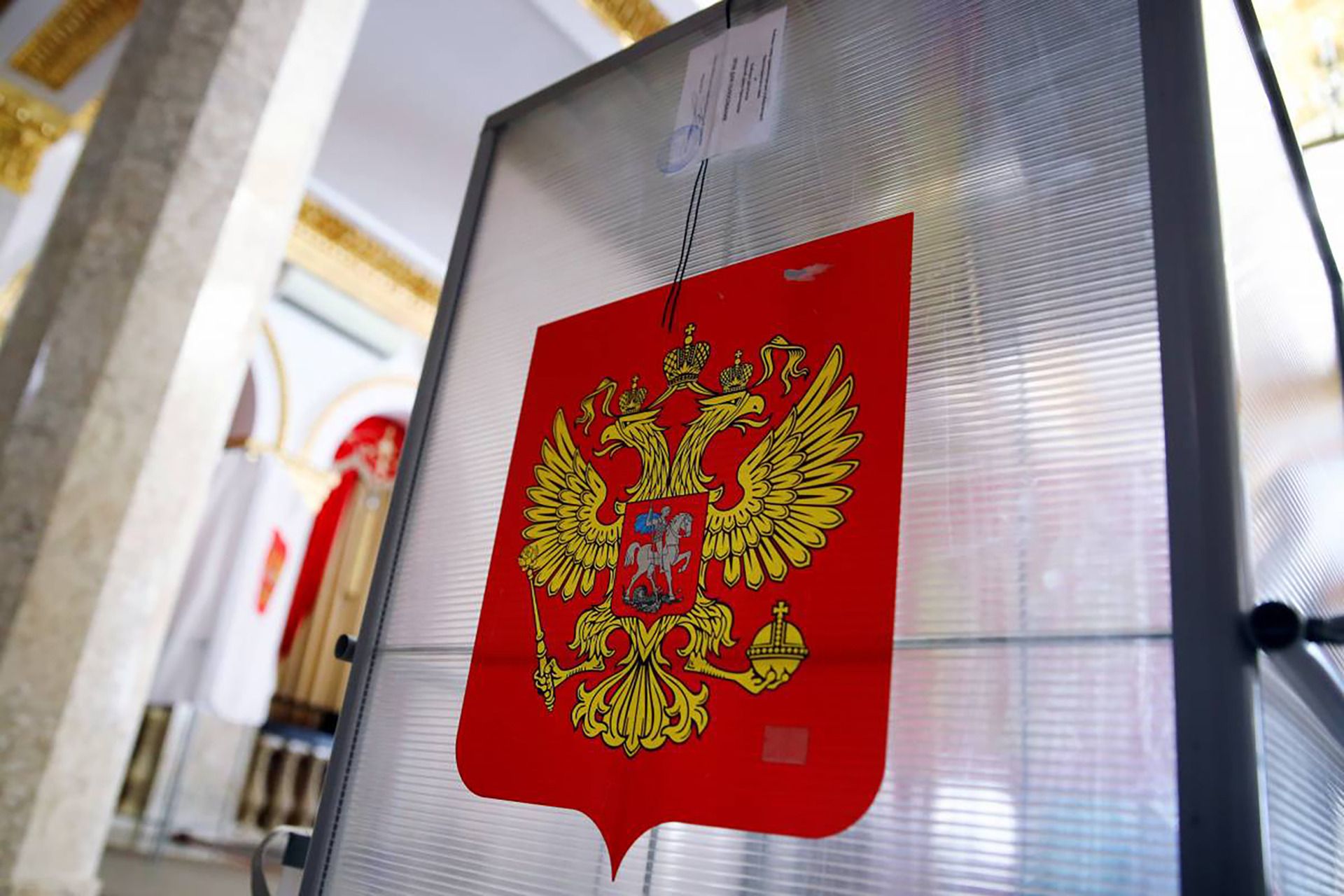
Photo: United Russia website
As Putin said, “everything must be within the law.” With this thought in mind, I often considered a deferral from the army, which, according to my draft certificate, ends in April 2026, but in reality, has already ended.
I entered university in 2020 in a specialist program. I was supposed to study peacefully for six years, maybe join the military department, and never think about conscription. But by 2025, I lost my right to defer service due to two academic leaves. Moreover, in the spring, the dean's office strongly urged me to appear at the military registration office to clarify my draft data—apparently, they noticed my problems with the deferral.
I no longer hope to become a graduate student or candidate of sciences. I don't want to go into the army. But it turns out, in this case, you don't have to hide from the draft board in the woods.
Kseniya previously worked as a lawyer at elections and wondered if anyone used this deferral. At that time, she had seen only one court decision where, according to her, “it was briefly mentioned that a citizen was granted a deferral due to the status of a registered candidate.” The unpopularity of this method, in her opinion, is due to the fact that elections in Russia usually take place on a single voting day in September, and the period during which a citizen can be a candidate falls between the spring and autumn draft campaigns.
However, elections do not only happen on the single voting day. Sometimes, a vote does not take place, so the campaign is held again, or a deputy loses their mandate—and a new person is needed for their seat in parliament.
So there are chances to avoid conscription in Russia using electoral law. You just need to look carefully for a suitable district.
At the end of September, Kseniya sent me a list of places where it was possible to run. It turns out, if the representation norm of voters does not exceed 10,000 people, you don't need to collect signatures (and it's at the signature collection stage that election commissions in Russia usually weed out independent candidates). And in Tatarstan, the timing was just right—anyone could nominate themselves for the Council of a rural settlement.
Expectations and Reality
The December elections in Tatarstan were held in 12 rural settlements and two cities. I chose a rural settlement 50 km from Kazan. The territorial election commission (TEC) in a village with a beautiful name—let's call it Volchya Volost—was even farther, 90 kilometers from the capital of Tatarstan (the editorial staff knows the real names of the settlement and the village where the author ran). By Moscow standards, it seemed close and convenient.
In the best tradition of journalistic preparation for business trips, I called the local newspaper to find out how to stress the name of the rural settlement. I only needed this information once—when I asked the TEC what documents I would need to submit my nomination. What I should have asked in advance was how to get to the local election commission.
At first, everything went according to plan. I prepared copies of documents, photos for the application, arranged a ride from Kazan to Volchya Volost through BlaBlaCar, and on the evening of October 9, set out to conquer the rural election commission in Tatarstan. In the train's seating car, I was met by a broken folding table on the seat back, a fellow traveler with a can of non-alcoholic “Baltika” beer who looked remarkably like Oleg Kashin, and a night of restless sleep.
In the morning, half an hour after the train arrived in Kazan, I received a notification on my phone about the lifting of the drone attack threat in the Chuvash Republic. At that time, I was supposed to get into a car to Volchya Volost. But the trip fell through—the driver stopped responding.
In Tatarstan, there is a problem with buses that are supposed to connect villages—each year, there are fewer and fewer. The head of the republic, Rustam Minnikhanov, regularly criticizes the Ministry of Transport of Tatarstan for the state of public transportation, writes the local publication. The ministry is responsible for organizing intermunicipal routes—basically, for buses from Kazan to various villages—but carriers often cancel them because they are unprofitable.
There hasn't been a bus from Kazan to Volchya Volost since at least the spring, and the only way to get there is by car.
Several websites offered car rentals. A Yandex.Taxi economy ride to Volchya Volost would have cost 2,700–3,200 rubles (about the same as a plane ticket from Moscow to Kazan, if booked in advance). But I was lucky to find a paid carpool chat on Telegram. There, I found a driver who agreed to take me to Volchya Volost for 400 rubles. I printed the nomination documents on the way. I crossed Tatarstan Street, ended up on the lake embankment, and near school No. 21—an educational project by Sberbank for future IT specialists—I called a taxi for 200 rubles to the stop from which I could get to Volchya Volost. The taxi driver clarified where we were going, and when I didn't hear him well, he mistook me for a foreigner. To dispel his suspicions, I had to make up a story about visiting a former classmate. For 40 minutes, while we drove, he asked me question after question, as if probing for weaknesses in my story, but by the end of the trip, he relaxed a bit and even showed me a photo of his school-age daughter for some reason.
At the stop where I parted ways with the taxi driver, a Kia Optima driver was waiting for me, already with three passengers inside. Being the smallest, I sat in the middle, and for the next hour we drove in silence, listening to popular songs in Tatar. Nobody asked me any questions in this car. We reached Volchya Volost in less than an hour. The driver accepted payment in cash or by transfer to someone's phone number—he explained with a chuckle that his accounts were frozen.
The election commission was located in a two-story administrative building clad in light siding. On the second floor, in a tiny office at a school desk, sat a middle-aged woman who processed my application in less than 20 minutes. Most of her time was spent figuring out why I wanted to run if I wasn't from the area, was just a student, and had no connection to Volchya Volost. I never came up with an answer, but she accepted my documents anyway, without waiting for explanations. She just asked me to leave my phone number in case something went wrong. I went down to the river, walked along the embankment, took a photo with a tilted horizon, and started looking for a ride back.
Short-lived Success
When I got back to Kazan, I received a message from the election commission—the application to run that I submitted was not in the required format, there was no scan of the last page of my passport, and I hadn't submitted a notice that I wasn't creating an election fund. At the same time, I got a message from a Kazan activist friend saying that the municipality I chose was a bad one due to terrible transport accessibility. But I had already figured that out myself. I had to spend the night in Kazan. The next day, when I returned to Volchya Volost, the woman from the TEC had already prepared the missing papers herself. We quickly filled everything out; she kept asking me to sit at the desk and write while sitting down. Such care was touching.
By law, the election commission decides whether to admit a candidate within 10 days after accepting the application. On October 20, I contacted the TEC via messenger and got a reply two hours later: I was successfully registered, my campaign period had officially begun, and they sent a link to the Tatarstan Election Commission website and a document with the decision on my nomination.
So I became a candidate, spending no more than 10,000 rubles on the whole self-nomination operation.
The elections in Volchya Volost took place on December 7. Besides me, there was a candidate from the LDPR born in 2004 and another independent candidate. His full name matched that of the head of the rural settlement where the vote was held. He became the deputy. Of the 28 voters who came to the polls, 24 voted for the winner, three for the young LDPR candidate, and one for me (a copy of the TEC protocol is available to the editors).
After that, I lost my status as a candidate for deputy, and with it, the grounds for a deferral from the army. Now, to avoid being drafted, lawyer Kseniya Borshcheva is again looking for snap elections scheduled for the coming months. And I am preparing for trips to places that can only be reached by carpooling.
If you enjoyed this article, consider making a donation — one-time or, even better, monthly. Your support helps us motivate our authors and become better with every article.
Our organization is recognized by the Internal Revenue Service (IRS) as a 501(c)(3) tax-exempt, charitable organization, which means that all contributions made to us are tax-deductible to the fullest extent permitted by U.S. law. Individuals may generally deduct charitable contributions of up to 60% of their Adjusted Gross Income (AGI) for cash donations made to qualifying 501(c)(3) organizations. For donations of appreciated assets (such as stocks or other long-term capital assets), the deduction is typically limited to 30% of AGI, based on the fair market value of the asset. C-corporations may deduct charitable contributions of up to 10% of their taxable income for donations made to eligible charitable organizations.
By submitting a donation, you confirm that you have read and accept the following documents: Privacy Policy and User Agreement, and also give consent to the processing of your personal data.
If you would like to unsubscribe from a monthly donation, please email us at: [email protected]