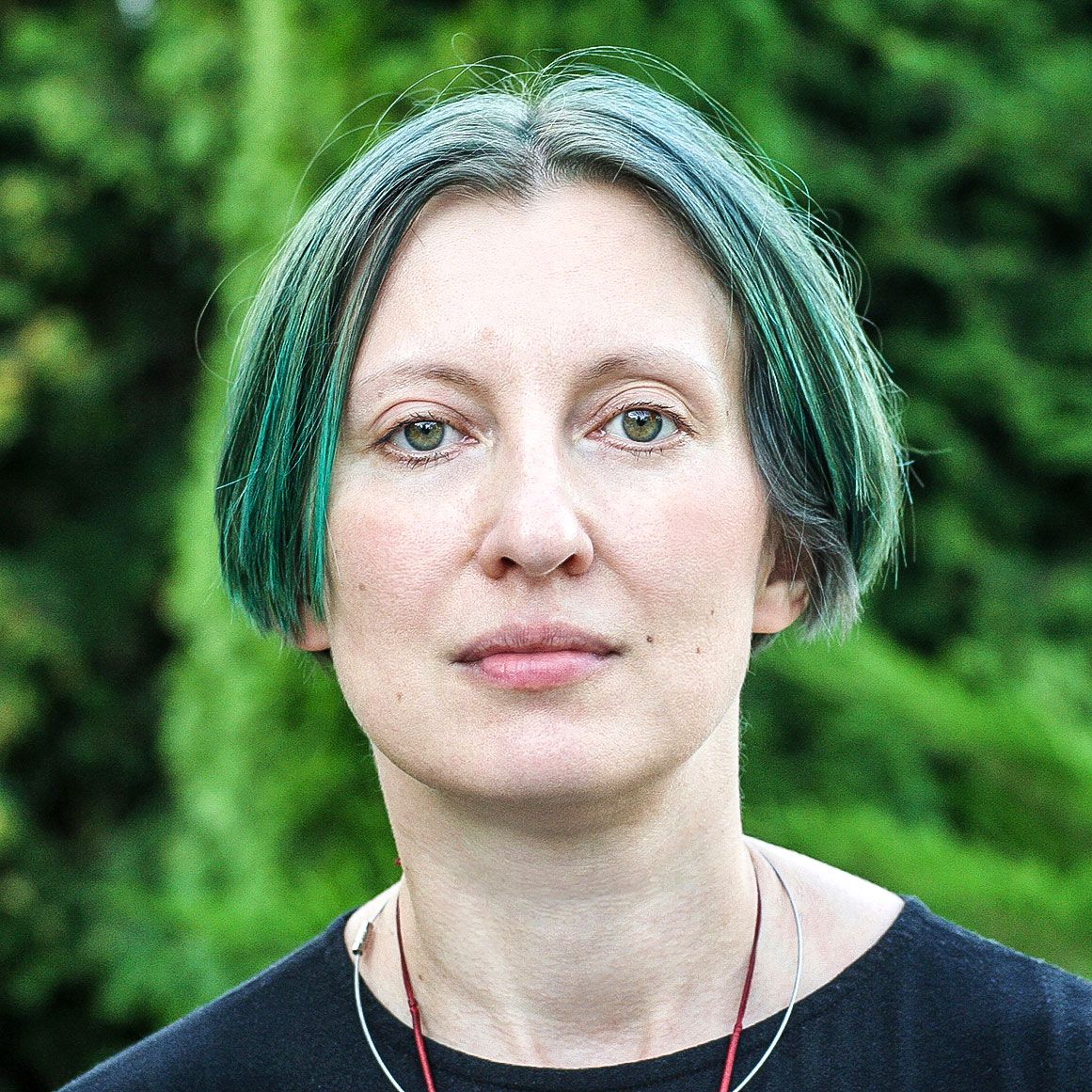
Until the early 2020s, Abbas Gallyamov was integrated into the Russian power structure: he worked as a speechwriter for Vladimir Putin when he was prime minister, as a political consultant in regional elections, and as deputy head of the administration of the president of Bashkortostan. But after the Russian invasion of Ukraine began, Gallyamov left for Israel, was labeled a foreign agent by the Russian Ministry of Justice, and last year was sentenced in absentia to eight years for “discrediting the Russian army.” We spoke with Abbas about the changing world order after Trump’s election, the prospects of a Russian invasion of an EU neighbor, and how friends of Putin’s younger daughter are quietly preparing to take power into their own hands.
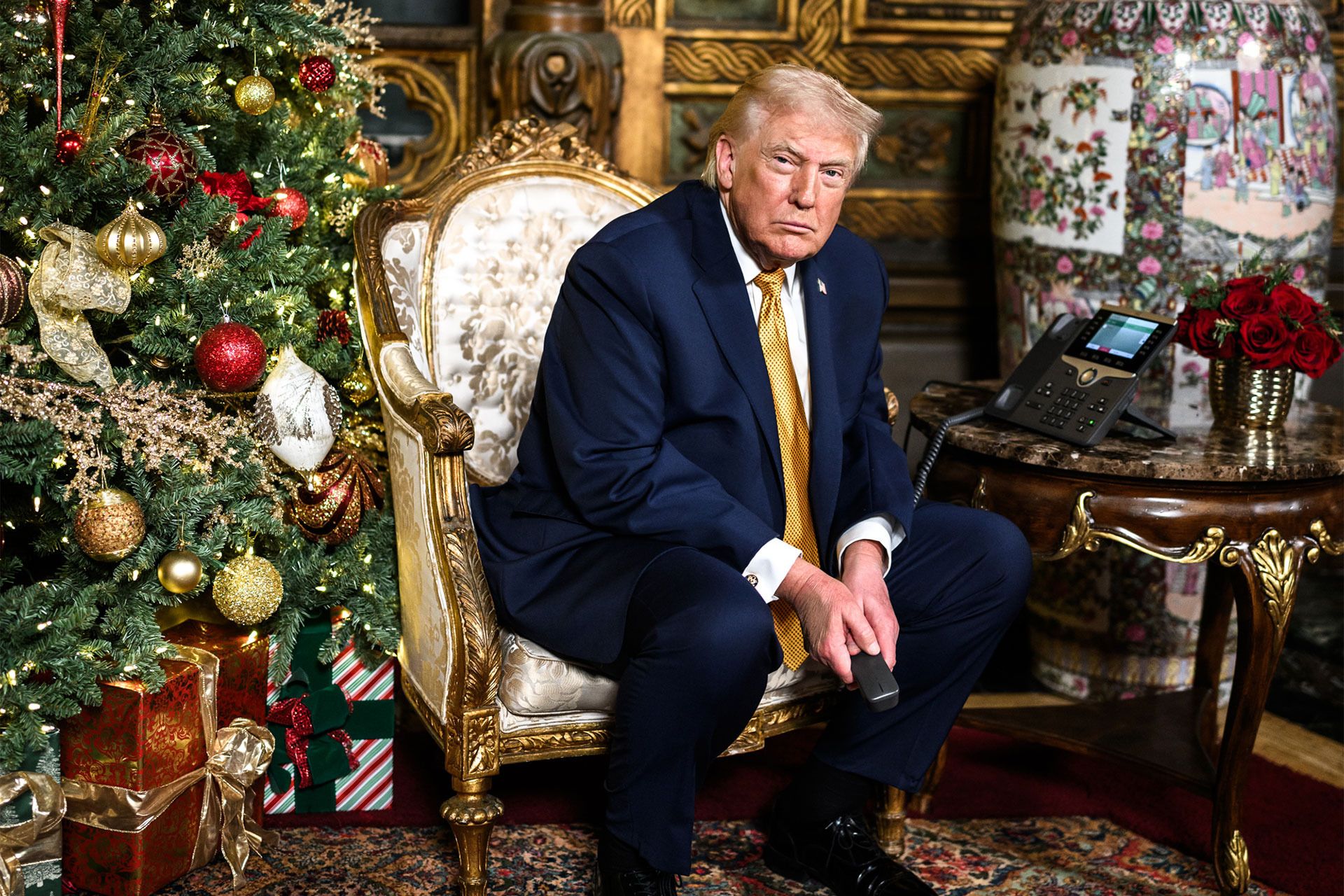
Photo: White House website
- Obviously, on a global scale, the main political event of the year was Trump’s return to the US presidency. How do you view the first results of his energetic activity?
- Trump’s rise to power is no accident, but a natural outcome. In the eyes of his voters, the Western world order had largely discredited itself, and voting for moderate opponents of the current dominant progressivism didn’t bring about change. The average Republican voted for Romney, for Bush—and so what? The trend didn’t shift, and they became disillusioned with moderates. Pure protest sentiment: the longer American conservatives failed to advance their agenda, the more radical they became.
That’s why, in the end, Trump came to power and began to shake the foundations of a world order based on an unrestrained desire to improve the world and belief that it was possible. And the main result of this year is that amid the chaos between progressives and anti-progressives, a new world order has begun to form.
- How would you characterize it?
- It’s still the earliest stage of a civil war. Trump has at least three more years, so it’s too early to say what this new order will look like. In any case, it’s not an unconditional victory for the new world: the old world is resisting, sometimes more or less effectively.
Trump wasn’t able to realize the most radical parts of his agenda—like annexing Canada or taking Greenland from Denmark. But, for example, he did achieve a complete halt to American aid to other countries.For decades, it seemed obvious to support ideological allies and fighters for democracy abroad. But Trump says: why do we need democracy in other countries, why should we spend money on this? Let them go to hell!
Of course, driven by his radical anti-progressivism, he’s throwing the baby out with the bathwater. As a result, there’s a positional struggle between America’s political forces.
Still, democratic institutions, though yielding to Trump’s authoritarian populism, haven’t completely died.
For example, Trump uses his powers to deploy the National Guard in various states—but he periodically faces court decisions prohibiting this. For now, these court rulings are respected. Or he keeps demanding CNN be shut down. But CNN keeps working. In short, the old world order has retreated, but hasn’t collapsed.
- You know, I’ve been subscribed to the White House newsletter for years, and I’m amazed at how radically its tone has changed this year. It feels like since January 2025, the emails are written by revolutionary sailors who tried to seize the White House after Trump lost the previous election—and now are finally getting their revenge, gleefully exposing “lying liberal journalists.” At the same time, Trump has effectively sanctioned a military operation against Venezuela. Last week, it was reported that the US is bombing ISIS bases in Nigeria. So, despite the change in rhetoric, America is still intervening in international politics, just with somewhat different priorities than before.
- Yes, that actually confirms my point about the positional struggle between the old and new world orders.Trump really does change his rhetoric often, but his approaches remain essentially the same. For example, he’s now pressuring Maduro, trying to topple his regime. But that’s been the dream of every American president since Maduro came to power.Previously, this struggle was waged under the banner of defending democracy, but Trump doesn’t want to strengthen democratic narratives—so he does the same thing under a more pragmatic banner of fighting drug trafficking.
Any revolution is two steps forward, one step back. The old and new worlds will grind against each other, conflict. In other words, we’ve entered a difficult era.But since the old direction became unacceptable to too many people, conflict was inevitable. That, in essence, is the point of democracy.
- One of Trump’s major decisions this year was trade wars, which revived speculation about a big war between the US and China—not trade, but a real hot war. What do you think about that?
- I’m not an expert in US-China relations—obviously, there are a lot of contradictions and they’re far from resolved. I’m only interested in one aspect related to the Russia-Ukraine war.
It’s clear that Russia is doing what it’s doing largely thanks to China’s support. None of this would be possible without Chinese help in circumventing sanctions, buying Russian hydrocarbons, supplying dual-use goods, Korean soldiers, and so on.
Russia is not currently in a position to pursue its course without relying on someone.It can’t play the global role it’s trying to on its own. Either Putin joins Trump and Russia becomes part of the American order, so to speak—or it becomes part of the Chinese order.
So much depends on China’s position. If China were to join Trump’s antiwar initiatives and tell Putin “enough, it’s time to stop, you’ve fought enough,” Putin would have no choice—he’d have to stop quickly. The question is whether China wants that.
For China, the Russia-Ukraine war clearly isn’t a matter of principle. So if Trump made the concessions Beijing wants in exchange for China changing its position on the war, of course Beijing would go for it. For Xi Jinping, Putin is just a bargaining chip in relations with the US. The logic is: as long as you Americans pressure us, we’ll support Russia—it costs us nothing. If you want us to stop, give us what we want.I won’t specify what exactly—they trade with the US on many fronts, and the Americans admit it themselves.
In August-September, when the US had already imposed a 50% tariff on India as punishment for continuing to buy Russian hydrocarbons—thus financing the war, as Trump said—the Western press, citing White House sources, argued: but we don’t want to do the same to China, because we’re having very tense bilateral talks, and such a measure would weaken our negotiating position.
- Speaking of Russian hydrocarbons. This year, the Finnish Crea Institute released another report on European energy policy, showing that since the start of the war in Ukraine, the EU has spent more on Russian hydrocarbons than Ukraine has received in financial and military aid from the EU. Despite tough sanctions rhetoric and statements like “we immediately gave up Russian coal, which we didn’t really need anyway, and by 1927 we’ll stop buying Russian gas altogether,” the EU is effectively financing Russia’s war in Ukraine.How do you see the situation in Europe after Trump’s return?
- Previously, starting in 2022, it was as if Putin was trying to wake up sleeping Europeans, and he wasn’t very successful—they’d half open their eyes, mumble something, and then fall asleep again. Over three years of war, European countries never managed to organize arms production at the necessary scale. They could have just flooded the Ukrainian army with weapons.Given Europe’s overall economic potential, which is many times greater than Russia’s, the only reason not to do this is if you don’t want to exert yourself. For example, Trump demands that European countries spend at least 5% of GDP on defense. All EU countries have agreed to do this in the coming years. But Spain still refuses—saying, “we can’t, we have social spending.” That can only happen if you’re asleep.
And Europe kept sleeping—after WWII, it stopped caring about defense. This became especially noticeable in the 1990s. The idea was, if something happens, the Americans will handle it. We’ll build prosperity, try to make humanity happy with green energy and socialism.
- You say that as if it’s a bad thing!
- When there’s a war and you focus only on green energy—that’s inadequate. You need to consider the agenda, not just your progressive wishes. Otherwise your system will collapse under the pressure of barbarians and no one will care about green energy anymore.
So maybe it’s worth postponing it for a while and redirecting some spending to defense? That’s one of Trump’s camp’s criticisms, and in this part, I agree.
So, Europeans kept refusing to wake up, focusing only on internal affairs. This year, the Trump factor joined the Putin factor. He says: I won’t protect you from Putin unless you at least increase your defense spending, and I’ll even withdraw US troops from Europe. There’s still no certainty that European politicians have fully woken up. But maybe next year Trump and Putin will finally wake them, which neither will like. Everyone’s forgotten what Europe can be when it’s in charge of the world.Just 100 years ago, China was practically a European colony. But whether Europeans will wake up—I can’t say yet. We’ll see.
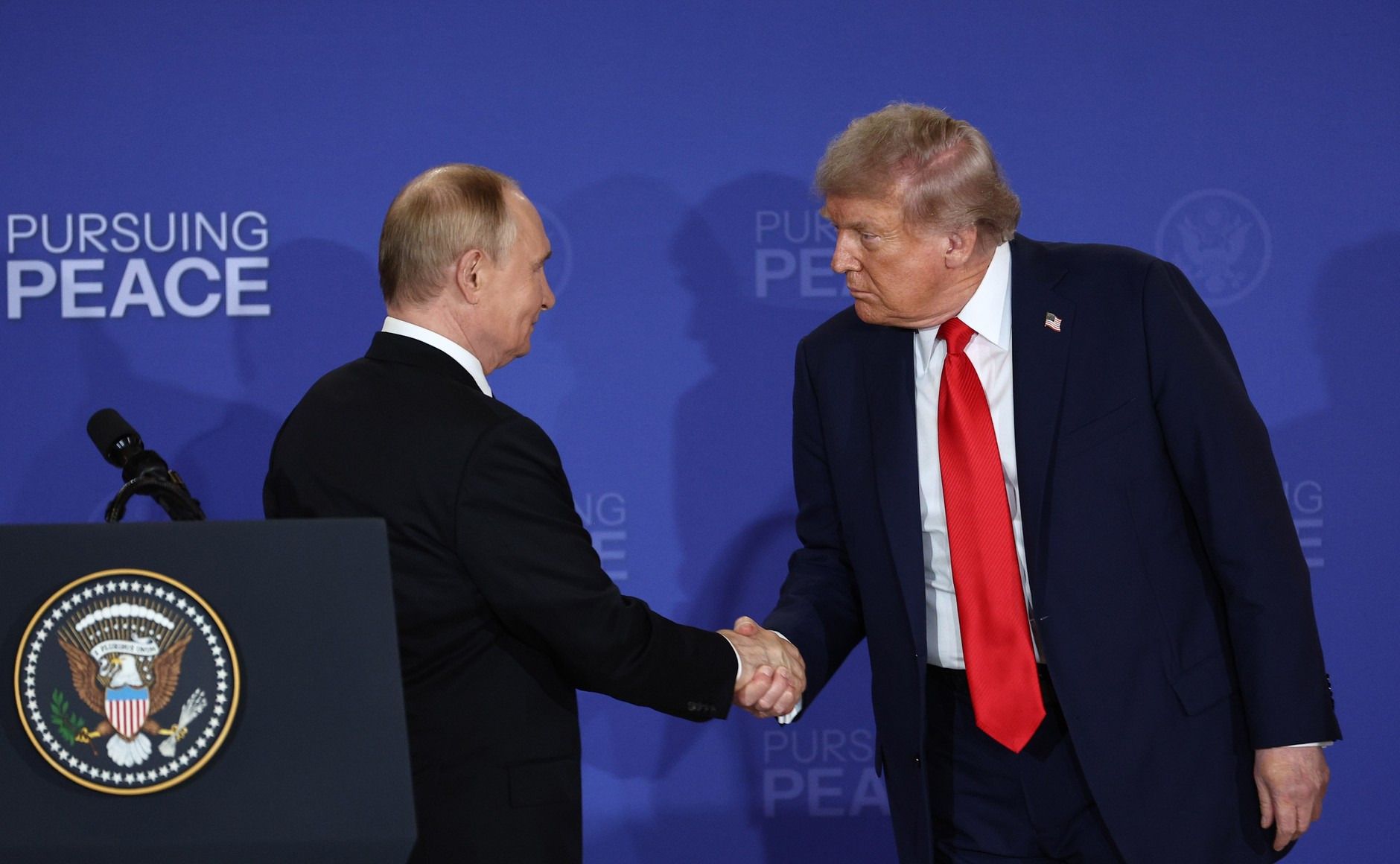
Vladimir Putin and Donald Trump at a press conference in Anchorage, August 16, 2025. Photo: kremlin.ru
- How do you feel about predictions of Russia attacking an EU country?
- I don’t rule it out—I wrote about it this summer for “We Can Explain.” Yes, Putin lacks resources. It would seem stupid to open a second front if you can’t win on the first. But that’s only if you expect the second war to be as serious as the first. Putin, looking at a sleeping Europe, might decide the new war will be easy and quick—and he’ll get what he wants, not from Ukraine, but from Europe.
In the end, what does Putin want?He doesn’t need Donbas. This war is about image for him.So Putin needs victory, triumph. Donbas just became a symbol of victory. Putin himself created a prize that’s too costly. But he still believes Donbas can be recaptured. So he’s straining his last resources to do it.
But if at some point he realizes the Russian offensive has stalled, he might decide: why not seize Narva or Tallinn? Or maybe break through the Suwałki corridor. That would change everything. No one would talk about Donbas anymore.
Just to end the war without looking like a loser who failed, you need to bring things as close as possible to the brink of World War III. And scare everyone, including your own supporters in Russia.
So that everyone begs: please, don’t push us to sin, we’ll all burn in nuclear war.And then you pull back. If you’ve taken, say, Tallinn or Suwałki, no one will talk about Donbas anymore.
Such a local operation could be done “little green men” style, like in Crimea. Europe and NATO might decide not to intervene. Especially with Trump in America. And then NATO fails its main function—and basically collapses. If you can’t win in one place, win in another.
I don’t rule out that Putin might make this decision. But it would be very risky, an adventure.What if NATO joins the war—then he has two fronts? That’s guaranteed defeat. But after World War I, every German knew Germany couldn’t fight on two fronts. But Hitler decided he could, that he was a genius who’d manage.There was no possibility, but the desire arose. And he acted on it. Why do we think Putin is less of a gambler than Hitler?
- Do you think this scenario could happen as soon as next year?
- Timing is crucial here. Putin needs to do it, of course, while Trump is in power. Because if, God forbid, the Democrats win— America will become what it was before Trump: clearly anti-Russian, absolutely pro-European. Then you can’t expect America to stay out of it. That’s the first thing. Second—when Putin finally realizes nothing more can be done with Donbas and Ukraine.There’s still hope of succeeding. But when that hope is gone, he might decide: better to return home with victory over, say, Moldova or Estonia than come back in shame without defeating Ukraine.
- I can’t help but recall your 2022 prediction “The Successor“ about Russian presidential elections, which didn’t come true. Obviously, it’s not about you personally, but in 2022 it was unimaginable that Navalny would be killed in prison, for example. Still, how do you see the prospects for succession if and when Putin ceases to be president?
- Even then, I didn’t promise it would definitely happen—I said it was one option. When I wrote that report in fall 2022, after the defeat near Kharkiv and Kherson, it seemed Russia had lost completely.There was mass mobilization, growing discontent, a sharp rise in antiwar sentiment. The elites were actively discussing the upcoming elections: maybe in 2024 they could convince Putin that the best scenario would be to hand over power to a successor and step aside.
They discussed who that successor might be. Later, since the worst-case scenario didn’t happen, it turned out they’d learned to fight more or less. They repelled Ukraine’s counteroffensive, took Bakhmut.Then Putin greatly strengthened his position by killing Prigozhin. After Prigozhin’s death, the elites sobered up. Maybe they thought Putin was weak, but now it was clear: he’ll outlast them all.After killing Navalny, he calmly managed to get re-elected.
Since the most catastrophic scenario didn’t happen, the “Successor” scenario wasn’t needed. That doesn’t mean it won’t be needed in the future, at a time of sharp regime weakening.
Look at what’s happening to the economy under sanctions pressure. Many potential successors, some of whom I mentioned, could still “take off.” Kozak, for example. Right now, there’s suddenly mass interest in him. Because Kozak, as I wrote then, represents the opposite scenario to the one Putin’s loyalists are enacting. If we’ve hit a dead end, we have someone who can help turn things around, without jailing Putin or taking his friends’ property.
That scenario wasn’t needed at the time: it was a crisis scenario, and the crisis wasn’t all-encompassing. Well, let’s wait for the next, bigger crisis. We’re moving in that direction anyway.
- Why do you say there’s mass demand for Dmitry Kozak? What shows that?
- Suddenly, at the end of the year, several publications appeared, including in the NYT, about who Kozak is, what his position is, and what prospects he has—is he a secret successor, a candidate for arrest, or about to fall out a window?
Different scenarios are discussed. While remaining part of Putin’s team, this political figure contains the seed of an alternative scenario. Interest in Kozak is further evidence that many see the current path as at least a dead end.
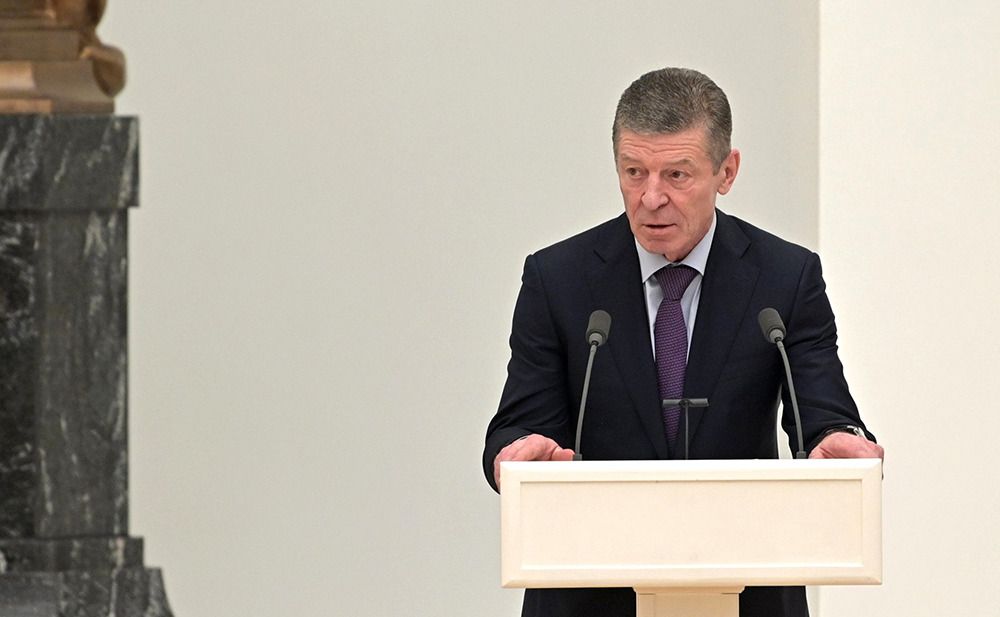
Deputy Head of the Presidential Administration Dmitry Kozak at a Security Council meeting, February 21, 2022. Photo: kremlin.ru
- What do you think of Defense Minister Andrei Belousov? Does he have any chance for career advancement? Could he become Putin’s successor?
- Well, not as a successor, but he could theoretically become prime minister. If Putin at some point decides to ignore Trump and go all-in, he’ll have to stop sitting on two chairs—when the economy seems market-based, but is actually mobilized. Now he meets with businessmen, talks about the investment climate, gives instructions. But in practice, nationalization is happening, there’s more state management of enterprises tied to defense contracts. Defense orders are everywhere, the economy is being militarized, life is being militarized. And directors of defense enterprises face jail for failing state contracts. Medvedev, for example, has publicly recalled how under Stalin, failures in defense orders were punished.
- Right. I don’t know the details of that case, so I won’t comment, but the trend is clear. Still, there’s an attempt to sit on two chairs for now. If Putin continues escalating, he may have to choose one—fully switch to a mobilization economy, total militarization. Then Belousov would be the most logical prime minister. Mishustin wouldn’t be needed—he’s a market guy by background. In that sense, Belousov has prospects, but no more—I don’t believe anyone is grooming him as a successor. Although Katerina Tikhonova respects him, and he’s something of a guru for the “Tikhonovites.”
- “Tikhonovites,” in case someone doesn’t know, are the grown children of Putin’s inner circle around his younger daughter, Katerina Tikhonova, and their friends. Does this golden youth have ambitions to run not just another Maybach, but the country?
- Of course they have ambitions, but cautious ones. They’re doing well now, and things will get even better. So they just wait. They see the apple is ripe and about to fall into their hands. The main thing now is not to spoil anything, not to make mistakes, not to fuss. So, except for [Russian Direct Investment Fund head and Putin’s negotiator with the US] Kirill Dmitriev, whose job requires it, the rest aren’t very active in public politics. They have their own inner circle, some intellectual work—they’re trying to formulate an ideology, study human experience.
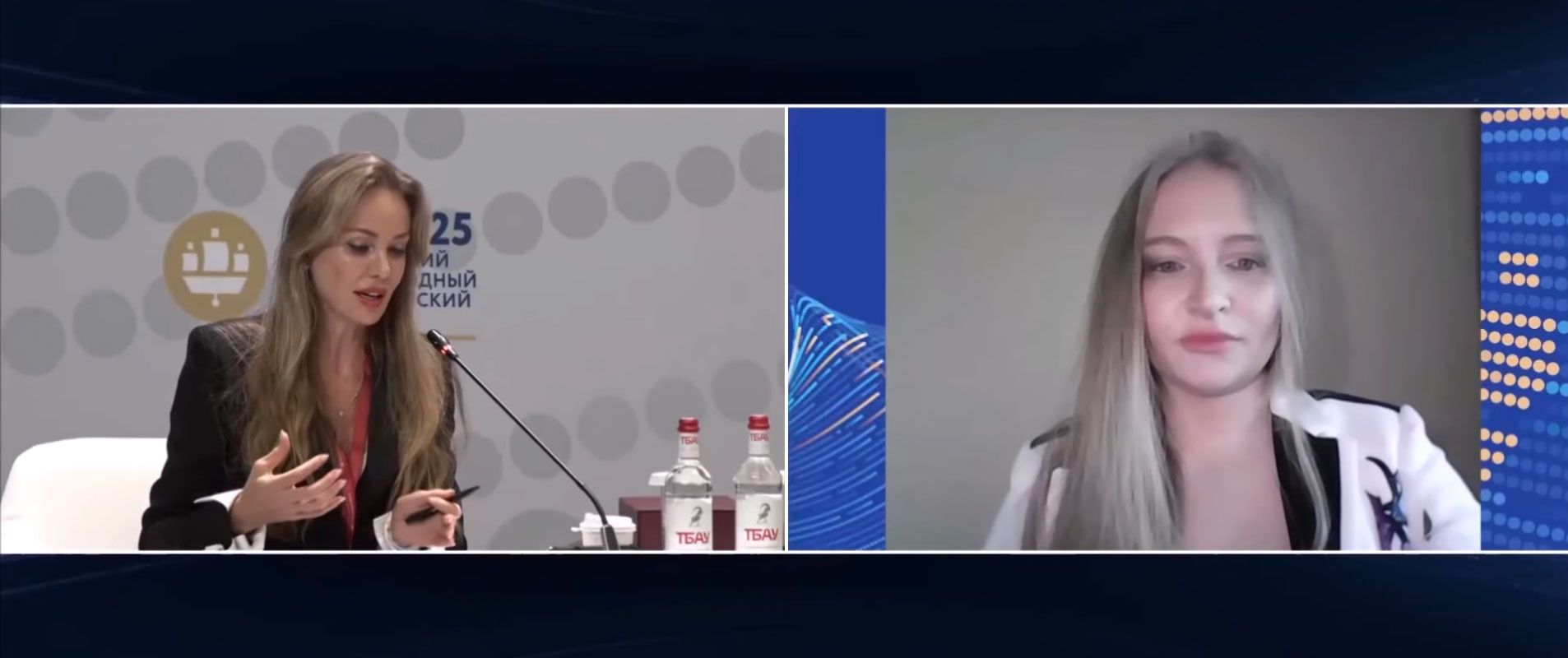
Natalya Popova, wife of Kirill Dmitriev (RDIF), and Katerina Tikhonova (right) via video link at SPIEF '25. Video frame: YouTube
I know that at seminars at Moscow State University, the Tikhonovites actively study the experience of Nazi Germany. Primarily social and economic.
- That sounds like a joke!
- It’s true, but I mean social-economic experience, not concentration camps. For example, combining market mechanisms and state management.
They believe Nazi Germany showed high economic efficiency under resource constraints during a two-front war. That’s logical, in principle.
They’re in the same situation: drawn into a war they can’t sustain, and the economic situation is worsening. So they look at how the Germans did it. They study Italian corporatism under Mussolini—they had a whole series of lectures on it.
They understand there are many problems in state-society relations—and blame it on the first generation of Putin’s elite from the “Ozero” cooperative, whom they dislike. In their view, while the tsar was doing great deeds and raising Russia, these people used their closeness to the leader for their own benefit. They looted Gazprom, for example. As a result, they lost society’s trust, and now people are getting poorer.
How to make people loyal without sharing power? There’s no talk of democratization—just more effective authoritarianism by redistributing rents and financial flows. Effective not just in producing lots of guns and shells, but in strengthening the regime’s social base. They don’t want to inherit a regime on the brink of revolution. They want the people to serve them loyally. So they’re toying with various social contract ideas. Simply put, they’re looking for ways to buy people’s loyalty.
- Who are the intellectual leaders of this group?
- I know Vladimir Medinsky handles the internal politics side of ideology for them. Belousov is definitely an authority. But they also bring in academics—I was told about Academician Chubaryan and other official scholars. I didn’t know the rest, so I didn’t remember their names.
- Only one question arises, maybe rhetorical. We all know how the experiments with economic efficiency in Nazi Germany and Mussolini’s Italy ended. What are Katerina Tikhonova’s friends, now re-studying these experiments, hoping for? That they’ll be luckier?
- They think they’re being critical. Looking for mistakes. Take the good, leave the bad.
In reality, these people are trapped by circumstances and may not even realize it. Talking about real liberalization and democratization now is silly: you’ll be branded an oppositionist, kicked out, everything taken, maybe even jailed. You can glorify archaism, talk about Eurasianism like Dugin, say the whole country should dance in circles—but they don’t want to do that, they’re not idiots.
So all that’s left for [Putin’s heirs] is something authoritarian. But they need to ensure protest moods don’t rise, but fall. That is, they’re realistic, they know protest potential is growing. And when they’re limited by current constraints, there’s not much left for them to study.
I discussed this with my source, who told me about these MSU seminars, having seen them from the inside. I asked: do you think Putin approves of all this? He said: I think Katerina has talked to him. There are no revolutionaries there. They’re all loyal to the regime.
I don’t have special complaints about their intellectual activities. Yes, they do this because they don’t run the country yet. Among the Tikhonovites there are ministers and governors, but overall they’re not a structure or community making real political decisions about the country’s future. What else can they do? Prepare for the moment when power falls into their hands.
If you enjoyed this article, consider making a donation — one-time or, even better, monthly. Your support helps us motivate our authors and become better with every article.
Our organization is recognized by the Internal Revenue Service (IRS) as a 501(c)(3) tax-exempt, charitable organization, which means that all contributions made to us are tax-deductible to the fullest extent permitted by U.S. law. Individuals may generally deduct charitable contributions of up to 60% of their Adjusted Gross Income (AGI) for cash donations made to qualifying 501(c)(3) organizations. For donations of appreciated assets (such as stocks or other long-term capital assets), the deduction is typically limited to 30% of AGI, based on the fair market value of the asset. C-corporations may deduct charitable contributions of up to 10% of their taxable income for donations made to eligible charitable organizations.
By submitting a donation, you confirm that you have read and accept the following documents: Privacy Policy and User Agreement, and also give consent to the processing of your personal data.
If you would like to unsubscribe from a monthly donation, please email us at: [email protected]