In Soviet times, the Russian emigration was an important base for recruiting foreign agents, but after the collapse of the USSR, its numbers grew many times over – opening up inexhaustible opportunities for Russian intelligence services. The network of Russian influence agents and simple spy centers is visibly becoming denser
In the Soviet Union, foreign intelligence was handled by two organizations – the KGB (its First Chief Directorate) and the GRU (military intelligence). After the USSR collapsed, their number increased: the KGB split into several independent services, including the FSB and the SVR (Foreign Intelligence Service). Formally, only they plus the GRU now conduct intelligence activities outside Russia. However, under Putin, many other organizations emerged performing the same functions but disguised as innocent non-profit and public associations engaged in charity and cultural activities. They focus on working with emigrants from the former USSR, whose numbers reached tens of millions after the collapse of the Soviet system.
New conditions predetermined new working methods and the creation of new organizational structures. One such structure recently attracted the attention of the press when the international investigative journalists consortium OCCRP gained access to the email correspondence of the “Fund for the Support and Protection of the Rights of Compatriots Living Abroad,” known as Pravfond.
Actually, it was clear before that Pravfond is a subdivision of Russian intelligence services, but now this has been proven with documents.
From the archive of nearly 50,000 emails of Pravfond starting from 2012, its ties to intelligence agencies and main goals became obvious – protection of Russian spies facing prosecution and financing propaganda in various forms and types. The priority region for Pravfond is the Baltic countries, but geographically its activities are not limited. In total, since 2012 Pravfond has issued more than a thousand grants, averaging $16,500 each.
Pravfond was established by Putin’s decree in January 2012. Founders are the Russian Foreign Ministry and Rossotrudnichestvo.
The stated purpose of the fund seems absurd at first glance – “...providing Russian compatriots with comprehensive legal and other necessary support in cases of violation of their rights, freedoms, and lawful interests in accordance with universally recognized principles and norms of international law in the field of human rights.”
It is implied that Russian compatriots abroad face dangers from which Russia protects them.
Under normal circumstances, any state protects the interests of its citizens who face troubles abroad. But the word “compatriots” in Putin’s legal lexicon has a special meaning.
Its status is fixed in the Federal law “On the State Policy of the Russian Federation Regarding Compatriots Abroad,” adopted in June 1999, just before Putin’s appointment as Prime Minister and FSB Director.
The law’s text states that the status of “compatriot” is granted to all people who once lived in the territory of the Russian Empire, USSR, Russia, and their descendants. That is, the law establishes a new category of population of foreign states with special privileges from the Russian state’s point of view, regardless of their citizenship. At the same time, recognition of belonging to compatriots, “...is an act of their self-identification, supported by social or professional activities aimed at preserving the Russian language, native languages of the peoples of the Russian Federation, developing Russian culture abroad, strengthening friendly relations between the states of residence of compatriots and the Russian Federation, supporting public associations of compatriots and protecting their rights, or other evidence of these persons’ free choice in favor of spiritual and cultural ties with the Russian Federation.”
In other words, all Russian citizens are “compatriots” by citizenship. For non-citizens living abroad, recognition as “compatriots” is a matter of self-identification supported by participation in propaganda activities in favor of Russia.
That is, all Russian influence agents, regardless of citizenship, automatically become “compatriots.”
At first glance, all this looks like complete legal nonsense. But three years later, in 2002, the Russian government created the “Government Commission on Compatriots Abroad” headed by Foreign Minister Sergey Lavrov. Thus, since 2002, the leadership of all legal work with emigrants has been concentrated in the Russian Foreign Ministry.
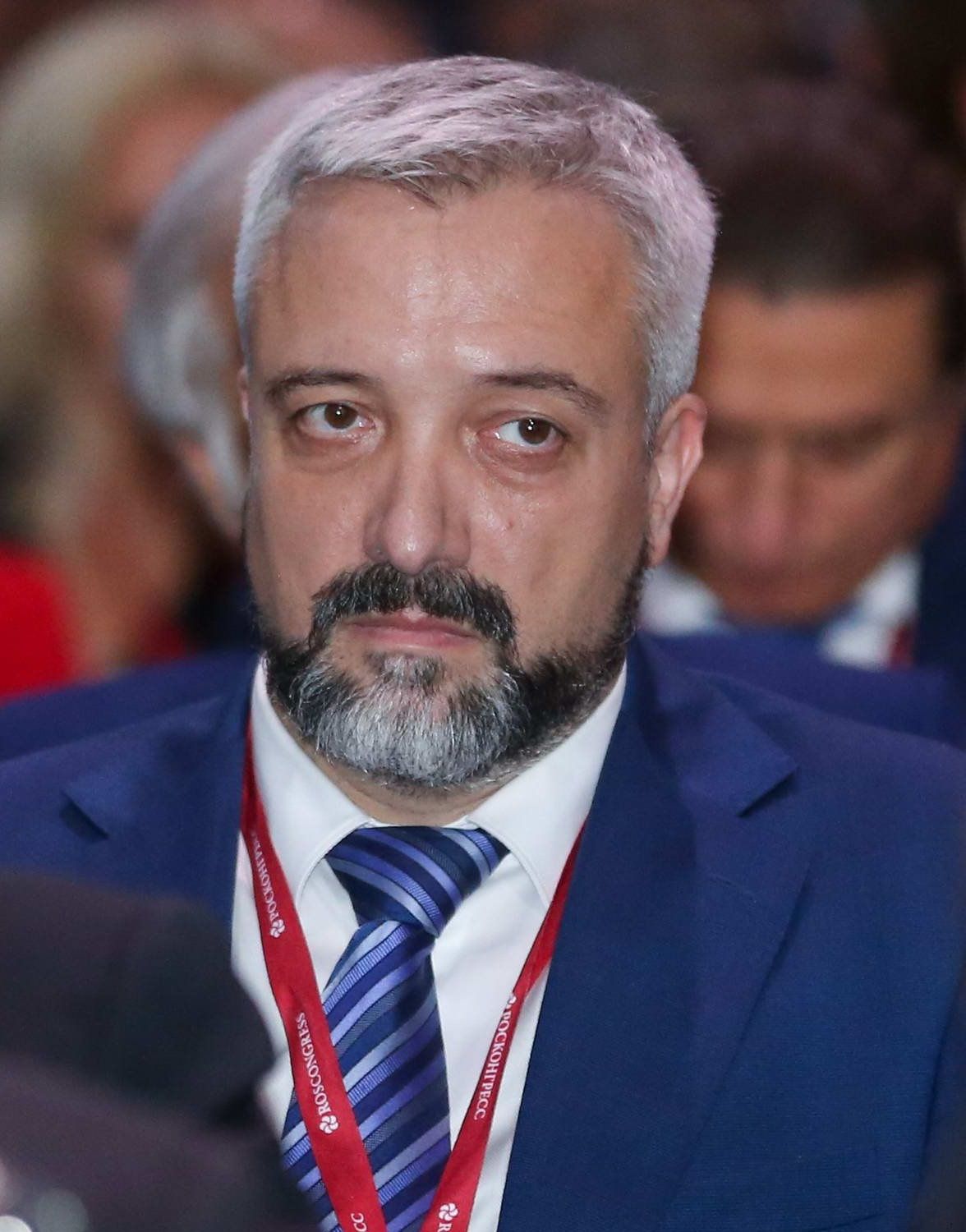
In 2008, a new structure was created for working with “compatriots” – the “Federal Agency for the Commonwealth of Independent States Affairs, Compatriots Living Abroad, and International Humanitarian Cooperation” (Rossotrudnichestvo), headed by Middle East specialist Yevgeny Primakov, grandson of former Russian Prime Minister and SVR Director Yevgeny Maksimovich Primakov.
Yevgeny Primakov. Photo: Duma.gov.ru
In 2012, the Foreign Ministry and Rossotrudnichestvo jointly established Pravfond. However, its creation was announced back in 2009 at the III World Congress of Compatriots in Moscow (500 delegates from 90 countries). The first trial congress took place in 2001, the second in 2006 (600 delegates from 78 countries). At the second congress, the creation of the executive body of the World Coordinating Council of Russian Compatriots Living Abroad (WCCRS) was announced. The country coordinating councils that are part of it were created over the next couple of years worldwide and became the basic structure for the activities of numerous pseudo-public emigrant organizations linked to them. Thus, over several years, a completely new and independent system of agent work with emigrants worldwide was formed.
By creating Pravfond, Russia declared its readiness to openly financially support not only citizens but all who fall under the concept of “compatriots,” that is, all its agents abroad. The method of assistance is grants and subsidies.
The fund’s board of trustees is headed by Sergey Lavrov, with members including many high-ranking Russian officials such as Dmitry Kiselyov, Natalia Narochnitskaya, and Sergey Stepashin. The managing board has four persons, including the head of Rossotrudnichestvo Yevgeny Primakov.
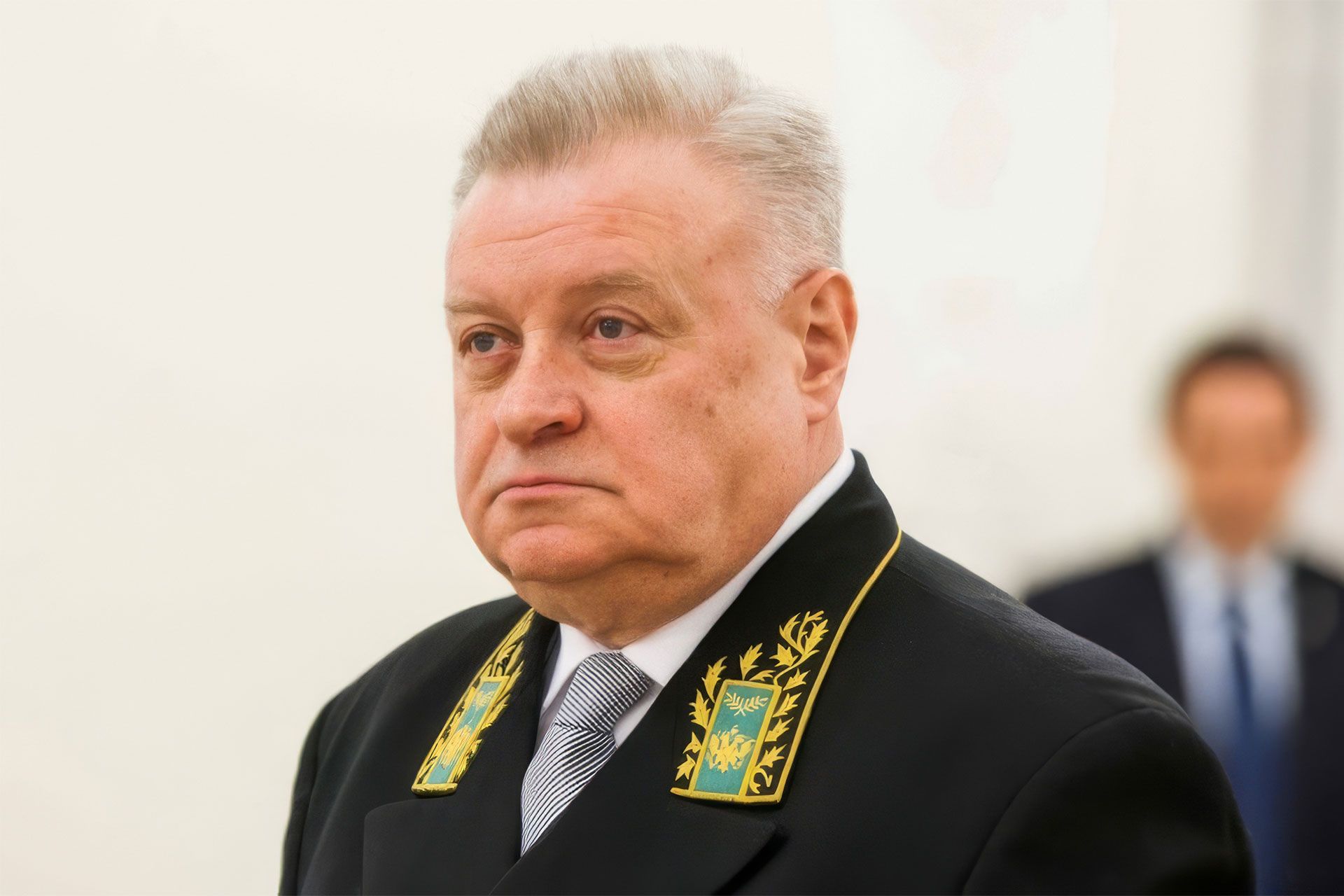
The fund’s chairman is Alexander Udaltsev, a graduate of Moscow State University and the Foreign Ministry’s Diplomatic Academy, and until 2020 was Russia’s ambassador to Lithuania.
Alexander Udaltsev. Photo: “Pravfond”
Quite ironically, considering the fund’s founders, its mission is formulated as follows:
“The fund carries out its activities in the name of developing democracy, social justice, respect for human and national minority rights and freedoms, improving relations between individuals and society, between individuals and the state, and fostering citizenship.”
This is typical Russian intelligence jargon, masking goals directly opposite to those stated.
By 2022, the number of the fund’s human rights centers in 23 countries across Europe and Asia reached 32, quadrupling in 10 years. In 2023, Pravfond officially received 209.8 million rubles from the budget, 8.9 million in donations, and 200 thousand rubles in subsidies and grants.
At the same time, the fund itself does not initiate the creation of centers: “The fund’s assistance in creating centers usually occurs at the initiative of local human rights structures and coordinating councils of compatriot organizations in a particular country.” In other words, Rossotrudnichestvo creates the centers, and the fund finances them.
For example, in Germany, the “human rights center” is headed by Yuri Yeremenko, editor-in-chief of the “Russian Field” website (Erfurt) – the organ of the All-German Coordinating Council of Russian Compatriots (OKS) and a member of OKS.
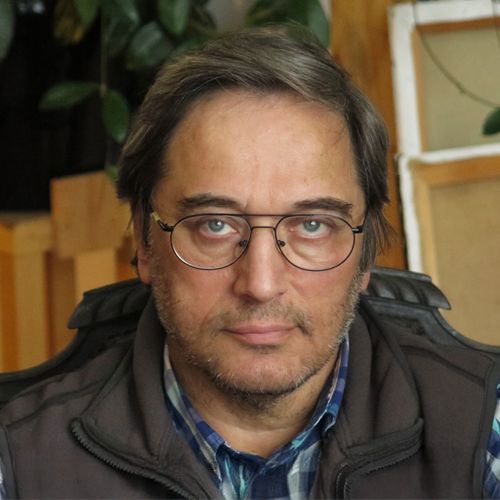
Yuri Yeremenko. Photo: Facebook “Moscow House of Compatriots”
Judging by Pravfond’s email correspondence obtained by journalists, Yeremenko’s organization has received at least 180,000 euros from Pravfond since 2018, with 36,717 euros received after 2023 when sanctions were imposed on Pravfond. According to OCCRP sources, intelligence services of two European countries suspect Yeremenko of contacts with the GRU.
Among other things, the fund finances human rights columns in foreign Russian-language press – that is, the press itself.
In 2022, 23 such columns were active. According to a fund representative, “Sustained positions in the media space are held by Russian-language print media supported by the fund such as the newspapers ‘MK-Germany,’ ‘MK-Athenian Courier,’ ‘Prague Telegraph,’ ‘Cyprus Herald,’ publications ‘Rusiya Dnes’ (Bulgaria), ‘Novoye Vremya’ (Azerbaijan), ‘Rights of Compatriots in Northern Europe’ (distributed in Denmark, Norway, Finland, and Sweden) and several other publications. In today’s geopolitical conditions, an exclusive niche is occupied by the internet newspaper ‘Crimean Echo’ and the magazine of the Tatar diaspora of Eastern Ukraine ‘Duslyk’ (‘Friendship’), both funded by the fund.”
The first head of the fund, Igor Panevkin, in a 2012 interview, responding to a correspondent’s suggestion that “your right hand in various countries will probably be our embassies and consulates,” said: “We will work with them quite closely, but unfortunately, they have completely different tasks. They can help us collect information, but that is not their task. We will probably work more with the 74 cultural and information centers already created by Rossotrudnichestvo in many countries.”
This means that embassies and consulates are closed official institutions with restricted access and all visitors are recorded by local intelligence services if desired. Rossotrudnichestvo’s offices – so-called “Russian Houses” – on the contrary, are open to everyone, hold mass events and concerts, and are extremely convenient for meetings with agents and conducting any recruitment and propaganda activities. Their directors and staff are usually intelligence officers, often operating under diplomatic cover.
The fact that “Pravfond” was created as yet another independent intelligence service working closely with others is confirmed by events in 2024.
In June 2024, Danish Radio (Danmarks Radio), citing the country’s security and intelligence service, reported the arrest in Denmark of a Russian citizen accused of working for Russian intelligence. The Russian woman provided legal consultations for Russian-speaking residents of the Danish island of Zealand.
The publication “Vot Tak” found out that the woman detained by Danish police is most likely Irina Petersen. She was born in Moscow, lives in the Danish city of Slagelse, and heads the “Center for Legal Support and Integration of Compatriots in Denmark” as well as the Russian-Danish club “Rudakis.” Petersen also coordinated May 9 celebrations for many years, including “Immortal Regiment” marches.
According to Danish police, the case against her is related to Pravfond’s activities, which sponsors overseas consulting centers and is used by Russian foreign intelligence for its purposes.
This information was published by Danmarks Radio in its article. As Insider reported, Pravfond held a conference four days after the start of the war in Ukraine for heads of legal aid centers and publishers of legal columns in Russian-language media in various countries. The head of the Danish consulting center participated in the event. Additionally, her consulting center received at least 338,000 Danish kroner from the fund, with Vladimir Pozdorovkin – a former SVR officer and deputy director of Pravfond responsible for its work in Northern Europe and the Baltics – being responsible for the payments. In total, Pravfond finances 34 consulting centers in 21 countries. This was established thanks to a leak of the fund’s internal documents.
Vladimir Pozdorovkin. Photo: “Pravfond”
Representatives of intelligence services from several European countries stated that the ultimate goal of creating such consulting centers was to influence public opinion in the countries where they were located and to “justify Russian interference in the internal affairs of other states.” Moreover, according to The Guardian, the fund allocated money, among other things, to pay lawyers for arms dealer Viktor Bout, drug trafficker Konstantin Yaroshenko, and hitman Vadim Krasikov, who shot the Chechen field commander Zelimkhan Khangoshvili in Berlin in 2019. In 2021 alone, Krasikov’s lawyer Robert Unger received 60,000 euros from Pravfond’s budget with Udaltsev’s approval.
According to another source cited by OCCRP investigators, “more than 40 Pravfond documents obtained by the Danish public broadcaster DR from a European intelligence source and passed to the consortium of European journalists, including The Guardian, indicate that several documented former intelligence agents were among the organization’s leadership. Among them is Vladimir Zdorovkin, identified by European intelligence sources as an agent of Russia’s Foreign Intelligence Service (SVR), publicly known as the curator of Pravfond operations in Northern Europe and the Baltics, and Anatoly Sorokin, who, according to documents, is an SVR officer overseeing Pravfond’s department for the Middle East, Moldova, and Transnistria.
The head of the Russian Diaspora Institute, officially listed as the “executor of Pravfond’s project,” is Sergey Panteleev, who was sanctioned by EU countries as a member of the Russian military intelligence unit specializing in psychological warfare operations.”
Sergey Panteleev. Photo: “Pravfond”
In 2023, Pravfond and its head Alexander Udaltsev were placed under EU sanctions for supporting the war in Ukraine, but this hardly significantly limited the organization’s activity. On October 28, 2022, an article titled “On the Experience of the Fund for the Support and Protection of the Rights of Compatriots Living Abroad” was published on Pravfond’s website, stating:
“This year, due to the ‘sanction’ war unleashed by the collective West against Russia, bans on financial transfers, the centers in Latvia, Lithuania, and Estonia suspended their work, websites in Denmark, Latvia, Norway, and Estonia were closed. The fund had to find unconventional solutions to support our partners in Spain, France, and Cyprus...”
The phrase “had to find unconventional solutions to support our partners” means that Pravfond uses new and probably illegal methods to deliver money to its overseas employees and agents.
In Cyprus, Pravfond has worked closely for many years with Natalia Kardash, editor-in-chief of the pro-Kremlin Russian-language newspaper “Cyprus Herald.” In October 2019, Pravfond’s website reported in an article titled “Pravfond and ‘Cyprus Herald’ Strengthen Cooperation” that “Alexander Udaltsev, executive director of the Fund for the Support and Protection of the Rights of Compatriots Living Abroad, met with Natalia Kardash, editor-in-chief of the newspaper ‘Cyprus Herald’ and vice-president of the Association of Russian-speaking Residents of Cyprus ‘Horizon.’ The parties discussed joint projects.”
Natalia Kardash and Alexander Udaltsev. Photo: “Pravfond”
Since 2014, Natalia Kardash has held annual international legal conferences Best Legal in Limassol under the aegis of her magazine “Successful Business,” financed by Pravfond. At the third conference in 2016, attended by over a hundred participants from 17 countries, gratitude was expressed towards the Fund for the Protection of Compatriots’ Rights Abroad and its head Igor Panevkin. Igor Panevkin, who died in 2024, according to his official biography, was an intelligence officer under diplomatic cover. The same applies to his successor Alexander Udaltsev.
Igor Panevkin. Photo: “Pravfond”
There are many organizations related to Pravfond. First and foremost is the “Russian World” fund, created in 2007 by presidential decree. It is headed by Vyacheslav Nikonov – grandson of Stalin’s foreign minister Vyacheslav Molotov, likely linked to the FSB (Nikonov was assistant to the KGB USSR chairman Vadim Bakatin as early as 1991).
Vyacheslav Nikonov. Photo: russkiymir.ru
The fund’s grants are issued in two directions: 1) Projects promoting the Russian language; 2) Projects of cultural and humanitarian focus. These categories include anything, primarily intelligence activities – espionage, recruitment, propaganda, destabilization of political situations in various countries, preparation of provocations, coups, terrorist acts, etc. In principle, there is nothing wrong with studying the Russian language, unless it is done by state security.
After 2022, “Russian World,” like Pravfond, was sanctioned, but this hardly seriously affected its work, only slightly complicating it.
Besides Pravfond and “Russian World,” there are many other funds and related organizations financing pro-Russian groups worldwide – the Moscow Yuri Dolgorukov International Cooperation Fund, the Fund for the Study of Historical Perspectives (FIP), Roscongress Fund, the A. M. Gorchakov Public Diplomacy Support Fund, the Agency for Strategic Initiatives (ASI), the Fund for the Protection of Rights and Legitimate Interests of Citizens Abroad “Russian World,” the Soviet Peace Fund (SPF), the Russian Middle Eastern Society, the Imperial Orthodox Palestine Society (IPPO), the Russian Humanitarian Mission, the Humanitarian Volunteer Corps (Humcorps), and many others.
These are financing centers that support the work of countless pseudo-public organizations created by Moscow worldwide – coordinating councils of Russian compatriots, Russian cultural societies, associations of actors, writers, journalists, lawyers, Russian language teachers, various friends of Russia, alumni of Soviet and Russian universities, Russian parties, sister city unions, sports and religious schools, patriotic associations like the “Immortal Regiment” and “Victory Volunteers,” and so on.
This network of Russian influence agents and simple spy centers has long spread worldwide and is visibly becoming denser.
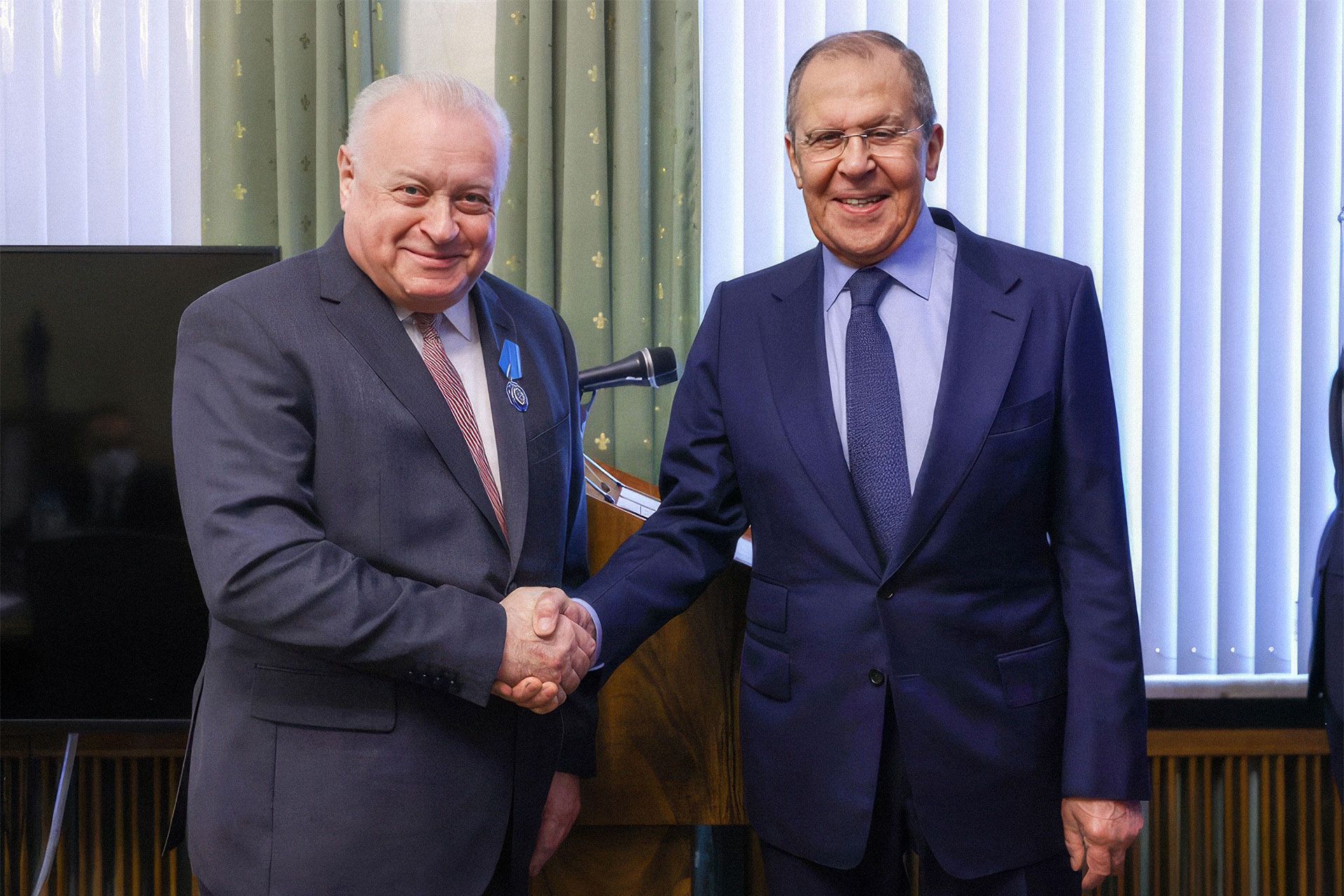
In the main photo: Chairman of Pravfond’s board Alexander Udaltsev and Russian Foreign Minister Sergey Lavrov. Source: “Pravfond”
If you enjoyed this article, consider making a donation — one-time or, even better, monthly. Your support helps us motivate our authors and become better with every article.
Our organization is recognized by the Internal Revenue Service (IRS) as a 501(c)(3) tax-exempt, charitable organization, which means that all contributions made to us are tax-deductible to the fullest extent permitted by U.S. law. Individuals may generally deduct charitable contributions of up to 60% of their Adjusted Gross Income (AGI) for cash donations made to qualifying 501(c)(3) organizations. For donations of appreciated assets (such as stocks or other long-term capital assets), the deduction is typically limited to 30% of AGI, based on the fair market value of the asset. C-corporations may deduct charitable contributions of up to 10% of their taxable income for donations made to eligible charitable organizations.
By submitting a donation, you confirm that you have read and accept the following documents: Privacy Policy and User Agreement, and also give consent to the processing of your personal data.
If you would like to unsubscribe from a monthly donation, please email us at: [email protected]