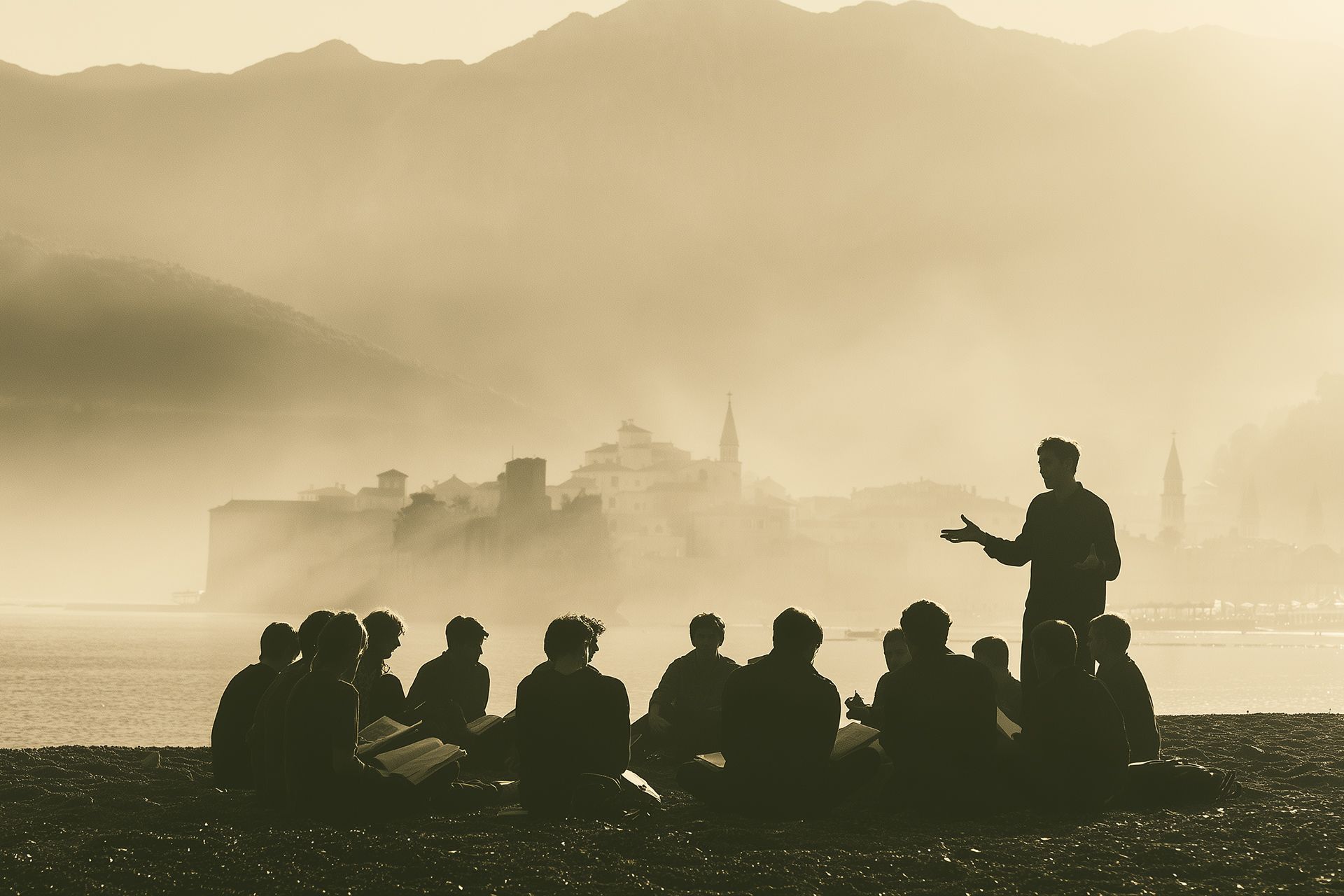
On a summer evening on the shore of the Adriatic Sea, a group of young people sits on the sand, with hummus, sandwiches, and fruit laid out on a blanket, and discusses Durkheim’s “Elementary Forms of Religious Life” in Russian. This is what classes at the sociology school of the Montenegrin Beach University FLAS (Faculty of Liberal Arts & Sciences) look like. But behind the idyllic picture lie the hardships of life in exile. This summer, the Russian Prosecutor General’s Office declared FLAS an undesirable organization, so a colloquium or seminar can be held without risk of criminal prosecution only in another country whose law enforcement agencies do not cooperate with Russia. Since the early 2020s, several other private educational projects created by Russian scholars to integrate into the international academic environment have found themselves in the same position. And yet alternative universities have managed to survive despite repression in Russia and unstable funding in the West.
Image: MostMedia / Midjourney
In June 2026, the Center for European Policy Analysis (CEPA) released a report on Russian education in exile. It states that since 2022 the Russian higher education system has been undergoing systemic degradation: a decline in the academic freedom index, political persecution of scholars and students, and the ideologization and militarization of universities. In response, anti-war researchers who emigrated from Russia created their own independent educational projects: “Free University”, FLAS, “Smolny Beyond Borders”, and others. According to CEPA, the overall scale of enrollment is comparable to pre-2022 admissions to leading private universities in Russia — EUSPb, the Moscow School of Social and Economic Sciences, and the Faculty of Liberal Arts and Sciences at St. Petersburg State University.
Liberal Arts in exile
Almost all independent educational projects in exile operate under Liberal Arts programs adopted in the Western academic world. In Russia, the first such program was launched in 1997 at St. Petersburg State University by a group of initiative-minded teachers from SPbSU and Bard College from New York and Berlin. Informally, the program was called “Smolny College” or simply “Smolny”. For several years it existed as an additional education program, and in 2011 it became a full-fledged faculty of SPbSU. In 2012, Liberal Arts opened at RANEPA, and in 2021 at MSSES (Shaninka).
But in 2021 Bard College was declared an undesirable organization in Russia, and its cooperation with the Faculty of Liberal Arts and Sciences at St. Petersburg State University ended. In 2022, with the start of Russia’s full-scale invasion of Ukraine, the program in its original concept could no longer exist in principle: teachers were leaving Russia, and those who remained had fewer and fewer topics that could be discussed safely within a state university. Thus in 2022 “Smolny Beyond Borders” (SBB) appeared — launched by a collective of teachers from the Faculty of Liberal Arts and Sciences, Higher School of Economics, and Shaninka who had left Russia. “The two-year online program is designed for people who left Russia after the start of the war and who cannot return to education, but nevertheless want to continue academic activity”, says art historian Philipp Fedchin, who took part in creating both “Smolny” and “Smolny Beyond Borders”. Liza (name changed) completed two programs at SBB: Contemporary Art in Russia and Philosophy of War and Peace. She says that the courses they took “were, of course, connected to the present day and the political context”. Classes were structured just like in a classical university: reviewing texts for the seminar, formulating questions about them, final essays. Liza is now studying at Bielefeld University (Germany), so it is difficult for her to assess how acceptable discussing such topics would be at a Russian university: “It may be that self-censorship inside the country has become much greater because of the risk of denunciations. Another question is that many teachers were forced to leave”.
Since the early 2020s, the Russian Prosecutor General’s Office has declared almost all independent universities that promoted Liberal Arts programs in Russia undesirable organizations.
These include Central European University (Austria), Yale University (USA), Stanford University (USA), the Ukrainian Research Institute and the Harvard Ukrainian Research Institute at Harvard University (USA), and the Research Center for Independent Literature and Social Movements of Eastern Europe at the University of Bremen (Germany). In total, as of November 2026, 66 educational organizations from around the world are on the undesirable organizations register.
“We all knew this would happen”, says FLAS sociology student Kira, “but it was still a surprise. I wouldn’t say there was panic or anything like that, more a kind of confusion. For many people, FLAS became such an enclave of normal life in all this chaos: it helped them leave Russia, start a new life, get a good education from professors who know their craft — people who, like the students, found themselves in a difficult position. But still, that day there was more of a positive feeling that we would all manage and survive everything”.
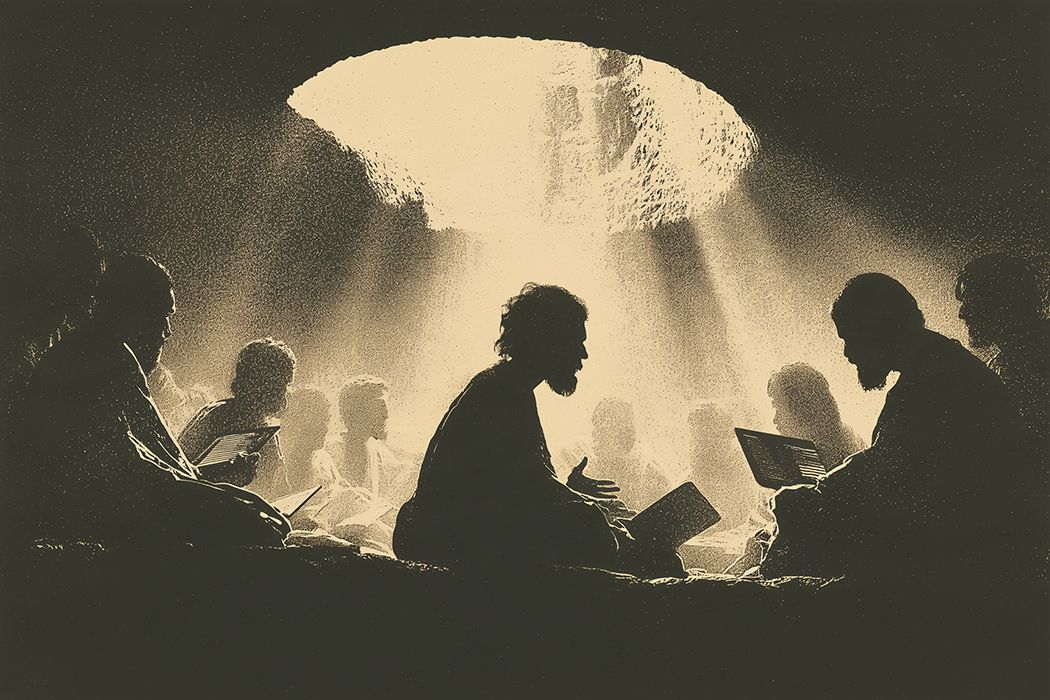
Image: MostMedia / Midjourney
Educational projects go underground because of the repressive policy of the state not only in Russia. In 2016, the “Committee of Scholars” in Turkey called for an end to Ankara’s military operation in regions inhabited by Kurds, as well as for the resumption of peace talks. About 1,000 scholars from 89 Turkish universities signed the petition “We will not be party to this crime”. The first to sign it were more than 1,100 scholars from 89 universities; later the number of signatories in Turkey exceeded 2,200. Four days later, police detained 27 signatories. Cases were opened against 822 scholars for “terrorist propaganda”, 406 of them were dismissed by state of emergency decrees, and the total number of dismissed reached 549. In 2019, the Constitutional Court ruled that the petition was protected by freedom of speech. The following year, a group of Turkish scholars and German colleagues in solidarity with them founded Off-University (Organisation für den Frieden e.V.). For scholars and researchers deprived of the opportunity to work at a university, online teaching became the only way to continue their work. There are also Russian students and teachers at Off-University.
Pros and cons
Educational programs in exile seek to stabilize their status in the academic field. For example, FLAS received official accreditation in Montenegro in 2024. This means that it retains the usual levels of education — bachelor’s and master’s degrees — and graduates receive state-recognized diplomas. But obtaining accreditation is a long and costly process that not every program can afford.
In addition to official grade reports, educational programs also provide other valuable privileges for students. For example, these are recommendation letters that can be used when applying to European universities.
Anastasia (name changed) took advantage of this opportunity. She completed her bachelor’s degree at the Faculty of Liberal Arts and Sciences at St. Petersburg State University and took the “Free University” course “Animals. Ethics. Law”. There, together with representatives of a foreign NGO, she began work on a project about the legislation of different countries on the protection of animals during disasters. According to Anastasia, this was a very valuable project for her research portfolio, with which she entered a master’s program in social anthropology at Oxford.
“Free University” teacher Boris Melnichenkoteaches the course “Collaborative Autoethnography of Vulnerability”, where he examines this phenomenon from the perspective of the social sciences. According to Melnichenko, in addition to lectures, students can write an analytical retelling of a scholarly work, give a presentation based on their notes, or present their creative project. “One student, for example, presented a performance”, Boris says. In addition, his students take part in international academic conferences. He organized two of them himself in Prague with the support of the Paris School for Advanced Studies in the Social Sciences (EHESS), where he worked on his dissertation. In 2024, Boris says, the participants were from countries of the former Soviet Union, and the following year the geography expanded — and future and current scholars from Germany, France, Armenia, Georgia, Belarus, and Russia gave presentations.
With several students, Boris managed to prepare a joint publication for a European scholarly journal. But because in 2023 the Ministry of Justice gave “Free University” the status of an “undesirable organization”, it had to be published anonymously. According to Boris, censorship restrictions have greatly affected both the organization of the educational process and the lives of everyone who studied or worked at “Free University”. Now, before enrollment, students undergo verification and assess their risks in a special questionnaire. If students can protect themselves through anonymization, it is much harder for teachers to do so: they lead lectures and seminars under their own names. “After being declared undesirable, I have faced major risks, I cannot return to Russia”, Boris says.
Off-University executive director Julia Strutz says that administrators and teachers have managed to create a secure online infrastructure in which course participants can remain anonymous. “All courses are held on the basis of a state partner universityHumboldt University of Berlin, and participants who successfully complete the training receive ECTS credits that can be counted at their own university“, Julia says.
According to Strutz, Off-University helps its teachers with developing teaching methods: for example, how to teach a course to students who know both English and Russian — or only one of them. Off-University is now preparing for an in-person November meeting with staff, students, and partners in Berlin. “This meeting will be the first opportunity for many of us to meet in person and think about how best to support one another”, Julia says.
“Not a single student for whom I wrote recommendation letters has, so to speak, become an outsider in the process. That’s not about my recommendation letters, it’s about the level of the students themselves. Everyone got into universities: American Ivy League schools, Oxford, Yale, the University of Pennsylvania, Harvard, Princeton. In all these universities, there are PhD students who were previously students of Smolny Beyond Borders”, says philologist and historian Ilya Kalinin, who teaches at “Smolny Beyond Borders”.
Maria — a student in the MSt in Women’s, Gender, and Sexuality Studies at Oxford. To apply for a program in this field, she applied to several European universities at once. To one of them, Central European University, she attached a recommendation letter signed by her teacher from the memory studies courses at Free University. Maria was accepted to this university with full funding, but in the end chose Oxford. In her view, it is difficult to assess the role of the recommendation letter in university admission, since the committee does not give feedback on applicants’ achievements. And yet Maria believes that the recommendation from “Free University” played a significant role: “It showed that I am interested in the subject I want to study in my master’s program, and also initiative: despite the fact that I did not have such courses at my university, I still looked for opportunities to take them”.
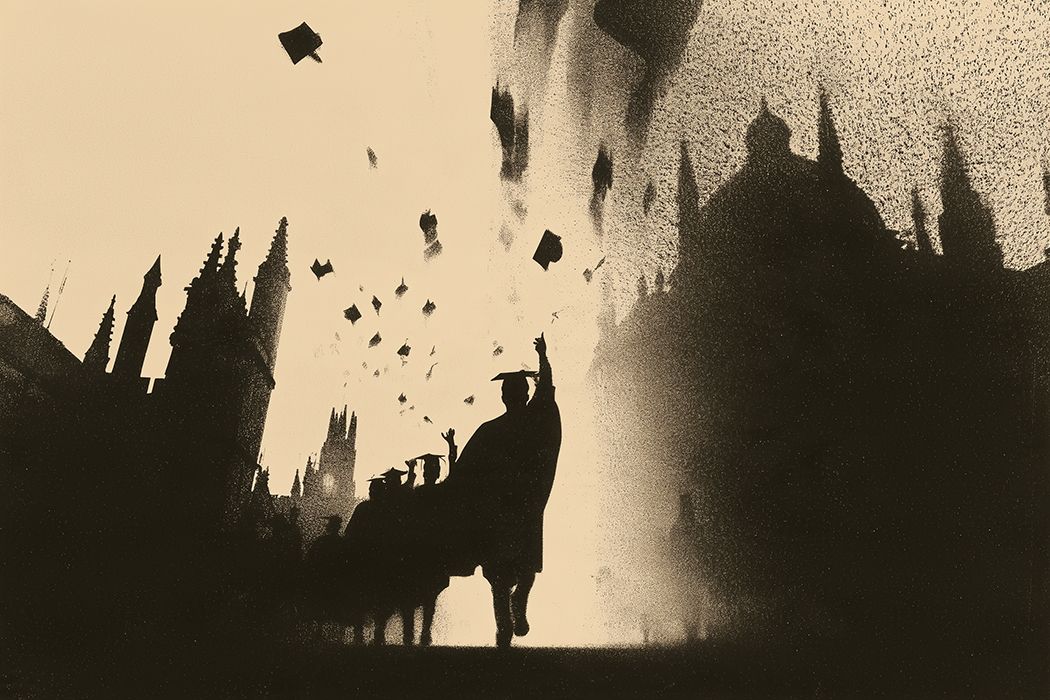
Image: MostMedia / Midjourney
Since 2022, about 500 students a year have enrolled in Smolny Beyond Borders, which is comparable to the pre-war intake at the Faculty of Liberal Arts and Sciences. “It’s clear that this is not the same as 600 students studying full-time at the faculty in the center of St. Petersburg, with their own historic building, etc”., says Philipp Fedchin. But the experience of the 2020–2021 pandemic created a habit of online learning, so the adaptation was not as difficult, he adds.
Students of online educational programs themselves often note that the lack of live interaction with classmates and teachers greatly affects the quality of the knowledge they receive.
Journalist Andrey Sapozhnikov enrolled in 2020 on a full scholarship for the Liberal Arts program at RANEPA in Moscow, while at the same time taking a course at Free University with political scientist Gleb Pavlovsky. Andrey was not satisfied with the quality of education at RANEPA: “I felt the complete uselessness of what I was doing in the context of Russia in 2020–2021”. On top of that, all this coincided with COVID restrictions: students attended the university in person only every other day. At “Free University”, Andrey says, the quality of education is good and there is no censorship, but all classes are entirely online — and they can never replace live learning. So Andrey moved to Vienna and studies at Central European University (CEU).
Where the money comes from and where it goes
As follows from CEPA’s research, the planning horizon for emigrated educational projects is one to two years. Some live on grants, others charge tuition. At the same time, at the beginning of 2025, the opportunities for grant funding for educational projects in exile sharply worsened because U.S. President Donald Trump shut down USAID (the United States Agency for International Development). According to CEPA, only a handful found permanent jobs at Western universities — most teachers themselves look for scholarships or change professions.
The main American and European sponsors of educational initiatives are themselves recognized in Russia as “undesirable organizations”, CEPA analysts emphasize CEPA. Because of this, mentioning such funding creates additional risk for teachers who still have relatives in Russia or whose status in their new country of residence is unstable.
Why repression in Russia can be called transnational
Coercion through loved ones and intimidation of family members is one of the tools of Russian transnational repression. Since 2022, the Russian authorities have actively persecuted political and civic opponents outside the country. Transnational repression includes not only pressure through relatives who remain in Russia, but also denial of government services at embassies, information attacks, freezing of assets in bank accounts, and more.
Funding models vary among projects in exile. Most teachers at “Free University”* work on a volunteer basis. “Some schools/courses have targeted funding, most do not. I teach two courses at Free University, one for free, the other for very little money. But that is my choice, and I am very grateful to Free University that I work with its students”, says journalist and Media School teacher Elena Kostyuchenko.
Off-University has more than 30 partners, including the Rosa Luxemburg Foundation and the Alexander von Humboldt Foundation, Free University Berlin, the University of New Europe, and the German Federal Ministry of Education and Research. This is not only a financial but also an educational partnership. For example, together with the consortium “The New University in Exile Consortium“ Off-University organized 15 online seminars that were ”co-taught by a scholar from the consortium in exile and a colleague who remained in their country“. While the course is running, teachers receive a salary. ”Depending on the country of residence, it covers the subsistence minimum or serves as a noticeable supplement to income“, says Julia Strutz
Off-University is currently collaborating with “Free University” teachers Elena Lukyanova and Maria Voskobitova: they teach the course “Law in a Lawless State”. The course’s financial partner is “Project 2022”. It is part of the Eastern Academic Alliance, receives funding from the European Union, and works with scholars, students, activists, and archivists. The project’s goal is to document and analyze the experiences of teachers, students, and cultural workers in conditions of war and the violence and political repression associated with it.
In 2024, FLAS leaders told Novaya Gazeta that commercial education remains the main source of income. A semester costs 2,500 euros (discounts are possible for siblings from the same family or from large families). For the annual short educational intensive “Beach University”, you have to pay from 350 to 780 euros per module. Fields: media, sociology, art history, anthropology, linguistics. The university rents a hotel with a large conference hall for lectures; students live in comfortable rooms one or two to a room and go to breakfast and lunch together.
Kira, who studies in the sociology department at FLAS, has been to Beach University four times and says that informal communication is just as important a part of the program as the academic one. During analytical readings, participants split into small groups, disperse around the hotel or — as is most often the case — go for a walk around the city, discussing the text.
“Smolny Beyond Borders” continues cooperation with the Gagarin Center for the Study of Human Rights and Civil Society at Bard College, just as the in-person faculty at SPbSU once did. “With the support of the Andrew Gagarin Trust, the Center continues to promote scholarly research by Smolny BB teachers on important issues and the implementation of public programs”, the project website says.
The two-year study program at “Smolny Beyond Borders” costs $5,000, but students can receive a discount of up to 90%. In special cases, the project pays the full tuition. Teachers receive a fee for the course at the end of the semester. “The payment is symbolic, really just a bonus at the end of the semester. It’s impossible to live or rent housing on that kind of money”, one teacher shared. “I’m glad for the opportunity to communicate with students and teachers who belong to the same community as I do, who share with me a similar experience — both of life in Russia and of leaving it. Integration into the Western academy is an important and necessary individual trajectory for each scholar separately. And in this case, we are talking about the reproduction of a community”.
If you enjoyed this article, consider making a donation — one-time or, even better, monthly. Your support helps us motivate our authors and become better with every article.
Our organization is recognized by the Internal Revenue Service (IRS) as a 501(c)(3) tax-exempt, charitable organization, which means that all contributions made to us are tax-deductible to the fullest extent permitted by U.S. law. Individuals may generally deduct charitable contributions of up to 60% of their Adjusted Gross Income (AGI) for cash donations made to qualifying 501(c)(3) organizations. For donations of appreciated assets (such as stocks or other long-term capital assets), the deduction is typically limited to 30% of AGI, based on the fair market value of the asset. C-corporations may deduct charitable contributions of up to 10% of their taxable income for donations made to eligible charitable organizations.
By submitting a donation, you confirm that you have read and accept the following documents: Privacy Policy and User Agreement, and also give consent to the processing of your personal data.
If you would like to unsubscribe from a monthly donation, please email us at: [email protected]