There are only two nuclear powers in Europe: France and the United Kingdom. Their combined strength is less than the arsenals of Russia and the USA, but fully sufficient to inflict unacceptable damage on an adversary. While Russian aggression in Ukraine continues and US commitments within NATO do not appear reliable, the stance of leading European countries on nuclear deterrence takes on particular significance.
French President Emmanuel Macron’s July visit to London lasted three days and included all the ceremonial receptions that can be offered to a high guest in the United Kingdom. This involved a reception at Windsor Castle by the royal family, a speech in the British Parliament, a visit to the military base in Northwood, and an extensive cultural program. The ceremonial part was no less grand than the political statements.
Essentially, the Franco-British alliance, well known from the history of the 19th and 20th centuries, reminded the world of itself once again. Of course, President Macron and Prime Minister Starmer did not have to go back to the times of the Entente to find common ground — in 2010, the Lancaster House Treaty on strategic partnership was already signed, containing provisions for broad cooperation in security, including nuclear programs of both sides. Nevertheless, like many such agreements, it remained largely declarative, and Macron’s visit to London was meant to breathe new life into the somewhat outdated framework of the alliance.
The history of relations between neighbors separated by the English Channel includes not only friendly alliances but also episodes of discord and disagreements, including from recent times. The previous state visit comparable to Macron’s program took place in 2008, when Nicolas Sarkozy was president (François Hollande visited London on a brief one-day official visit, i.e., a different status). Much time has passed since then, and one of the main events in this interval was Brexit, which sharply worsened relations between France and the UK. Paris insisted on a tough negotiation line with the British defectors, while London tried to keep the benefits of EU membership while shedding obligations. As is known, an agreement was reached after 4.5 years of difficult consultations, and everyone breathed a sigh of relief when the UK officially left the EU on December 31, 2020. Revising previous principles of neighborly relations is always complicated: the list of mutual claims grows, and moving to new agreements on new terms takes time.
It can be assumed that Macron’s visit to London symbolizes the end of the post-Brexit period, and that chapter is finally closed.
In the context of the ongoing war in Ukraine, NATO’s crisis, and the inconsistent policy of the new American administration, someone in Europe must take responsibility for the course of events. The return of the old good Entente shows that France and England are ready to take on this role.
Coalition of the willing
This phrase has somewhat faded from memory due to the changing situation in peace talks between Russia and Ukraine, mediated by the USA, which no longer foresee such an option. However, it is worth recalling that at the initial stage of Donald Trump’s efforts to stop hostilities, the introduction of peacekeeping forces into Ukraine was considered one of the scenarios. According to the American president’s idea, the war in Ukraine was a European problem, and the observance of ceasefire conditions (once achieved), as well as monitoring the parties’ actions, should become Europe’s responsibility.
At the initial stage, the European peacekeeping mission was envisioned roughly like this. Kyiv and Moscow sign some peace agreement, fighting stops, and as a security guarantee for Ukraine, units of the “coalition of the willing” – i.e., forces from those European countries that voluntarily decide to participate – are deployed on its territory. It is important to emphasize that these troops were to be stationed not on the front line but at some distance, and combat operations were not planned. This idea was proposed in March 2025 by President Macron and Prime Minister Starmer but immediately seemed poorly prepared.
One can start with the fact that Russia has always been categorically against the presence of any NATO military units in Ukraine. Suppose the brave Europeans were determined to ignore Moscow’s protests, but without some agreements, even informal ones, such a mission looked like an adventure. One must choose: either deploy troops and be ready to fight, or have the consent of both warring parties for peacekeeping. Otherwise, even a simple question like “to respond or not to shelling” has no clear answer.
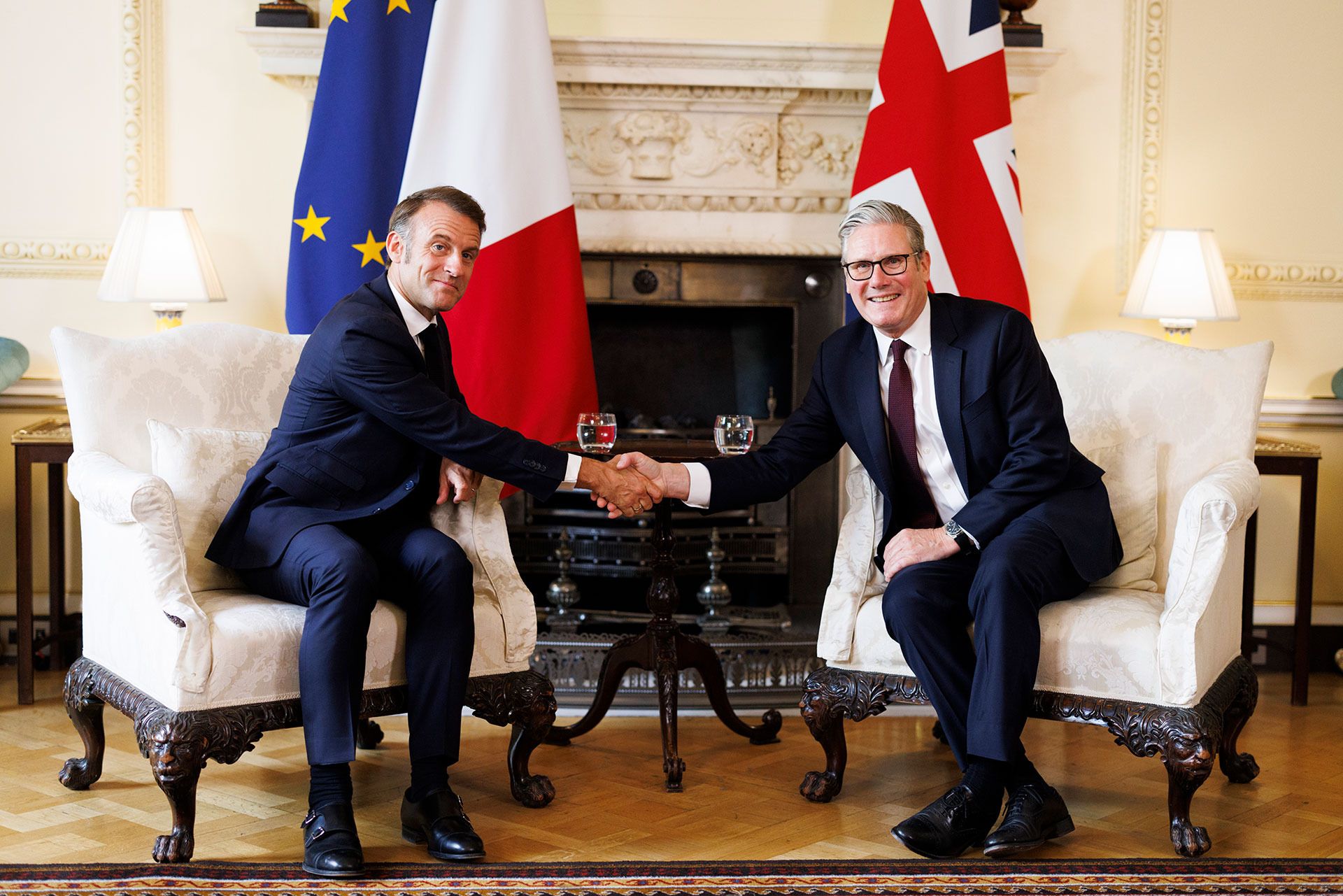
UK Prime Minister Keir Starmer welcomes French President Emmanuel Macron at Downing Street, 10, London, July 9, 2025. Photo: Simon Dawson / No 10 Downing Street / CC BY-NC-ND 4.0
European partners of France and the UK understood the ambiguity of this situation well and were reluctant to join the “coalition of the willing.” Only a few countries made vague promises. The initiative’s authors initially announced 30,000 troops for the peacekeeping mission, but only France confirmed the presence of 10,000 soldiers. Thus,
the “coalition of the willing” formed slowly and reluctantly, while world events and the course of negotiations between Russia and Ukraine pushed this idea to the background. It can even be assumed that the European initiative was mainly intended to impress Donald Trump rather than to be implemented.
But Macron’s July visit to London brought the “coalition of the willing” back into discussion, as France and the UK issued a joint statement expressing readiness to form a contingent of 50,000 troops and for the first time clearly outlined the mission’s goals: ensuring security in the air and at sea. While Ukrainians have already managed quite well at sea, “closing the sky” over Ukraine has so far eluded anyone.
However, Russia’s objections remain valid, and there is still no peace agreement, leaving the “coalition of the willing” project hypothetical. Nevertheless, its concrete outlines have been sketched for the first time. It cannot be ruled out that these plans were also mainly intended for Donald Trump’s ears and did not go beyond diplomatic posturing. But even if so, the statement about having 50,000 troops for a mission aimed at European security is unprecedented and should not be underestimated.
Nuclear deterrence
There are only two nuclear powers in Europe: France and the UK. Their combined strength (290 warheads for France and 225 for the UK) is inferior to the arsenals of Russia and the USA but fully sufficient to inflict unacceptable damage on an adversary. While Russian aggression in Ukraine continues and US commitments within NATO do not appear reliable, the stance of leading European countries on nuclear deterrence takes on particular significance.
Unlike talks about a “coalition of the willing,” which may or may not happen, here we are dealing with a real confrontation between Russia and united Europe, and deepening the Franco-British alliance in the nuclear field is both a strong and timely message to Moscow.
Second, the nuclear deterrence forces of both countries, without moving into a questionable unified command status, are raising coordination to an unprecedented level, including synchronization of nuclear submarine patrols. Unlike NATO practice, this coordination is bilateral, without American involvement.
Third, a decision was made to resume production of Storm Shadow/Scalp cruise missiles (in a modernized version), which were supplied to Ukraine and performed well there. The manufacture of these missiles began in 1997 and was the result of Franco-British cooperation, but no new orders were placed over the last 15 years. This episode illustrates the recent European security concept, which left all problems to NATO’s discretion. Meanwhile, national armed forces were intended for short-term military-police operations in remote hotspots, and mass arms production was deemed unnecessary.
But times are changing. Storm Shadow/Scalp missiles will be produced again, replenishing European arsenals, and deliveries to Ukraine will continue and increase.
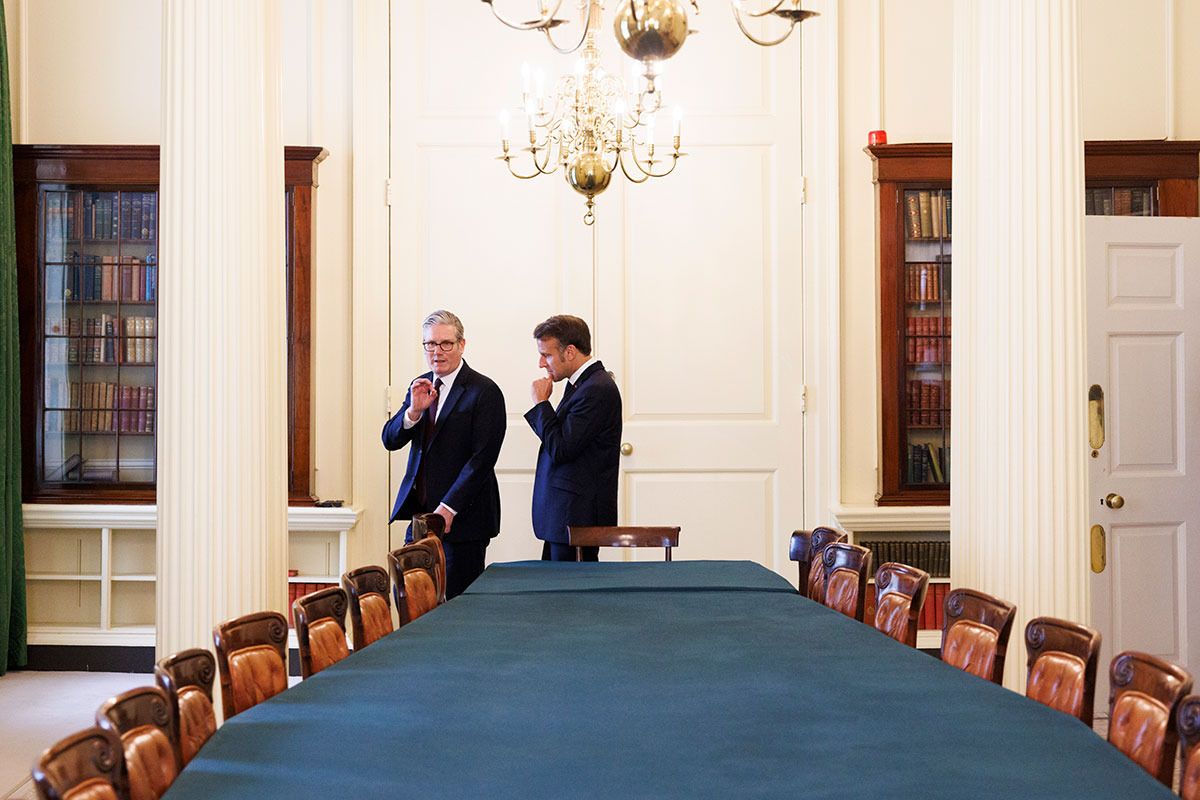
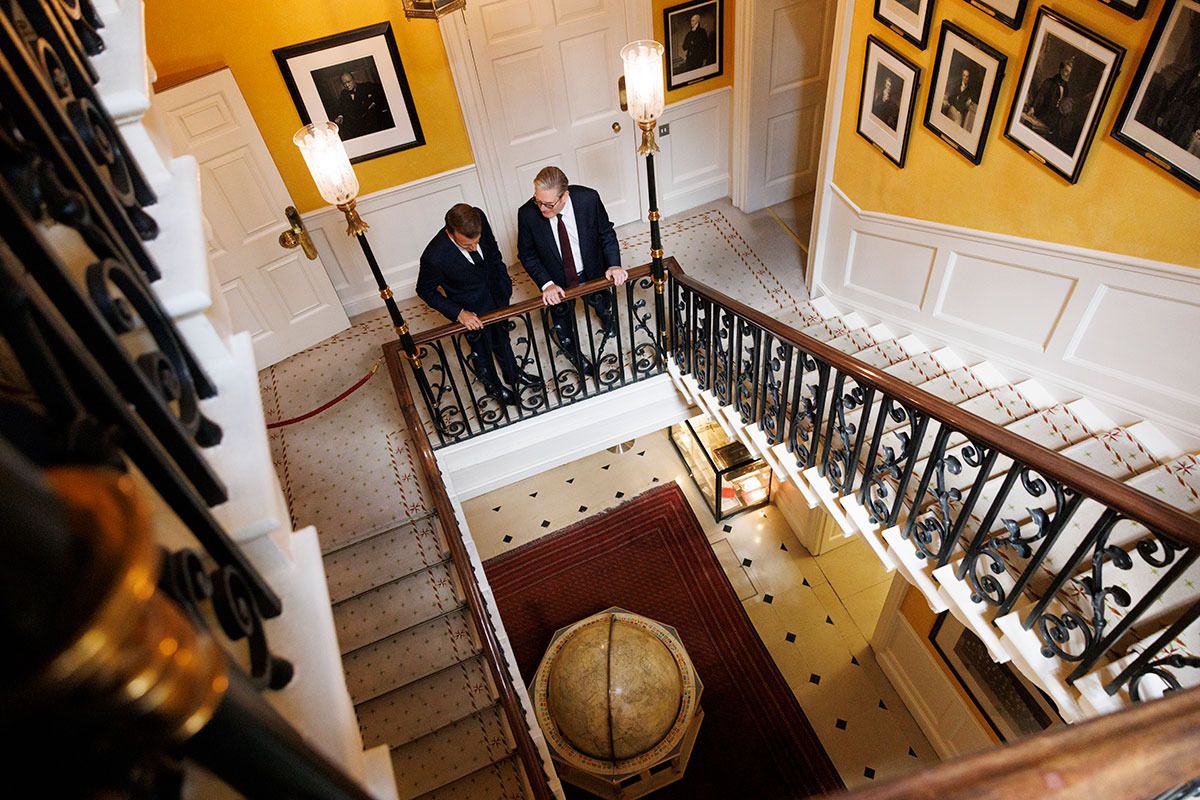
UK Prime Minister Keir Starmer and French President Emmanuel Macron at Downing Street, 10, London, July 9, 2025. Photo: Simon Dawson / No 10 Downing Street / CC BY-NC-ND 4.0
Strengthening cooperation between France and the UK in the nuclear field includes not only the above points but many others, including “peaceful atom,” indicating careful preparation of the agreement and a high level of trust.
Russia has repeatedly been described by European leaders as an “existential threat” for the long term. In this context, the role of nuclear deterrence becomes decisive, and Franco-British cooperation is key to European security.
Russia’s reaction
Macron’s and Starmer’s statements during the French president’s visit to London did not go unnoticed in Moscow. If the Kremlin is worried about something, it usually tries, on the one hand, to mock the unwelcome developments and downplay their significance, but on the other hand, to refute their basis with a set of asymmetric arguments.
The first part of the program posed no difficulty for Russian propagandists, who ridiculed how Macron allegedly broke all possible protocols in London, while the British press allegedly focused only on scandalous stories. Reducing the image of Western leaders to a bunch of amusing, fussy little men incapable of anything serious is a favorite tactic of Russian political commentators. This tactic is usually employed precisely when these leaders begin to act decisively.
At the same time, another approach exists, intended for a more serious audience prone to conspiracy theories. It explains the adoption of decisions unwelcome to the Kremlin not by the real situation in Europe but by secret grievances or historical chronicles. For example, President Putin somehow decided(16) that France and the UK still cannot forgive him for the collapse of their colonial empires, ignoring that both Macron and Starmer clearly justified their decisions by Russian aggression in Ukraine and the Russian threat to Europe.
Meanwhile, strengthening the Franco-British alliance brings two pieces of bad news for Russia.
The first is that arms production in Europe, though slowly and with difficulty, is starting up. This will allow increased support for Ukraine and, importantly, progress toward strategic autonomy, reducing dependence on the US. If Russia plans to test the strength of countries on the EU’s eastern border, these plans become increasingly problematic each year, regardless of Washington’s stance on transatlantic solidarity.
The second bad news is that close Franco-British cooperation in the nuclear field reduces Russia’s options for nuclear blackmail. There is no need to officially declare which European countries are under the “nuclear umbrella” of the new Entente: Macron and Starmer reasonably leave room for “strategic ambiguity.” But Moscow understands that it cannot count on the previous European complacency.
Of course, a Russian provocation on the Estonian border, if it happens, implies a proportional response with conventional means, and nuclear deterrence remains a last resort that will never be used. But for the balance of power, it is necessary, as the example of Ukraine has shown. One way or another, when Russian television again counts missile flight times to Berlin, Paris, or London, it would be good to also consider the time of the retaliatory strike.
Main photo – official meeting of French President Emmanuel Macron and UK Prime Minister Keir Starmer, London, July 9, 2025. Source: Simon Dawson / No 10 Downing Street / CC BY-NC-ND 4.0
If you enjoyed this article, consider making a donation — one-time or, even better, monthly. Your support helps us motivate our authors and become better with every article.
Our organization is recognized by the Internal Revenue Service (IRS) as a 501(c)(3) tax-exempt, charitable organization, which means that all contributions made to us are tax-deductible to the fullest extent permitted by U.S. law. Individuals may generally deduct charitable contributions of up to 60% of their Adjusted Gross Income (AGI) for cash donations made to qualifying 501(c)(3) organizations. For donations of appreciated assets (such as stocks or other long-term capital assets), the deduction is typically limited to 30% of AGI, based on the fair market value of the asset. C-corporations may deduct charitable contributions of up to 10% of their taxable income for donations made to eligible charitable organizations.
By submitting a donation, you confirm that you have read and accept the following documents: Privacy Policy and User Agreement, and also give consent to the processing of your personal data.
If you would like to unsubscribe from a monthly donation, please email us at: [email protected]