“The authorities lie” has already become such a deeply rooted belief that only television can persuade people otherwise. The authorities themselves, however, quite readily confirm this opinion. This, of course, seriously hinders an objective assessment of reality at any level — from consumer behavior to the behavior of economic agents. But there is an even more important question: do the authorities lie to themselves?
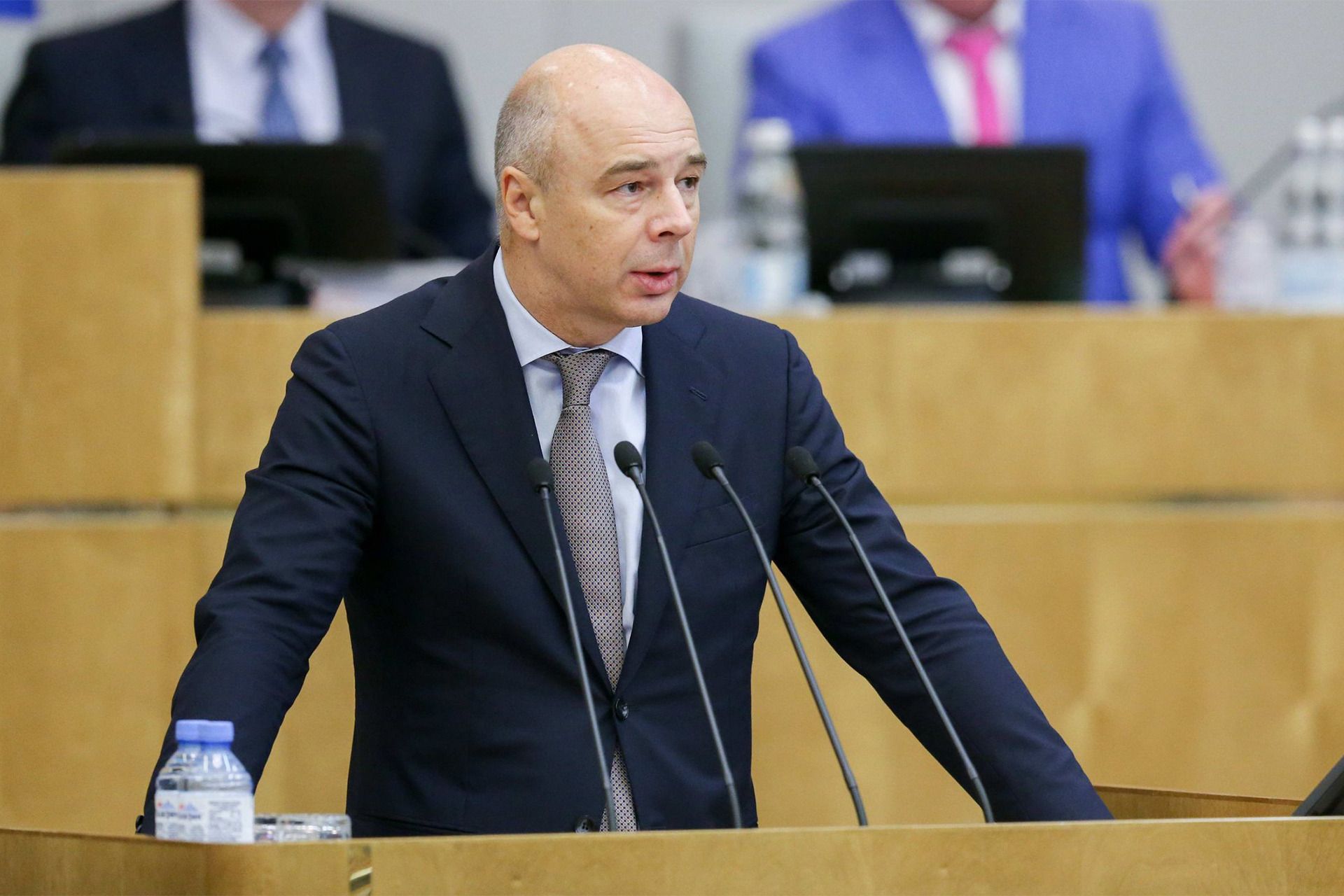
First Deputy Prime Minister, Minister of Finance of the Russian Federation Anton Siluanov. Photo: duma.gov.ru
“The prepared draft budget is resilient to any scenarios”, — that is how Finance Minister Anton Siluanov briskly began his speech in the State Duma, where he presented the draft budget for 2027 and 2028–29. Deputies were shown a wonderful picture: the budget was managed to be drawn up with oil at $50/barrel (all excess revenue will go to the National Wealth Fund), Russia is successfully getting off the oil needle — the share of oil and gas revenues will fall to 17%, the budget deficit remains at a safe level of 2% of GDP, and the state debt is also under control. In short, “the budget reduces its impact on the money supply, freeing up space for private credit and for the economy to move onto a growth trajectory”.
Higher and higher
“In 2027, real household incomes will grow by 1.4%, and in the following two years — by an average of 2.5% annually”, the minister delighted the “people’s representatives”. And social policy is the main priority: pensions will be indexed, and veterans, people with disabilities, and mothers in labor will not be forgotten either. In general, everything will be indexed and increased. By the amount of inflation, which, in the Finance Ministry’s view, will be 6.8%. The subsistence minimum, for example, will rise all the way to 20,227 rubles. And the minimum wage — to 28,935 rubles. Mr. Siluanov uttered these figures without blushing.
But the main thing, despite the minister’s assurances, in his speech was still a different direction. Where to get the money for the second (in reality, the main) priority: “financial support for the needs of the country’s defense and security, social support for participants in the special military operation and their family members”. In short, for the war.
After all, spending on it will increase again in 2027. And significantly: by 27% relative to the previous plan for 2027, which will amount to 35% of all budget expenditures. Spending under the “National Defense” section will increase by another 32.2% relative to previous plans: the security services and the National Guard value their work catching the dissatisfied, and there are more and more of them — either the scale of dissatisfaction is growing, or the appetites of the security services, or they have some kind of socialist competition there to meet and exceed the plan.
Actually, the Finance Ministry has already figured out where to get the money. And what it didn’t figure out itself, others suggested, starting with the same deputies and other lawmakers. For example, Federation Council Speaker Valentina Matviyenko proposed abolishing the reduced VAT rate for oysters, lobsters, and other lobsters. Supposedly, those who can afford them won’t even notice such a trifle. I sincerely support her proposal. Indeed, when the Finance Ministry is planning to cut spending on the cancer-fighting program next year by 12 times (once again, in words — twelve times), it is shameful to eat oysters with 10% VAT.
By the way, regarding help for demographics: maternity capital will of course be indexed (by the amount of official inflation), but the program to support large families will be cut by 40%. And even spending on the long-suffering housing and utilities sector, according to the draft budget, will be reduced by 100 million rubles, to 1.8 billion — after all, somehow we have lived until now with burst pipes, and we’ll keep living. And anyway, maybe Ukraine will also start responding symmetrically to Russian strikes on its municipal and energy infrastructure — so why spend money on something that is doomed anyway.
Deceptive figures
However, for now the budget still does not add up in any way. Siluanov called the budget deficit safe. According to the latest version of the draft, it is 2.2% of GDP — 7.72 trillion rubles versus the previously planned 5.39 trillion. Considering that this year the deficit was planned at 3.8 trillion, and then the bar was raised to 7.34 trillion, it is hard to believe that in 2027 things will be any different in a country that has already been at war for five years. Many experts assume that the budget deficit may double next year as well. And then it will exceed the 3% of GDP considered safe.
In general, one can go through any of the minister’s statements and find not outright lying, but a very sly shift in meaning. Take, for example, the promise of rising real incomes. Next year — a modest 1.4%, but later almost twice as much growth is promised. This is a tactic repeatedly used by Russian agencies (and the Finance Ministry is no exception): for the near, verifiable future, the figures are given more or less close to reality, but for the longer term one can freely fantasize — by then everyone will have forgotten what was promised anyway.
But even the modest 1.4% may turn out to be overstated. For example, this year, according to official data, real incomes will grow by almost 1%. And according to independent researchers, they have already begun to decline. Because consumer inflation differs from the official figure by almost two times, and the weakening of the ruble that has begun is unlikely to be stopped (the budget benefits from devaluation; it can pay with cheaper money while collecting more of the same devalued money in absolute terms — a purely mathematical trick), and that means real incomes will be discounted by the weakening ruble, since imports still “sit” in almost all production.
By the way. In 2024, growth in real incomes was forecast at 2.1% in 2026 and 3.5% in 2027. In 2025, the figures were more modest, and in spring 2026 they were also revised, resulting in a forecast of 0.8% growth this year and 2.1% next year. That’s by way of saying something about forgetfulness — the internet remembers.
And as for pride in getting off the oil needle — it is happening at the expense of squeezing business and the population. New tax hikes, housing and electricity tariff increases, an increase in the tax on deposits (and people have already received tax notices on deposits for this year — notices so large that they have to take loans to pay them). New large-scale tax audits — already even in small business, for amounts starting at 5 million rubles. Siluanov, however, called this in his speech “measures for the uniform taxation of passive income”. But whatever you call it, the result is an economic slowdown.
In reality, only part of military production is growing now, namely drone production (assembly from Chinese components and smuggled Western chips) and electronics (which also involve a lot of smuggling and Chinese parts). Well, also missile and shell production.
However, it must be admitted that over the past week the finance minister was not the biggest liar. So what if it’s a percent or two here and there, no big deal. Here in the Irkutsk region, the plague disappeared. At first it appeared — either a girl from the Institute of Virology went to Mongolia to visit infected ground squirrels, or she broke a vial with the plague bacillus at her institute — and then it turned into “pneumonia of unspecified etiology”. That’s what Rospotrebnadzor itself said. Don’t believe it? And you shouldn’t: Kremlin spokesman Dmitry Peskov himself ordered people “not to believe all sorts of rumors”. And should we also not believe that all hospitals in Irkutsk and its satellite town Shelekhov are closed, and that a mask-and-glove regime has been introduced at the aluminum plant there? And did Rospotrebnadzor head Anna Popova fly to Irkutsk for the beauty of Lake Baikal, perhaps? And did Buryatia head Aleksey Tsydenov hastily deny that the girl fell ill with the plague in the republic under his jurisdiction — while confirming the diagnosis — perhaps because he believed the rumors? And apparently, ashamed of their own gullibility, Russian media and pro-government Telegram channels began hastily deleting their posts about the plague — while Central Asian countries are erecting sanitary cordons on the border with Russia, and the United States said it is “closely monitoring” the situation.
We would gladly not believe it, but memories of how livestock was slaughtered under the guise of various harmless diseases in order not to utter the terrible word “foot-and-mouth disease” for Russian meat exports to China make that very difficult. Especially since this is not about livestock or exports, but about human lives. Such behavior cannot be explained by a desire not to sow panic: the population, on the contrary, fell into even greater panic because of such explanations — our authorities don’t have much of a reputation, you know.
Abraham Lincoln is credited with the phrase: “You can fool some of the people all of the time, and all of the people some of the time, but you cannot fool all of the people all of the time”. The history of the USSR confirms this. Present-day Russia clearly shows: the more often and more blatantly the authorities lie to the people, the less the people believe them — even when they are telling the truth. Remember the anti-vaccine and anti-mask movement that arose in Russia during COVID. But I have a terrible suspicion that the current Russian authorities are lying not only to the people, but to themselves as well.
This suspicion is not mine alone. The Institute for the Study of War (ISW) states: “Putin’s claims about Russia’s advances on the front line in September 2026 are so far removed from reality that they resemble hallucinations”. In his speech at the Valdai Forum (which was moved from Sochi to the Moscow region because of Ukrainian drones), Putin claimed that in September 2026 alone Russian forces captured 1,301 square kilometers of territory in Ukraine — 2.5 times more than the Russian gains claimed in previous months. But ISW found that in September Russian forces lost 80.81 square kilometers. And taking into account the “gray zones”, the Russian army’s net losses amounted to 175.18 square kilometers. After that, ISW analysts ask: “Does Putin know that the figures he presented are false, or does he accept the fictional front-line data presented to him as a result of a culture of lying deeply rooted in the structure of the Russian military command?”
It is quite possible that both self-deception and deception of subordinates are at work: after all, Russian officials, including military ones, well remember the Soviet rule — only good news should be brought to the boss. Therefore, any failure must be presented, if not as a victory, then at least as a clever plan for regrouping.
Here it is worth recalling another joke from the Soviet era: how different Soviet leaders reacted when they found that the rails had been removed in front of the train they were riding in. In that joke, Brezhnev ordered the windows to be curtained and the carriage to be rocked, pretending that the train was moving. There is increasing evidence that the Russian carriage today is performing roughly the same maneuver.
If you enjoyed this article, consider making a donation — one-time or, even better, monthly. Your support helps us motivate our authors and become better with every article.
Our organization is recognized by the Internal Revenue Service (IRS) as a 501(c)(3) tax-exempt, charitable organization, which means that all contributions made to us are tax-deductible to the fullest extent permitted by U.S. law. Individuals may generally deduct charitable contributions of up to 60% of their Adjusted Gross Income (AGI) for cash donations made to qualifying 501(c)(3) organizations. For donations of appreciated assets (such as stocks or other long-term capital assets), the deduction is typically limited to 30% of AGI, based on the fair market value of the asset. C-corporations may deduct charitable contributions of up to 10% of their taxable income for donations made to eligible charitable organizations.
By submitting a donation, you confirm that you have read and accept the following documents: Privacy Policy and User Agreement, and also give consent to the processing of your personal data.
If you would like to unsubscribe from a monthly donation, please email us at: [email protected]