The eighteenth EU sanctions package is, as usual, mocked by Russian officials for its ineffectiveness. However, public skepticism is accompanied by rather active moves from the Kremlin. Is this just a coincidence? It seems not.
When the EU first published a press release, followed by a detailed list of sanctions imposed on Russia as part of the 18th package, the Russian stock market reacted weakly, and oil prices even dropped slightly. Indeed — what use are sanctions against the former film director and now propagandist Karen Shakhnazarov? Or the ban on over a hundred tankers of the Russian shadow fleet?
The interesting points seem to be only two innovations: first, the “cap” for Russian oil is now floating — minus 15% from the average market price — and will be reviewed every six months; second, for the first time, sanctions are introduced on petroleum products made from Russian raw materials.
Now there is no need to persuade all 27 EU countries to sign off on another deterioration of conditions for Russian oil exports — everything will happen automatically.
Regarding restrictions on petroleum product exports, in theory, this will prevent mixing Russian oil with oil from other countries and selling fuel to Europe under the guise of Indian or Indonesian origin.
This is, of course, good, skeptics respond, but experience has shown that Russia suffers from the oil price “cap” for only a few months before resuming deliveries using tankers under “convenient” flags, of which there are already more than 800. Yes, half are under EU sanctions, but once a tanker re-registers — it’s a fresh start. Additionally, a practice has emerged of transferring oil at sea from a “disreputable” tanker to a “respectable” one, where both turn off their transponders for secrecy. And the ban on petroleum products is simply laughable: distinguishing which oil they were made from is only possible through isotope analysis. It’s roughly like doing DNA tests on every citizen at the border — technically possible, practically impossible.
The same roughly applies to sanctions on the banking sector. Yes, this time niche and regional banks involved in sanction evasion operations were targeted, yes, Chinese banks were also hit — but so what? Russia has already fully switched to ruble settlements in foreign trade, which, by the way, keeps the ruble strong — importers no longer need dollars. More precisely, the chain is a bit more complex: ruble — crypto — goods. And in trade with key current partners, China, Iran, and the UAE (the Emirates are more of a hub for trade with other countries), national digital currencies are already widely used, which completely excludes the possibility of control by third-party regulators.
And again, all this is correct, but there is a nuance. The Russian Direct Investment Fund (RDIF) fell under sanctions. The CEO of RDIF is Kirill Dmitriev, who took part in intriguing negotiations with Americans on rare earth metals deals and joint Arctic projects. As informed sources say, he participated not only because he is married to the friend of Putin’s eldest daughter. The point is that in the current complex payment chains with Russian partners, RDIF has become a kind of confirmation center — roughly speaking, a guarantor that no one will cheat anyone. Just as decentralized crypto exchange platforms guarantee participants that the deal will go through.
Henceforth, it turns out, no one in the West can work through RDIF.
By the way, there is also an innovation regarding tankers: for the first time, not only their names and registration countries are listed, but also technical data: IMO ship identification numbers, routes, and transshipment schemes. This already allows European port authorities and insurers to identify such vessels and deny them entry to ports and insurance. Most likely, previously sanctioned tankers will also be identified this way.
So, half of the shadow fleet has already been identified. Once the second half is identified, all vessels of the Russian shadow fleet will become pirate ships, operating at their own risk. And, by the way, recent incidents obstructing the passage of such tankers through the Baltic straits suggest that using the Western maritime route will soon become inconvenient for Russian oil traders. And to get oil to eastern ports, it still needs to be transported over the eternally overloaded Russian Railways. As for the Northern Sea Route, this exotic option can only flatter the pride of propagandists for now.
Even the difficulty of identifying the oil from which petroleum products are made can be overcome by spot-checking individual batches from certain countries with subsequent extremely harsh penalties for violators.
This is roughly how banks were forced to comply with anti-money laundering and sanction laws: a few million-dollar fines — and everyone became compliant.
Financial Times writes that all these measures are unlikely to be effective unless joined by the US and the G7. As for the G7 countries, they will most likely support the initiative, albeit with some exceptions — for example, liquefied Russian gas is important for Japan. By the way, the UK almost simultaneously with the EU imposed its own sanctions — mainly against GRU officers. But the US situation is more interesting.
The eighteenth sanctions package was adopted by the EU immediately after Slovakia agreed to sign it in exchange for certain preferences. Most likely, this is not just a coincidence: Hungary and Slovakia usually extract additional benefits, discounts, and transfers from the EU this way. But there is another coincidence — a change in rhetoric by US President Donald Trump. From compliments to Vladimir Putin, the American leader has moved to reproaches and threats: in particular, he promised to impose 100% tariffs on Russian goods and services, as well as on those who buy Russian goods and services but do not help Ukraine. A 50-day grace period was given, expiring on September 2 — just when Putin will be visiting China.
The reaction to Trump’s threat was also roughly the same as to European sanctions — basically, he can threaten, but who will listen? Will China stop buying Russian oil and coal? But right after this, it suddenly became clear that the Kremlin is not opposed to Trump participating in the Putin-Xi meeting as well. And after the announcement of European sanctions, Russia also expressed readiness for a third round of negotiations with Ukraine. Meanwhile, the Indian oil minister for some reason stated that the country could quite possibly abandon Russian oil in favor of Middle Eastern supplies.
If 100% tariffs on goods from all countries involved in Russian exports come into force, China will be forced to buy only Russian pipeline oil, which cannot be tracked by external observers. What then to do with 84% of current oil exports, transported by tankers?
Meanwhile, the European Union has begun developing the 19th package of sanctions.
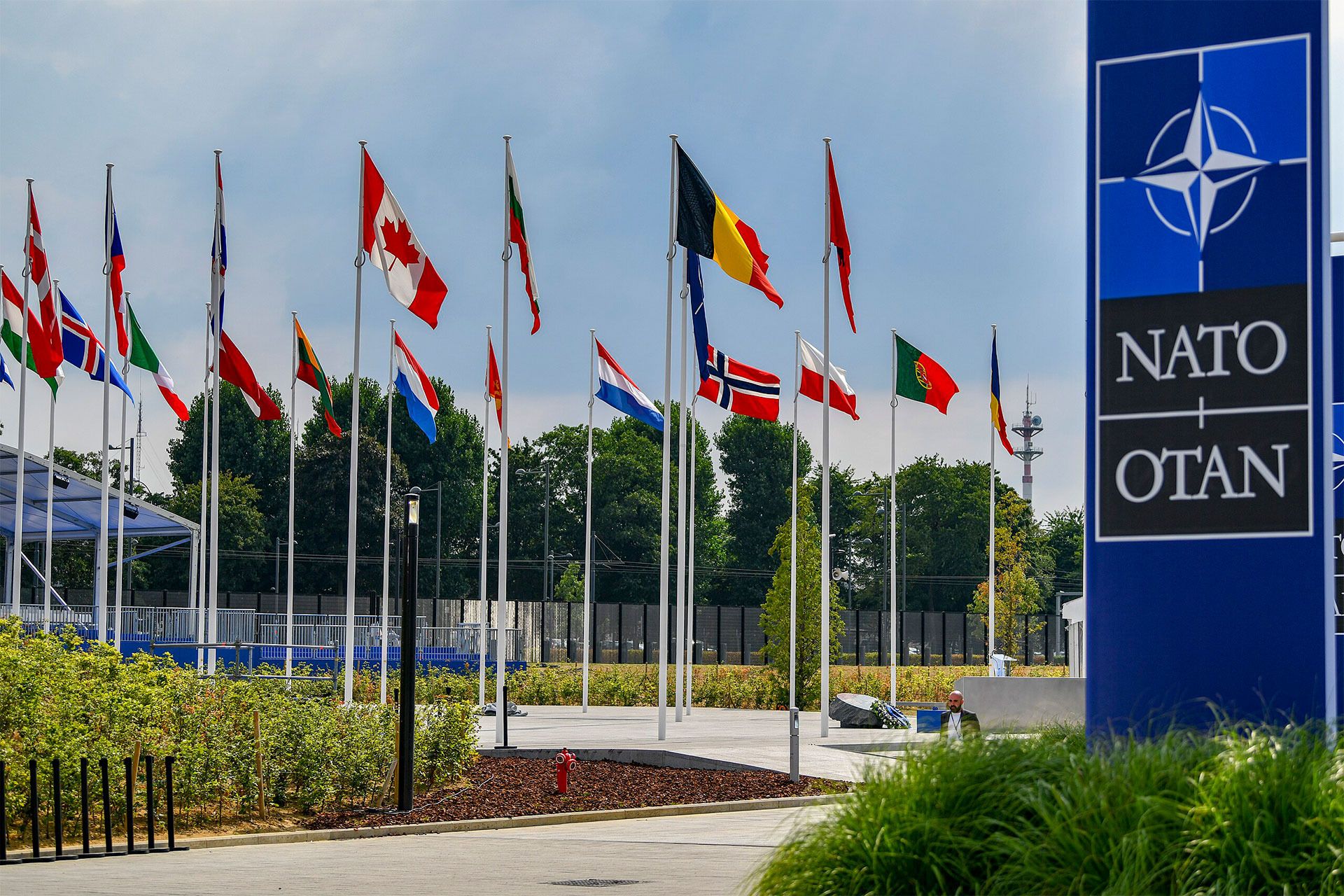
In the main photo — flags of NATO member countries in front of the organization's headquarters in Brussels
If you enjoyed this article, consider making a donation — one-time or, even better, monthly. Your support helps us motivate our authors and become better with every article.
Our organization is recognized by the Internal Revenue Service (IRS) as a 501(c)(3) tax-exempt, charitable organization, which means that all contributions made to us are tax-deductible to the fullest extent permitted by U.S. law. Individuals may generally deduct charitable contributions of up to 60% of their Adjusted Gross Income (AGI) for cash donations made to qualifying 501(c)(3) organizations. For donations of appreciated assets (such as stocks or other long-term capital assets), the deduction is typically limited to 30% of AGI, based on the fair market value of the asset. C-corporations may deduct charitable contributions of up to 10% of their taxable income for donations made to eligible charitable organizations.
By submitting a donation, you confirm that you have read and accept the following documents: Privacy Policy and User Agreement, and also give consent to the processing of your personal data.
If you would like to unsubscribe from a monthly donation, please email us at: [email protected]