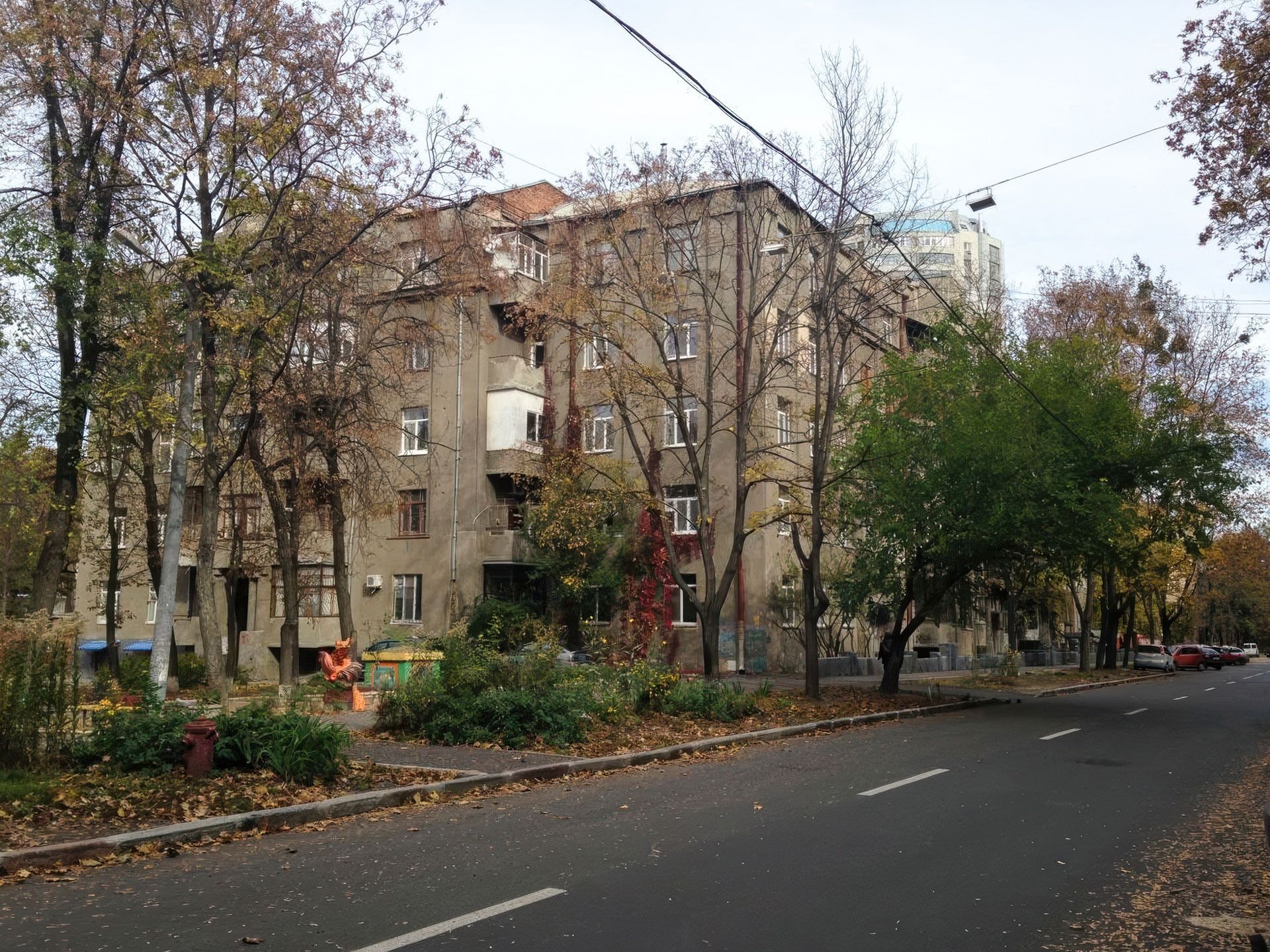
The brief period of the rise of Ukrainian literature and art in the 1920s-30s is called the “Executed Renaissance.” The intellectual and creative atmosphere of those years was so enticing that emigrants fleeing the Civil War began moving to Ukraine. But the golden age ended as abruptly as it began. “Most.Media” recalls the tragic biographies of the participants in this movement.
On May 13, 1933, in Kharkiv on Krasnykh Pysateley Street, in house number 5, known as the “Slovo House” (Будинок “Слово”), a small group gathered in apartment number 9. Friends of the host, the Ukrainian writer Mykola Khvylovy, who also lived in the same building, came to visit. They were discussing the arrest of their friend, poet and writer Mykhailo Yalovy — accused of “nationalism” and “participation in a counterrevolutionary organization.” Suddenly, Khvylovy went into his study, and a minute later a gunshot was heard from there.
When the guests rushed into the room, Khvylovy was sitting at his desk with a bullet wound to his temple. He was dead. Next to him lay a note:
“The arrest of Yalovy is the execution of an entire Generation… For what? For being the most sincere communists? I don’t understand anything (…)”
“It hurts terribly. Long live communism. Long live socialist construction. Long live the Communist Party.“
Thus began the countdown of the tragedy of the Ukrainian “Executed Renaissance.”
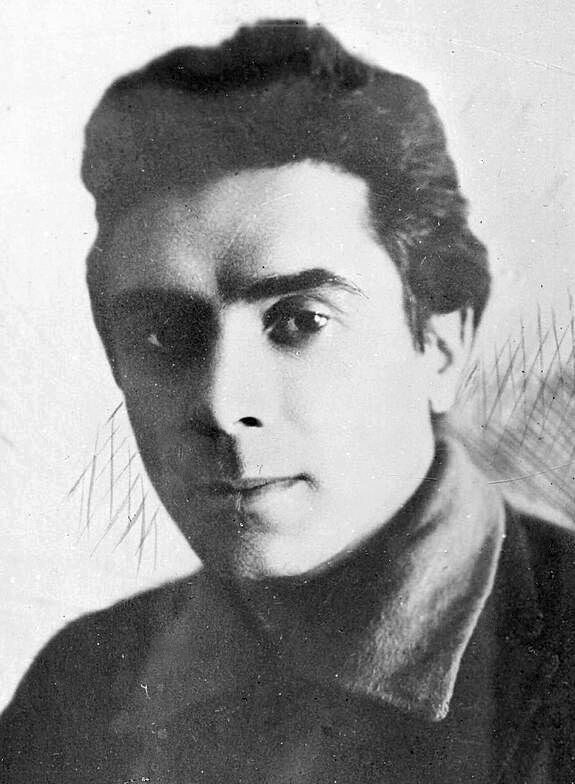
Mykola Khvylovy. Photo: Wikipedia
Ten years earlier, in the early 1920s, Stalin began a policy of Ukrainization. Ukraine breathed more freely — the authorities allowed books to be published in Ukrainian, Ukrainian schools appeared, and newspapers and magazines began to be published in Ukrainian. The native language returned to the sphere of government administration.
After more than a century of oppression by the Russian Empire, Ukraine experienced an unprecedented rise of national culture and free thought. At first, everything looked promising.
Ukrainian writers, poets, and artists moved to Kharkiv, then the capital of Ukraine and a cultural and scientific center. They often had nowhere to live — crammed in with friends or in corners. It was then decided to build a special house for writers. Within two years, a six-story building was constructed on Krasnykh Pysateley Street, where all 62 apartments were allocated to cultural figures, mainly writers. The building was named “Slovo” (“Word”) not only because it housed “workers of the word,” but also because from above it resembled the letter “C.” The golden age of Ukrainian culture began.
“Slovo House,” 1930. Image: proslovo.com
The intellectual and creative atmosphere was so enticing that emigrants fleeing the Civil War began moving to Ukraine.
The writer and former Minister of Education of the Ukrainian People's Republic (UNR), Anton Krushelnytsky, returned with his entire family, as did poet Mykola Voronoi and even the famous historian and former head of the UNR, Mykhailo Hrushevsky. Many returned, but only Hrushevsky was relatively fortunate — he more or less adapted to Soviet life and continued his historical research, but because the authorities considered his work too “Ukrainianized,” the old man was exiled and died soon after, though of natural causes. Krushelnytsky was executed in 1937, along with all five of his children; his wife died of grief. Only his granddaughter survived. Voronoi was also executed in the 1930s.
The Krushelnytsky family, early 1930s. Image: Wikipedia
Ukrainization ended as abruptly as it began — on March 10, 1933, an editorial appeared in Pravda titled “The Outrageous Facts of the Extremely Gross Distortion of National Policy in Ukraine.” The article signaled the start of Cheka reprisals against Ukrainian cultural figures. Repressions began immediately and in waves. The first victim was the writer, poet, and publicist Ivan Bahrianyi, accused of counterrevolutionary agitation. Bahrianyi led the so-called MARS (“Workshop of Revolutionary Word”), a literary, absolutely apolitical organization as far as possible. His arrest occurred a year before the Pravda article — the Chekists were working ahead of time. Writers mourned, protested, and then moved on.
When Mykhailo Yalovy was arrested, it became clear that Bahrianyi’s case was not an isolated incident.
The clever Khvylovy understood everything immediately and preferred not to lie down in a mass grave with a shattered skull. Besides, he and his friend, writer Arkadiy Liubchenko, had just returned from a trip to villages, after which he fell into depression. The friends wanted to see the aftermath of the Holodomor, echoes of which they had seen in Kharkiv.
Many peasants from famine-stricken villages flocked to the cities, primarily to Kharkiv, the capital of the Ukrainian SSR, an industrial and transport hub, a city of power and resources. Many who arrived died in the city; corpses lay in the streets — contrary to peasants' expectations, finding work in Kharkiv was nearly impossible, and no one could obtain food ration cards.
However, after traveling through the villages, Khvylovy realized that Kharkiv was almost paradise compared to the provinces. Yalovy’s arrest was simply the last straw for the writer disillusioned with Soviet power.
Mykhailo Yalovy (pseudonym Yulian Shpol)
Writer, poet, publicist, public figure. Born in 1895 in Poltava region into the family of a volost clerk. He graduated from the Myrhorod gymnasium and entered the medical faculty of Kyiv University, where he immediately joined the Socialist Revolutionary movement. In 1920, he joined the Communist Party and immediately became editor of the newspaper “Krestyanska Bednota” (“Peasant Poor”), and was the first president of VAPLITE (Free Academy of Proletarian Literature). He began publishing collections of poems and novels early on.
In 1929, Yalovy’s most famous novel “Golden Fox Cubs” (Золоті лисенята) was published, about the anti-Denikin underground and a love story against the backdrop of the fight against counterrevolution. Yalovy was a convinced supporter of Soviet power and in all media he accessed, under the pseudonym Mykhailo Krasnyi, called to join the fight against counterrevolution. Earlier, in 1921, together with poets Mykhailo Semenko and Vasyl Aleshko, he formed the “Strike Group of Futurist Poets” in Kharkiv. At the end of 1925, he co-founded the “Free Academy of Proletarian Literature” with other poets and writers, including Mykola Khvylovy, Maik Yohansen, Mykola Kulish, Ostap Vyshnia, Petro Pancha, and others.
In 1932, when attacks on Ukrainian cultural figures began, Yalovy and Khvylovy were expelled from VAPLITE to preserve the organization. But it didn’t help, and VAPLITE had to disband.
A year later, the poet was expelled from the party, and a few weeks later arrested on a fabricated case of the so-called UVO — Ukrainian Military Organization, created by former officers of the Ukrainian People's Republic (UNR). On November 3, 1937, Yalovy and his comrades were executed in Sandarmokh.
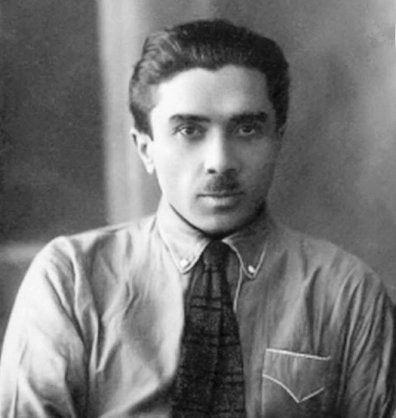
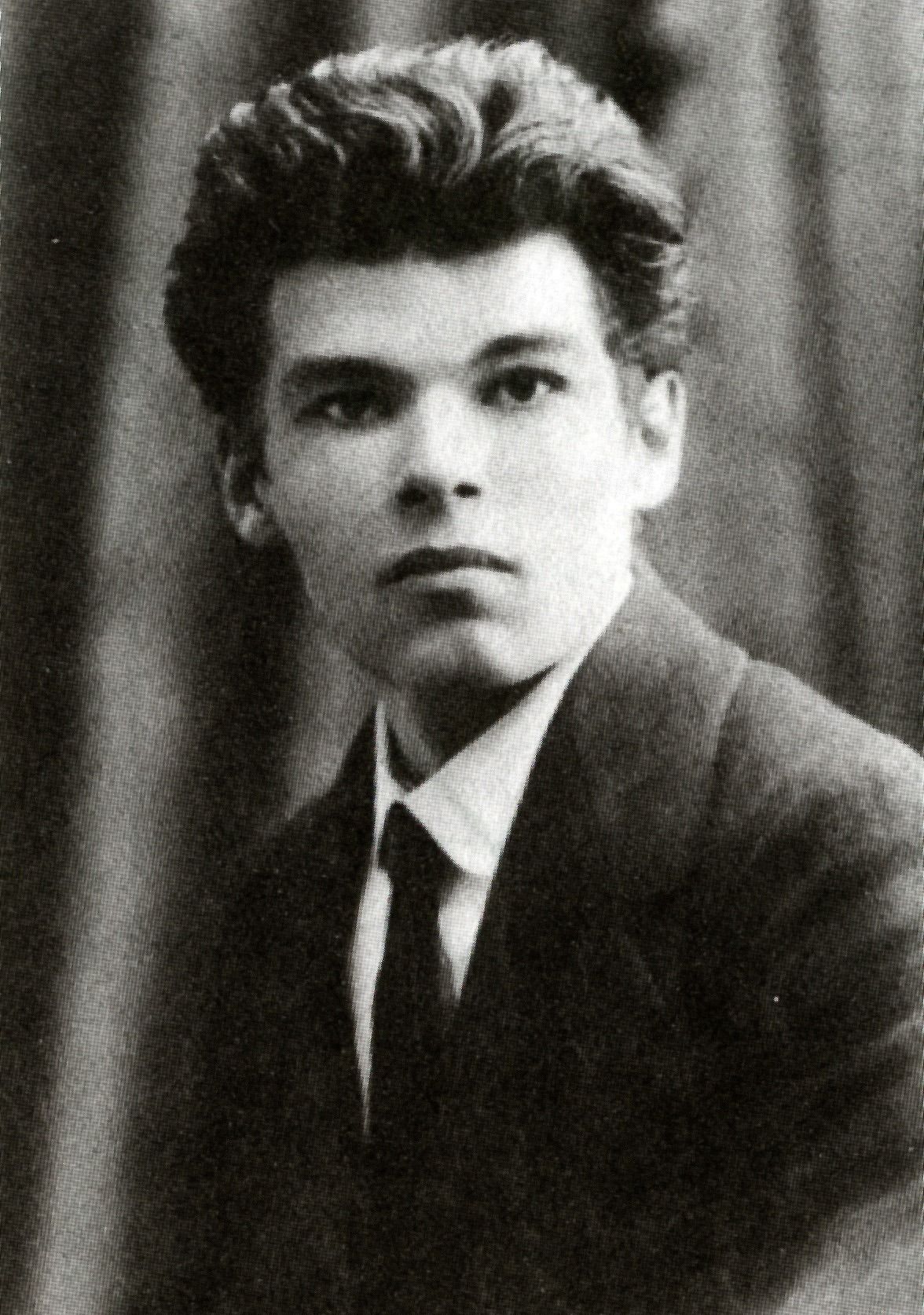
Mykhailo Yalovy. Photo: proslovo.com
Don’t touch,
Don’t touch me today.
There is fire in my soul,
In my soul —
Reflections
Of millennial struggles,
Bequeathed
By millions of generations…
When red-winged crowds
Fill the street pits, —
Crying are the shaken, electrified strings,
The ruffled, awakened, mesmerized beasts.
Frozen pains burst forth.
With a final whistle
Ages are swept away by a cosmic broom, —
Torn from the depths of the past,
I am — blindingly naked.
Don’t touch me,
Naked.
***
Don’t touch,
Don’t touch me today.
There is fire in my soul,
In my soul —
Reflections
Of millennial running,
Bequeathed
By millions of generations...
When red-winged crowds
Fill the street pits, —
Crying are the dissonant, inflamed strings,
Mad awakened beasts run wild.
Frozen pains burst forth.
With a final whistle
Ages are swept away by a cosmic broom, —
Torn from the slums of the past
I am — dazzlingly naked.
Don’t touch me
Naked.
(Translation by Kateryna Barabash)
Mykola Khvylovy
One of the brightest representatives of the “Executed Renaissance” and Ukrainian culture of the 1920s-30s in general, an outstanding prose writer and publicist, author of excellent stories, novellas, and novels, author of the slogan “Away from Moscow!”, organizer of Ukrainian writers' communities. His real name was Mykola Fitilyov. Born on November 13, 1893, in Kharkiv province. He did not receive higher education — he had to feed the family because his mother left the drinking father with the children, and Mykola became the head of the family. He worked various jobs — loader, laborer. In 1914, he was mobilized and fought in Galicia, the Carpathians, Poland, and Romania. In the trenches, Mykola embraced communist ideas and began educational work among soldiers. At that time, he wrote his first poems.
After demobilization in 1917, Fitilyov and his brother created a detachment of “free Cossacks” and joined Petliura — for some time fighting on the side of the Directory against the Hetman, but soon they were ordered to disarm for sympathizing with the Bolsheviks. Fitilyov and his comrades were sentenced to execution, but he managed to escape and joined the Red Army. He was demobilized in 1922, moved to Kharkiv, and began publishing poetry. He tried several pseudonyms and finally became Khvylovy. “Khvylya” means “wave” in Ukrainian — apparently, Mykola Khvylovy liked the power of the element. The pseudonym suited the young writer perfectly — who, if not he, the leader of the new wave of Ukrainian culture, should bear such a name?
Mykola Khvylovy
We love iron and copper, Concrete and cast iron — Thunder was born from them, But also singing strings.
Finally, the morning blossomed, The country has stars, With spears and sabers in battles We raise them from the sky.
***
We are in love with iron and copper,
With concrete and cast iron
From them thunder began to roar
But the strings began to sing
At last the dawn blossomed
Over our starry land
And stars with sabers and blades
We take down from the sky.
(Translation by Kateryna Barabash)
Revolutionary pathos, as we see, went hand in hand with the idea of resistance to Bolshevik Moscow. Khvylovy, like many other authors of those years, wrote enthusiastic poems about the “wonderful, new world,” while simultaneously protesting the relentless pressure of Russia on Ukraine.
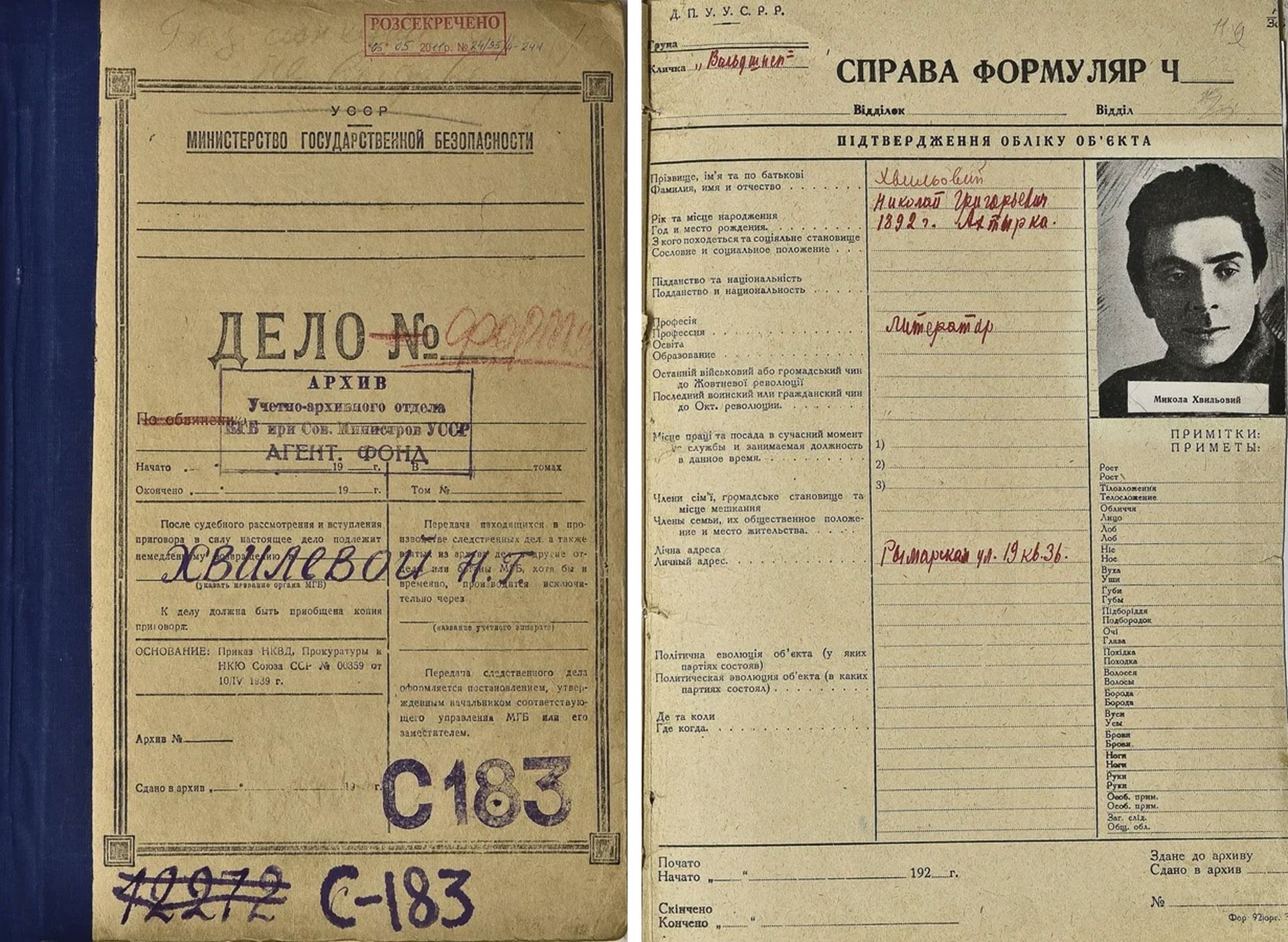
Mykola Khvylovy’s case file. Photo: TsDVR
Khvylovy’s publicist work effectively became the voice of Ukrainian national protest against Moscow’s expansion. He wrote boldly and passionately. This was an era of passionaries, but Khvylovy stood out for his dangerous radicalism; his articles contained frank anti-Russian and anti-Stalin attacks.
“Ukrainian poetry must run away from Russian literature and its element as fast as possible. The fact is that Russian literature has for centuries weighed over us like a master of the situation, who has accustomed our psyche to slavish imitation,” Khvylovy wrote in one of his articles. In another, he expressed something unthinkable for those times:
“Russia is an independent state? Yes! Then we are independent too.”
It was clear that after Yalovy, Khvylovy’s turn would come. Serving in the Directory alone already led to the mass grave in Sandarmokh.
In the 1920s, Khvylovy created his best works: “I (Romantika),” the novellas “Sanatorium Zone” and “Sentimental Story,” the collection “Blue Etudes,” the novel “Waldshneps,” and the pamphlet “Ukraine or Little Russia?” But from 1926, he ceased to be published. He did not release any more works before his death. Probably, he knew he would not be forgiven. Khvylovy’s shot opened the door for Ukrainian culture into the abyss and eternity.
“Notice how young Ukrainian writers write. You probably don’t know them, but you should; it was already written by Shevchenko. There is a belief that our grandfathers all played flutes, which is why the language is so musical. Our grandfathers were shepherds and drove cattle across the blue dew, and by the storm-beaten oak they played flutes. And Rabindranath Tagore was also born in the wilderness.
So, notice: they were born in the wilderness and got lost in the wilderness. That is bad. I am taking a new path, and I am happy. Ahead of me burns a star, as it once did. I place it in my hair — and it burns differently… Yes…““
🌉
Meanwhile, Ukrainian culture was boiling, bubbling, producing masterpieces, seeking unexpected ways of self-expression, experimenting. Writers united into associations based on interests and aesthetic tastes: “Pluh,” “Hart” (later VAPLITE), “Aspanfut” (Association of Panfuturists), and others. These organizations published literary magazines featuring not only works but fiery debates. Meanwhile, a large-scale literacy campaign was underway, increasing the number of readers.
Demand created supply, which is why, in particular, the art of the 1920s was so multifaceted and diverse. There was the precise, quite accessible humor of the super-popular Ostap Vyshnia, the delicate love lyrics of Volodymyr Sosiura, the intellectual novels of Valerian Pidmohylny, the “romantic vitalism” of Mykola Khvylovy, the futuristic poems of Mykhailo Semenko, neoclassicism. The 1920s was an era of various “isms,” which socialist realism had not yet destroyed.
Kharkiv was a magnet for Ukrainian free talents, a city of creative experiments and brilliant new ideas — not only in literature. In 1926, Les Kurbas’s theater “Berezil” moved here from Kyiv — a phenomenon of global scale in terms of bold directorial experiments. Models of “Berezil” stage sets received a gold medal at the World Theater Exhibition in Paris in 1925. Kurbas staged many modern plays, mainly by his friend and outstanding playwright Mykola Kulish.
Les Kurbas (real name Oleksandr-Zenon Kurbas)
Born February 25, 1885, in the Austro-Hungarian Empire into an acting family. He studied in Lviv and Vienna, spoke eight languages fluently, and received excellent philological, philosophical, and theological education. He started in theater as an actor and was very popular.
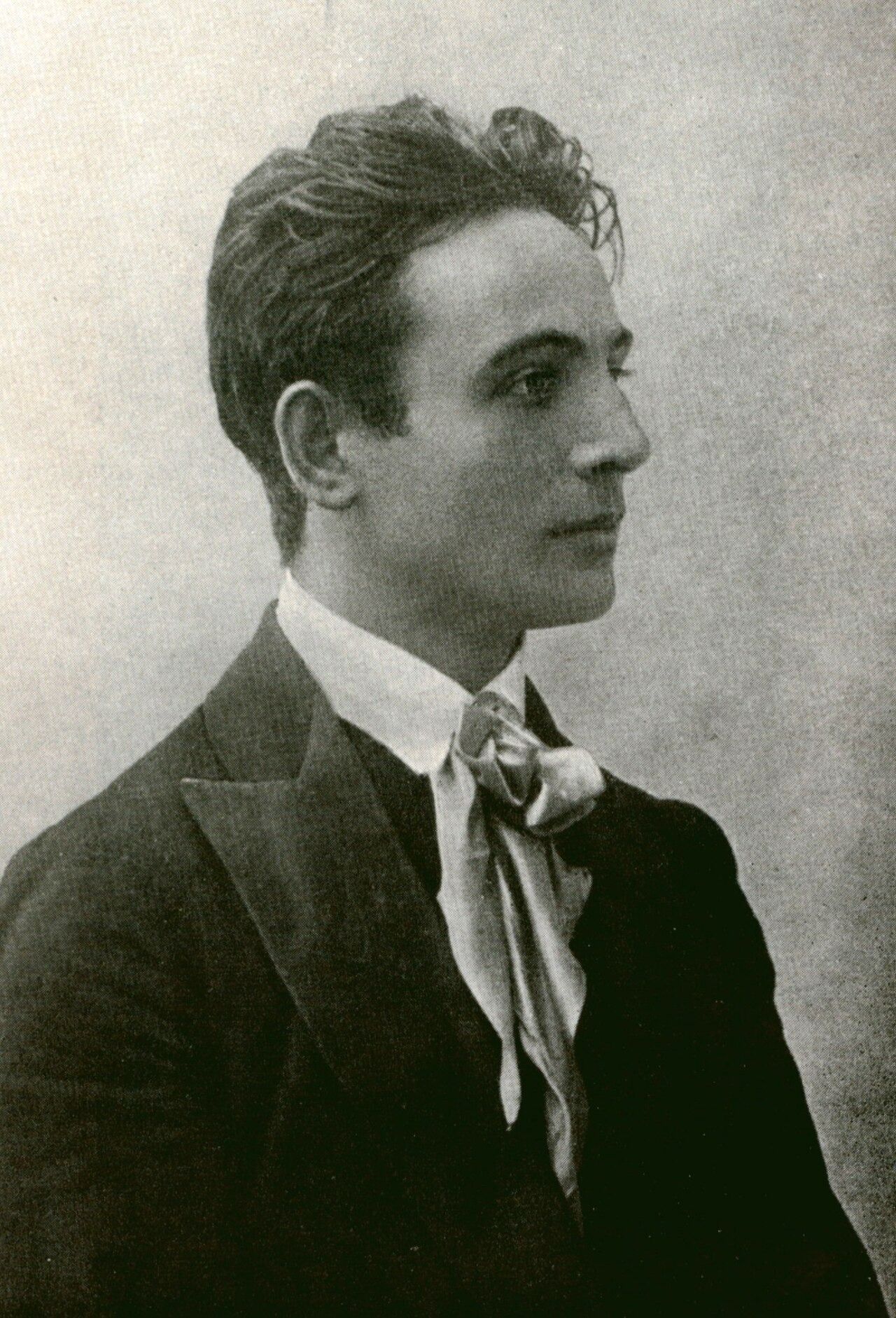
Les Kurbas. Photo: Wikipedia
During World War I, Kurbas moved to Kyiv, where he soon created his “Young Theater.” He toured with it on the fronts of the Civil War, and in 1922 created “Berezil” based on the “Young Theater” and went on tour in Europe.
Four years later, the theater settled in Kharkiv, receiving a beautiful building in the city center on Sumska Street. In Kharkiv, Kurbas found his “own” playwright — Mykola Kulish. Their tandem entered theater textbooks, although contemporary critics long rejected Kurbas’s new methods.
Kurbas was so unsoviet a director that he simply could not compromise with the authorities — his nature would not allow it. After one premiere, which of course had nothing to do with socialist realism, a party official summoned Kurbas and demanded he join the ranks of “normal” creators. But there was no place for Kurbas among them.
In December 1933, he was arrested, sentenced to five years in labor camps, soon sent by train to Solovki, and on November 3, 1937, executed in Sandarmokh.
Mykola Kulish
Playwright, writer, one of the symbols of the Executed Renaissance. Born in 1892 in Kherson region. During World War I, he rose to the rank of lieutenant; from 1919, organizer of the Dnipro Peasant Regiment of the Red Army, later worked as a school inspector in the Odessa Department of Public Education. In 1922, he became a member of the “Hart” writers’ union. After staging the play “97” about the 1921-1922 famine in Kherson and “The Commune in the Steppes,” he gained recognition and moved to Kharkiv, where he soon became president of the literary organization VAPLITE. From 1925, he collaborated with Les Kurbas and the “Berezil” theater.
After the end of Ukrainization policy, Kulish was among the first to face repression because he was extraordinarily popular and his plays bordered on anti-Soviet themes. Even one of the early joint productions by Kurbas and Kulish, “Myna Mazailo,” a seemingly optimistic story about the victory of Ukrainization, alarmed the Chekists: “Their Ukrainization is a way to identify all of us Ukrainians and then destroy us together so that even the spirit would be gone,” said one of the characters.
Kulish, putting “anti-Sovietism” into the mouths of potential “counterrevolutionaries,” gave voice even to doubters, which honored him as a playwright but unsettled the censors.
HANNA. They have made a mess of the settlement…
KOPYSTKA. As stupid as your ram… Did you hear what Lenin said? Then a new world will come when we learn rikhmetyka…
HANNA. May it be so!
KOPYSTKA. We will learn rikhmetyka and all politics, then we’ll make you such an oven that it will cook and bake by itself…
HANNA. Stop lying!..
KOPYSTKA. Then you’ll see! You turn the screw, and it… shhh! — the borscht boils, turn it again — trach-tarakh! — borscht on the table…
HANNA. There’s nothing to cook! Famine is coming! (To her son.) Stop, or I swear I’ll burn your books.
In 1932, in the play “Pathetic Sonata,” the phrase was spoken: “We want our nation not to clean the boots of strangers. It’s time! It’s time to become free! We must mount horses to gallop through our Cossack steppes with eagles and winds!” It is no surprise that the same year the play was branded “fascist,” Kulish was declared a bourgeois-nationalist playwright, all his 15 plays were banned one after another, and most were destroyed.
In December 1934, Kulish was arrested for “membership in a nationalist terrorist organization and ties with the OUN,” sentenced to 10 years in Solovki camps, and three years later executed in Sandarmokh.
Mykola Kulish. Photo: Wikipedia
During the height of Ukrainization, from 1925 to 1928, a large public debate unfolded about the role of the writer in society and what Ukrainian literature should be. Most participants, speaking in newspapers and magazines, agreed: “Away from Moscow! Give us Europe!” This call by Khvylovy ran like a red thread through all the milestones of the heated discussion of national art.
It was a celebration of free culture, a celebration of independent national art. Ukrainian creators believed the moment had come to go their own way, to show the world what “free Ukraine,” just yesterday a colony of the Russian Empire, was capable of. Enough of constantly looking back at Russia, no matter how great its culture was.
They did not yet know that at the head of the new state replacing the empire stood a sadist of all-Union scale, or even wider. He did not forgive such statements. He forgave nothing at all.
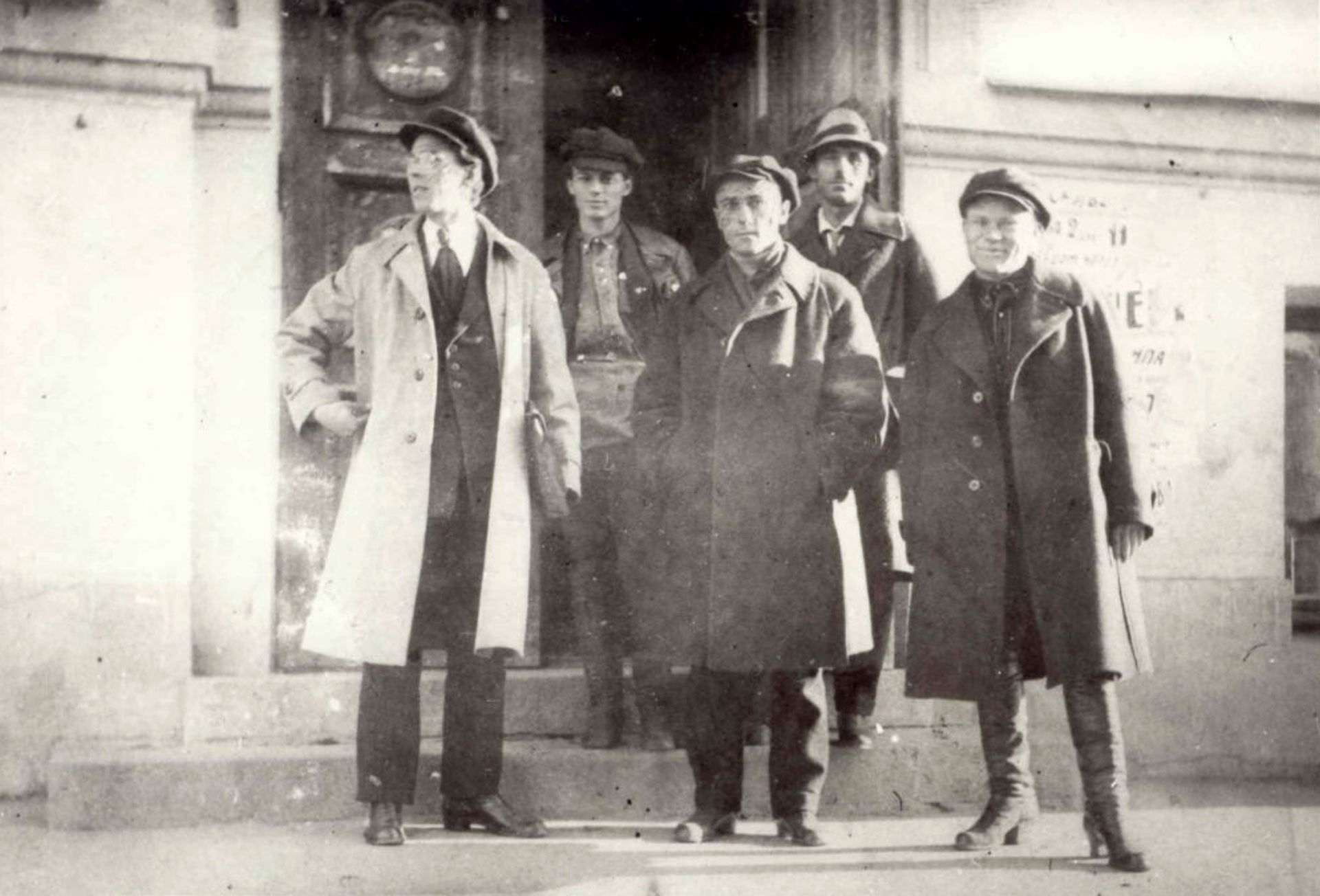
Image: proslovo.com
The Slovo House continued to be inhabited; the common dining room became a local Hyde Park. The constructivist apartments had no kitchens — it was believed that the Soviet person should eat together with comrades. A cook worked in the dining room; everyone ate the same dishes in front of all — a perfect example of a socialist cell “by interests.” Meanwhile, each apartment had a telephone — and most likely, they were bugged, since the writers, as rulers of the unstable thoughts of the new Soviet person, were closely monitored. Possibly, someone inside the “commune” worked for the DPU (the Ukrainian equivalent of the GPU).
They drank and argued a lot — until hoarseness, almost to fights — quarreled and made up. Remember Blok:
Outside the city grew a deserted quarter On swampy and shaky ground. Poets lived there — and each met Another with a haughty smile.
In vain the bright day rose Over that sad swamp; Its inhabitant devoted his day To wine and diligent work.
When drunk, they swore friendship, Talked cynically and sweetly. At dawn they vomited. Then, locked away, Worked stupidly and zealously.
Blok seemed to have described the Slovo House in advance — it appears that such was the turbulent life of the bohemian community in central Kharkiv.
The house had its own sports ground, usually inhabited by one resident — Maik Yohansen, one of the brightest representatives of Ukrainian literature of those years. An athlete and handsome man, he amazed people not only with his talent but also with his habit of walking around the house shirtless with an unlit pipe and an unusual devotion to sports for a member of the “commune.”
Maik Yohansen
An outstanding Ukrainian poet, writer, essayist, and screenwriter. According to many researchers, the most talented of the brilliant literary cohort of the 1920s-30s. Born in 1896 as Mykhailo in a family of a Latvian immigrant with Scandinavian roots. Yohansen called himself a descendant of Vikings on his father’s side and allegedly a descendant of Cervantes on his mother’s side. He was an unrestrained fantasist. He received excellent education, graduating from the historical-philological faculty of the Imperial University in Kharkiv, writing poetry and prose in Russian. After the Denikin occupation of Kharkiv and witnessing soldiers’ atrocities, he burned everything written in Russian and from then on wrote only in Ukrainian. That was when Yohansen found his Ukrainian identity.
In 1921, he met Khvylovy, Volodymyr Sosiura, and other Ukrainian writers. Together they organized various literary associations, published magazines, and created performances for Kurbas’s theater.
Yohansen was a true Renaissance man — he seemed to be able to do everything and was talented in everything: he wrote books for children and adults, translated, wrote film scripts, conducted linguistic research, spoke eighteen languages, and, possessing a unique memory, learned each in a few days.
One of Yohansen’s friends recalled how once during a billiards game Maik suddenly said, “I’ll go have lunch, then lie down for an hour — I need to learn Serbian.” And the most amazing thing — by evening, he spoke Serbian. He learned Spanish by talking with Spanish children brought to Kharkiv.
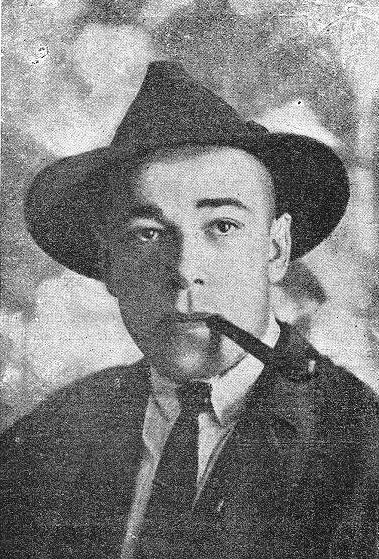
Maik Yohansen. Image: tyzhden.ua
Yohansen’s main work is considered the avant-garde novella “The Journey of the Learned Doctor Leonardo and His Future Lover, the Beautiful Alcesta, to Slobozhanshchyna Switzerland.” However, Yohansen valued his poetry more.
On August 18, 1937, he was arrested and on October 27 of the same year, the day before his 42nd birthday, executed by the Kyiv NKVD. Shortly before his arrest, Maik wrote:
“...settling in the realm of shadows, I will have intelligent conversations with Hesiod, Heine, and Cervantes. But I will speak to them in Ukrainian because I believe our colorful Motherland is a diamond among the cluster of free peoples of the world. And I will also say there, in the realm of shadows, that I, Maik Yohansen, was among the best poets of the renewed Ukrainian land both in life and after death.“
On the roofs, rusty ears of grain The bloody moon fades, At dawn the sickle will mow The young withered hay. [...] I know: I will perish high, In the pure blue air. They will hang me over the city: To the pre-dawn star in the eye, To look into the cold eye.
***
Over the roof, with rusty ear
The bloody moon melts away
With a sickle before dawn it will mow
The dried young grass
[...]
I know, I will perish high, In the clear blue air, They will hang me over the city: To the pre-dawn star in the eyes, To look into cold eyes...
(Translation by Kateryna Barabash)
The Slovo House, which became a symbol and collective image of the Ukrainian Renaissance, can also be considered the birthplace of Ukrainian futurism in poetry — arguably the main achievement of temporarily free Ukrainian literature, which gained worldwide fame. Except, of course, in Russia, which to this day remains confident in the universal superiority of “great Russian culture.”
Futurism also flourished in Russia and Italy, but while in these two countries it faded away on its own, in Ukraine it was physically destroyed — most of its representatives were executed.
Among the futurists were Maik Yohansen, Heorhiy Shkurupiy, and Mykhailo Yalovy. The initiator and unofficial leader of this movement was Mykhailo Semenko.
Mykhailo Semenko
Although futurism was also a notable phenomenon in Russia, largely similar to Ukrainian futurism, there was no figure in Russian futurism comparable to Semenko — neither in significance within the community nor in originality of creative methods. His pride was the fact that he introduced Ukraine to the “futurism bacillus”: “…in Ukrainian art, the bacillus of the great, monumental process of futurist destruction of world art arose,” Semenko wrote.
He was born in Poltava region in 1892, and in 1911 went to St. Petersburg, where he entered the natural-historical department of the pedagogical faculty at V. M. Bekhterev’s Psychoneurological Institute. He did not finish it — World War I began, and Mykhailo went to the front. But a year earlier, in 1913, his first collection of poems was published. At that time, he also created his first futurist organization, “Kvero.” In the 1920s, he moved to Kharkiv, settled in the Slovo House, and began energetic work on “liquidating art” and creating panfuturism, i.e., complete destruction of boundaries of art and total fusion of art with life. This became the main content of his creative method.
In 1924, a huge collection of his works, almost 800 pieces, was published under the title “Kobzar.” With this reference to Taras Shevchenko, Semenko wanted to cross out all the old in literature and show that in place of the “tar and lard-smelling” Ukrainian classic comes a new poet — himself, Mykhailo Semenko. One can imagine the fire of criticism this fearless poet faced.
By the late 1920s, he already understood where everything was headed and even renounced the name he once took: “I / now / Semenko Mykhailo, / and before that / was / Semenko Mykhailo…,” he wrote. This symbolic renunciation of his literary name said a lot, primarily about the feeling of “the end of a beautiful era.”
Mykhailo Semenko. Image: M. Semenko. “Selected Works.” Smoloskyp Publishing House.
Outside the city, clouds, terrible smoke,
Dazzling flashes.
Ahead lie dreadful days,
Inevitable days…
***
Outside the city, clouds and smoke — nightmare.
Blinding lightning.
Ahead — only the blaze of fear,
Inevitable days…
(Translation by Kateryna Barabash)
Already in 1931, Semenko officially recognized the error of his creative beliefs. This indeed marked the “end of a beautiful era” for Ukrainian poetry.
Semenko was an inspirer not only of futurism but of poetry of that period in general, one of the symbols of the revival of Ukrainian literature. On April 26, 1937, he was arrested and, after six months of torture, executed in Sandarmokh the same year.
I will disappear without a cry like dew on a window
I will disappear without a trace in a blue dream
And then I will resurrect in nativity scenes many times
Among the noise of cries of unconnected phrases
***
I will quietly perish like a flower outside the window
Perish without a sign in a blue dream
But later will resurrect in nativity scenes many times
Amid the cries and noise of disconnected phrases
(Translation by Kateryna Barabash)
Alongside avant-gardism and futurism, neoclassicism flourished in the 1920s and early 1930s, a very noticeable phenomenon in Ukrainian culture of those years. There were few neoclassics, called the “fivefold cluster,” because five were well known — Mykola Zerov, Maksym Rylsky, Pavlo Filipovych, Oswald Burgardt (also Yuriy Klyon), and Mykhailo Drai-Khmara.
When Ukrainization began, future neoclassics did not rush into the whirlpool of new free culture with its revolutionary chaos and thirst for creative experiments — they quietly began translating Western literature. This was also a breakthrough — the 1876 Ems Ukaz by Alexander II, which attempted to destroy the Ukrainian language at its root, forbade translations of foreign authors into Ukrainian. When in 1882, despite the ban, Mykhailo Starytsky translated “Hamlet” into the native language, he had to undergo a series of interrogations and explanations.
The neoclassics sought to balance revolutionary chaos by reintroducing world classics to the Ukrainian-speaking environment. In 1923, poets and translators moved to Kyiv, where they began lecturing on classical literature, introducing revolutionary youth to centuries of cultural experience, and writing poems — lyrical, pastoral, about pure love. They created a new literary standard despite the Bolsheviks’ imposition of their “revolutionary” culture. In this sense, their contribution was no less significant than that of poets and writers — innovators and experimenters — who rushed into the future.
The neoclassics reminded of the past and the eternal, and most importantly, marked the European tradition in Ukrainian literature. But it turned out that even this was seen by the Bolsheviks as protest and counterrevolution.
By the mid-1920s, they began to be harassed, their meetings were increasingly called “criminal gatherings,” and their poems “propaganda of hostile values.” Familiar vocabulary, isn’t it? As Pavlo Filipovych sadly wrote,
The muse even shuddered when she heard
That those translations from Homer and Catullus
Would revive the capitalist world.
Of the five leading neoclassics, only Oswald Burgardt escaped repression — he managed to emigrate as an ethnic German. Rylsky was arrested in 1931, spent several months in prison, then sharply changed his creative direction — becoming a 100% Soviet poet supporting the Bolsheviks. The other three poets of the “fivefold cluster” — Mykola Zerov, Pavlo Filipovych, and Mykhailo Drai-Khmara — died in camps. Zerov and Filipovych were executed in Sandarmokh on November 3, 1937; Filipovych died in Kolyma in 1939.
The tops of pines rustle broadly
And a fluffy cloud darkens
The high day and radiant blue;
In the wild grass, legs get tangled.
So here one might fall by the roadside,
Closing one’s eyes, and for a moment
Sweetly rest from barking dogs,
From base souls, treachery, and anxiety.
And then, on the wave of a coming dream,
One will again stumble upon a loud rhyme,
On rhythms left somewhere in the heart;
And, feeling the power of earthly juices,
Will open one’s eyes and meet corals
Of such cheerful fragrant strawberries.
***
The tops of pines rustle softly
And a gray cloud darkens reality
The high day and blue light
And in wild grass, legs get tangled.
So one might fall by the roadside
Forget the vileness for a sweet moment
Of barking dogs, their barking and growling
Of base souls, treachery, and anxiety.
And rush along the dream wave, and suddenly
Again stumble upon the loud knock of rhyme
On rhythms that remained somewhere in the heart
And, sensing the power of the earth’s juices,
Open eyes and see corals
Of cheerful aromatic wild strawberries.
(Mykola Zerov, translation by Kateryna Barabash)
The name of Valerian Pidmohylny, a representative of the so-called “intellectual novel” — considered by experts the brightest prose writer of that period — is listed separately in the history of the “Executed Renaissance.” The authoritative literary critic Yuriy Sherekh (Shevelev) wrote about him:
“Among his generation, Pidmohylny stood out for his particular firmness of worldview. He was less lyrical than others. He was possibly the only truly great Ukrainian prose writer.”
Pidmohylny was born in 1901 in the Yekaterinoslav region into a peasant family, lost his father early, and his mother did everything to give her son a good education, even hiring a French teacher. He entered Yekaterinoslav University but did not finish it, forced to work due to financial difficulties. His first collection of stories was published when he was only 17. At that time, both the public and colleagues noticed his exceptional talent as a prose writer. According to friends and acquaintances, Pidmohylny was an intelligent and even quiet person but extraordinarily principled and honest. Therefore, he did not feel the need to hide his dislike of Soviet power in his works.
Valerian Pidmohylny. Photo: Wikipedia
He described the life of the victorious Bolshevik country as he saw it. He was one of the few who told about the life of the intelligentsia during the Civil War and post-revolutionary years with its hardships, attempts to keep footing, and somehow adapt to new conditions. He wrote honestly, not allowing himself to look back at the political situation, although by the late 1920s, he already understood that repression was coming.
The pinnacle of the writer’s creativity is rightly considered the novel “City” (Місто), the first urban novel in Ukrainian literature, which was published in 1928 in Kharkiv and instantly became the most popular work in Ukraine for many years. It was so popular that it was reprinted the following year. It is no surprise that Pidmohylny was one of the first arrested among this brilliant cohort — in 1934. He was tortured like many others but signed nothing. On November 3, 1937, he was executed in Sandarmokh.
Sandarmokh. Pillars-cabbages at the site of execution pits. Author: Visem
It would be unfair not to tell at least a little about Ukrainian artists, whose powerful flowering fell in the 1920s and tragically ended during the Great Terror — those artists who, along with writers, ensured Ukraine’s brief renaissance, which, alas, became executed.
In visual arts, a separate phenomenon was the Association of Revolutionary Art of Ukraine, which united the “Boychukists” — students of the monumentalist Mykhailo Boychuk. His works and those of his students were an unprecedented phenomenon in the country’s cultural life — they based their work on Byzantine mosaics and frescoes, Old Russian icons, Ukrainian folk painting, combining all this with new revolutionary themes. When the “Boychukist” exhibition opened in Paris in 1910, Guillaume Apollinaire wrote: “The Little Russian group shows an example of how to freely travel through centuries. Until now, only poets could do this, and now artists have become erudites.”
The Soviet power’s offensive against artists began even earlier than against writers, in the late 1920s.
The Boychukists, fascinated by Bolshevik ideas, not only did not resist “revolutionary art” but actively demonstrated their willingness to cooperate with the authorities. Vasyl Sedliar made a tapestry with Stalin’s portrait, and Mykhailo Boychuk himself with the Soviet emblem. But the turn to national identity and Ukrainian art was seen by the authorities as a dangerous symptom. On November 25, 1936, Boychuk was arrested, and on July 13, 1937, he died in the basements of Kyiv’s Lukyanivska prison from a Chekist bullet. Later, the Bolsheviks destroyed everything they could from his works, and when in the early 1990s Boychuk’s name returned to Ukraine’s cultural space and serious interest in him arose with monographs and dissertations, his art had to be studied mainly through photographs.
Many Ukrainian cultural figures were not physically destroyed but had their creativity killed. One of the most passionate and gifted poets of the early 20th century, Pavlo Tychyna, after the camps began writing poems loudly praising Soviet power. Another representative of that magical generation, Khvylovy’s friend, poet Mykola Bazhan, who also started as a passionate advocate of Ukrainian literature and ended as a faithful singer of Soviet power, even co-wrote the anthem of the Ukrainian SSR:
In battles for the fate of the people, The Russian people were always a friend and brother, And Lenin illuminated our path to freedom, And Stalin leads us to bright heights.
***
Always in battles for the fate of the people
The Russian people were a friend and brother,
Ilyich illuminated our path to freedom
And Stalin — the way to bright heights.
(Translation by Kateryna Barabash)
Maxym Rylsky also killed his poetic gift, turning from a neoclassic into an official Soviet poet-functionary after his release. No one would dare condemn them. Only the greatest regret remains.
The great director Oleksandr Dovzhenko, a philosopher of cinema, killed the artist and director in himself — after the masterpiece “Earth,” he was forced to make openly propagandistic films by Stalin’s orders.
Among poets/writers/artists, there were very few who did not share communist ideals. Mostly, the Ukrainian creative intelligentsia enthusiastically embraced the revolution and supported it with their creativity, naively hoping to be useful to communism with their talents and experiments.
It is hard to imagine what Ukrainian intellectuals who sincerely believed in communist ideals and fell into the maw of repression endured. For many, the Holodomor was a catalyst for awakening. Khvylovy shot himself not only fearing his own arrest after Yalovy but also feeling the responsibility of the intelligentsia for the tragedy of Ukrainian peasantry.
Artists were accused of terrorism, of attempts on the lives of party officials: in particular, Valerian Pidmohylny, Hryhoriy Kosynka, Anton Krushelnytsky, and his entire large family were accused of attempting to assassinate Pavlo Postyshev, Stalin’s representative in Ukraine; of espionage; and of participation in a counterrevolutionary organization. In the “Union for the Liberation of Ukraine” (SVU) case, 45 people were on trial, including doctors, scientists, historians, and educators.
Writer and translator Hryhoriy Kosynka. Photo: Wikipedia
The cases were fabricated, often hastily and carelessly — with confessions beaten out during interrogations, fabricated testimonies. Those who just recently argued hoarsely and bitterly in the Slovo House dining room about the fate of literature, aesthetics, quarreled and did not speak for months, shared one fate, thrown into mass graves.
The term “Executed Renaissance” first appeared in an anthology of Ukrainian literature of the 1920s-30s compiled by literary critic Yuriy Lavrynenko. He titled the collection of works of that period so. However, the phrase was coined by Polish publicist Jerzy Giedroyc — in 1958, in a letter to Lavrynenko, he proposed naming the anthology exactly that.
Now ordinary Kharkiv residents live in the Slovo House. They claim that the shadows of the “Executed Renaissance” still roam the building. Residents whisper that at night footsteps are heard in one of the rooms of apartment 9, where Khvylovy shot himself; from apartment 22, where the passionate hunter Ostap Vyshnia lived, sometimes the barking of hunting dogs can be heard; and from apartment 33, where Mykola Kulish lived, sometimes laughter is heard — the owner often hosted guests and told jokes until morning. At the beginning of the Russian invasion of Ukraine, on March 7, 2022, the building was damaged by Russian shelling: windows were blown out, bricks fell from the facade. Fortunately, there were no human casualties. Traces of that shelling are still visible.
It is impossible to tell about everyone considered part of that magnificent tragic company in one text. We have listed only a few — those who could not be left unmentioned, who were, so to speak, navigators of this incredible rise. But on one day alone in Sandarmokh, November 3 (as recorded in NKVD reports — “in honor of the 20th anniversary of the October Revolution”), more than 100 representatives of Ukrainian culture were executed. The names of both the shooters and the decision-makers are now known. We will not name them — they are unworthy to stand alongside the names of the innocently destroyed talents.
If you enjoyed this article, consider making a donation — one-time or, even better, monthly. Your support helps us motivate our authors and become better with every article.
Our organization is recognized by the Internal Revenue Service (IRS) as a 501(c)(3) tax-exempt, charitable organization, which means that all contributions made to us are tax-deductible to the fullest extent permitted by U.S. law. Individuals may generally deduct charitable contributions of up to 60% of their Adjusted Gross Income (AGI) for cash donations made to qualifying 501(c)(3) organizations. For donations of appreciated assets (such as stocks or other long-term capital assets), the deduction is typically limited to 30% of AGI, based on the fair market value of the asset. C-corporations may deduct charitable contributions of up to 10% of their taxable income for donations made to eligible charitable organizations.
By submitting a donation, you confirm that you have read and accept the following documents: Privacy Policy and User Agreement, and also give consent to the processing of your personal data.
If you would like to unsubscribe from a monthly donation, please email us at: [email protected]