On the weekend, Russian news agencies enthusiastically reported the emergence of a new oil province in Russia. Rosneft head Igor Sechin even compared the commissioning of the Vostok Oil project in Taimyr with the discovery of West Siberian oil in Soviet times. Let’s find out whether this is true.
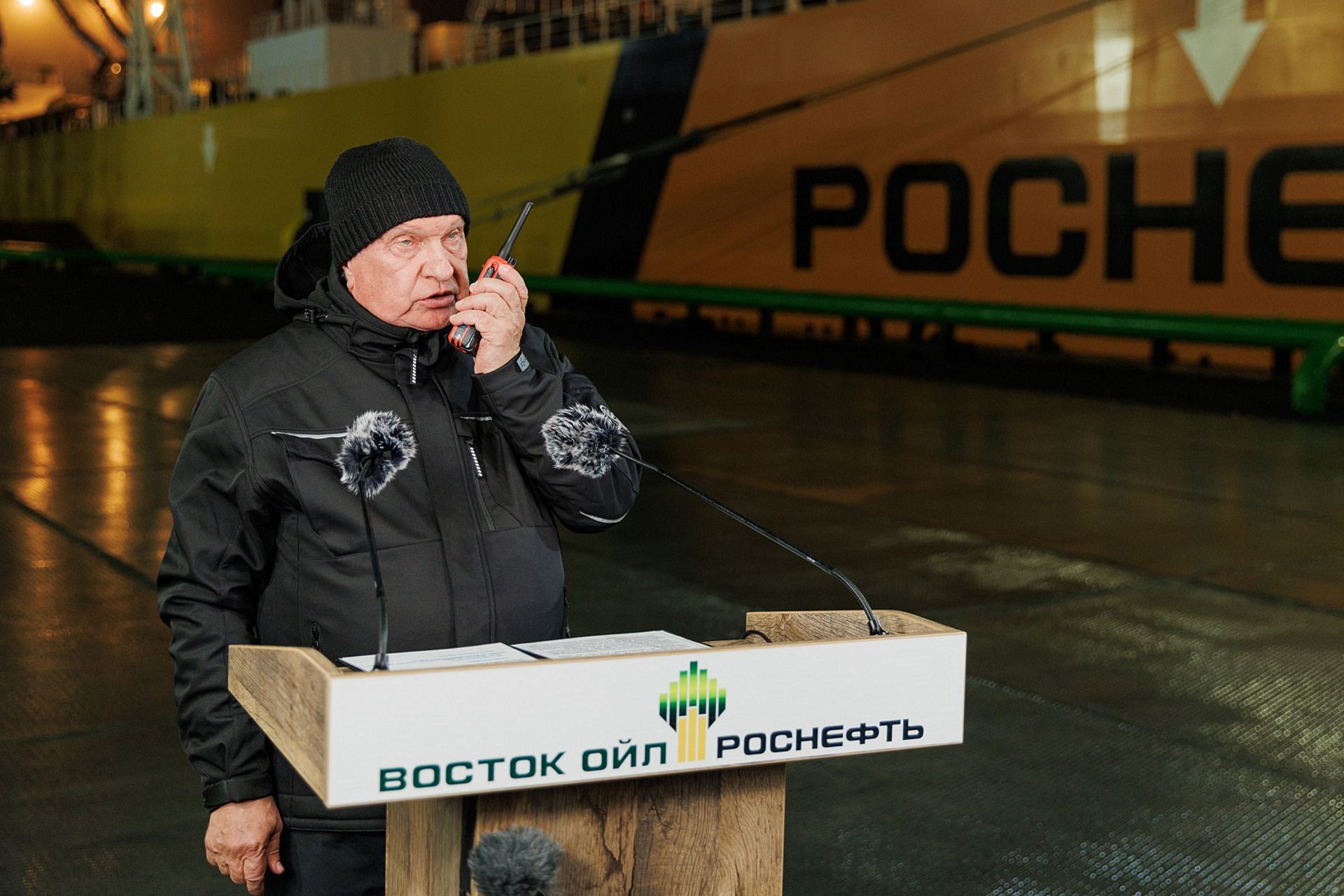
Rosneft head Igor Sechin ceremonially opens the Vostok Oil project, September 5, 2026. Photo: Rosneft / kremlin.ru
In 1965, the discovery of the Samotlor field marked the beginning of large-scale Soviet oil and gas exports. If we talk about the “oil needle” on which the USSR, and then Russia, became hooked, that needle was forged right there, at Samotlor, beneath the lake of the same name. Later, other fields of the West Siberian oil province were discovered: Priobskoye, Fedorovskoye, Mamontovskoye, Krasnoleninskoye — with light low-sulfur oil known on world markets under the Siberian Light brand. But Samotlor was first. And so last Saturday, Rosneft head Igor Sechin proudly reported to Vladimir Putin: “Congratulations on the birthday of Russia’s new oil province, Vostok Oil, Vladimir Vladimirovich. This event stands alongside such great feats as the discovery of West Siberian oil in Soviet times”.
Vladimir Putin watches the commissioning of the Vostok Oil project via videoconference, September 5, 2026. Photo: kremlin.ru
It should be noted right away that the Vostok Oil project is not exactly newly discovered fields. In 2019–2020, Rosneft came up with the idea of combining the depleting Vankor fields in the north of Krasnoyarsk Krai and new, undeveloped areas in Taimyr — the so-called Payakhskaya and West Irkinskaya groups — into one cluster. In 2020, Sechin presented Vostok Oil to Putin as a new megaproject. From the very beginning, it was conceived as an international one: the oil lies deep underground, which implies the use of multistage hydraulic fracturing technology, and it will have to be extracted in the harsh conditions of the Far North. Nevertheless, transnational corporations did not join the project: only independent traders were brought in — albeit the world’s largest ones: Singapore’s Trafigura and Swiss-Dutch Vitol.
As already noted, developing the field requires complex technologies and specialized software. Rosneft, and Russia in general, did not have many of them. As a result, the largest Western oilfield service companies — Schlumberger, Baker Hughes — were brought in on a contractual basis, and Rosneft launched the project. This included designing the 770-kilometer pipeline through which the project’s oil was to be delivered to the also-under-construction port of Bukhta Severnaya — in fact, it was opened last Saturday.
At the opening, Sechin acidly “sent greetings” to BP and ExxonMobil and their executives, with whom, according to his admission, participation in the project was discussed, but they clearly declined. However, Trafigura and Vitol also exited the project with the start of the invasion of Ukraine. At the same time, the war deprived the project of support from Western oilfield service giants. Meanwhile, high-tech software for well logging and complex drilling, supplied from the US and the EU, cannot be fully replaced by Chinese analogues. And using them sharply increases accident rates and drilling costs.
BP and ExxonMobil’s unwillingness to participate was clearly driven by more than just political considerations. The state fanfare was accompanied by criticism from independent experts from the very beginning of the project.
First of all, the reserves of the new fields raise doubts. All publications about the project’s resources say vaguely that the resource base will make it possible to ship 30 million tons of oil already in 2027. But geologists and oil workers do not have such a concept as “resource base”. There are estimated reserves (C2), explored reserves (C1), undeveloped but already drilled reserves (B2 and B1), and developed drilled reserves (A). The reserves of the Payakhskaya and West Irkinskaya groups are estimated in the C2 and C1 classes. In simpler terms, they are rough estimates, by analogy with other fields (C2), and as drilled by individual exploratory wells that were sufficient to understand what technological models are needed for development. That’s all. Seismic surveying, building a three-dimensional field model with additional exploratory drilling — all of that is already category B2, which, judging by specialists’ comments, is still a long way off.
So where did the 30 million tons Sechin promised for next year come from? That’s where the Vankor fields came in handy. Their production peak passed in 2017, but they continued to supply 11–15 million tons of oil into the ESPO pipeline, part of the Transneft system. Now this oil will go through the new pipeline to Bukhta Severnaya. The rest, apparently, Sechin intends to make up from already drilled areas. Or does he?
The thing is, the oil has to be delivered to the buyer. The natural buyers of Arctic oil are China and India. India is now even preferable: Rosneft owns 49% of Nayara Energy, the largest oil refining complex there, from which gasoline and jet fuel are currently flowing to Russia. A tempting scheme emerges: supply oil to your own Indian refinery, sell the resulting gasoline in Russia. In business, people respectfully call that “taking both ends”. But transportation is still a problem.
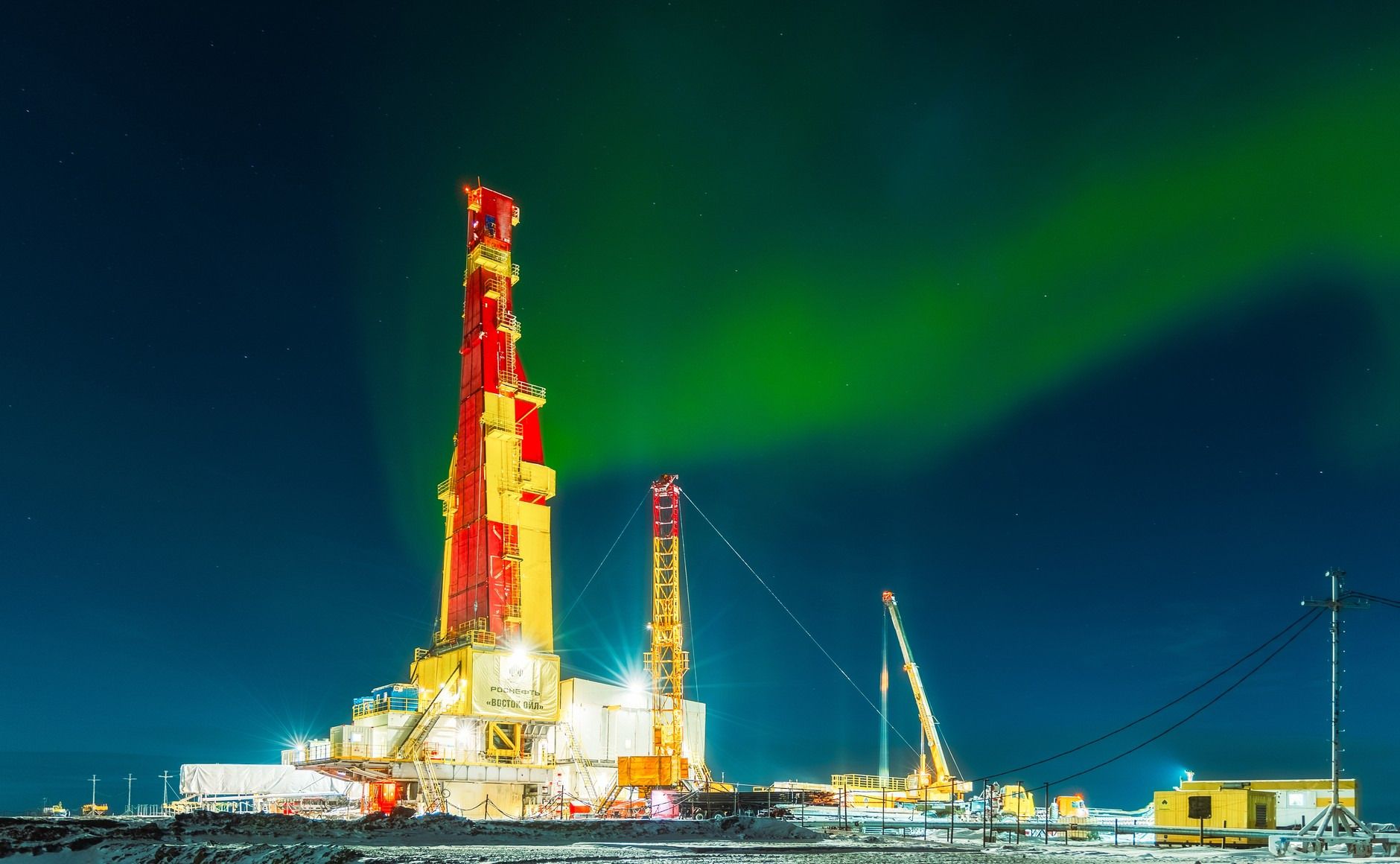
Infrastructure of the Vostok Oil project. Photo: Rosneft / kremlin.ru
The ceremonial opening of Vostok Oil, with greetings to the “current and former” leaders of the transnational corporations that refused cooperation, was not conducted by Mr. Sechin under a gushing drilling rig, but at the opening of that very oil terminal in Bukhta Severnaya. And by his own words, the project’s port complex now includes an oil-loading berth, two cargo berths, a port fleet berth, and 14 tanks of 30,000 tons each for oil accumulation and storage. And everything else — will come: provision of new grids and generation, including wind power, construction of 15 local energy districts, 16 power plants, and 9,000 km of transmission lines. Which means: for now, the promised 150 million tons by 2030 and even 100 million tons later simply cannot be pumped through — there is no energy capacity.
However, what does “promised” mean? The promise is worded cleverly: if necessary. And the need may never arise: China is rapidly shifting to green energy and electric vehicles, steadily reducing its use of oil — its current purchases should not be seen as increased consumption, it is building reserves that it may use itself, or sell at a profit. India, meanwhile, specializes mainly in processing oil and then selling petroleum products to other countries, first and foremost Europe. There is no need for such quantities of oil within the country, and it is unlikely that there ever will be. As for Europe, the conflict in the Strait of Hormuz will sooner or later end, and the Guyana field being developed by ExxonMobil will reach design capacity. Again, transport — the largest consumer of petroleum products, even in Europe — is gradually shifting to electricity, and if administrative barriers are removed and German carmakers start moving faster, Europe could already be on the path China took to reduce its need for oil by 2030.
But the already quite obvious decline in global oil dependence is not the most pressing issue. The main thing now is delivery.
Bukhta Severnaya is the Northern Sea Route. Whatever is said about global warming and the melting of Arctic ice, it is ice-free for only two to three months a year. For the rest of the time, for a while one can make do with low-power icebreakers, but after a stable ice cover forms, powerful icebreakers are needed, and Russia does not have enough of them — most have been in service since Soviet times, and the icebreaker Admiral Makarov, which has not been able to enter service for 30 years, recently caught fire again, without even leaving the shipyard.
To export even the promised 30 million tons of oil per year through the freezing Bukhta Severnaya, a fleet of at least 40 Arctic ice-class tankers is required, experts note. And these ships do not exist and will not exist because of sanctions: the South Korean Samsung Heavy shipyard, which produced parts of these vessels’ hulls (in Russia, they were only welded at the Zvezda shipyard), has stopped cooperation.
Infrastructure of the Vostok Oil project. Photo: Rosneft / kremlin.ru
In addition, the difficult ice conditions dictate a reduction in the amount of oil carried by tankers — supertankers like those that sail from the Persian Gulf cannot be used on this route. Smaller tanker capacity means higher transport costs per unit of goods. Add to that the short navigation season and the costs of transferring oil from Vankor — Sechin’s oil will likely turn out to be very expensive.
At the same time, Vostok Oil is exempted from most taxes, including profit tax and mineral extraction tax. That is where Rosneft’s real profit begins to emerge. In essence, the company will pump long-developed Vankor oil into Bukhta Severnaya, exempt from the heaviest taxes. And as for the oil from the “new Samotlor”... The parable of the donkey, the padishah, and Khoja Nasreddin fits perfectly here.
If you enjoyed this article, consider making a donation — one-time or, even better, monthly. Your support helps us motivate our authors and become better with every article.
Our organization is recognized by the Internal Revenue Service (IRS) as a 501(c)(3) tax-exempt, charitable organization, which means that all contributions made to us are tax-deductible to the fullest extent permitted by U.S. law. Individuals may generally deduct charitable contributions of up to 60% of their Adjusted Gross Income (AGI) for cash donations made to qualifying 501(c)(3) organizations. For donations of appreciated assets (such as stocks or other long-term capital assets), the deduction is typically limited to 30% of AGI, based on the fair market value of the asset. C-corporations may deduct charitable contributions of up to 10% of their taxable income for donations made to eligible charitable organizations.
By submitting a donation, you confirm that you have read and accept the following documents: Privacy Policy and User Agreement, and also give consent to the processing of your personal data.
If you would like to unsubscribe from a monthly donation, please email us at: [email protected]