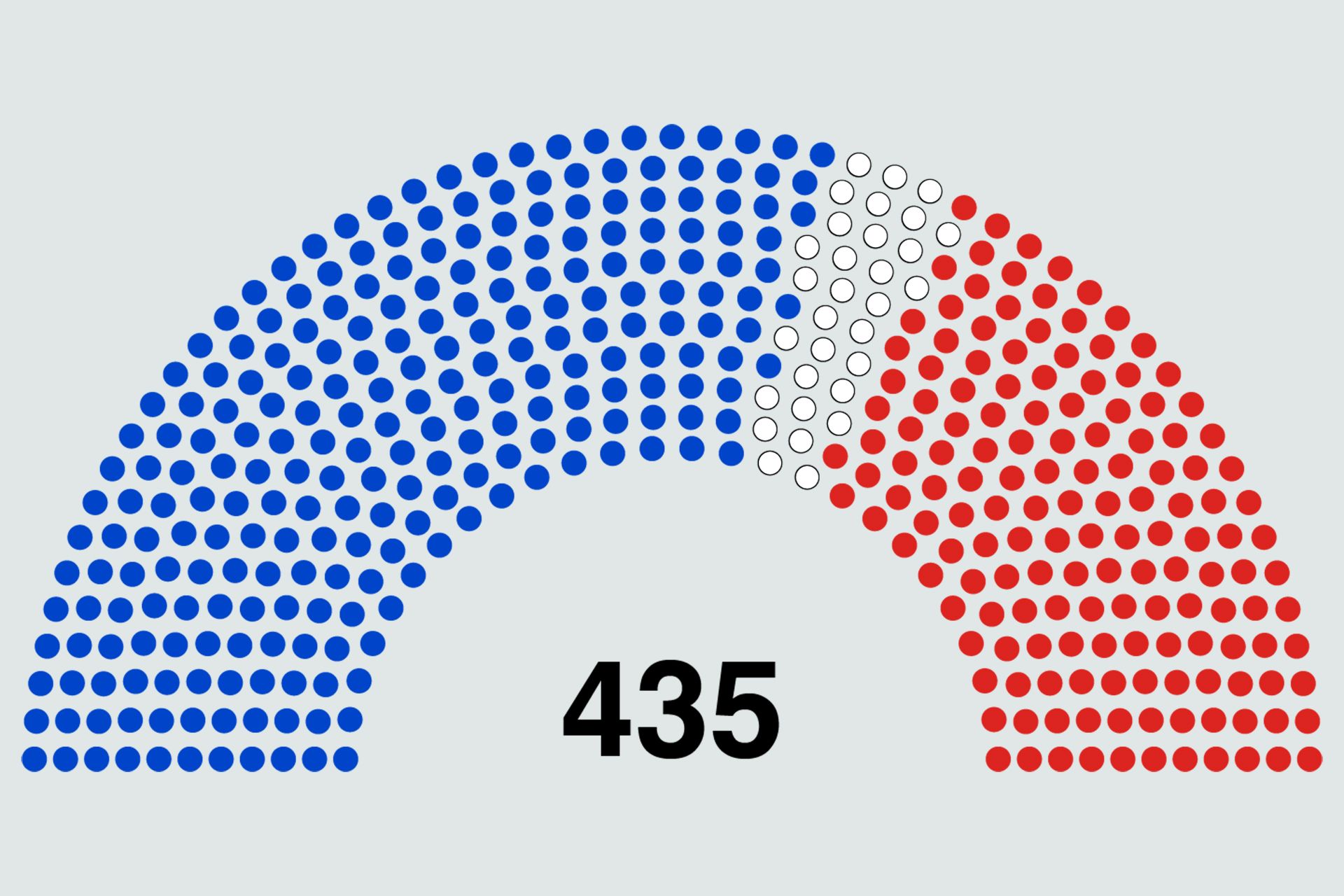
“Rout”, “catastrophe”, “tsunami”, “national humiliation”, and even Trump obliteration — “Trump’s zeroing out”. These are the expressions the American press uses to describe the Republicans’ defeat in the midterm elections, and none of them is an exaggeration. Even the boldest forecasts underestimated the potential of protest voting.
Image: Wikipedia / Public domain
“Pretend I’m on the ballot!” Donald Trump cried out to voters, confident in his invincibility. Now he says that if voters had listened to him, Republicans would have won “very easily”. The point is that they did listen and did pretend.
Sources describe the atmosphere in the White House on election night as “gloomy” and “funereal”. Trump, they say, took out his frustration on his aides, accusing them of giving him false information about the poll results. That is the flip side of loyalty. “And never be afraid to tell me the truth to my face”, says the king to the first minister, a desperate toady, in Schwartz’s fairy tale.
There are so many sensational results that it’s hard to know where to begin. But perhaps the most important thing in these elections was the participation of a new generation of politicians. America is still ruled by boomers. They have effectively deprived Generation X (born between 1965 and 1980) of a political future. But millennials and zoomers were not willing to put up with that: 36.7 percent of this year’s candidates are under 45.
Among Senate candidates, millennials outnumbered other generations for the first time in U.S. history.
They are a pleasure to watch. They may lack experience, but they certainly don’t lack sincerity or drive. And these are by no means creatures of party bosses, who eye them with alarm. The Democratic Party’s “old guard” is retreating under their onslaught. Six of the 11 incumbent Democratic congressmen who lost primaries were defeated by younger challengers. Here is an impressive example: in Colorado, 29-year-old Ethiopian-born Melat Kiros knocked 69-year-old Diana DeGette, who had been elected to Congress 15 times, out of the saddle. In the election, Kiros utterly routed her Republican opponent Kristi Peterson.
Also in Colorado, 31-year-old millennial Manny Rutinel, the son of a single mother from the Dominican Republic, won the primary in a landslide against the much more experienced Shannon Bird, a member of the lower house of the state legislature, and on November 3 defeated Republican congressman Gabe Evans. In Wisconsin, millennial Rebecca Cook took a seat in the lower house from Republican Derrick Van Orden.
They all worked tirelessly for this (the party apparatus helped them very little) and earned their success. But one of the loudest victories was the election of James Talarico as senator from Texas. Texas has not had a Democratic senator since 1994. Talarico is also a millennial (he is 37). Before beginning his political career, Talarico worked as a schoolteacher, then won election to the lower house of the Texas legislature. In addition to a secular higher education, he also has a theological education.
“James Talarico said he hates Christianity, that God is transgender, and that the Ten Commandments are a form of fascism”, Donald Trump described the Democratic candidate. And also that he wants to “destroy meat” in Texas because he himself is vegan: “But that hurt his image, so he started eating meat. And recently he was seen at a barbecue, where he was gorging on meat. He ate it, and then people saw him run off to a secluded place and puke it up”.
Fact-checkers have long since established that all of this is nonsense. Talarico earned his reputation as an enemy of Christianity by opposing a law requiring schools to hang a table of the Ten Commandments in every classroom. “I don’t want anyone to force their religion on me, and I certainly don’t want the government to do it”, he said. — I am a Christian, but I know that the most dangerous form of government is theocracy“. That is where the comparison of the Mosaic commandments to fascism came from in the garbled game of telephone that is Trumpist propaganda.
Talarico responded to the attacks calmly and with dignity, and when Trump, as usual, nicknamed him “Talafrico” (from freak), he released merch with the inscription “I am Talafrico”.
He was opposed by the state attorney general, Ken Paxton. He compromised himself in that office to such an extent that the Republican-controlled Texas House of Representatives voted to impeach him. Paxton was saved by the state Senate, which acquitted him on all 16 counts, including corruption, bribery, abuse of office, and securities fraud. But Trump supported him and promoted him in every possible way. However, that support did not help him. James Talarico received 1.2 million more votes than Paxton (55.1% to 43%).
“Blue wave” in the U.S. Congress: the most unexpected results of the November elections
What’s more, in Texas the gubernatorial election was won convincingly by Democrat Gina Hinojosa, the first Latina in that office, over the seasoned Greg Abbott, who was running for a fourth term. And that’s not all: in Texas, the lieutenant governor, attorney general, and other elected state officials are now Democrats. Democrats also won a majority in the lower house of the state legislature. No one could have imagined that voters would repaint reliably Republican Texas from red to blue in a single day. The same thing happened in Georgia.
In addition to youth, this year’s recruits have another important quality: diversity. Ethnic and gender diversity.
In New Hampshire, Republican John Sununu, a member of a famous political dynasty, lost the Senate race to Democrat and openly gay Chris Pappas. Trans woman Sarah McBride was successfully reelected to the House of Representatives from Delaware, defeating Republican Joseph Arminio in a landslide. In Indiana, Republican Victoria Spartz (the only Ukrainian in Congress) was forced to give up her seat to gay J.D. Ford. Another trans woman, Bentley Hudgins, was elected to the lower house of the Georgia legislature. As we can see, the Republicans’ anti-transgender rhetoric did not work, just as openly anti-Islamic propaganda did not work: in Michigan, Muslim Abdul El-Sayed became a senator — the first such case in U.S. history. One could say that the DEI policy (diversity, equity, and inclusion), which Trumpists were zealously purging from government institutions, has returned through the back door.
On social media, the Republicans’ current defeat is being compared with 1974. Back then, after Watergate, the biggest constitutional crisis in postwar U.S. history, Republicans lost four Senate seats and 45 seats in the lower house. One can also recall the 1994 elections in the middle of Bill Clinton’s first term, which were dubbed the “Republican Revolution”: Republicans then won eight Senate seats and 54 seats in the House of Representatives. In 2008, when Barack Obama was elected, Democrats took eight Senate seats and 21 in the lower house from Republicans.
As we can see, waves in American politics crash in both directions. The reasons are different each time, but as a rule the president’s party loses the midterms because of economic troubles.
That is what happened this time as well. The war in Iran sent gasoline and diesel prices soaring, and therefore everything else too. The president showed complete indifference to this problem. In his campaign speeches, he preferred to scare Americans with impending socialism if, in his terminology, the “far-left psychos” came to power. The classic battle between the fridge and the television was won by the fridge. There is no one to blame. Nothing forced Trump to tear up the nuclear deal with Iran and start a war with it. But he continues to insist that it was a “wise decision”. It is perfectly clear that he underestimated the opponent and its survival threshold. Unpopular decisions have to be paid for.
Reaction of the U.S. president to the Republicans’ failure
The good news: the president accepted the election results. He is not saying they were fabricated, no one is demanding a recount, and no one is exposing the fraudsters. And yet he promised a million for exposing fraud. As it turns out, MAGA activists were told to stand down. There were no incidents such as ICE agents being present at polling places either. And yet the president was urged to declare martial law outright. Thank God, everything went peacefully. “It just happened that way”, Trump explained in an interview with Fox News. — There was probably that kind of mood in the air“. And he added: ”I shouldn’t feel guilty because I saw you on your show the other day saying that almost never does an incumbent president, no matter how good or bad he is, whether Republican or Democrat, lose. I don’t know why. No one has explained it, but it happens almost every time“. Admirable humility.
But here’s the question: now that the dust has settled, what will the Democrats do with their majority? It seems that with their victory they have put themselves in a very vulnerable position.
In response to the election results, the president posted an image of his traditional red cap with the word “Veto”. And in words he said: “They’re going to send me crazy things. And I’m going to veto them. In a couple of months they’ll call me and say: how do we work this thing out? And we’ll work together”.
Overriding a presidential veto requires a two-thirds vote in both chambers. Even if such a qualified majority can be assembled (it was, for example, in 2017, when Congress passed the anti-Russian sanctions law — CAATSA), the president has the ability to sabotage its implementation (as was the case with CAATSA itself). Could it turn out that, having become the majority, Democrats will take responsibility for the state of the country without having any real ability to influence that state of affairs? And then in the 2028 presidential campaign Republicans will be able to pin the blame on them.
Added to this is intra-party discord, the conflict between the establishment and the progressive wing. Democratic leaders Hakeem Jeffries and Charles Schumer fear a drift to the left. But they can no longer do without progressive youth either. On the other hand, party discipline is weakening among Republicans too. Trump is loosening his iron grip on their necks. They no longer want to be associated with an unpopular president. During the campaign they removed references to Trump and even to the Republican Party from their campaign materials. In such a situation, bipartisan cooperation may return to Congress, interesting blocs may emerge, and fragmentation based on shared interests may occur. We’ll live and see.
If you enjoyed this article, consider making a donation — one-time or, even better, monthly. Your support helps us motivate our authors and become better with every article.
Our organization is recognized by the Internal Revenue Service (IRS) as a 501(c)(3) tax-exempt, charitable organization, which means that all contributions made to us are tax-deductible to the fullest extent permitted by U.S. law. Individuals may generally deduct charitable contributions of up to 60% of their Adjusted Gross Income (AGI) for cash donations made to qualifying 501(c)(3) organizations. For donations of appreciated assets (such as stocks or other long-term capital assets), the deduction is typically limited to 30% of AGI, based on the fair market value of the asset. C-corporations may deduct charitable contributions of up to 10% of their taxable income for donations made to eligible charitable organizations.
By submitting a donation, you confirm that you have read and accept the following documents: Privacy Policy and User Agreement, and also give consent to the processing of your personal data.
If you would like to unsubscribe from a monthly donation, please email us at: [email protected]