On Monday, the EU published a new package of sanctions. Despite the impressive list of big-name (and not-so-big-name) figures, no one believes anymore that sanctions can stop the war. So why is all this needed?
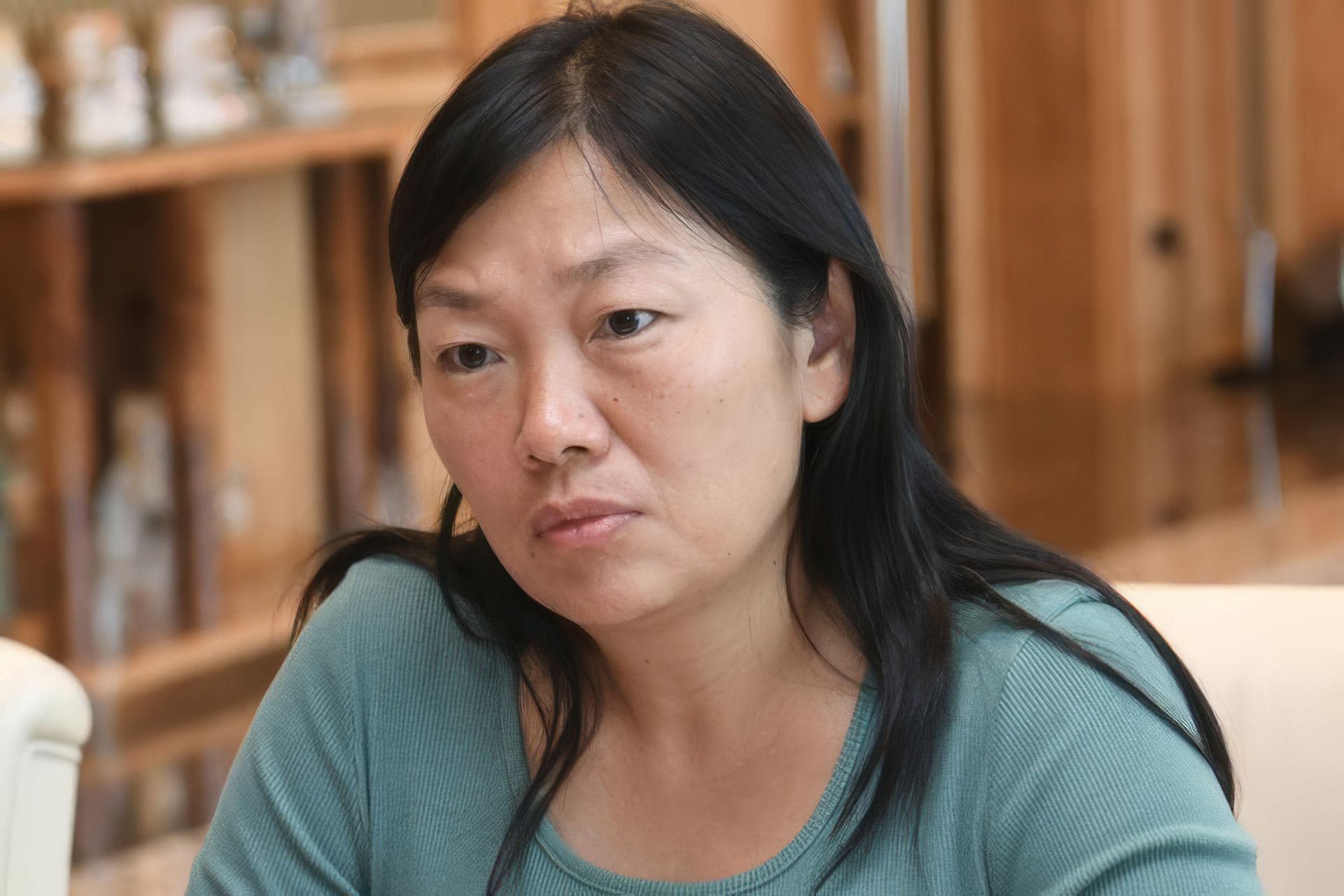
Tatyana Kim. Photo: tatarstan.ru
In the latest package of sanctions, the EU targeted 12 individuals and 101 legal entities. Among them are well-known oil refining companies, banks, and public figures.
Storage, processing, and transportation of oil. These are, above all, the country’s largest oil refiners: the Moscow, Kirishi, Khabarovsk, Saratov, Ilsky, Novoshakhtinsk, and Omsk refineries. Along with them, the managers and owners of the Volkhov-Eco, Yenisei, Balchug Petroleum, Gazprom Neftekhim Salavat, and TAIF-NK refineries were also sanctioned. The black list also includes the St. Petersburg Oil Terminal, RusChemAlliance, RusGasDobycha, NNK-Northern Oil, NNK-Sakhalinmorneftegaz, and Tatneft-NAO.
Restrictions were also imposed on 15 companies that own, manage, finance, or insure tankers transporting Russian oil.
Eleven of them are registered in the UAE, Oman, Hong Kong, and the Seychelles, and four are in Russia. Personal sanctions affected the individuals who own or manage these companies — in particular, Igor Konfino, Daniil Mosin, and Sergei Grib. The sanctions list also includes new foreign buyers and traders.
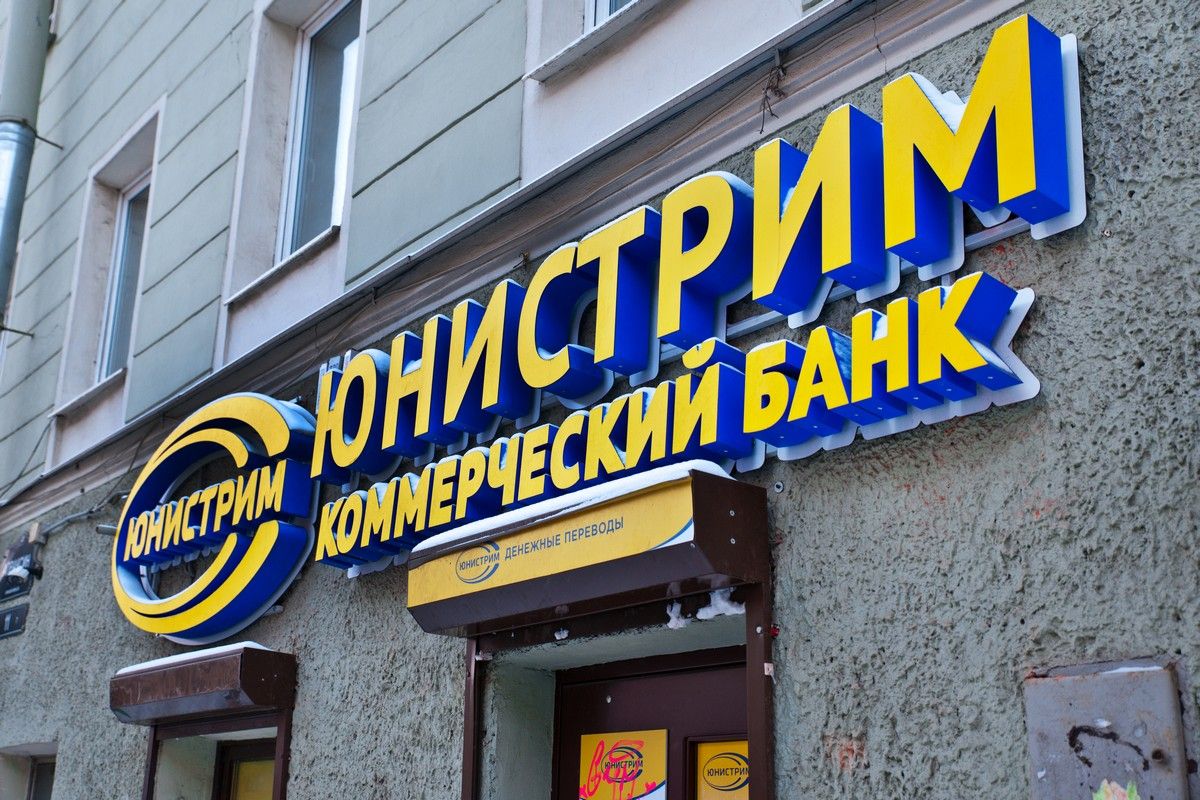
Banks and payment systems. Here, for Russian relocants, the most significant development was the inclusion of Unistream Bank, which owns the eponymous payment system, under sanctions.
After sanctions were imposed on Zolotaya Korona, only Unistream continued to process transfers from Russia abroad. Now that route is blocked.
Photo: asiaplus.news
But there are other banks and non-bank systems too, in particular SPB Bank — the settlement depository of SPB Exchange; NKO YooMoney — the operator of the Money service, the largest electronic payments and wallet service in Russia, part of Sber’s ecosystem (apparently, transfers from Sber to some “friendly” countries are over too); Bank 131, which serves as a major payment gateway for cross-border settlements in e-commerce, freelancing, and international online platforms; Solid Bank, which plays an important role in settlements with counterparties in Southeast Asia; Kontur.Bank, important for cash and settlement services for small and medium-sized businesses; and NKO Petersburg Settlement Center (PRC), which handles the financial flows of large companies and settlements in the Northwestern region. So, of course, these are not major banks, but they play an important role in their niches or are involved in chains of alternative cross-border payments.
Propagandists, trolls, and hackers. This time the group was quite large: Vitaly Eliseev (Channel One), Pyotr Marchenko (NTV), Chey Bowes (RT), Alexey Stefanov (Sputnik Latvia and RT), Yury Podolyaka (a popular Z-blogger), Daniil Bezsonov (Z-blogger and representative of the so-called “DPR”). The list also includes the “troll factory” — the Social Design Agency, along with 24 of its employees.
The pro-Russian hacker group NoName057(16), known for a series of large-scale DDoS attacks on government portals, political party and election candidate websites, as well as on energy, transport, the financial sector, and water supply in EU countries, Ukraine, and the United States, was also sanctioned.
Well-known figures. Perhaps the biggest stir was caused by the inclusion of Tatyana Kim on the sanctions list — for selling military gear on her marketplace. But it also includes Alexander Chachava — the developer of My.Games and co-owner of Yandex — and Ruslan Baysarov — the main shareholder of South Ural Gold, taken from Konstantin Strukov — and even Valentina Matviyenko’s son Sergei, who is described in the document as “one of Russia’s largest developers”, whose Megalit-Okhta Group makes a “major financial contribution” to Russia’s budget.
Why all this?
The accompanying letter to the EU list says that “the European Council reaffirmed its unwavering, firm, and resolute support for the independence, sovereignty, and territorial integrity of Ukraine within its internationally recognized borders. The European Council stated that the Union will continue to provide Ukraine and its people with comprehensive political, financial, economic, humanitarian, military, and diplomatic support in coordination with like-minded partners and allies”.
In effect, what we see is an act of support for Ukraine and condemnation of Russian aggression. There is no longer any hope that sanctions will not only stop the war, but at least make it prohibitively expensive. And this is an acknowledgment of reality: there is no “prohibitive” price for Putin. Therefore, sanctions cannot become the reason the war stops.
It’s probably nice that Sergei Matviyenko will no longer be able to live in his luxurious villa in Pesaro, Italy, and use the family assets stored in San Marino. And there is no sympathy even for Tatyana Kim — she shouldn’t have been selling drones and night-vision devices on her marketplace. But what about the relocants, for example — what did they do to deserve this? And Russian pensioners abroad? And those who live in emigration on the money from renting out their apartment? Is there no way to separate the wheat from the chaff — pension transfers from payment for goods banned from import into Russia? Is there reason to suspect that a relocant’s salary includes payment for espionage and sabotage in Europe?
Hardly. Most likely, this is in the same category as Estonia closing its border with Russia — supposedly to prevent saboteurs and Kremlin agents from entering. Although it is an open secret that sabotage is now carried out by EU citizens, and the tasks are given to them via the internet, which cannot be shut down. Or the tightening of visa issuance to Russians and the discussion of a complete ban on tourist visas for them.
Everyone understands that this will not help achieve the stated goals in any way. But the EU has no other tools to demonstrate the consistency of its policy.
Europe has found itself in a rather difficult situation, where its closest ally — the United States — is trying to play the role of some neutral mediator, where “both sides are at fault”, but for some reason the pressure has to be on Ukraine. When there is no such powerful financial lever as the US has: the ability to impose secondary sanctions on countries helping Russia, using the dollar’s global role in any transaction. And at the same time, voices are even beginning to be heard within the EU that it is necessary to negotiate with Russia.
Under these conditions, the consistent introduction of more and more sanctions is not a signal to Putin. And not to those who will suffer from the sanctions. It is a signal to EU members themselves — we are still united and unshakable. And if those who left Putin’s Russia suffer as a result, then when trees are cut, chips fly. That is today’s reality.
If you enjoyed this article, consider making a donation — one-time or, even better, monthly. Your support helps us motivate our authors and become better with every article.
Our organization is recognized by the Internal Revenue Service (IRS) as a 501(c)(3) tax-exempt, charitable organization, which means that all contributions made to us are tax-deductible to the fullest extent permitted by U.S. law. Individuals may generally deduct charitable contributions of up to 60% of their Adjusted Gross Income (AGI) for cash donations made to qualifying 501(c)(3) organizations. For donations of appreciated assets (such as stocks or other long-term capital assets), the deduction is typically limited to 30% of AGI, based on the fair market value of the asset. C-corporations may deduct charitable contributions of up to 10% of their taxable income for donations made to eligible charitable organizations.
By submitting a donation, you confirm that you have read and accept the following documents: Privacy Policy and User Agreement, and also give consent to the processing of your personal data.
If you would like to unsubscribe from a monthly donation, please email us at: [email protected]